🎯 Its Role
Sound absorption aims to "soak up" that echo, improving the quality of sound inside the space. It reduces reverberation time, making the space "clearer" sonically.
In the world of acoustics, there are two entirely different goals: One is to improve the sound inside our room. The other is to prevent sound from entering (or leaving) our room.
The materials industry often plays with words, selling "acoustic panels" to people who are searching for peace and quiet. The result is tragic. Let's see why "foam" isn't a shield.
Think of an empty room with no furniture. If you clap your hands, the sound will bounce off the hard walls, ceiling and floor, creating an annoying echo (reverberation). The room "buzzes".
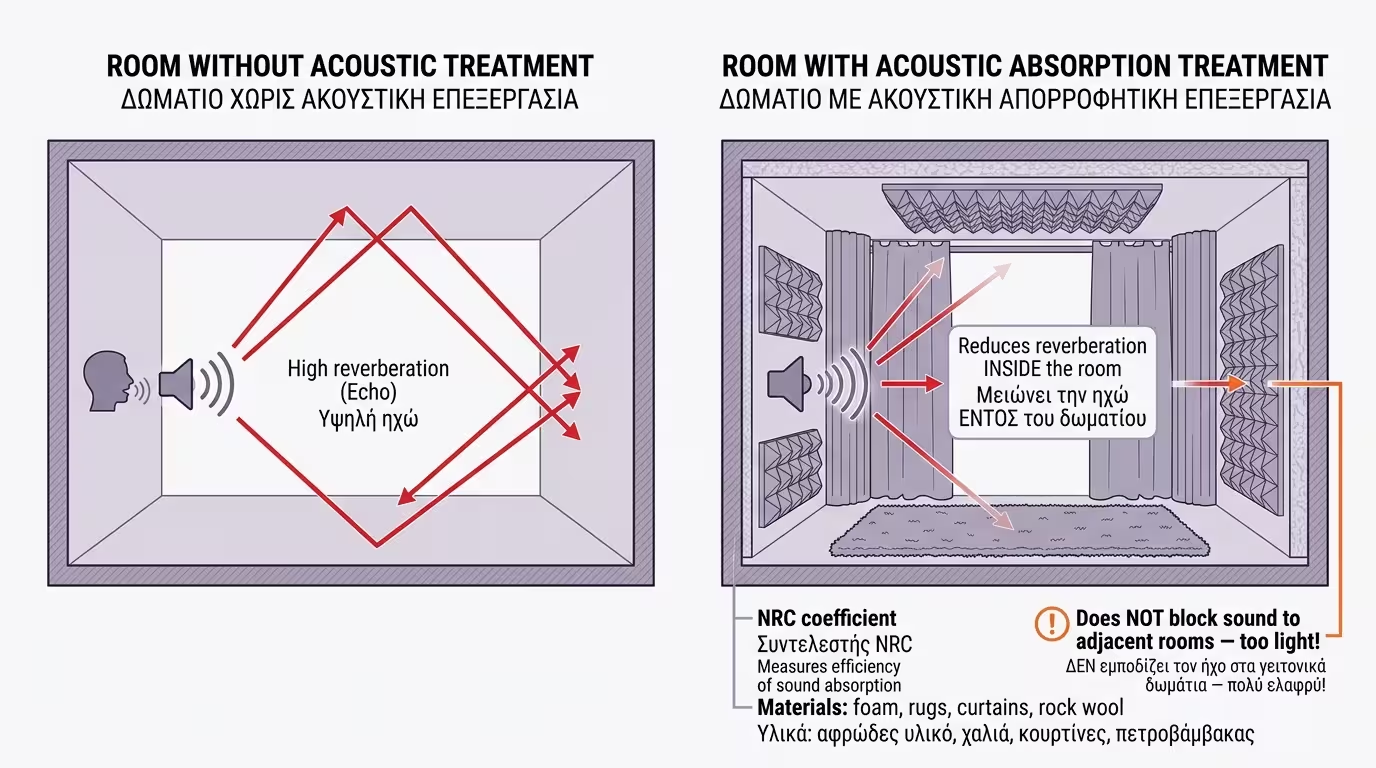
Sound absorption aims to "soak up" that echo, improving the quality of sound inside the space. It reduces reverberation time, making the space "clearer" sonically.
Soft, porous, lightweight materials: Foam panels (the well-known grey "sponges" or egg-crate foam), heavy rugs, thick curtains, sofas, and even rock wool. When a sound wave hits the pores of these materials, it gets trapped and converted into negligible heat.
These materials DO NOT stop sound from passing to the adjacent space. They are far too light. The energy of low frequencies (e.g. the bass from your neighbour's sound system) passes through the foam as if it doesn't exist!
Here we change sport entirely. The goal isn't to listen to our own music beautifully, but to build a "fortress" that won't let noise pass through the walls.
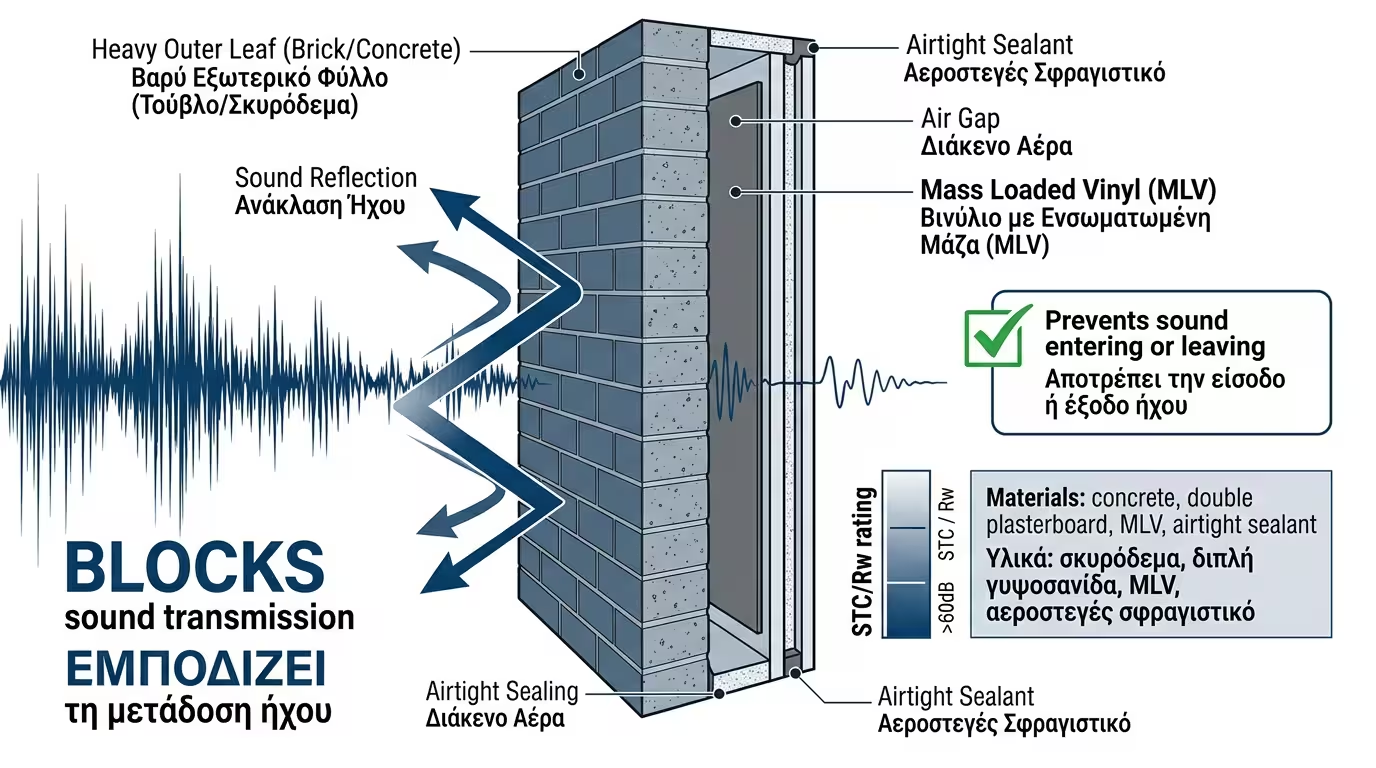
To block the transmission of sound energy from one room to the next. To prevent sound from entering or leaving.
Heavy, dense and rigid materials (Mass), combined with systems that "break" mechanical contact (Decoupling). We're talking about bricks, concrete, double heavy plasterboard, mass-loaded vinyl (MLV) and airtight sealing. A sound wave can't easily shake a wall weighing 100 kg, so it "crashes" against it and bounces back.
To understand with a simple analogy, imagine that sound is… water from a hose.
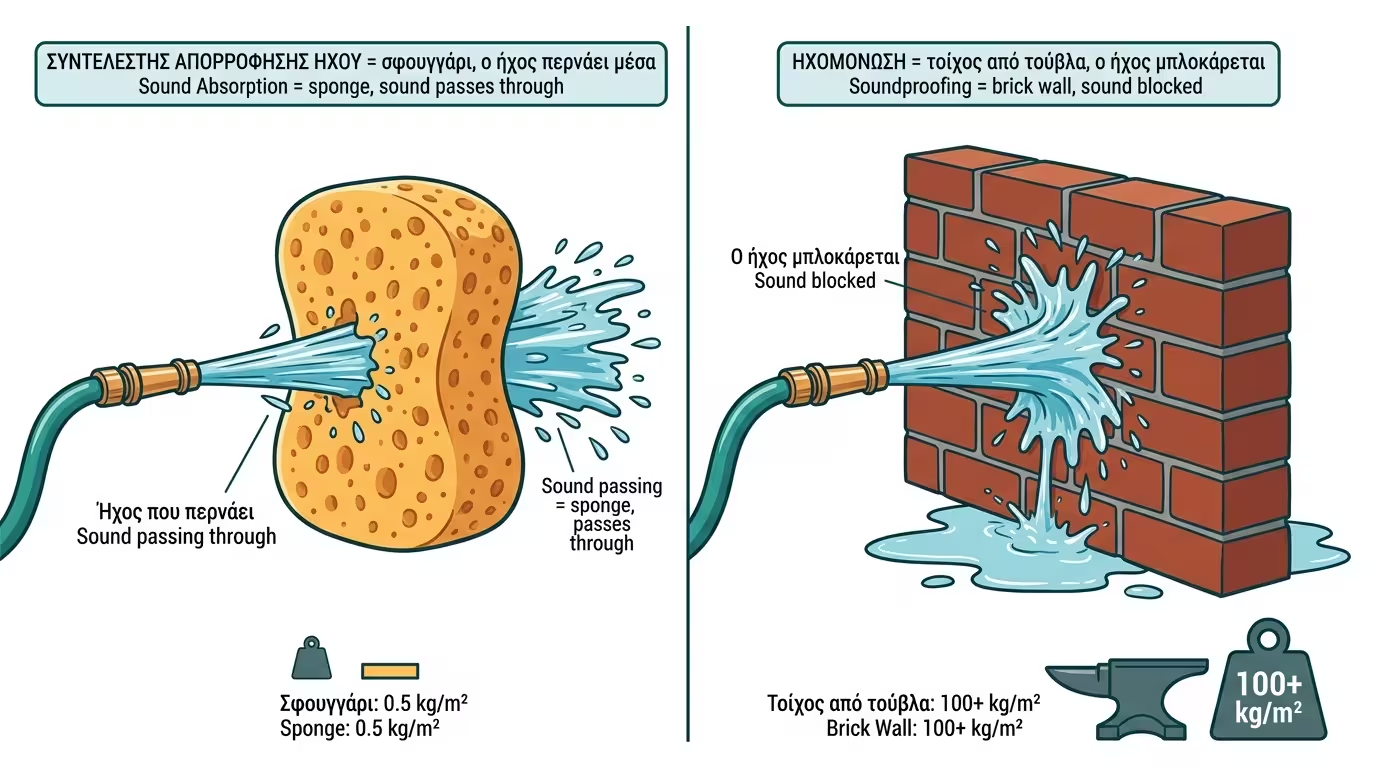
If you spray water onto a sponge, the sponge will soak up a bit, but most of the water will pass through and get you wet.
If you spray water onto a brick wall, the water will crash into the wall and you'll stay completely dry on the other side.
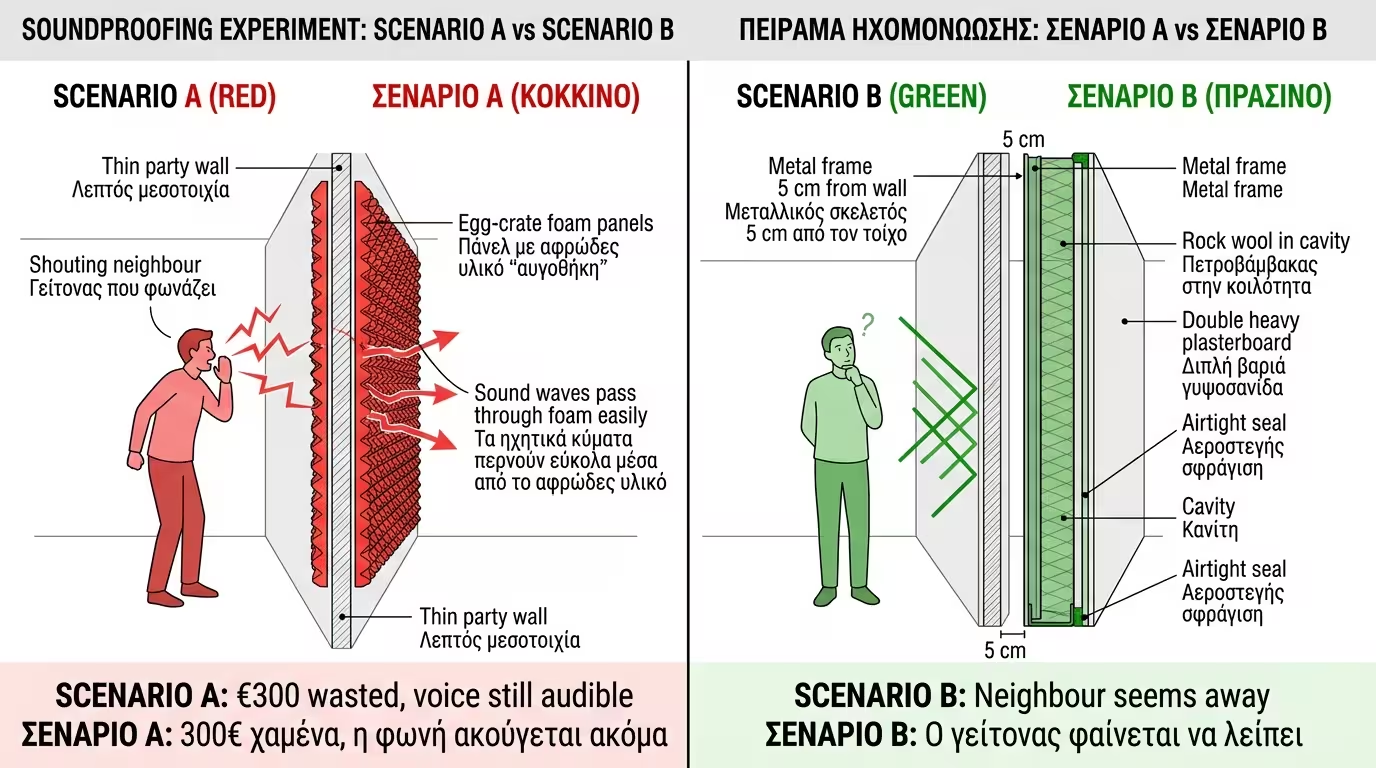
A thin wall separates us from our neighbour. The neighbour watches matches and shouts.
We buy 10 square metres of expensive, black acoustic foam (egg-crate panels) and glue them all over our wall. That evening, the neighbour shouts. We hear him crystal clear. What did we achieve? We simply made our own space sound more "muffled" when we talk. We've wasted €300.
We leave the wall as is. We build a metal frame 5 cm away (without touching the old wall). Inside the frame we place rock wool (to absorb sound within the cavity), then close it with two layers of heavy acoustic plasterboard. We seal airtight. That evening, the neighbour shouts, but we think he's away. We've added Mass and Decoupling.
The Bottom Line: If you want to build a Home Studio for recording songs without reverb, buy foam (sound absorption). If you want to sleep without hearing the neighbour's dog, you need plasterboard, air gaps and weight (soundproofing). Never confuse the two!
Return to category.
Go to categoryReturn to the central guide.
Go to guide