
The 10 dB Rule: How the Human Brain (Wrongly) Perceives Noise Being Halved

When we start a soundproofing project, the biggest problem isn't the materials - it's our expectations.

We live in a linear world. If you have €100 and someone takes €50, you've lost half. By that logic, many believe that if a sound meter shows acoustic energy was halved (reduced by 50%), our ears will hear the noise as "half as loud".

This is the biggest mistake in acoustics. Physics (the instrument) and psychoacoustics (the brain) speak entirely different languages.

1. The "Deception" of 3 dB (The Physics)

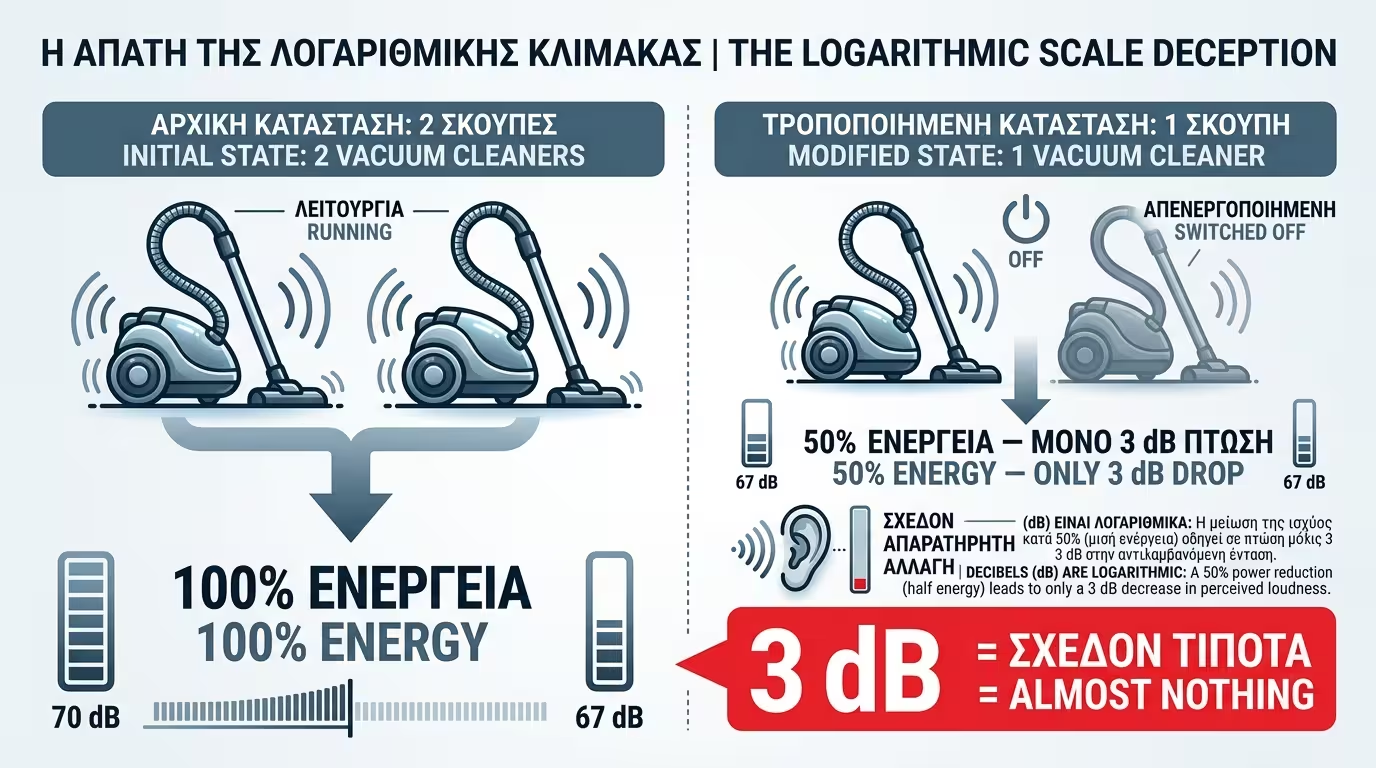
In our first article, we said the decibel scale is logarithmic. According to physics, if you switch off one of two identical vacuum cleaners running next to you, the acoustic energy in the room is reduced by exactly half (50%).

Do you know how this huge energy reduction shows on a sound meter? A mere 3 dB! And how does your brain translate that 3 dB drop? As a tiny, barely perceptible decrease in loudness.

In other words, if you buy a material that advertises "50% reduction of acoustic energy", in reality you will notice almost no difference with your ears!

Logarithmic scale: 50% energy reduction = only 3 dB, a barely perceptible change

2. The 10 dB Rule (Psychoacoustics)

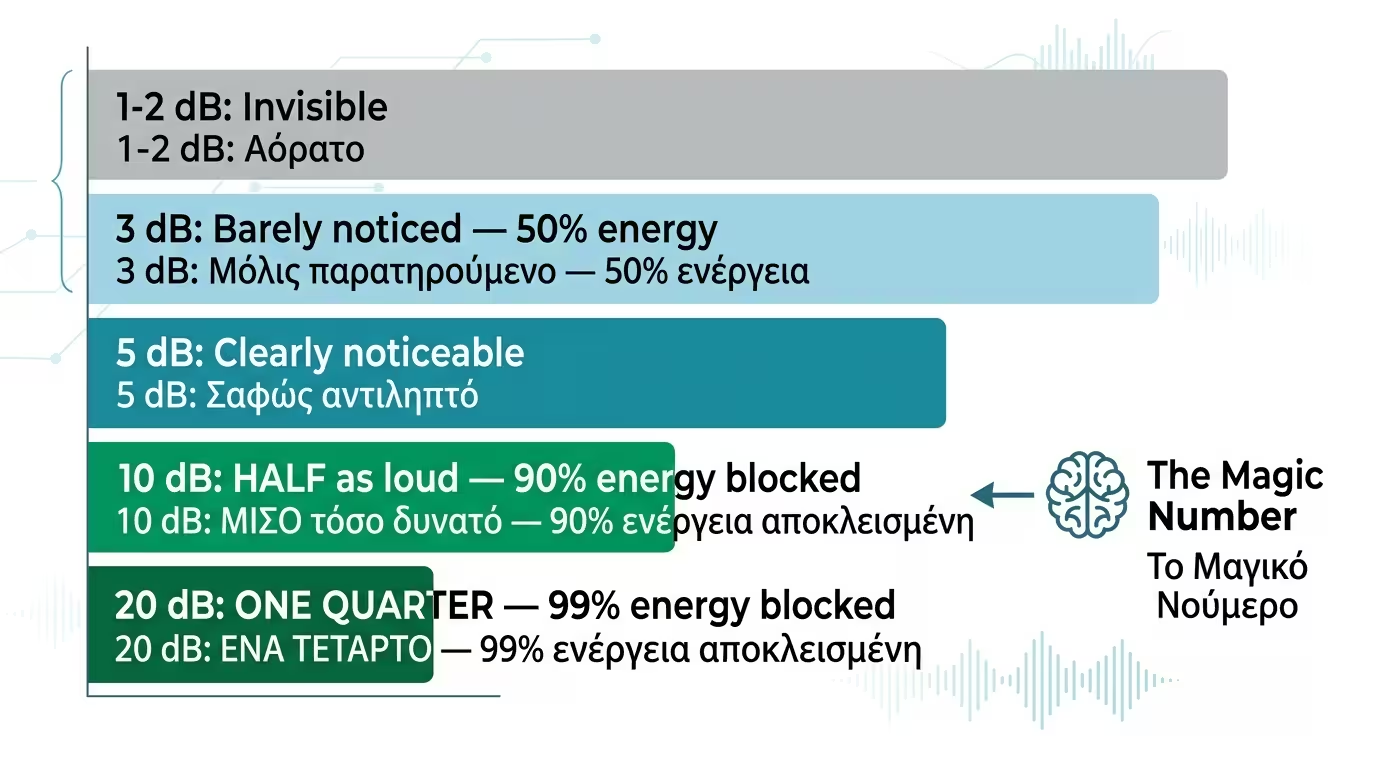
For the human brain to be convinced that a noise has "dropped to half" (that it has become noticeably quieter and tolerable), a reduction of around 10 dB is required.

This is the "10 dB Rule".

  • 1 to 2 dB reduction: Nobody notices.
  • 3 dB reduction: Barely perceptible in absolute silence (corresponds to 50% physical energy reduction).
  • 5 dB reduction: Clearly noticeable improvement.
  • 10 dB reduction: Noise now sounds HALF as loud.
  • 20 dB reduction: Noise sounds ONE QUARTER (1/4) as loud.
Psychoacoustic scale: 1-2 dB invisible, 3 dB barely noticed, 5 dB clear, 10 dB halved, 20 dB one quarter

3. What This Means in Practice (The Herculean Effort)

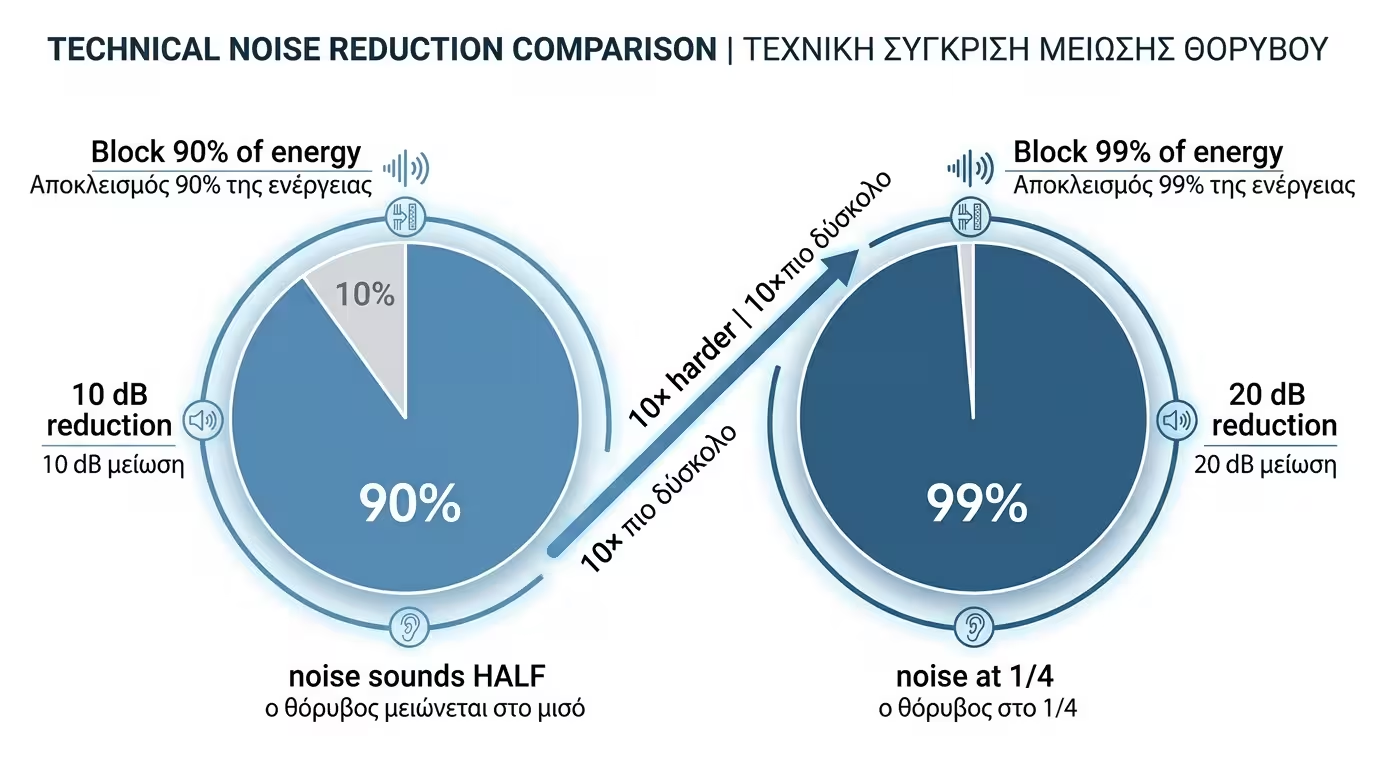
To cut 10 dB from a wall (and feel that the noise has halved), the insulation system you install must block 90% of the acoustic energy! To cut 20 dB (and feel the noise has become a "whisper" at 1/4), you must block 99% of the acoustic energy!

Now you understand why soundproofing is so difficult and expensive. For you to perceive a satisfying difference, the engineer must stop almost all of the physical energy.

Blocking 90% energy = 10 dB, 99% = 20 dB - why soundproofing is so expensive

4. The Experiment in Our Model: The 4×4 Assessment

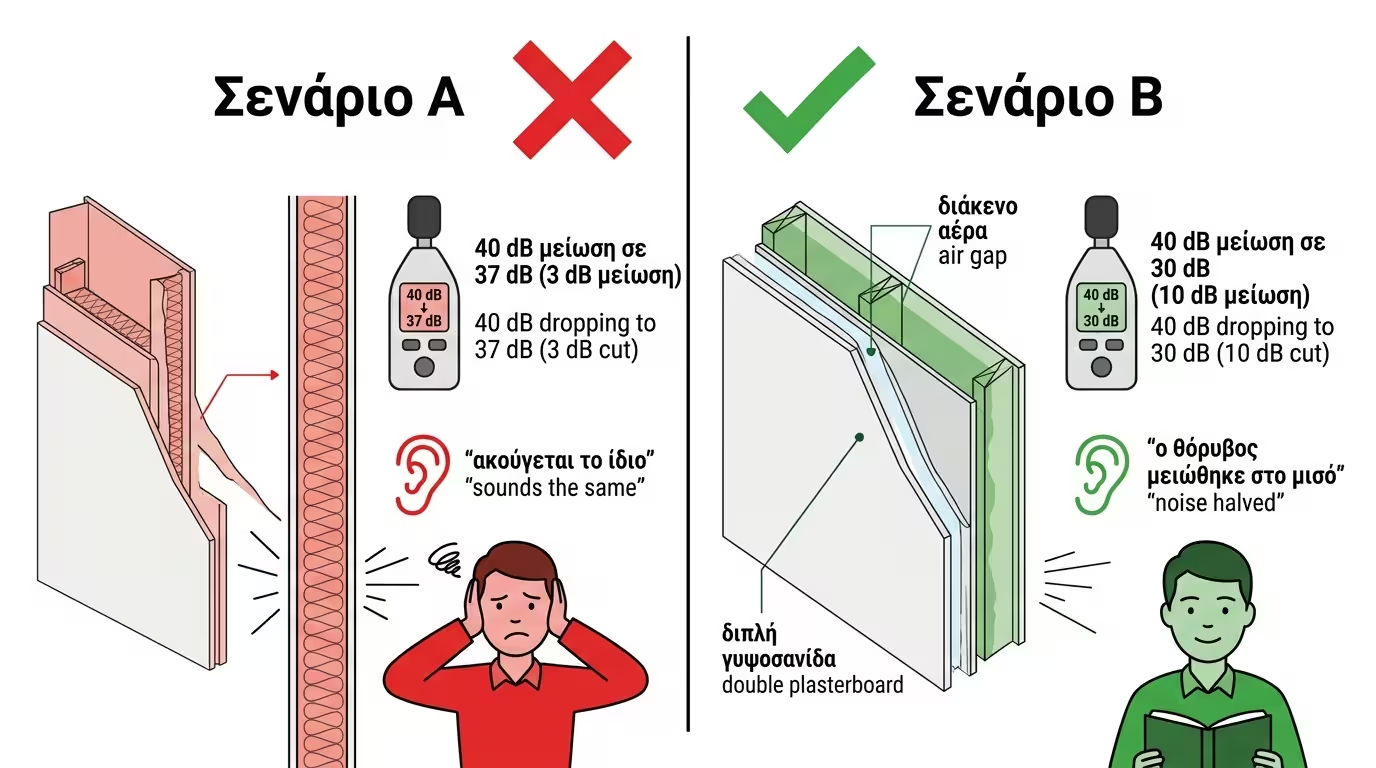
Experiment: Scenario A (3 dB disappointment) vs Scenario B (10 dB psychological relief)

The neighbour plays music at 70 dB. Our thin wall drops the sound to 40 dB. It's very annoying. We call two different teams.

❌ Scenario A (The 3 dB Disappointment)

The first tradesman fits a thin, cheap insulation material to the wall. He promises "50% energy reduction". That evening, the neighbour plays music. The meter reads 37 dB. The physical energy did indeed halve! But our ears hear the music almost as loudly. We feel cheated, even though the tradesman told the (technical) truth.

✅ Scenario B (The Psychological Relief of 10 dB)

The second tradesman builds a proper stud wall with an air gap and double acoustic plasterboard (as we saw in Category B). That evening, the meter reads 30 dB (a 10 dB drop from before). Our brain immediately perceives the noise as half. The music has become a distant, insignificant murmur that no longer bothers us!

The Bottom Line: Before you start a soundproofing project, you must understand how your ears work. Don't chase "absolute zero". Aim for that "magic" 10-15 dB reduction that will trick your brain, turning irritating noise into a simple background hum.

Related Articles

Sound Insulation: Silence and Noise Protection

Return to category.

Go to category

Preview