Cost vs. Performance in High-Tech Insulation Materials: When Are They Worth It?

If you have read the previous articles in this section, you have probably been impressed by the capabilities of modern science. Materials that insulate with just 1 centimetre of thickness (Aerogel), "heat mirrors" and walls that melt to keep you cool (PCM).

However, when you ask a supplier for a quote, enthusiasm often turns into... a cold sweat. High-tech insulation materials can cost from 5 to 20 times more per square metre compared to standard white polystyrene (EPS). The question is relentless: Are they worth paying for? The answer lies in the word Return on Investment (ROI) and the "hidden" value of your space.

1. VIP & Aerogel: The "Hidden" Value of the Square Metre

If you have a huge, empty flat roof or a free external wall on a rural plot, choosing materials like VIP or Aerogel is a pure waste of money. Traditional EPS 10 centimetres thick will give you the same result at 1/10 of the cost.

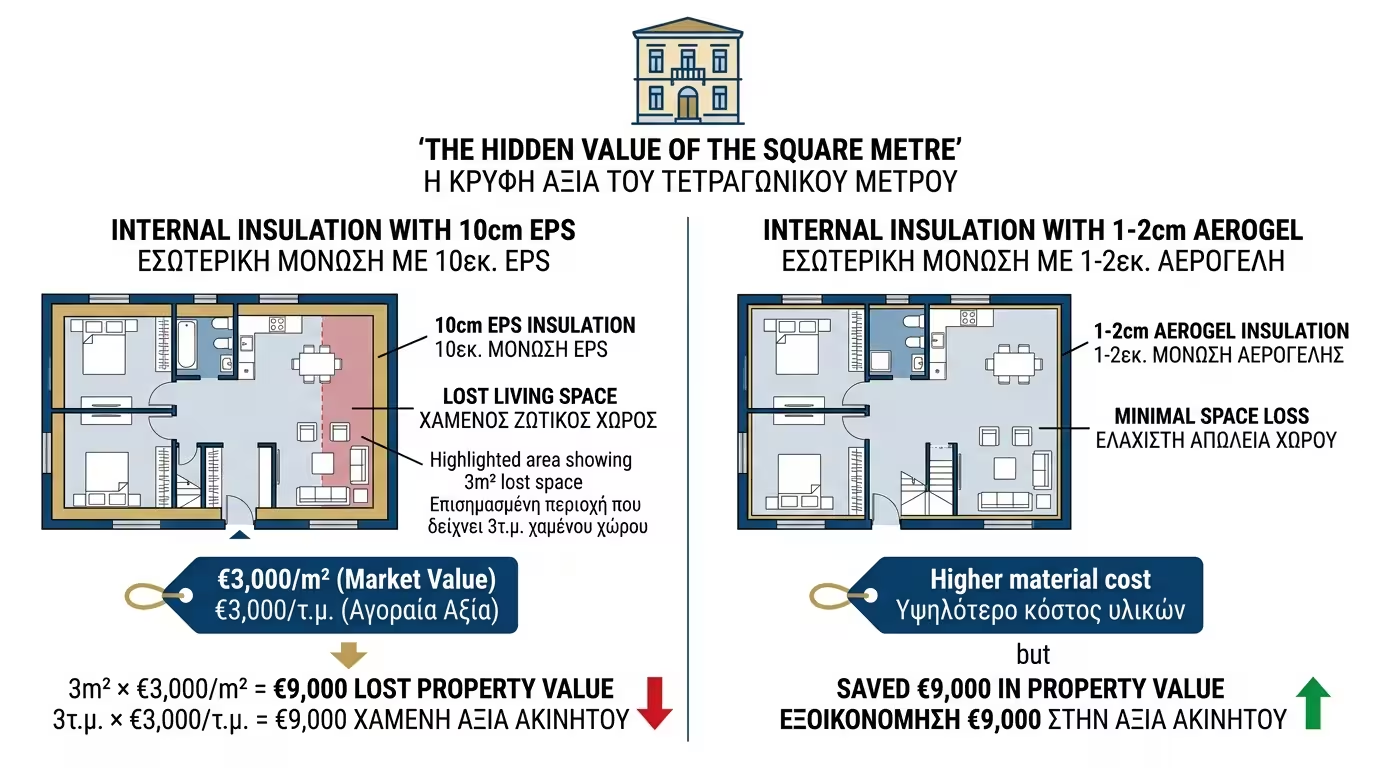
When do they suddenly become "cheap"? When space is expensive! Imagine a flat in central Athens (property value e.g. €3,000/m²). You want internal insulation because changing the facade is prohibited.

VIP and Aerogel - the hidden value of space in expensive properties

❌ Conventional Insulation (10cm EPS)

You install 10 centimetres on all perimeter walls. You "eat" precious space from the living room and bedrooms. You might lose a total of 3 square metres. In property value, you just threw away €9,000 (3 m² × €3,000)!

✅ Aerogel (1-2cm)

You pay considerably more for the material, but you save your square metres. The expensive material achieves immediate payback, protecting the commercial value of your home.

2. PCM (Phase Change Materials): Investing in Comfort

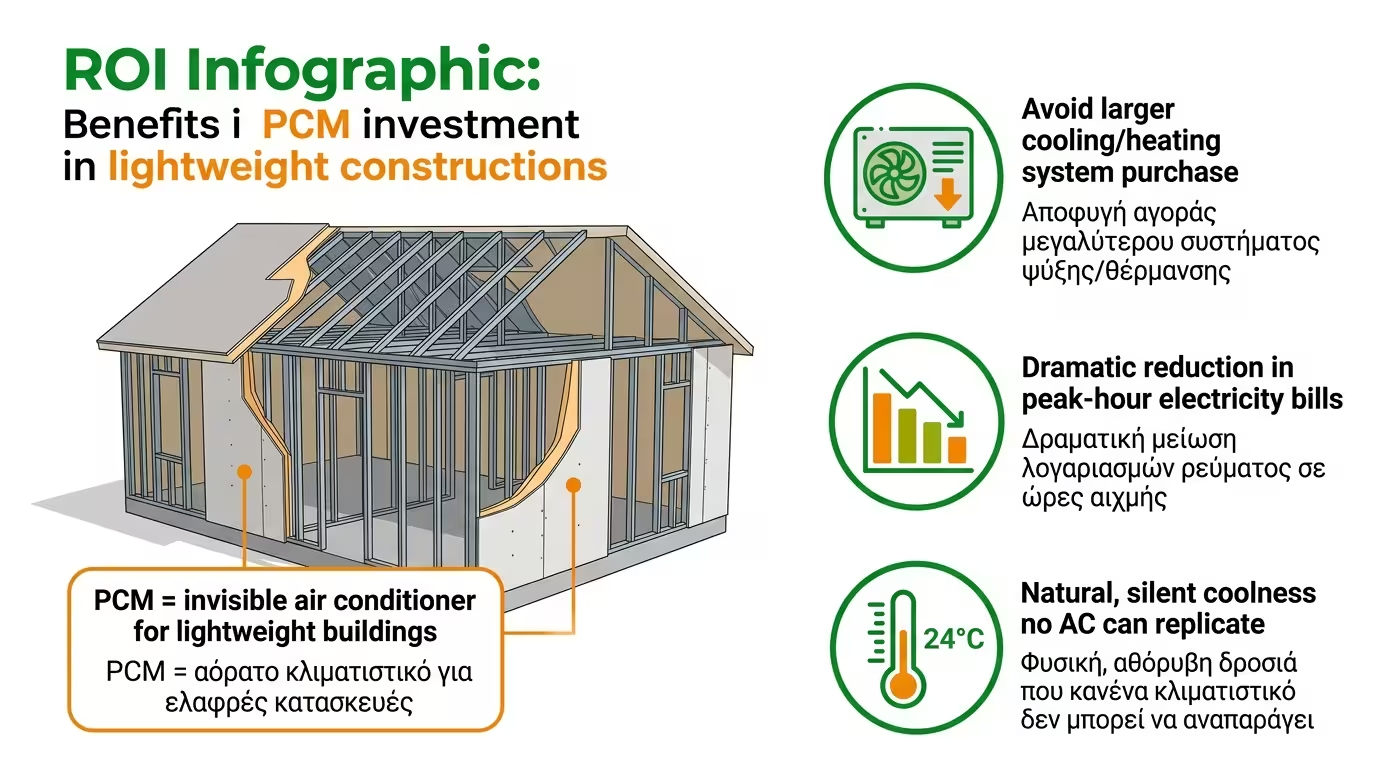
PCM is not bought to save space, nor to block the cold. It is bought to reduce temperature "shocks" in lightweight constructions (attics, prefabs, plasterboard houses).

Its payback is not as immediate as EPS. However, if you live in an area with extreme summer heat, PCM takes on the role of "invisible air conditioning". You avoid buying a larger and more expensive cooling/heating system and dramatically reduce electricity bills during "peak hours". Furthermore, it delivers a quality of natural, silent coolness that no air conditioner can offer.

PCM - investing in comfort and electricity savings

3. Reflective Insulation (Foil): The Value-for-Money Champion

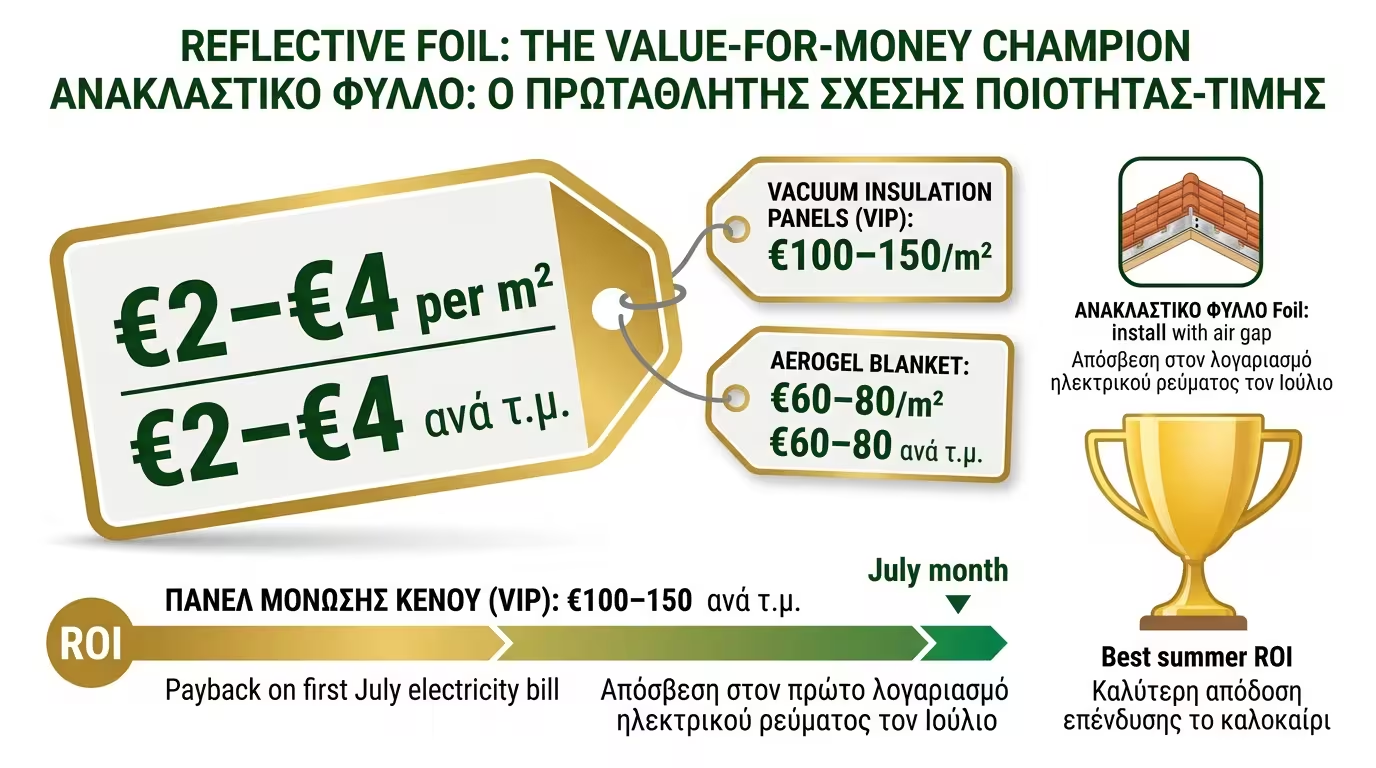
Reflective insulation - the cost-performance champion

Here, things are clear-cut. Unlike the other "exotic" materials in this category, reflective insulation (aluminium membranes) is extremely affordable (often under €2-€4 per square metre).

When correctly installed (with the essential air gap) under tiled roofs, it delivers perhaps the greatest and fastest ROI of any material in summer. It pays for itself literally on the first electricity bill in July!

4. The 10x10 Model Experiment: Basement Ceiling Insulation

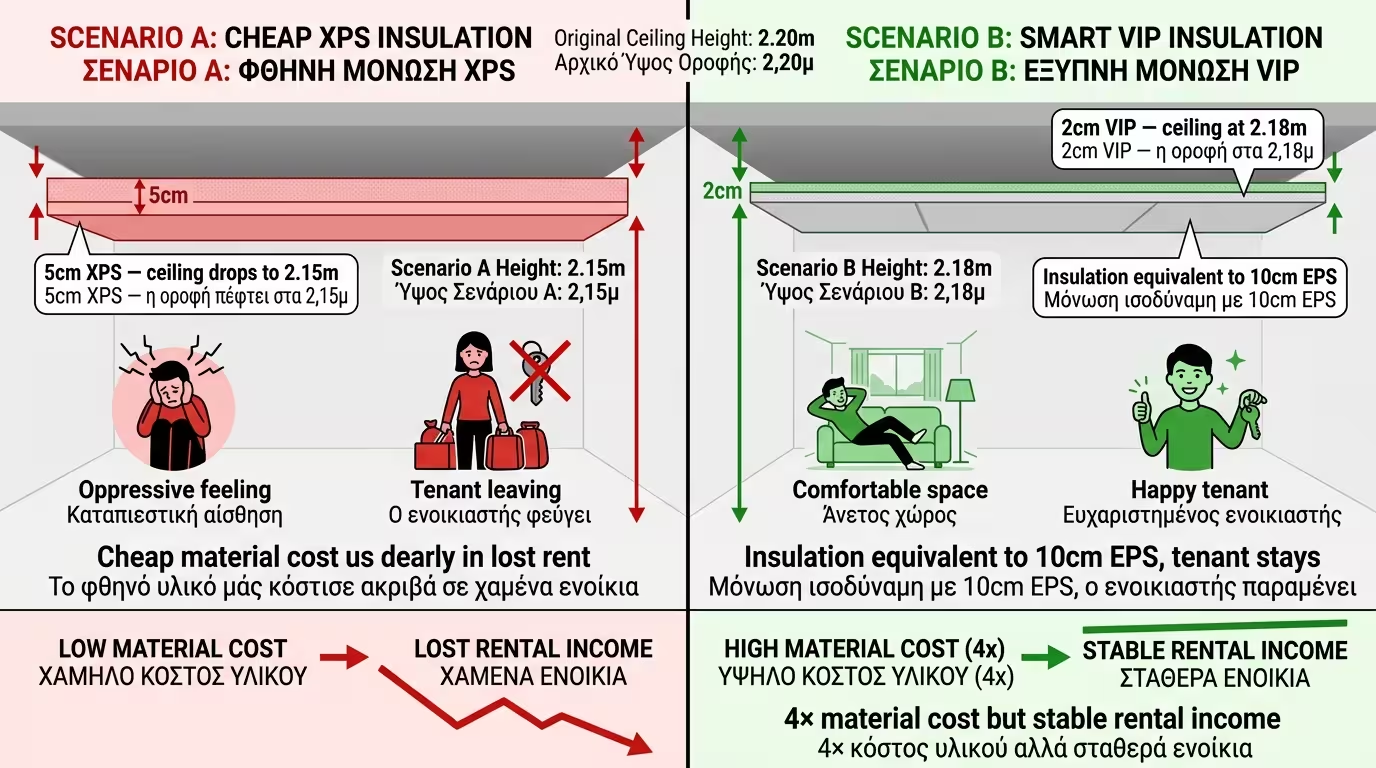
We want to insulate the ceiling of a low-ceiling basement (height 2.20m) that we intend to rent out as a dwelling. We cannot go below 2.15m or it would feel claustrophobic.

10x10 Model - low-ceiling basement insulation VIP vs XPS

❌ Scenario A: Extruded Polystyrene 5cm (Budget Solution)

The material is cheap, but the ceiling drops to 2.15m. The space feels oppressive. Since 5cm is not fully adequate, the tenant pays heavily for electricity and eventually moves out. The cheap material cost us dearly in lost rent.

✅ Scenario B: VIP Panels 2cm (Premium Solution)

We pay 4 times more. The ceiling drops by a negligible amount (to 2.18m). The space remains comfortable and "breathes", the insulation is equivalent to 10cm of polystyrene and the tenant is delighted. The extra money we spent on the material is recouped through the stability of the rental income.

💡 Final Conclusion: Do not dismiss high-tech materials simply by looking at the price tag. If you are building a typical house with plenty of space, stick to conventional materials (polystyrene, rock wool, etc.). If, however, you face spatial constraints, architectural requirements or specific cooling challenges, high-tech materials are not expensive. They are simply the "surgical" solutions that make the impossible, possible.

Related Articles

Insulation Materials: The Complete Selection & Characteristics Guide

Return to category.

Go to category

Preview