
Facade Impact Resistance: The Secret of Double Mesh Reinforcement

Let's be honest: external thermal insulation (ETICS) is, at its core, a soft material (polystyrene) covered by a very thin layer of adhesive and render (a total thickness of just 3 to 5mm).

This thin "crust" is more than sufficient to withstand wind, sun, rain and thermal expansion. But what happens when the system receives a strong, point-load mechanical impact? A football, a bicycle handlebar, a garden-chair armrest or even heavy hailstones can crack this crust and dent the soft polystyrene underneath.

1. The "High-Risk Zone"

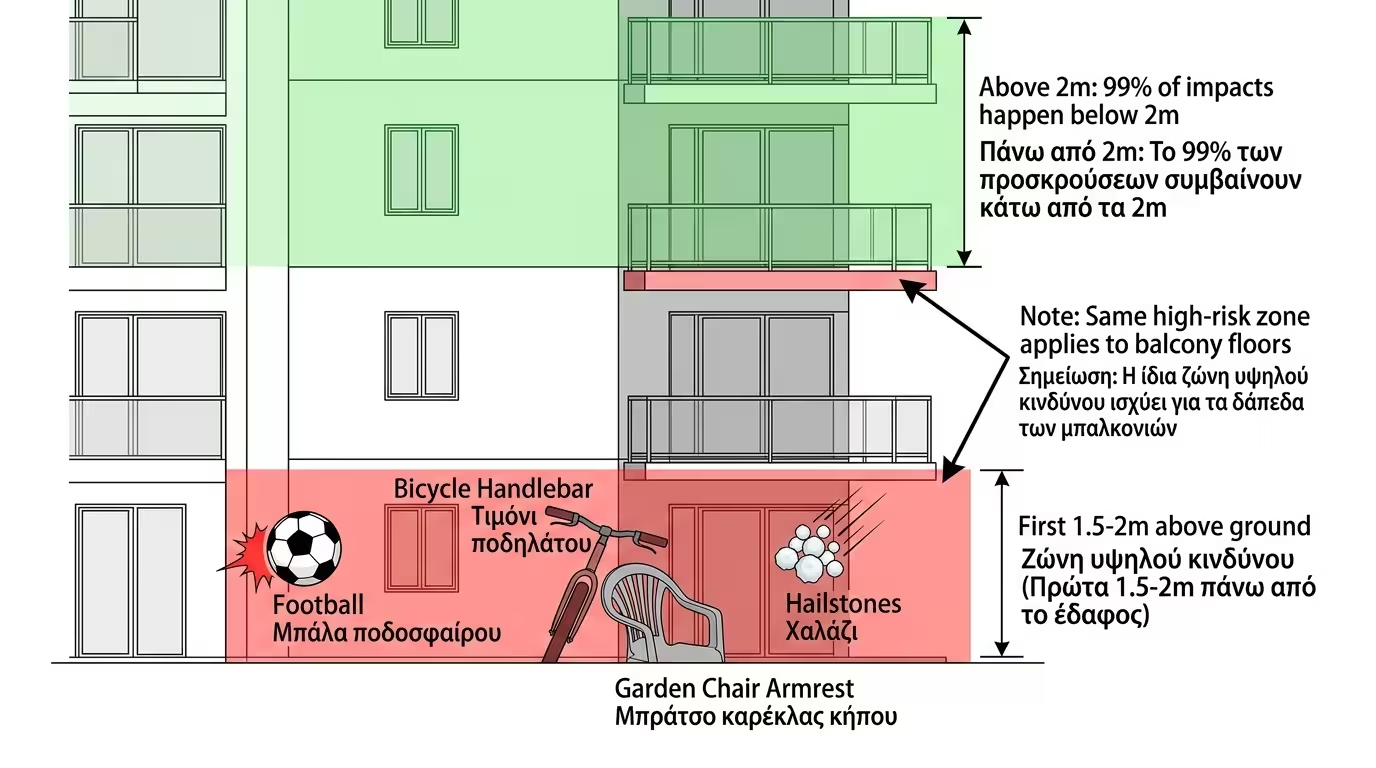
Not all of the house is equally at risk. A ball or tool will rarely hit the wall on the 2nd floor. The danger zone is the first 1.5 to 2 metres above ground (or above your balcony floor). That is where 99% of mechanical impacts occur.

If you leave this zone with the standard, basic reinforcement, it is only a matter of time before you see small (or large) dents in your render. And once the render "breaks", rainwater will find its way inside.

High-risk zone - first 1.5-2 metres from ground level

2. The Solution: Double Reinforcement or "Panzer" Mesh

To make the thermal facade exceptionally impact-resistant (High Impact Resistance), we apply reinforced armouring in the high-risk zone. There are two ways to do this:

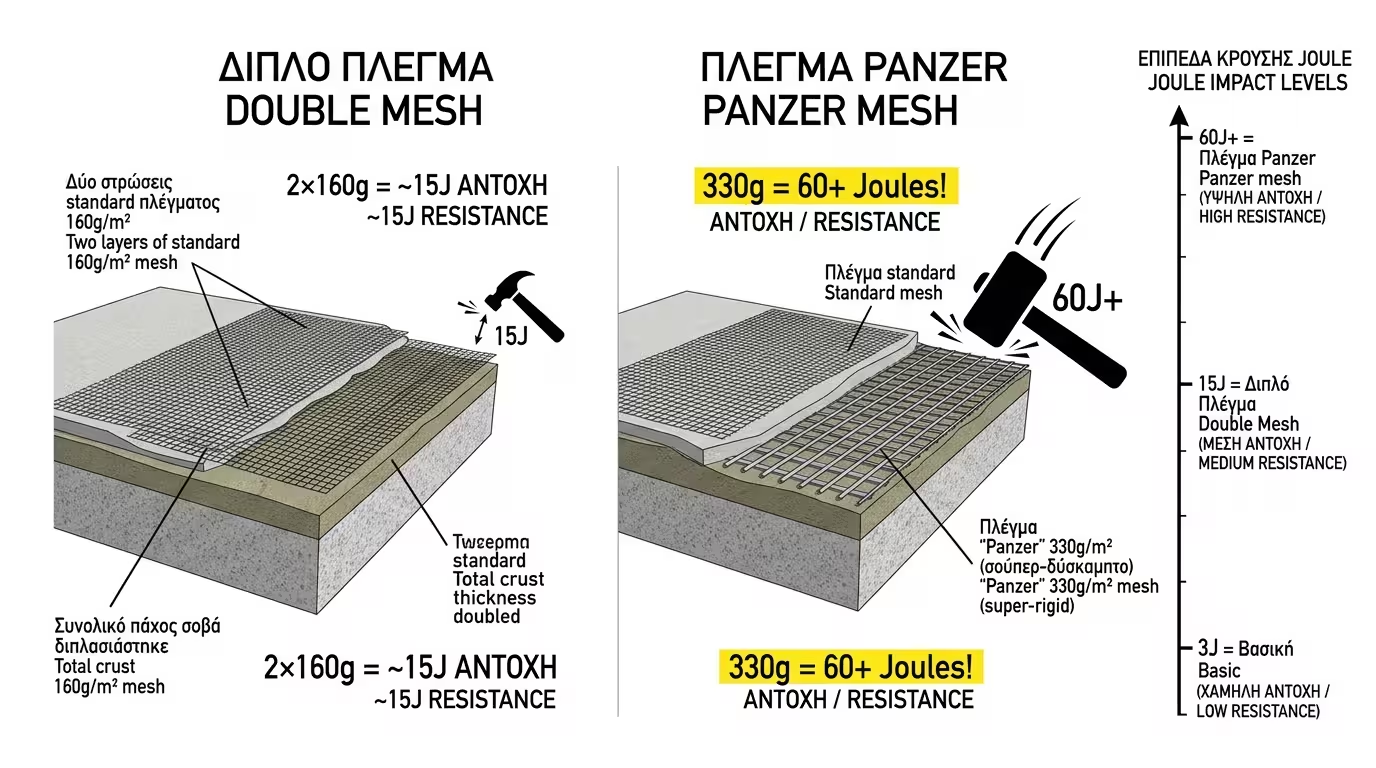
Double mesh vs Panzer mesh - resistance comparison

🔄 Double Fibreglass Mesh

Instead of applying one layer of adhesive and one mesh (as he does for the rest of the building), the worker performs the process twice. He spreads adhesive, embeds the first mesh, lets it "pull" (set), then adds another layer of adhesive and a second mesh on top. This doubles the thickness and strength of the crust!
🛡️ Panzer Armour Mesh

Many manufacturers produce a special, super-reinforced fibreglass mesh. While standard mesh weighs about 160 grams per square metre, Panzer mesh weighs over 330g/m²! It is so hard and rigid that it is applied like real armour on the first 2 metres of the building, before being covered by the standard mesh.

With these methods, the wall's impact resistance rockets from 3 Joules (basic system) to 15 or even 60 Joules! Practically, you can kick the wall and your foot will hurt, without the render suffering the slightest scratch.

3. The 10x10 Model Experiment

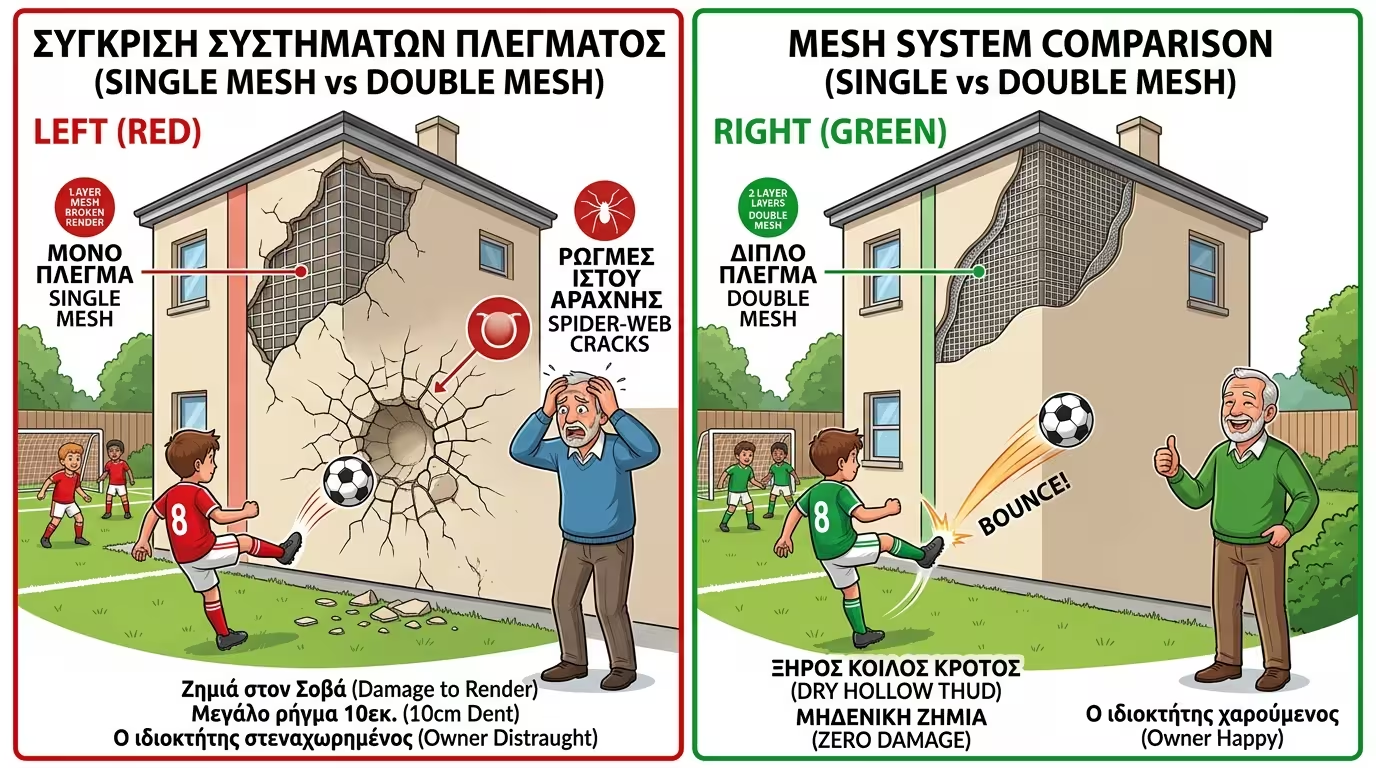
10x10 experiment - single mesh vs double mesh football impact

The kids are playing football in the yard. A powerful, "blind" shot ends up hitting the freshly rendered thermal facade wall at full force.

❌ Scenario A (Single Mesh Throughout)

The ball hits the wall. The thin render gives way inward, compressing the polystyrene. A characteristic, round dent 10cm in diameter remains, and the render around it has cracked (spider-web fracture). The homeowner tears his hair out.

✅ Scenario B (Double Mesh on the First 2 Metres)

We had the foresight to ask the contractor to apply double mesh around the entire ground floor (a minimal extra cost). The ball slams into the wall with force, there is a dry, "hollow" thud, and the ball bounces off. The wall has suffered absolutely nothing! The investment is saved.

The Final Conclusion: Adding double mesh or Panzer mesh at low points and on balconies adds only a few euros to the overall renovation cost. Yet it saves you from the constant frustration of patching and protects your property from everyday "abuse". Ask for it explicitly in the quote!

Related Articles

Application & Construction Details: Correct Installation Guide

Return to category.

Go to category

Preview