The 7 Most Common Contractor Mistakes in ETICS Installation - Inspection Checklist

You've chosen the best crew, bought the top-brand materials and decided on the right insulation thickness. Everything looks perfect, until 2-3 years later you see the external render filling with cracks (the notorious "spider web") or, worse, blistering.

External insulation does not forgive sloppiness. Every step requires religious adherence to specifications. If you are about to start work, print this list and use it as your own inspection checklist.

1. Board Installation Mistakes: Bonding, Joints & Interlocking

These are the 7 most common (and destructive) mistakes crews make when installing ETICS.

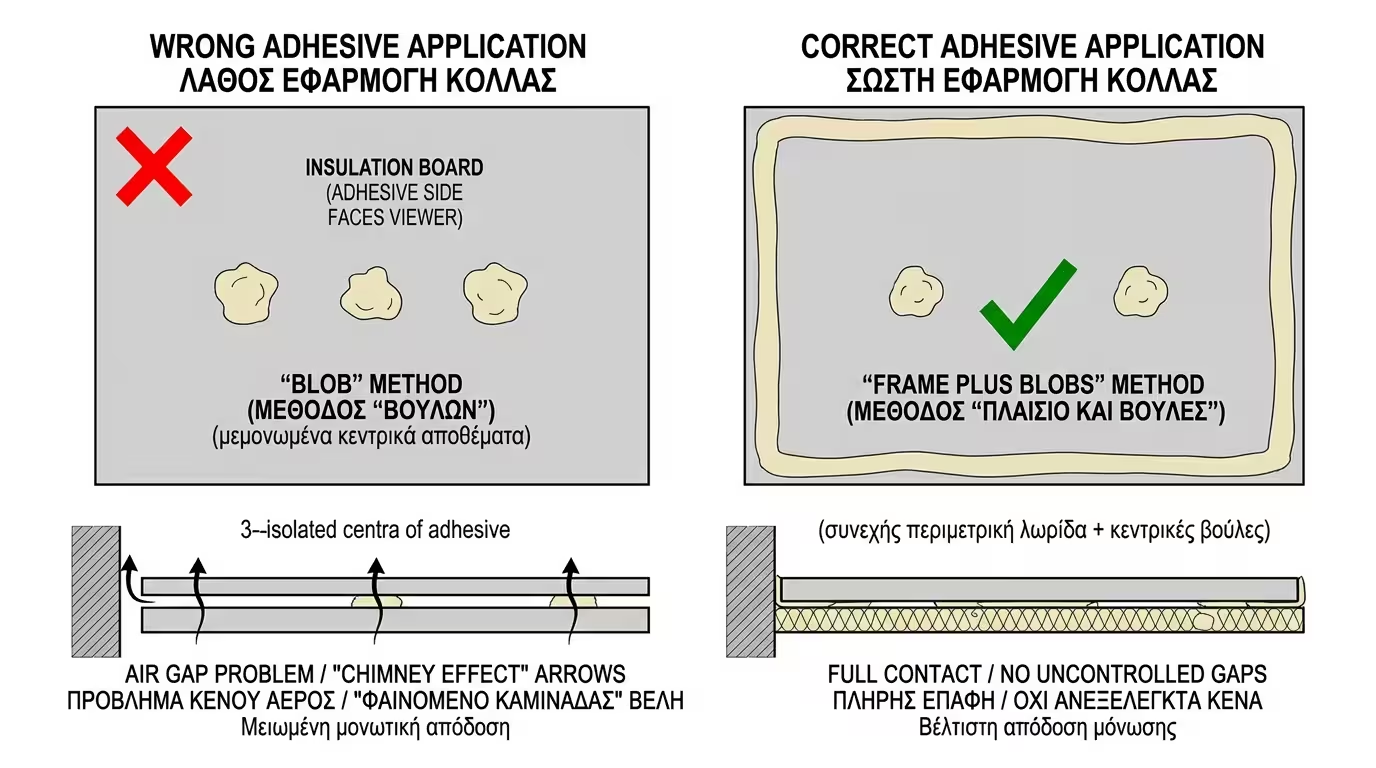
Wrong insulation board bonding - 'blob' method vs correct application

1️⃣ Wrong Board Bonding (The "Blob" Method)

Many crews, to save adhesive and time, place 3-4 "blobs" of adhesive in the centre of the board. This leaves an air gap around the perimeter behind the polystyrene. In case of fire or wind, the system acts like a chimney or peels off.

The correct way: Adhesive must be applied around all edges like a frame, plus 2-3 "blobs" in the centre. On a flat wall, over the entire surface with a notched trowel.
2️⃣ Filling Joints with Adhesive or Render

During installation, small gaps (joints) remain between boards. Adhesive is not an insulation material! Where adhesive fills the joints, a thermal bridge is created. Moisture will condensate and the render will crack, creating a visible grid of cracks.

The correct way: Gaps over 2mm must be filled exclusively with special low-expansion polyurethane foam or with "wedges" cut from the insulation itself.

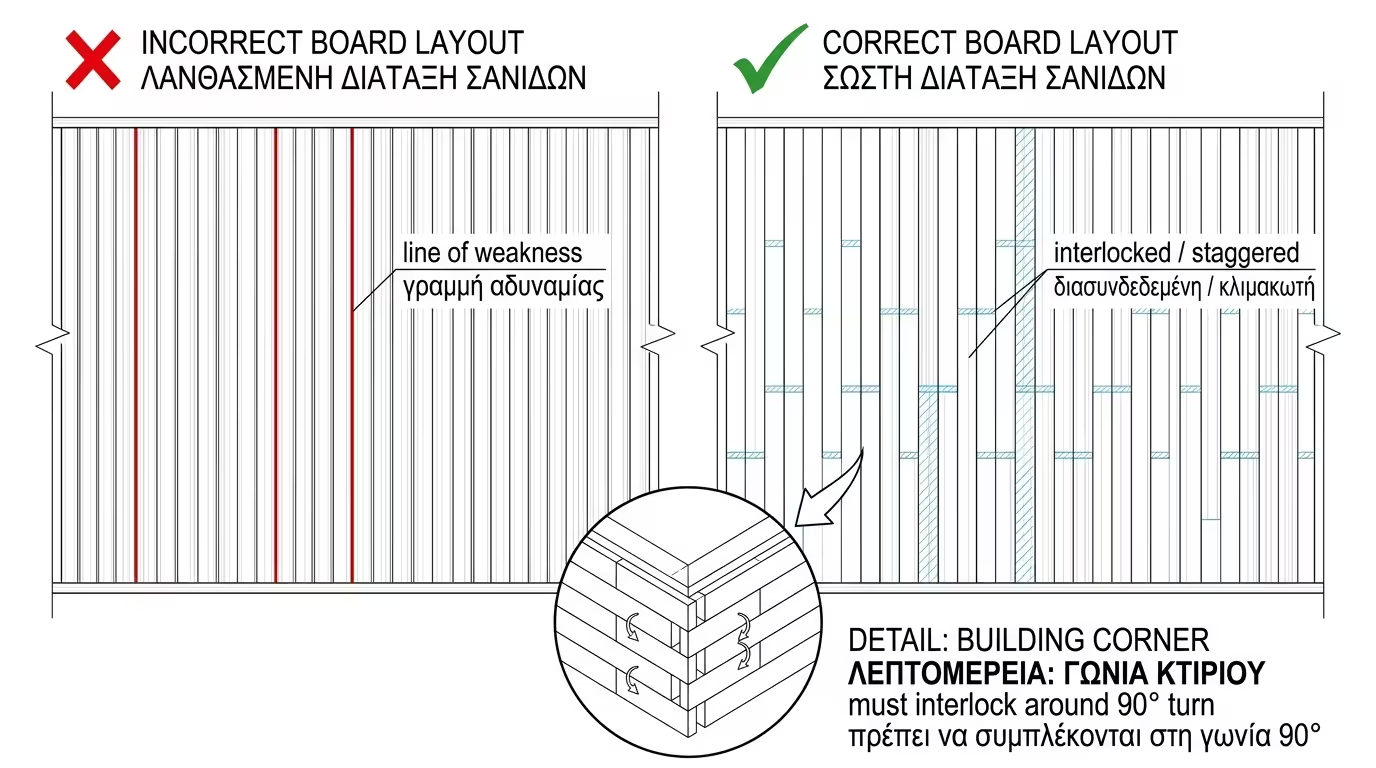
3️⃣ Wrong Board Interlock (Not Staggered)

Boards must never be vertically aligned (one joint above the other). This creates a huge, continuous line of weakness that will crack immediately.

The correct way: Boards are installed staggered (interlocked), just like bricks. The same staggered interlock must be applied at building corners.

Staggered installation (like bricks) is critical to avoid continuous lines of weakness that lead to cracking. The same staggered interlock must also be applied at building corners.

Correct staggered board layout vs wrong aligned joints

2. Opening Corner & Mesh Embedding Mistakes

The corners at openings (doors, windows) and the mesh embedding are the points that determine the system's longevity.

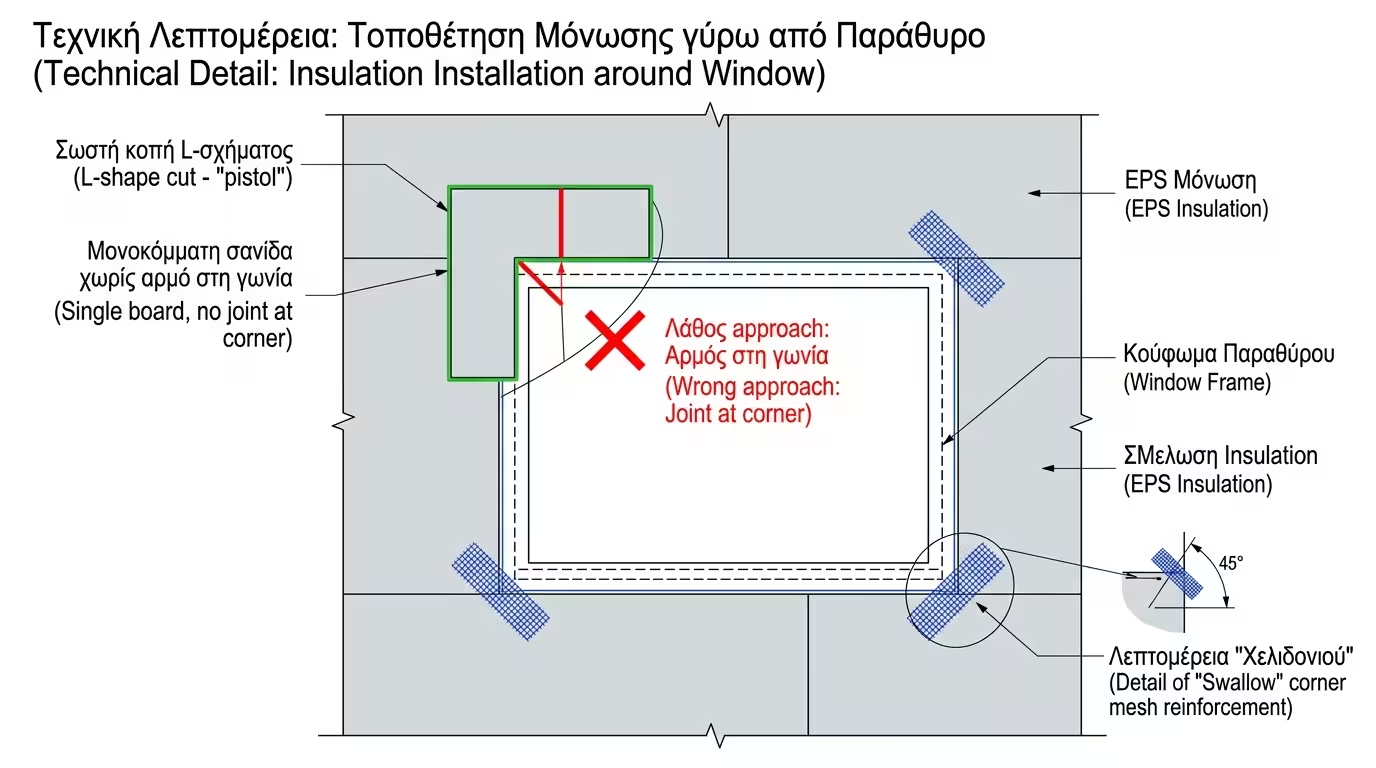
Correct board cuts at window corners - L-shaped cut

4️⃣ Wrong Cuts at Window Corners

Window corners receive the highest stresses. If the installer joins two boards exactly at the window corner, cracking is 100% guaranteed.

The correct way: The board is cut into an "L" (or pistol) shape. The board must "embrace" the corner in one piece, with no joint at that sensitive point.

5️⃣ Dry Mesh Embedding (The Ultimate Crime)

The fibreglass mesh gives the ETICS its strength. The worst mistake is for the installer to nail the mesh dry on the polystyrene and then render over it. The render will peel off with a simple knock.

The correct way: First, a base coat layer is spread. Then the mesh is pressed (embedded) into the wet material in the outer 1/3 ("wet-on-wet" method).

3. Diagonal Reinforcement & Mechanical Fixing Mistakes

The final details that make the difference between a system that lasts decades and one that starts failing within a few years.

Correct ETICS anchor installation and mechanical fixings

6️⃣ Missing Diagonal Reinforcement ("Swallows")

Even if the board is L-cut, window corners need additional reinforcement because all stresses concentrate there.

The correct way: Small rectangular mesh pieces ("swallows") are placed diagonally (at 45°) at every window/door corner. If you don't see them being installed, stop the work!

7️⃣ Anchors Before the Adhesive Cures

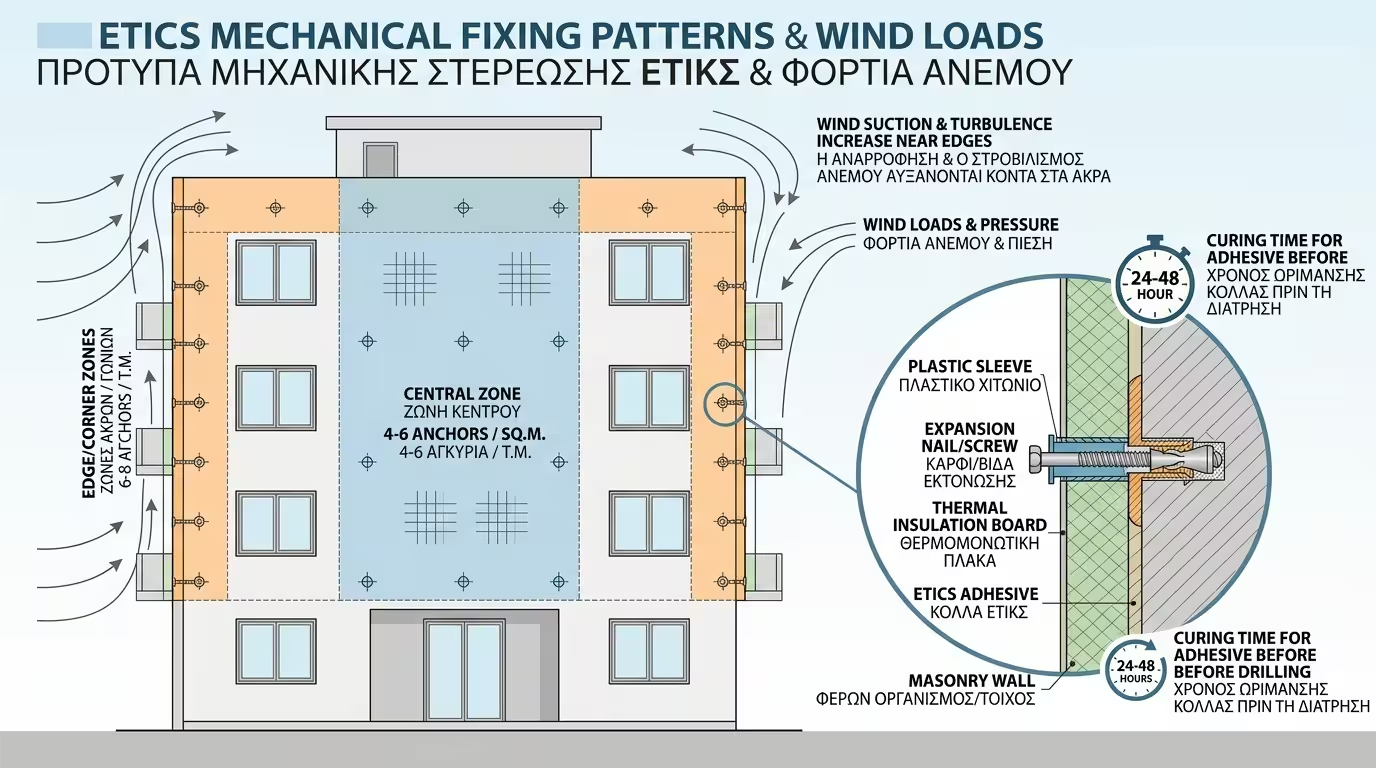
Anchors are the final anchor. If the crew bonds the boards and immediately starts drilling, the vibration will destroy the fresh adhesive. The board will effectively debond internally.

The correct way: At least 24-48 hours must pass (depending on weather) before drilling. The correct number of anchors per sq.m. with emphasis on building edges - where wind pressure is double.

⚠️ Rule: External insulation does not forgive a single omission. Print this 7-mistake list and check every stage before allowing the crew to proceed to the next. Prevention costs very little - remediation costs the entire new system.

Related Articles

Insulation Systems: Complete Solutions for Every Building

Return to category.

Go to category

Preview