🔧 Maintenance Cost
Cheap materials wear down quickly from the Greek sun (UV radiation) and thermal expansion. In 3 to 5 years they start cracking. You will need to call a worker again, pay daily wages for "patching" and buy new materials.
When you research the market to insulate your house, your brain instinctively focuses on one number only: the final price at the bottom of the quote. It is perfectly logical. But in construction materials, the initial purchase price is only the tip of the iceberg.
Engineers and economists never look at the initial price. They look at the Lifecycle Cost (LCC). What does this mean? It means the real cost of insulation is not what you pay today, but the sum of expenses you will incur over the next 20 or 30 years.
Let us suppose you choose a very cheap, inferior insulation material or a cheap acrylic coating for your roof. What does the €1,000 quote not tell you?
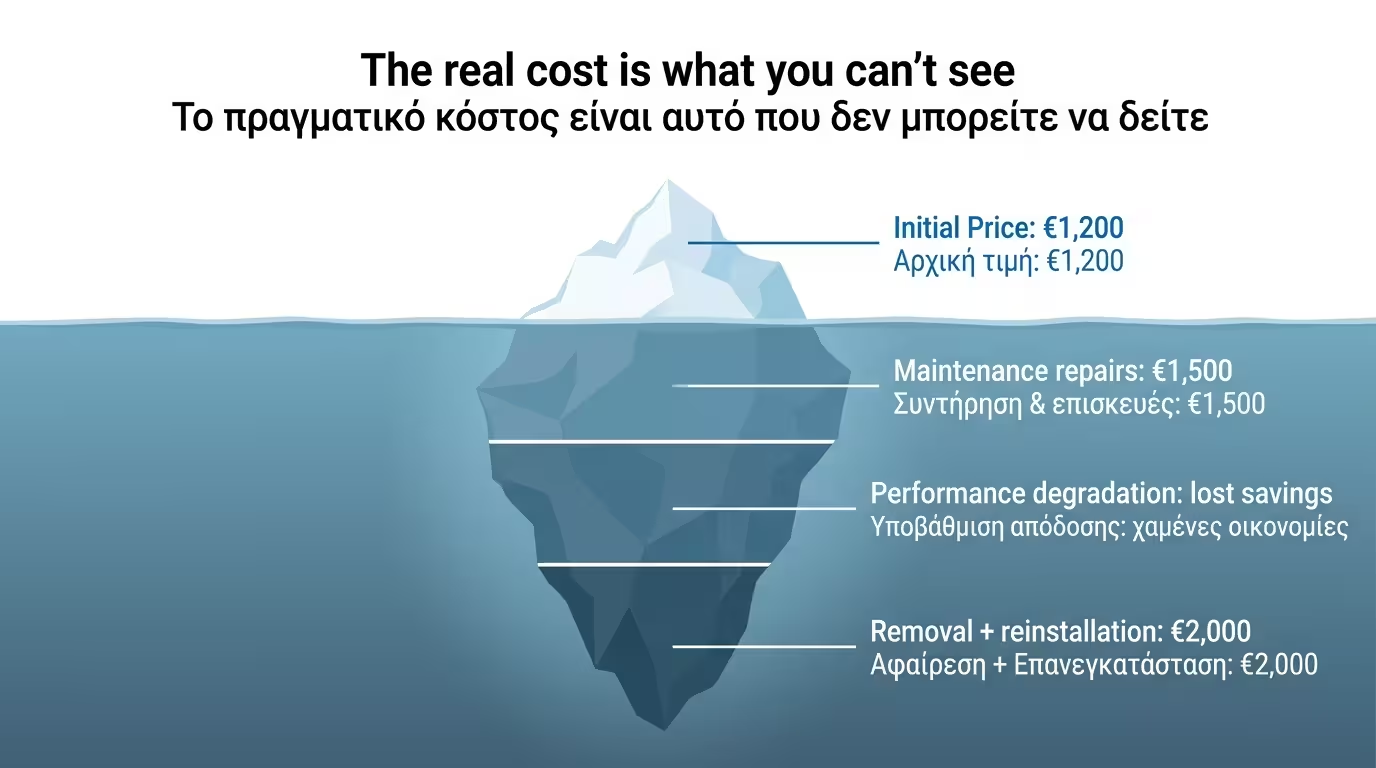
Cheap materials wear down quickly from the Greek sun (UV radiation) and thermal expansion. In 3 to 5 years they start cracking. You will need to call a worker again, pay daily wages for "patching" and buy new materials.
A cheap white polystyrene (EPS) of very low density or a poor-quality glass wool may "settle" or absorb moisture over the years. If it absorbs moisture, its U-Value is destroyed. You think you have insulation, but in reality you are burning the same money on oil again!
When the cheap material is completely destroyed in 10 years, you will not just pay to install new material. You will pay labour to remove the old, money for waste skips, and of course new scaffolding. Removal cost is often higher than the original installation!
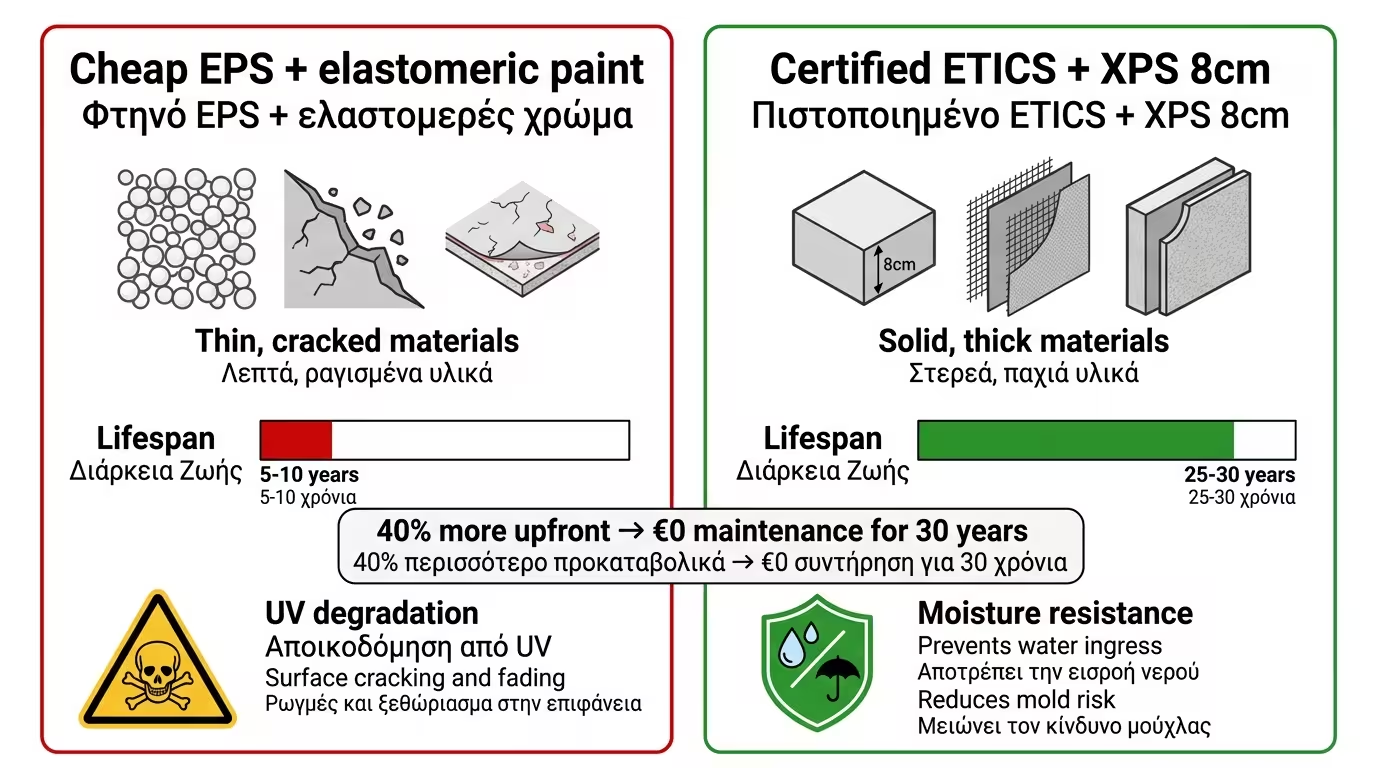
Conversely, a certified ETICS thermal facade system from a top manufacturer or a roof insulation with extruded polystyrene (XPS) and polyurethane membranes may cost 40% more initially.
However, their lifespan exceeds 25 to 30 years with zero maintenance. They maintain their thermal properties (they do not absorb water) and require no removal.
Let us take the roof (100 m²) of our virtual house and look at the bill over 20 years.
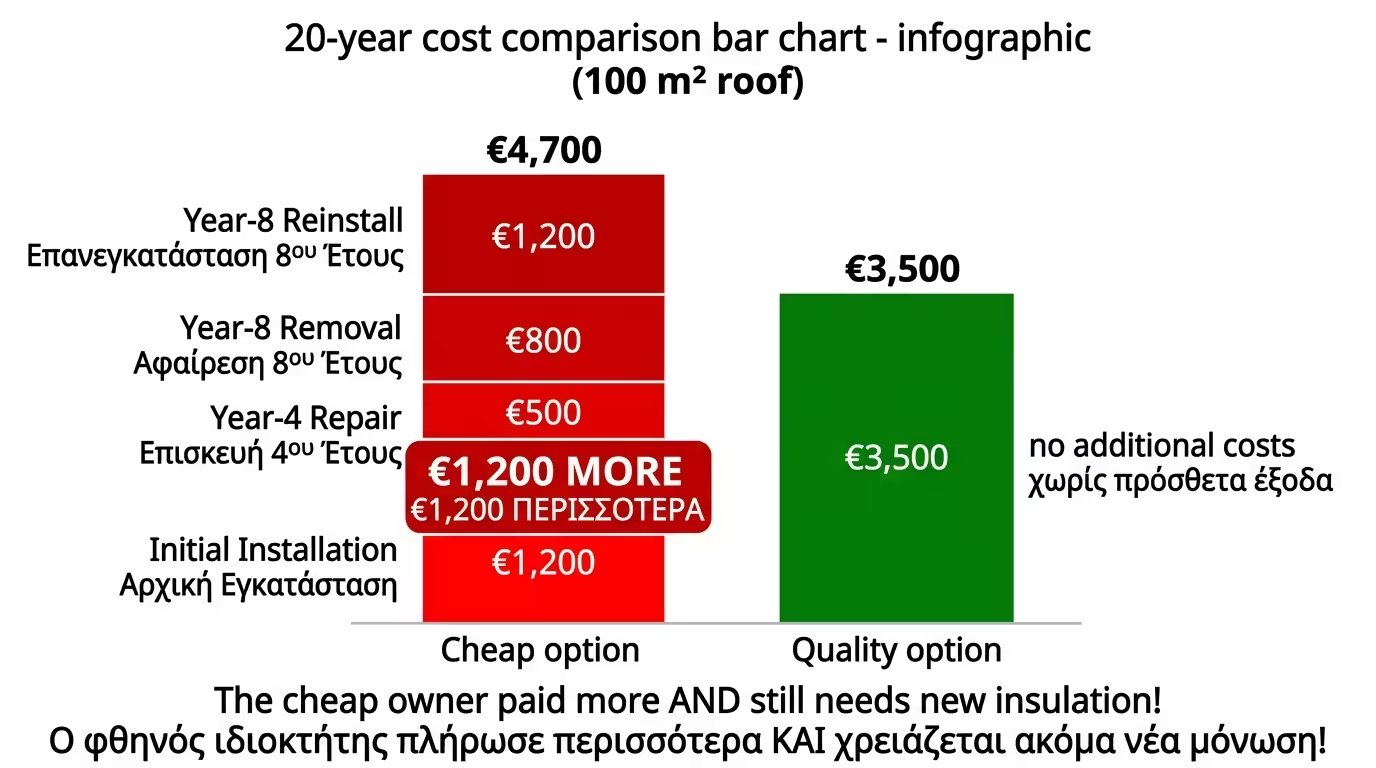
We find a worker who applies a simple, cheap elastomeric paint on the roof. We pay €1,200. Perfect! But in 4 years the paint cracks and lets in water. We pay another €500 for patching. At 8 years it is completely destroyed. We pay €800 for removal and another €1,200 to re-apply.
Total 20-Year Cost: 1,200 + 1,500 + 800 + 1,200 = €4,700 (plus the permanent headache and ceiling damage).
We install a complete, heavy inverted insulation system (8cm XPS, geotextile, gravel or paving slabs). It costs €3,500 and we "hurt" at the moment of payment. But this system is fully protected from sun and weather. 20 years pass without ever dealing with it again, and the U-Value remains stable saving us thousands in electricity.
Total 20-Year Cost: €3,500.
📊 The Result: The cheap scenario owner paid €1,200 more, suffered from damp, and at the end of 20 years... is looking for insulation again!
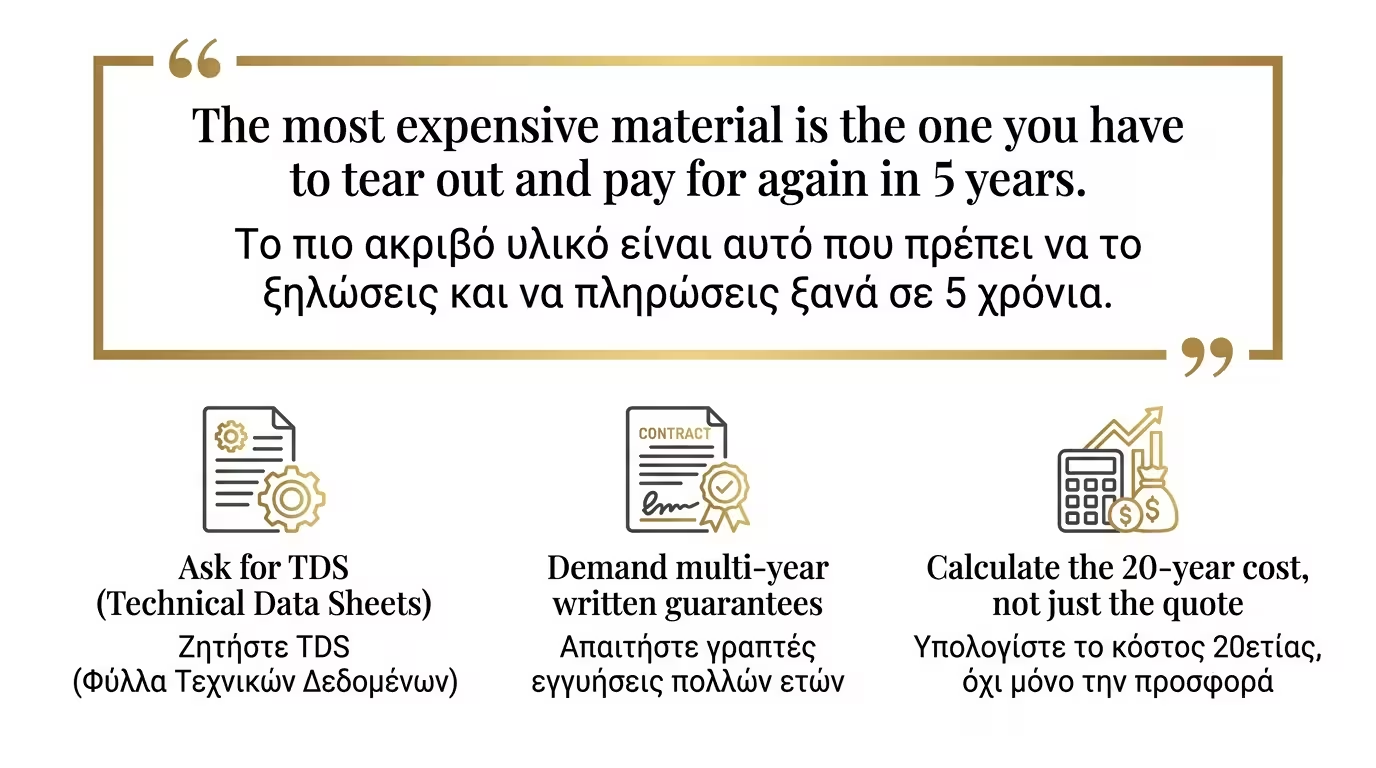
When comparing quotes from contractors, do not just look at the number in the bottom right corner. Ask for Technical Data Sheets (TDS), request multi-year written guarantees, and remember the golden rule of construction: "The most expensive material is the one you have to tear out and pay for again in 5 years."
Return to category.
Go to categoryReturn to the central guide.
Go to guide