
Fire Protection Study: When Is It Mandatory by Law and What Does It Include?

Fire safety is not a matter of the contractor's "experience" or "common sense." It obeys strict mathematical calculations and legal regulations. The document that unites physics with the law is called the Fire Protection Study.

It is, essentially, your building's contingency plan in case a fire breaks out. Without it, no public building, business or new apartment block can operate legally.

When Is It Legally Mandatory?

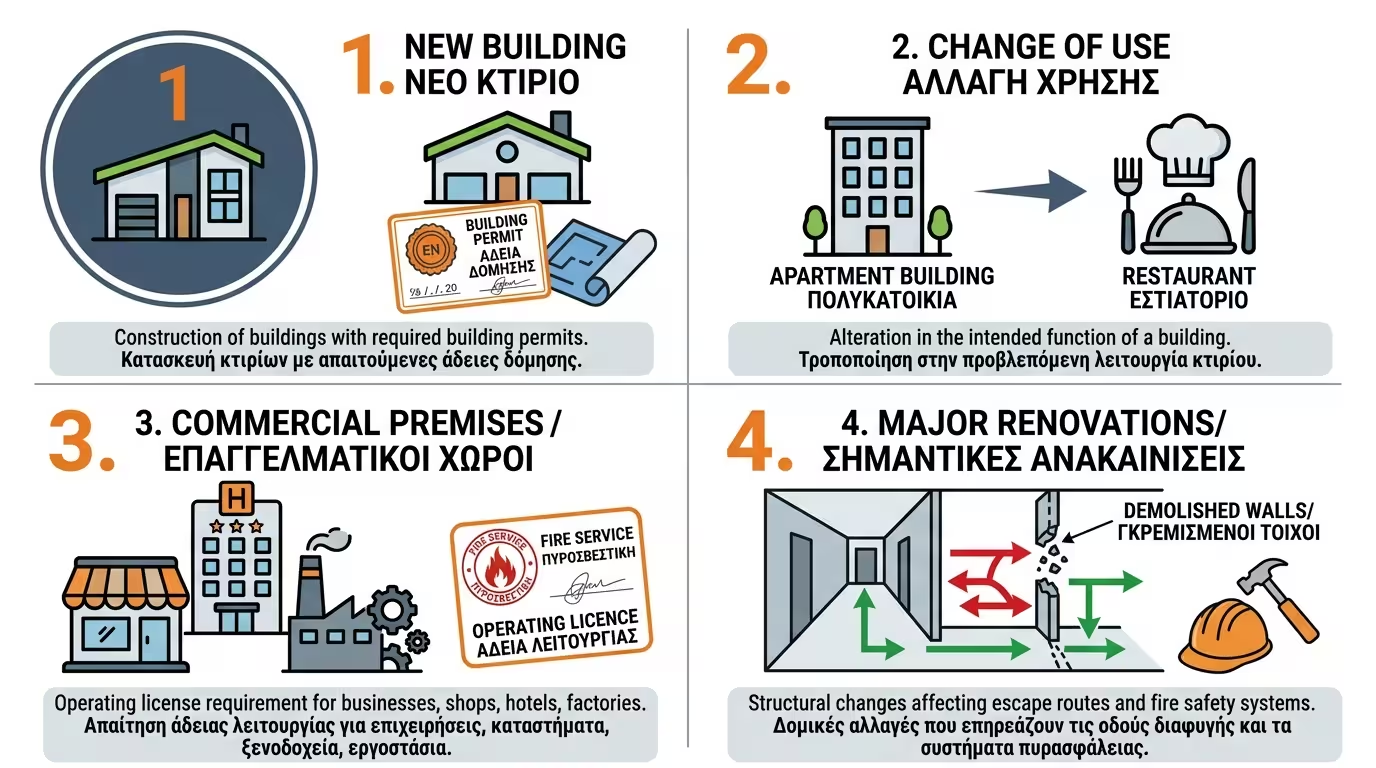
The law (and the Fire Service) requires an approved Fire Protection Study in the following cases:

1. Every New Building: Whether you're constructing a small holiday cottage or a skyscraper, the planning authority will not issue a building permit without the study.

2. Change of Use: If you buy an old apartment and want to convert it into a restaurant, tutorial school or clinic, the requirements change dramatically. You need a new study based on the new use.

3. All Commercial Premises: Shops, hotels, factories, warehouses, places of public assembly. To obtain your operating licence from the local authority, a prerequisite is the Fire Service's stamp on the study.

4. Major Renovations: If you demolish walls and change the escape routes in an existing building, the old study is invalidated and an updated one is required.

4 cases when a Fire Protection Study is mandatory

The 2 "Volumes" of the Study (What Exactly Does It Include?)

The Fire Protection Study is not a simple piece of paper. It is usually compiled by a team of engineers (Architects/Civil Engineers and Mechanical/Electrical Engineers) and is divided into two substantial volumes.

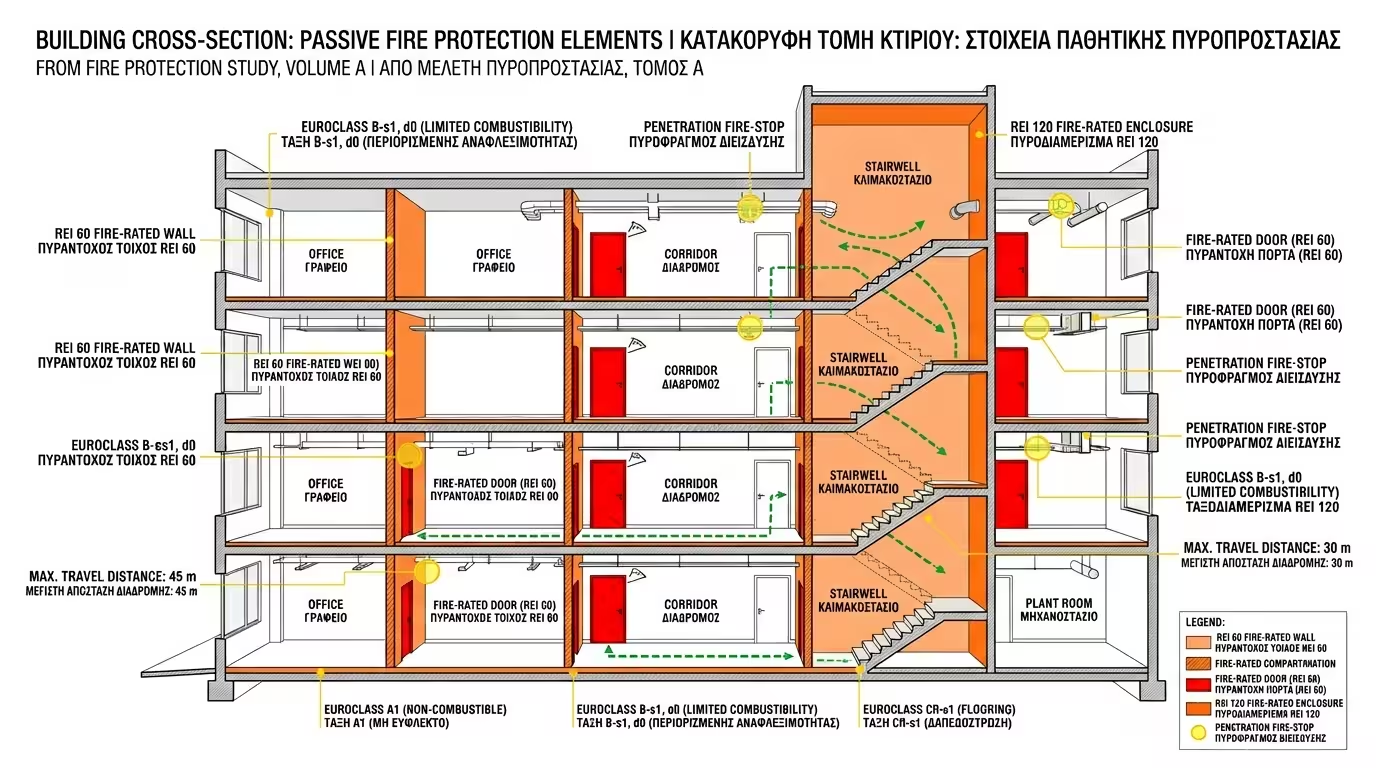
A. Passive Fire Protection Volume (The Architecture Map): This is where the building's "bones" are designed. The engineer studies and maps: Escape Routes (calculating the maximum distance to the exit, e.g. 30 or 45 metres), Compartmentation (dividing the building into safe "boxes" with REI 60, 120 ratings etc.) and Materials (specifying the permitted Euroclass categories for floors, walls and insulation).

Volume A: Passive Fire Protection - escape routes, compartmentation, materials

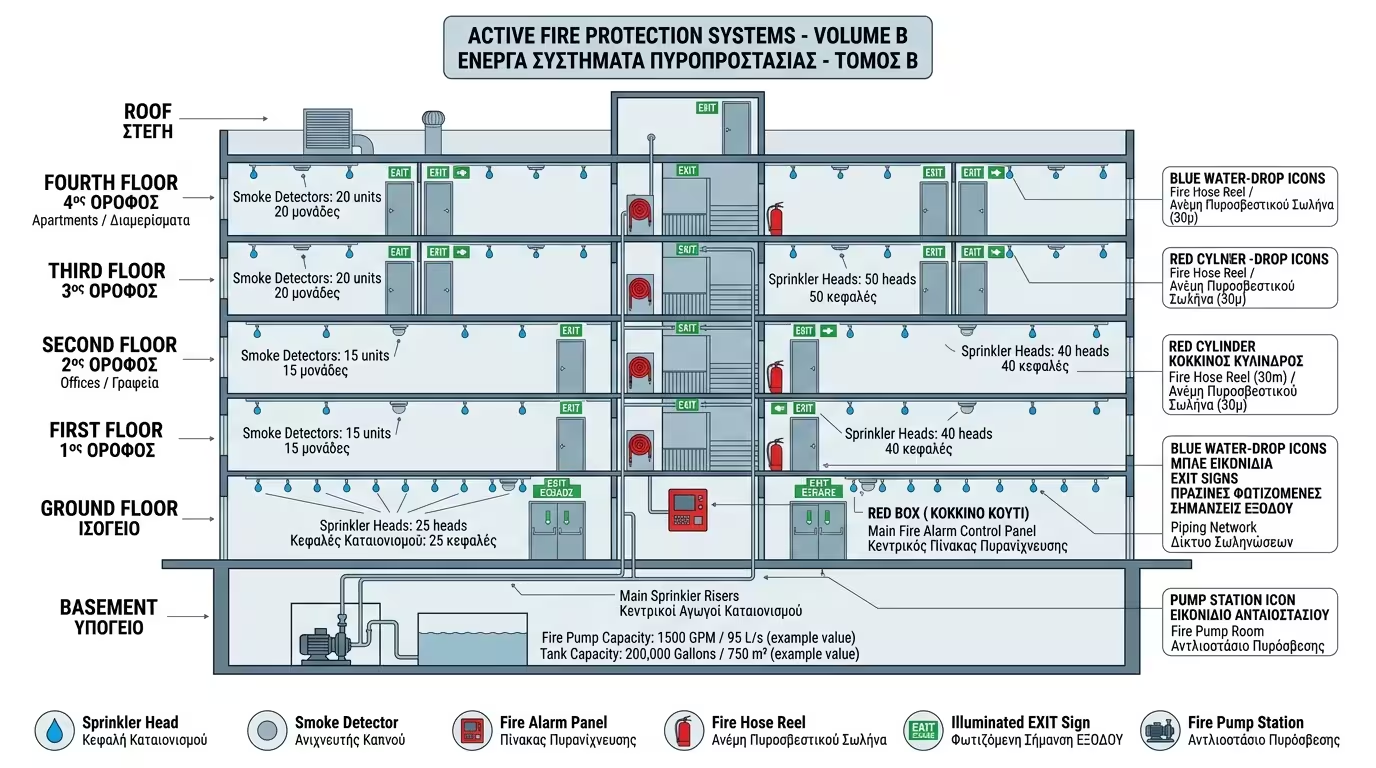
B. Active Fire Protection Volume (The Machinery Map): This is where the "weapons" that will fight the fire are designed. Depending on the risk and the size of the building, the mechanical engineer calculates: the number and capacity of extinguishers, the fire detection network (where smoke detectors and sirens will go), emergency lighting and EXIT signs (the green lights), as well as heavy systems: permanent water supply network (fire hose reels), water tanks, pump stations and automatic Sprinkler systems (for large or underground spaces).

Volume B: Active Fire Protection - extinguishers, detection, sprinklers

The Experiment in Our Model (The New Gym in the 4×4)

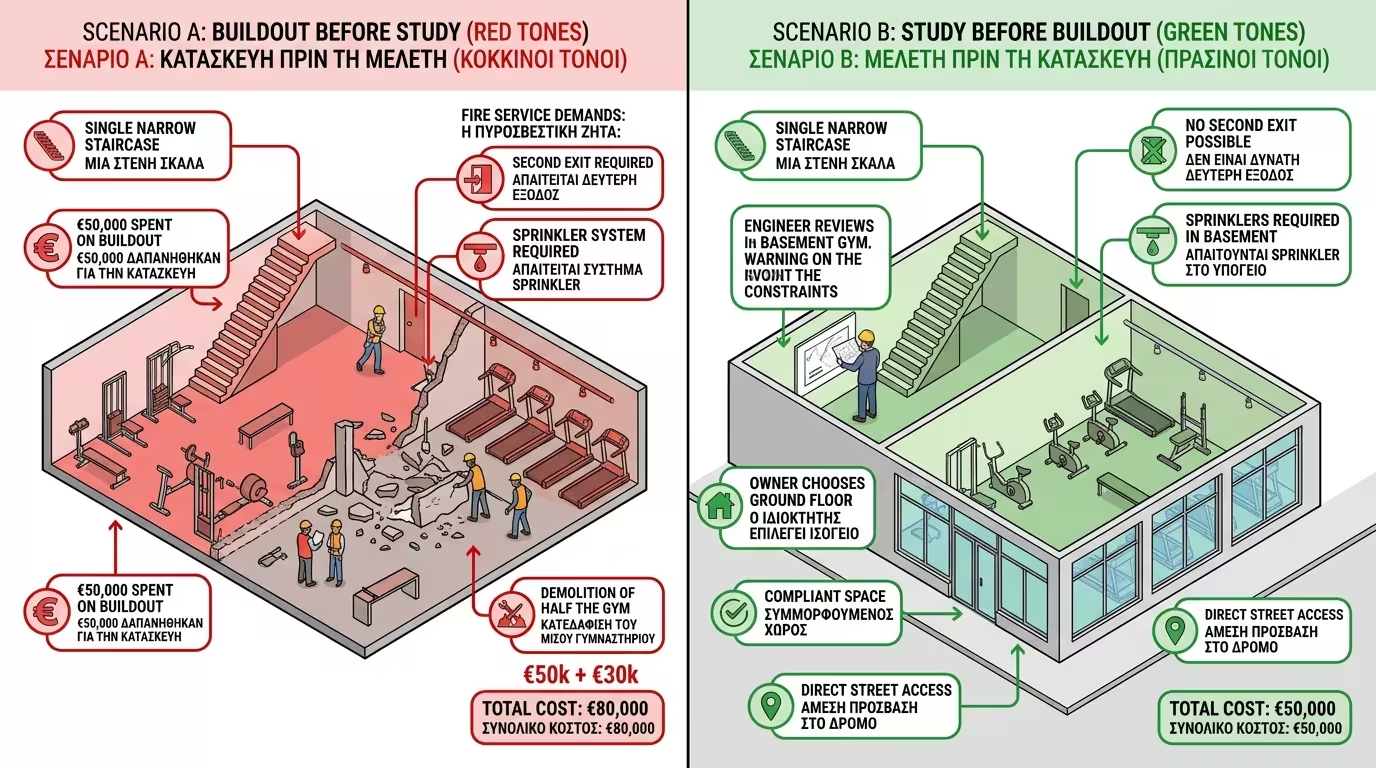
Experiment: basement gym 300 m² - without study vs with study from the start

We rent a 300 m² basement space to open a modern gym. It has only one narrow staircase to the street.

❌ Scenario A (Build first, ask later)

We bring in the contractor. We spend €50,000 on plasterboard, mirrors and equipment. We go to the Fire Service for the licence. The Officer looks at the floor plan and says: "A place of public assembly in a basement with only one exit? Prohibited. You need a mandatory second emergency exit and a Sprinkler system." Disaster. To build a second staircase and install water tanks, we have to demolish half the gym and spend another €30,000.

✅ Scenario B (The study comes first)

Before even renting the space, we pay an Engineer. They prepare the Fire Protection Study. They warn us upfront: "You'll need a second staircase and Sprinklers. The cost will be high." Seeing the real cost and legal requirements, we decide not to rent this basement and find a ground-floor space that meets the specifications with far less expense. The study saved us from financial disaster!

Final Takeaway: The Fire Protection Study is not "yet another bureaucratic piece of paper." It is the foundation of your safety and your budget. We don't drive a single screw into a commercial building until the engineer has approved the study!

Related Articles

Fire Protection: Passive Safety & Building Protection

Return to category.

Go to category

Preview