🥄 The Everyday Example
You leave a metal spoon in a pot of hot soup. Within minutes the handle burns, even though it does not touch the soup. The heat travelled through the metal mass (from molecule to molecule).
Heat in nature obeys an inviolable, "lazy" rule: It always travels from hot to cold, trying to equalise temperature. In winter your radiator's heat tries to escape to the cold environment, and in summer the sun's heat tries to penetrate your cool living room.
To make this journey, heat uses three different "vehicles": Conduction, Convection and Radiation. A truly energy-efficient building is designed to block all three. Let us see how each one works.
This is the most common way heat transfers through solids.
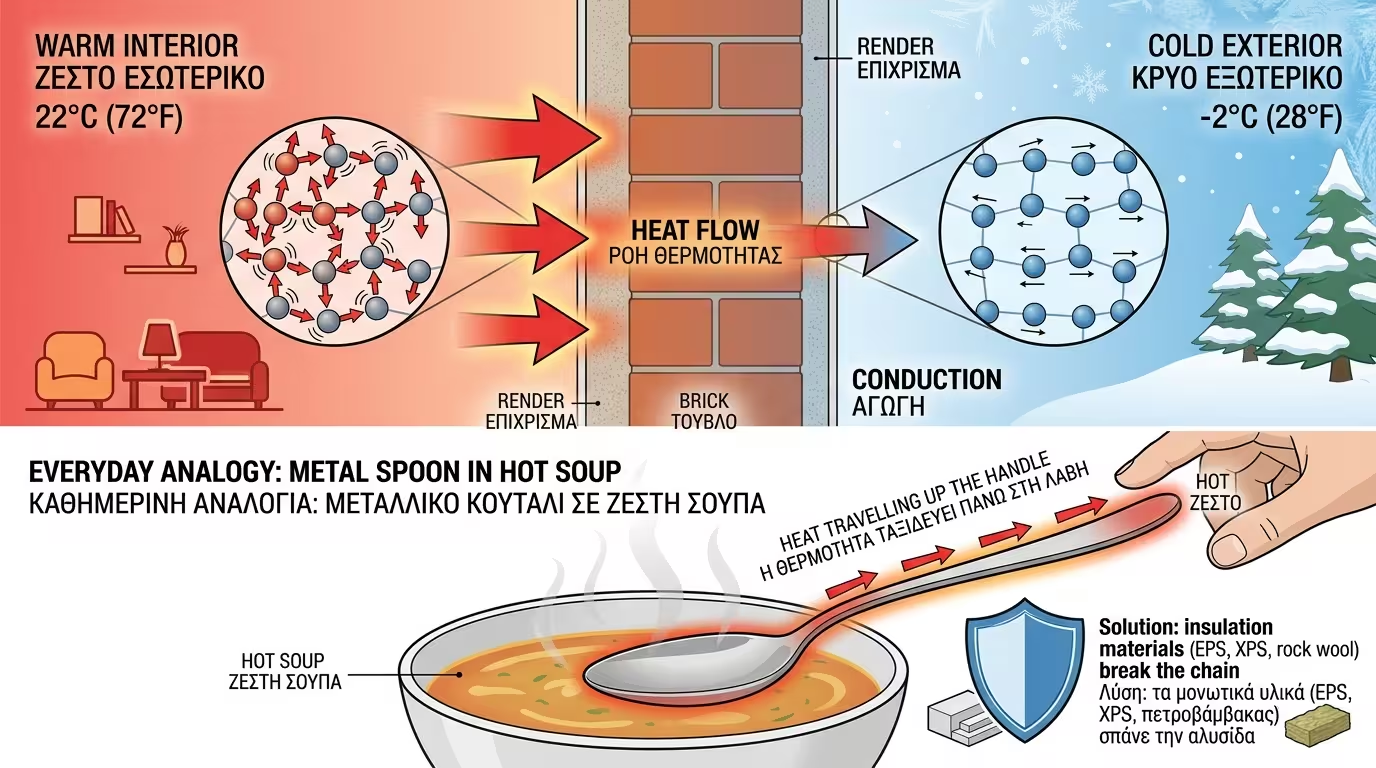
You leave a metal spoon in a pot of hot soup. Within minutes the handle burns, even though it does not touch the soup. The heat travelled through the metal mass (from molecule to molecule).
The living room heat warms the inner render, which transfers it to the brick, the brick to the outer render, and finally the heat "flies" into the cold winter air. The same happens with the bare concrete slab (the infamous thermal bridge).
With classic insulation materials (EPS, XPS, Rock Wool, Polyurethane). Because they are full of air (a poor conductor), they break the conduction chain.
Here heat does not travel through solids but through fluids (liquids or gases). Warm air is lighter than cold air and therefore tends to rise.
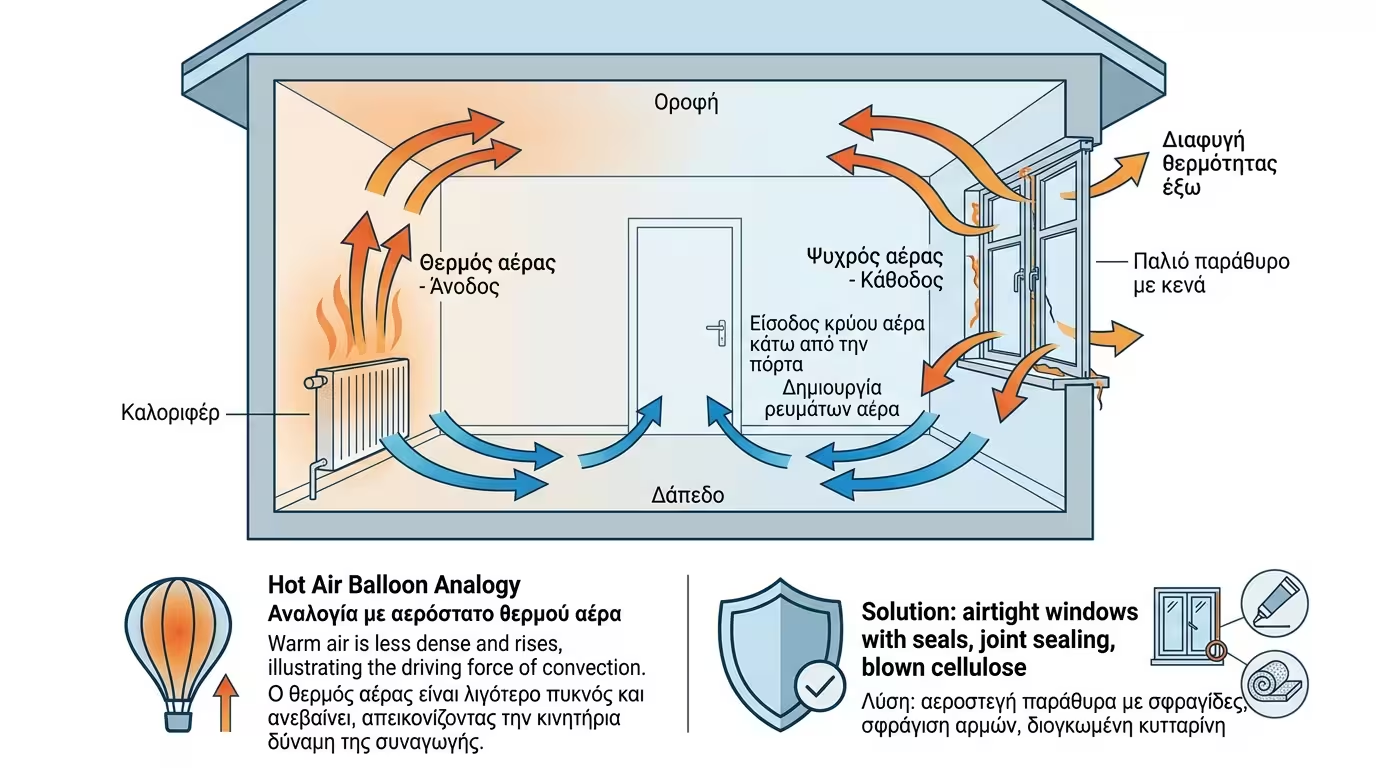
A hot air balloon. The burner heats the air, it becomes lighter and lifts the balloon up.
Convection is responsible for the "draughts" you feel. The radiator's warm air rises to the ceiling, finds gaps in old wooden windows or holes in the roof and escapes outside. Simultaneously, cold air enters under the door. This creates a continuous, freezing current inside the house.
With airtightness. Polystyrene is not enough. We need modern windows with seals, joint sealing with silicones, and materials without joins (like blown cellulose) in roofs to stop free air circulation.
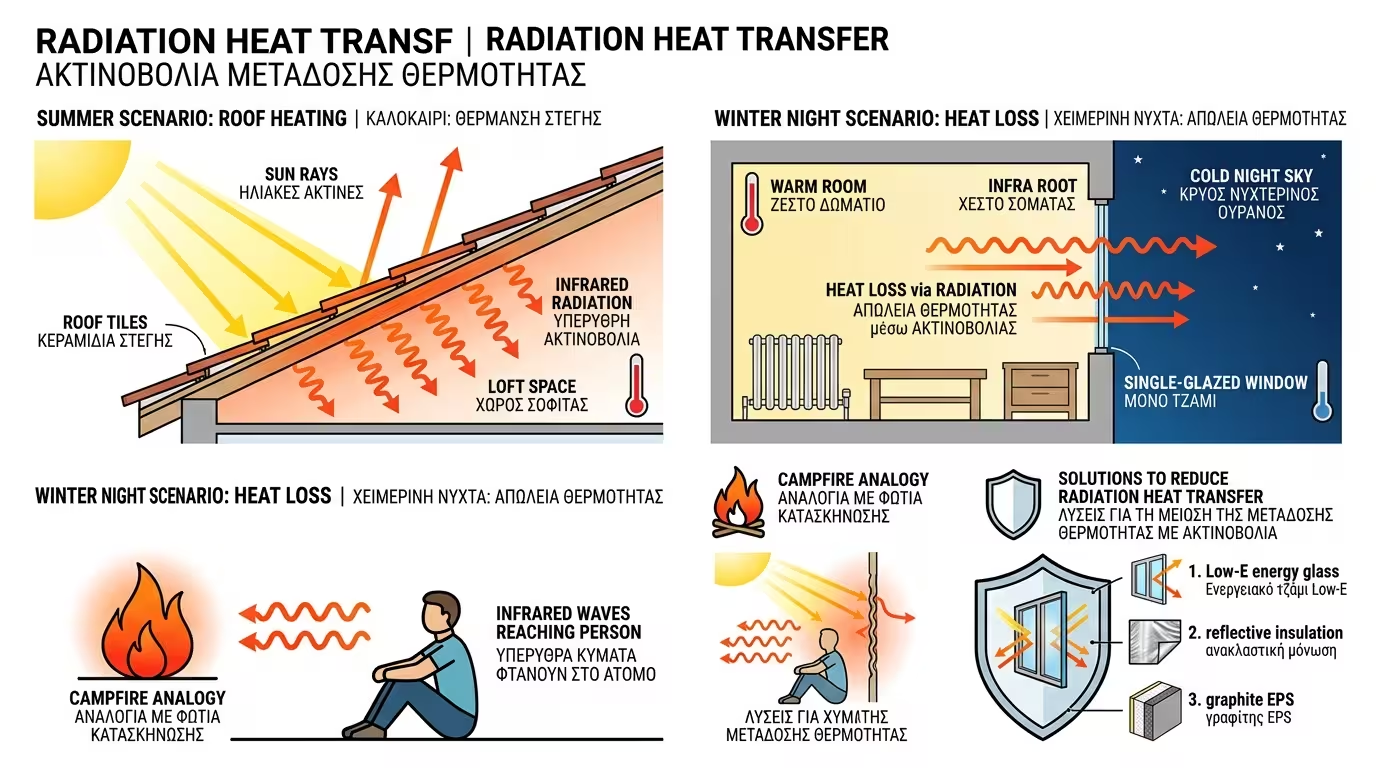
Radiation is the most insidious mode because it needs no material (neither solid nor air). It is transmitted via electromagnetic waves.
You stand next to an outdoor fire. Your face burns even though the air between you and the fire is freezing. You feel the infrared radiation of the flame. The same applies to the sun's heat.
In summer, solar radiation "cooks" the tiles and they radiate their heat into the loft. In winter (at night), the plain, clear window panes radiate your living room's heat towards the dark, cold sky.
Radiation does not understand thickness. It needs mirrors. Reflective Insulation on the roof, graphite particles in grey EPS, and above all Energy-Efficient Low-E Glass with an invisible metallic coating that reflects heat back into the room.
It is a freezing January night (-2°C) and we have 22°C in the living room. Our house (old construction) is under a coordinated attack from all 3 fronts:
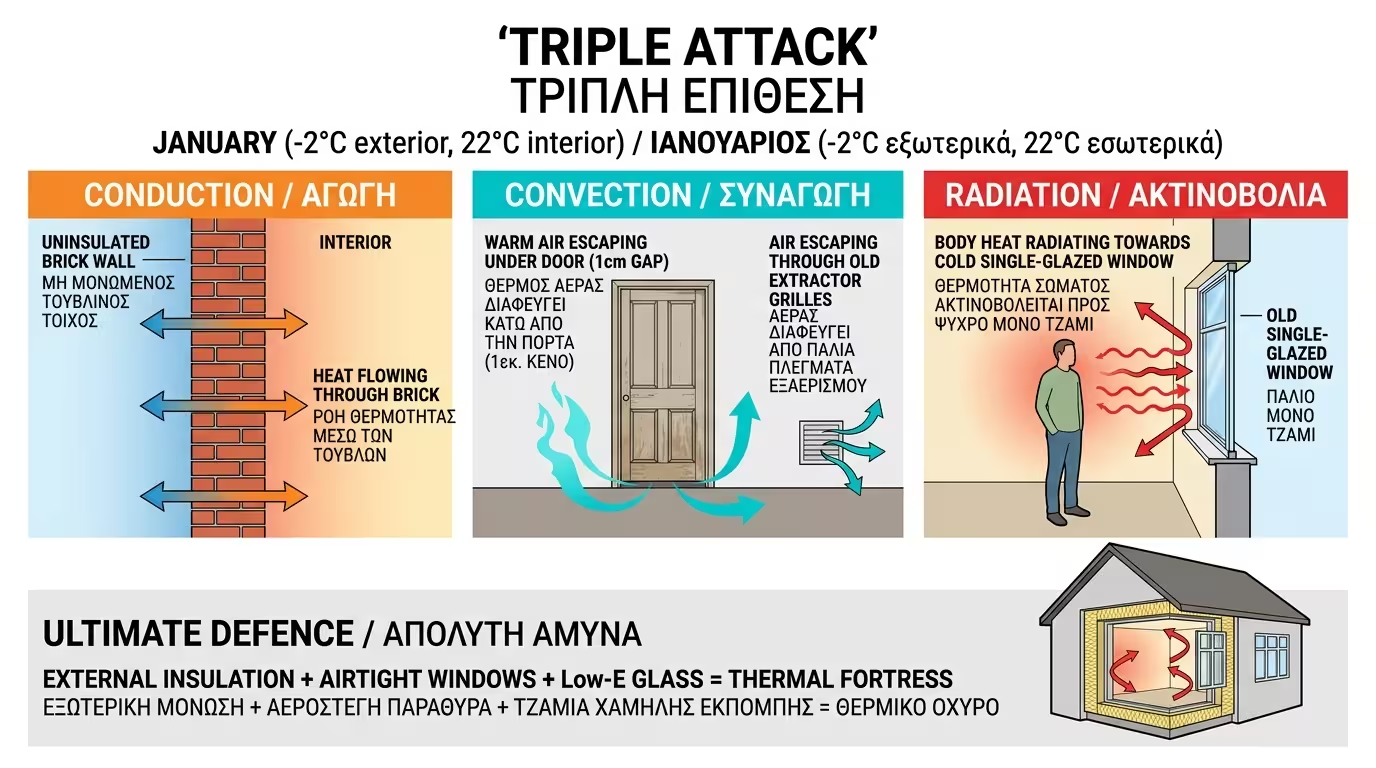
The heat touches the uninsulated wall and leaks "silently" outwards through the brick.
The warm air escapes through the 1cm gap under the front door and through the old extractor grilles. We feel the air "pulling" at our feet.
We sit next to the large balcony door with its single glazing. Even though the radiator is burning, we feel a "chill" on our back. This happens because our warm body radiates its own heat towards the freezing glass, losing energy!
💡 The Ultimate Defence: If we add External Insulation (stopping Conduction), seal the gaps with new windows (stopping Convection), and install Energy-Efficient Glass (stopping Radiation), the house transforms into an impregnable thermal fortress!
💡 Final Conclusion: Do not simply buy "thick" materials thinking you have solved the problem. An excellent external insulation system is meaningless if air leaks through the windows (Convection) or if your glass is not energy-rated (Radiation). Proper insulation is a system that closes the door on all 3 energy "thieves".
Return to category.
Go to categoryReturn to the central guide.
Go to guide