
Acoustic Engineer vs. Simple Tradesman: When the Problem Demands a Scientific Study, Not Just Another Plasterboard

When you have a leak in the bathroom, you call a plumber. You don't call a Hydraulic Engineer for a fluid-flow study. In soundproofing, however, things are far more treacherous. Sound is invisible, obeys complex laws of physics and, as we've seen in earlier articles, can travel through solid concrete, fooling both our eyes and ears.

So when does the tradesman's instinct and experience suffice, and when must Science take over?

1. The Tradesman's Domain (The Plasterer)

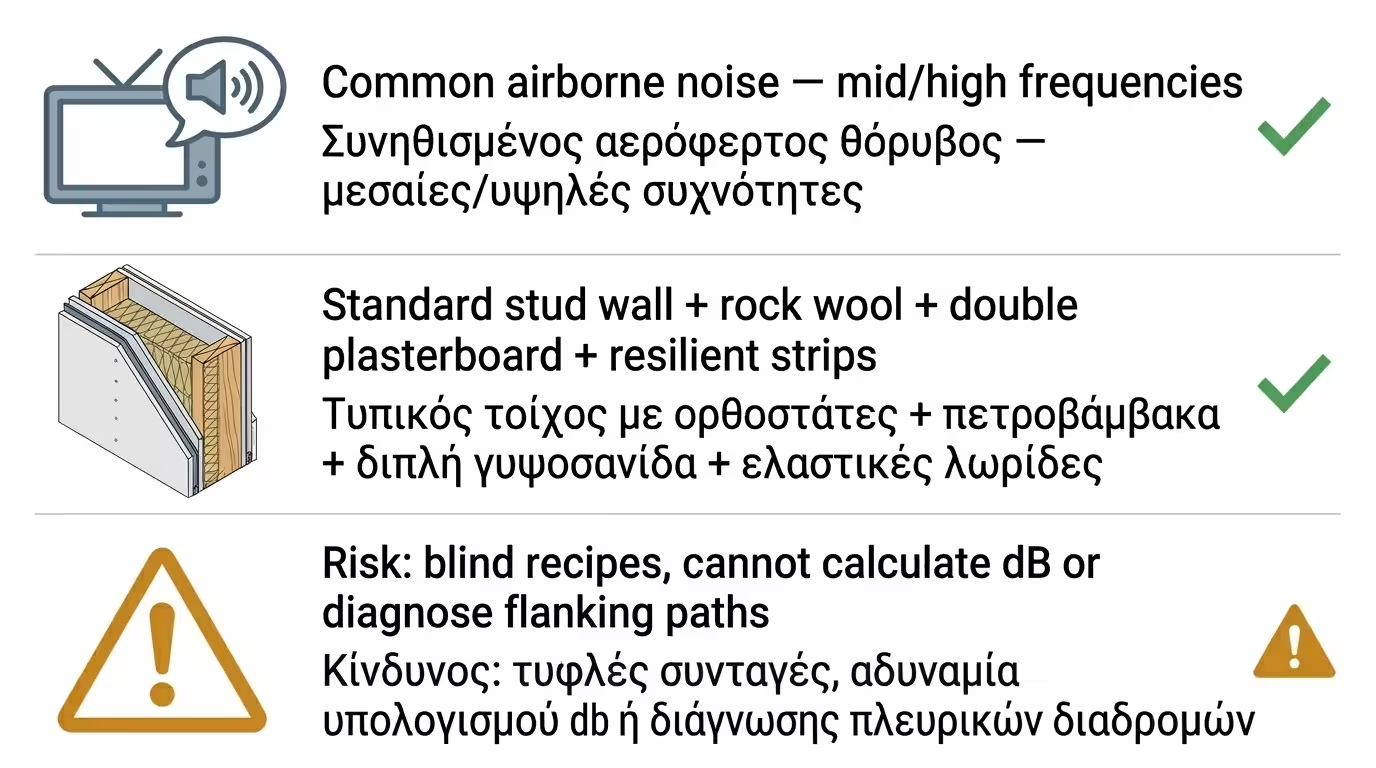
A good, experienced dry-lining tradesman is more than sufficient when your problem is simple, common and airborne.

  • When to call him: When you hear the neighbour's television, speech, barking or road noise (mid and high frequencies).
  • His solution: He knows how to quickly and correctly build a standard stud wall with rock wool, double acoustic plasterboard and resilient strips. He knows how to skim-coat and deliver a finished, clean wall.
  • The risk: He applies blind recipes. He can't calculate exactly how many dB will be cut, nor can he diagnose whether the sound is coming from somewhere else (flanking transmission).
Skilled plasterer: stud wall, rock wool, resilient strips

2. The Acoustic Engineer's Domain

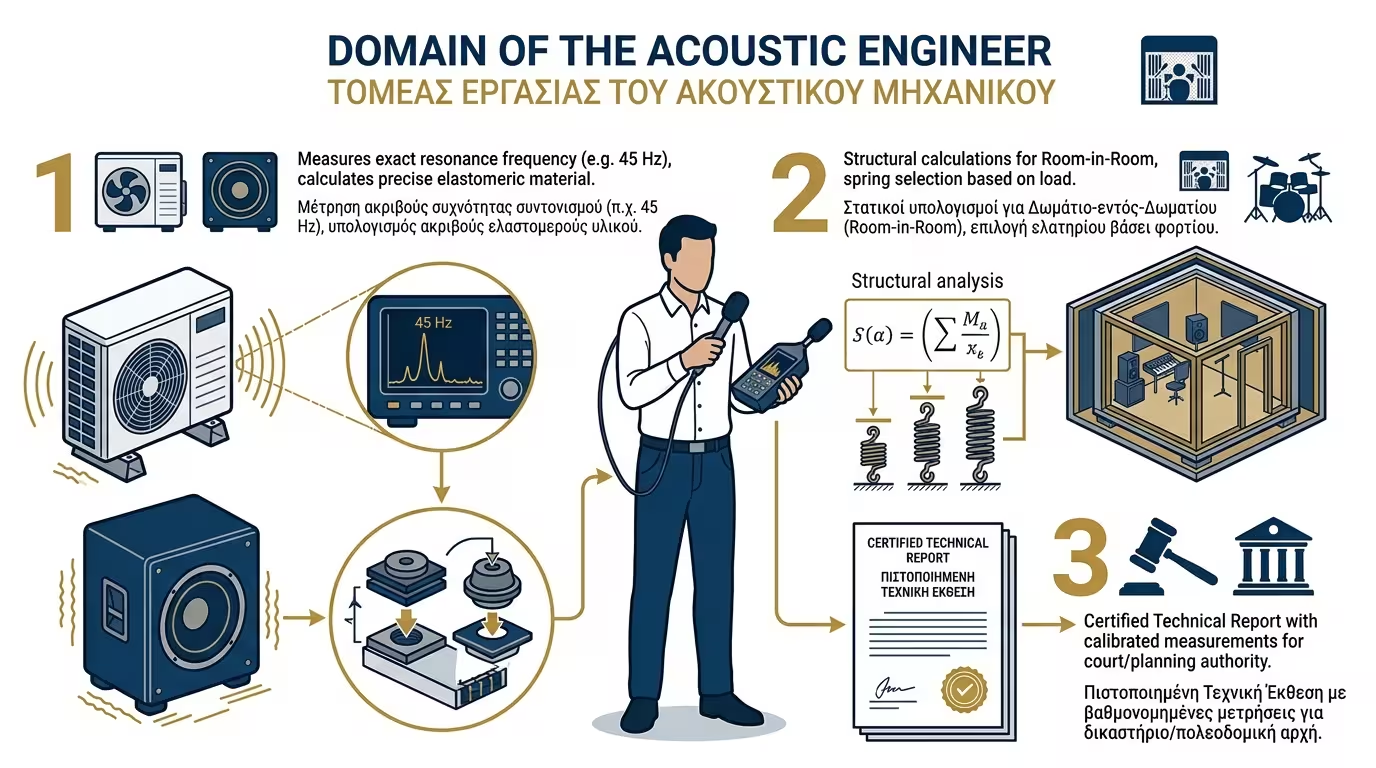
The Acoustic Engineer doesn't hold a drill - he holds a measurement microphone, a spectrum analyser and simulation software. He is absolutely essential when the problem is complex, impact-based or involves low frequencies (bass).

When you must pay for an acoustic study:

  1. Machinery and Bass: If the problem is heat pumps, lift motors, industrial noise or the neighbour's enormous subwoofer. The tradesman will add another plasterboard and fail. The engineer will measure the exact resonance frequency (e.g. 45 Hz) and calculate the precise elastomeric material needed to dampen it.
  2. Studios, Home Cinemas and Drums: You cannot build a Room-in-Room blind. Structural calculations for the weight of materials (so the slab doesn't fail) and precise spring selection based on load are required.
  3. Legal/Professional Requirements: If you're opening a bar, a gym, or if you're in a court dispute with a neighbour, the court and the planning authority don't accept a tradesman's opinion. They demand a formal Technical Report with certified measurements.
Acoustic engineer: measurement microphone, spectrum analyser, simulation software

3. The Myth of "I'll Use the Thickest Material and Be Done"

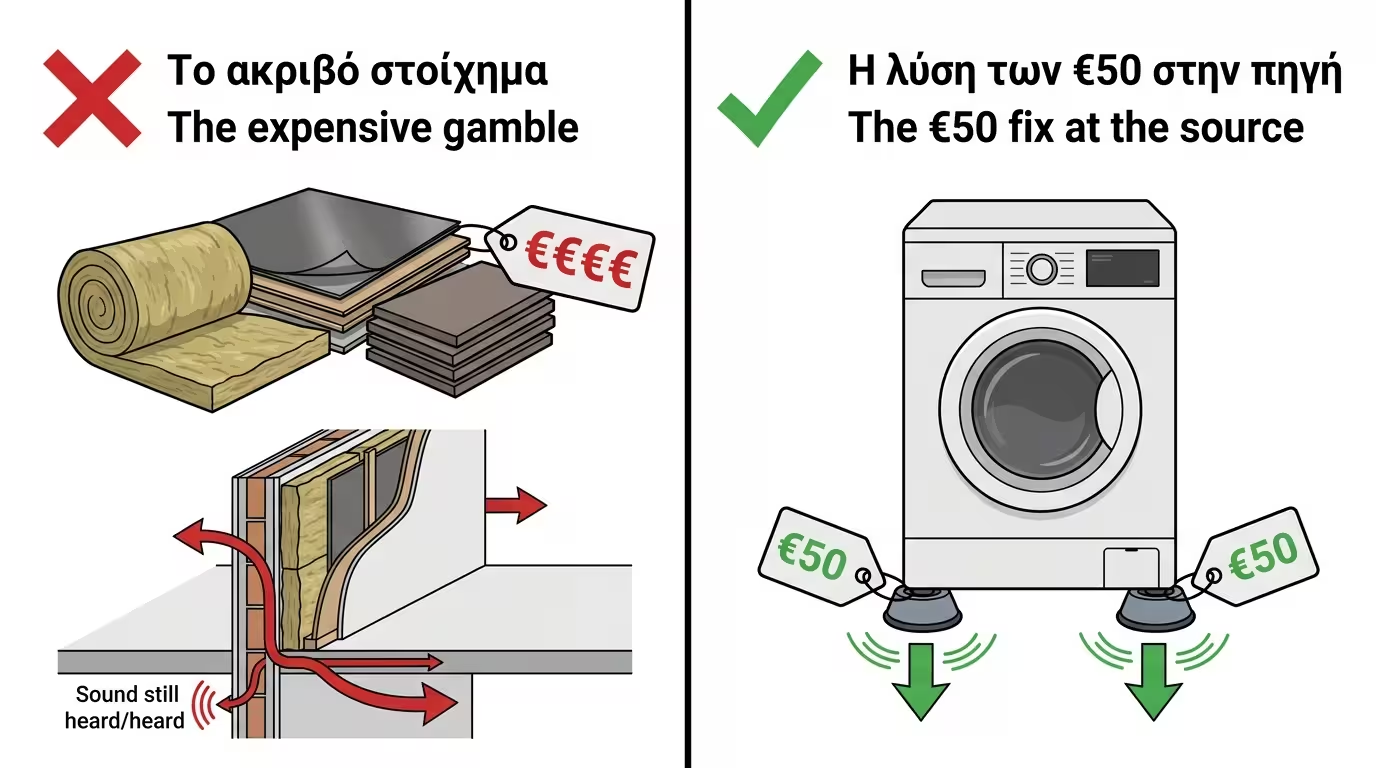
Without diagnosis, soundproofing becomes a gamble. Many homeowners spend thousands on expensive, thick materials (rock wool, MLV, panels), hoping that overkill will solve the problem. The Acoustic Engineer, by properly diagnosing flanking transmission, may discover that you don't even need to touch the wall! Perhaps the problem is solved simply by placing special anti-vibration pads under the neighbour's washing machine (at a cost of €50).

Thousands spent on expensive materials when the fix was €50 anti-vibration pads under the washing machine

4. The Experiment in Our Model: The Low Hum in the 4×4

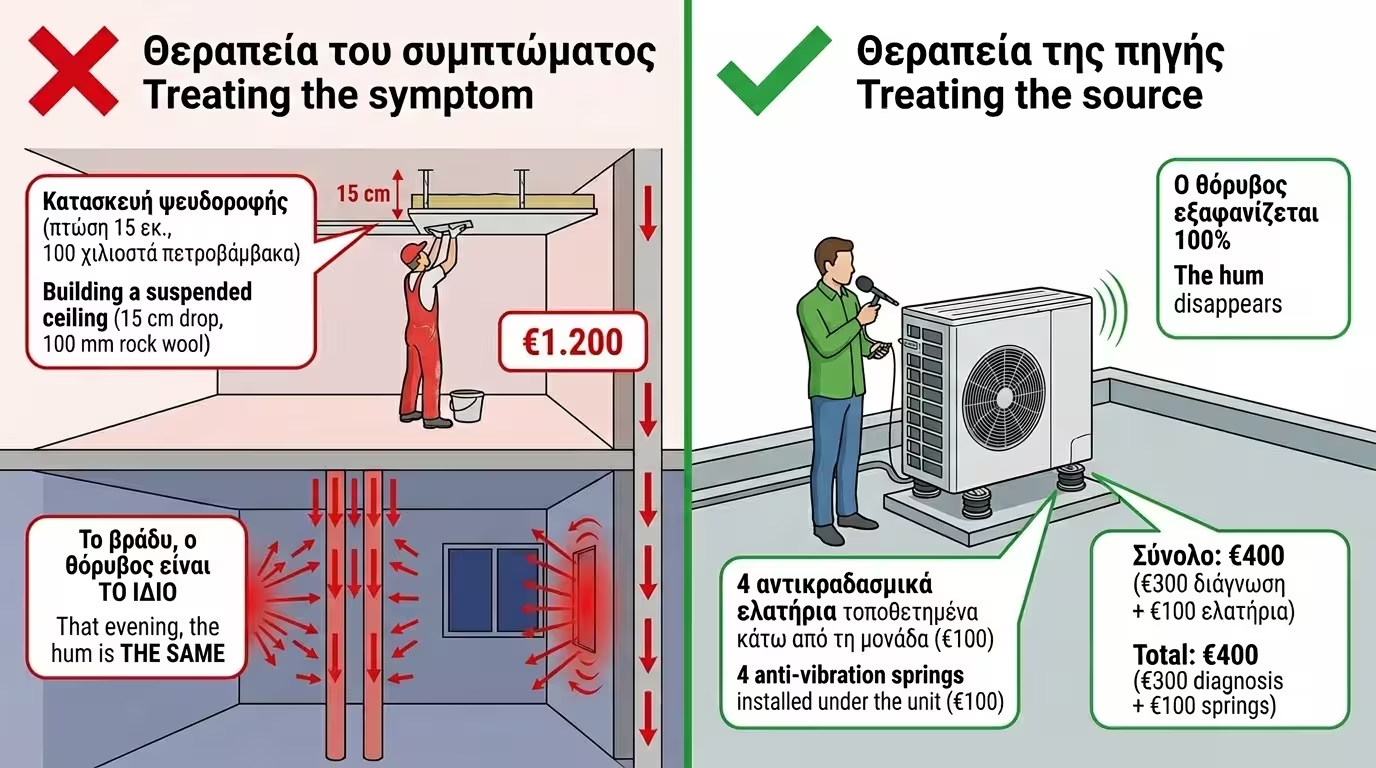
Experiment: Scenario A (€1,200 ceiling, same hum) vs Scenario B (€400 diagnosis + springs, complete fix)

We hear a continuous hum (low frequency) in our room. It comes from the neighbour's heat pump on the roof, directly above us.

❌ Scenario A (The Tradesman's Approach)

We call the plasterer. "Don't worry, I'll drop the ceiling by 15 cm, fit 100 mm rock wool and you'll have peace," he says. We pay €1,200. The ceiling is finished. That evening, the hum sounds EXACTLY THE SAME. The machine's vibration travels down through the columns and radiates from the walls. We've thrown away €1,200.

✅ Scenario B (The Engineer's Approach)

We pay €200-300 for an acoustician's diagnosis. He arrives with his instrument, measures the vibrations on the roof and on our walls. He tells us: "Don't touch the ceiling. We need to go up to the roof and place the heat pump on 4 special anti-vibration springs." We buy the springs (€100). The hum disappears 100%. Total cost: €400, and we solved the problem at the Source!

The Bottom Line: The tradesman is the hands of soundproofing. The engineer is the brain. For common airborne noise, the hands of a good tradesman suffice. For vibrations, hums and absolute silence, invest first in the engineer's brain. You'll recoup his fee from all the useless materials you won't buy!

Related Articles

Sound Insulation: Silence and Noise Protection

Return to category.

Go to category

Preview