
📐 Shape & Area
A square house 10 metres wide × 10 metres long. Total area: 100 sq.m.
If you have ever searched for thermal insulation, you have surely been bombarded with confusing terms: thermal transmittance coefficients, thermal resistance, and lambda values. But at the end of the day, what everyone really cares about is one simple, practical question: "How many euros and how many kilowatt-hours (kWh) will I save in winter by insulating?"
To answer this with scientific precision throughout all articles in our guide, we created the "10x10 Model". It is our own digital laboratory. A typical, uninsulated Greek home, which we use as a baseline (Base Case) to "test" every insulation material, every window and every intervention technique.
Here, we make the invisible (heat) visible and measurable.
To ensure our calculations are realistic and easily transferable to your own square metres, we defined a home with simple geometry that reflects the construction practices of the 1970s and 1980s in Greece.
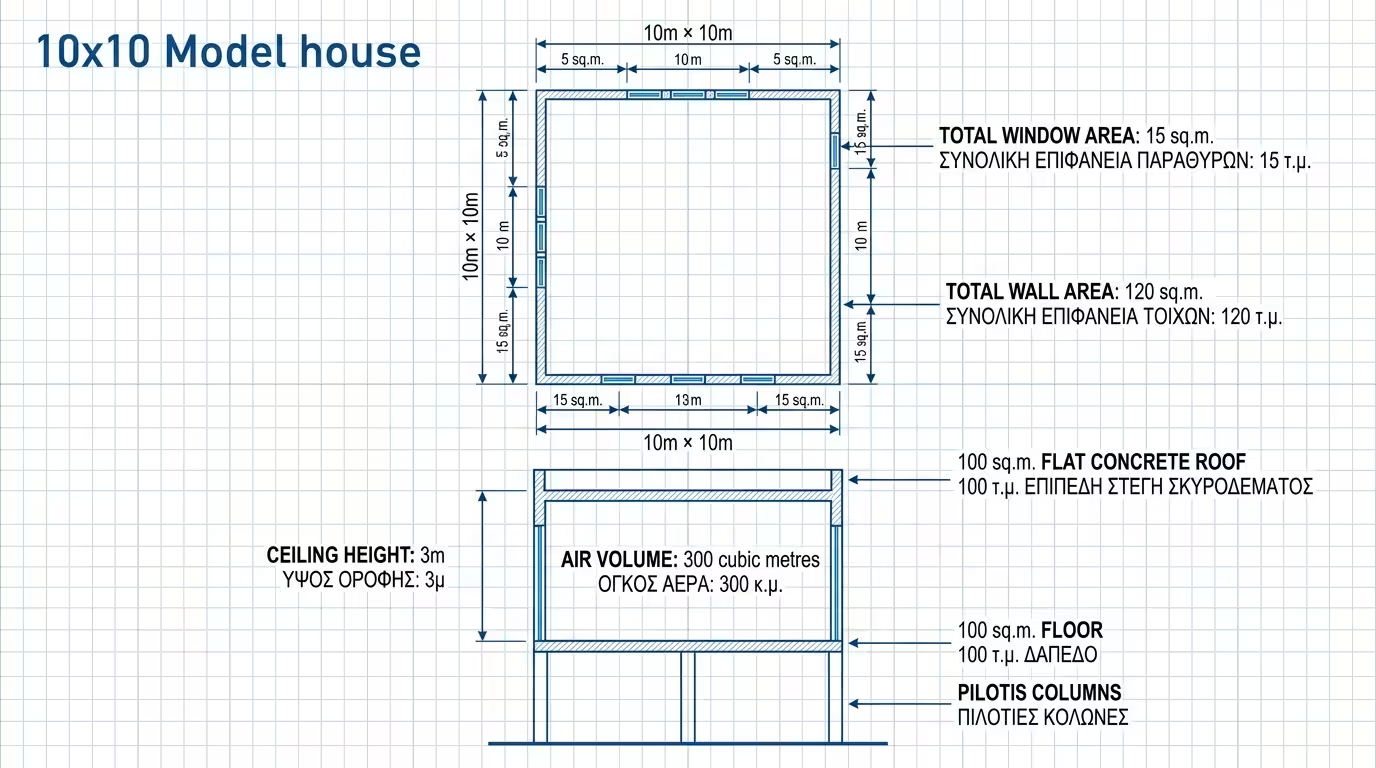
A square house 10 metres wide × 10 metres long. Total area: 100 sq.m.
3 metres. The total air volume to be heated is 300 cubic metres.
120 sq.m. gross wall area (4 walls × 30 sq.m.).
15 sq.m. of windows and balcony doors (≈15% of floor area). Net wall area: 105 sq.m.
100 sq.m. of reinforced concrete slab.
100 sq.m. of floor resting on an uninsulated pilotis or on the ground.
At this stage, our home is completely "naked" in energy terms. No renovation has taken place. The table below shows the building elements and their initial thermal transmittance coefficient (U-Value). The higher the number, the more heat "escapes" to the environment.
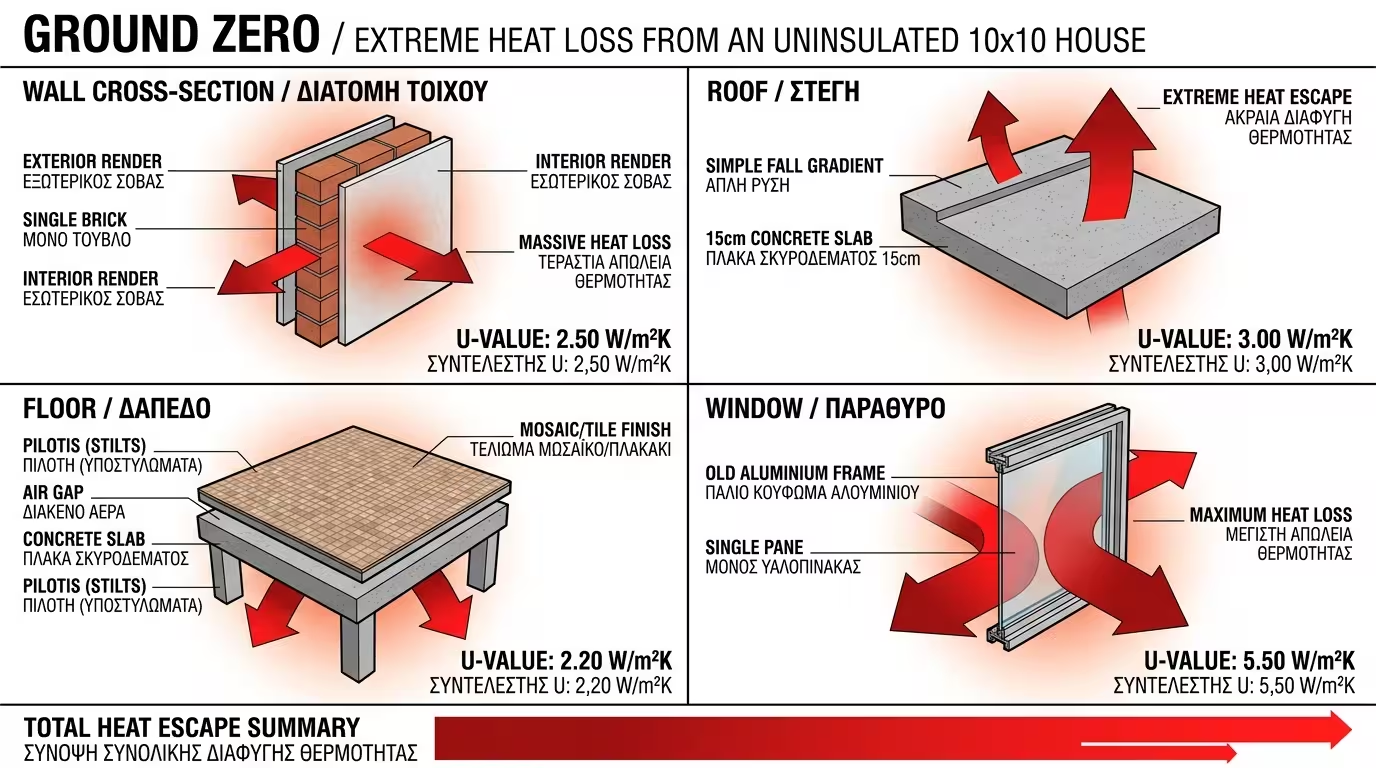
| Building Element | Material (Uninsulated) | Area | U-Value |
|---|---|---|---|
| Walls | Single-leaf brick wall with plain render | 105 sq.m. | 2.50 W/(m²K) |
| Flat Roof | 15cm concrete slab, no insulation, simple fall | 100 sq.m. | 3.00 W/(m²K) |
| Floor | Concrete slab, mosaic or tiles (above pilotis) | 100 sq.m. | 2.20 W/(m²K) |
| Windows | Old aluminium (no thermal break) + single glazing | 15 sq.m. | 5.50 W/(m²K) |
To calculate how much energy the heating system (radiators, A/C, heat pump) must consume just to replenish the heat lost through walls and glazing, we use the fundamental transmission heat loss formula:
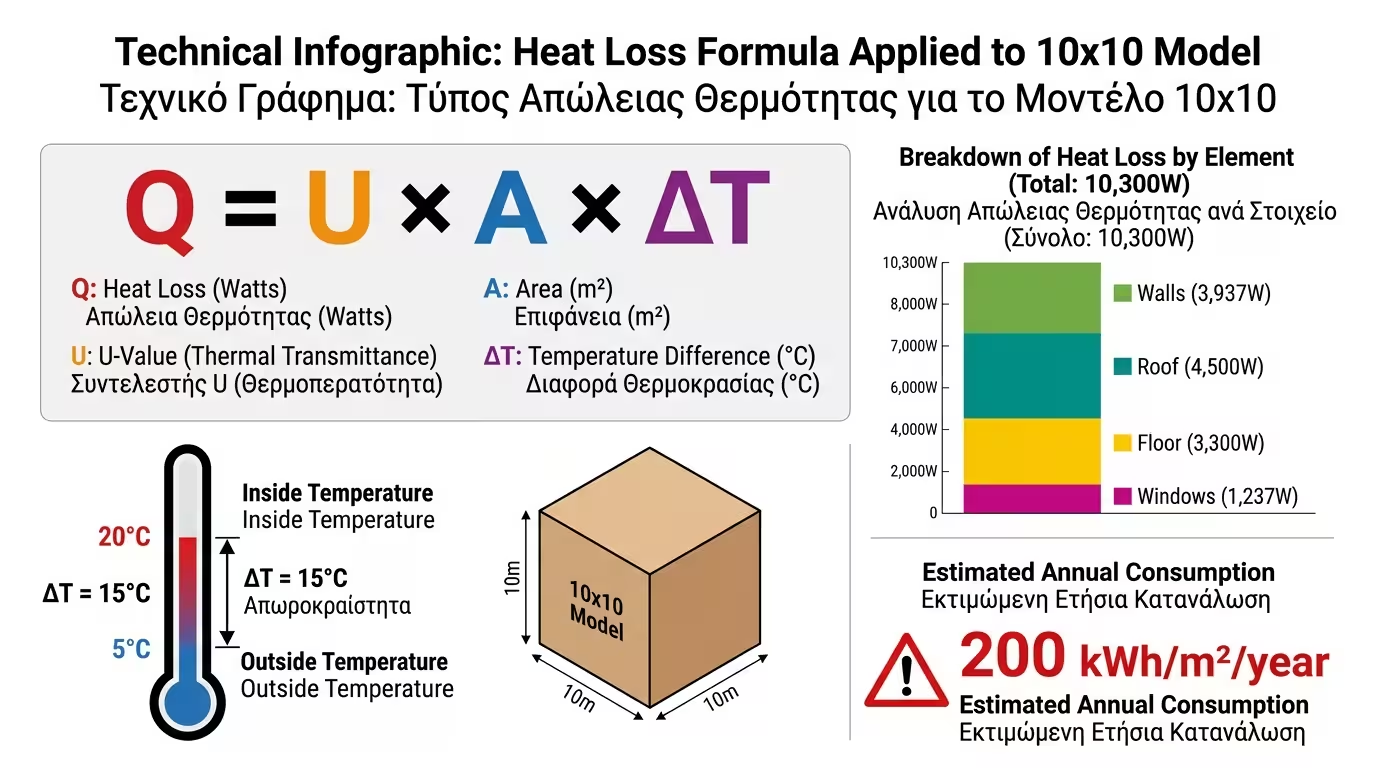
Q: Rate of heat loss (Watts).
U: Thermal transmittance W/(m²K).
A: Area of the building element (sq.m.).
ΔT: Indoor-outdoor temperature difference.
We want a steady indoor temperature of 20°C. Outside: a typical winter day at 5°C. Difference: ΔT = 15°C.
Applying the formula, the 10x10 Model loses approximately 10,300 Watts (10.3 kW) of thermal energy every hour at "Ground Zero".
Over a typical Greek year, this translates to consumption reaching or exceeding 200 kWh per sq.m. annually. A home that is literally an energy black hole, heating the neighbourhood instead of its occupants.
In the articles that follow in the Insulation Guide, the 10x10 Model will receive virtual "upgrades". You will frequently see a box like the following:
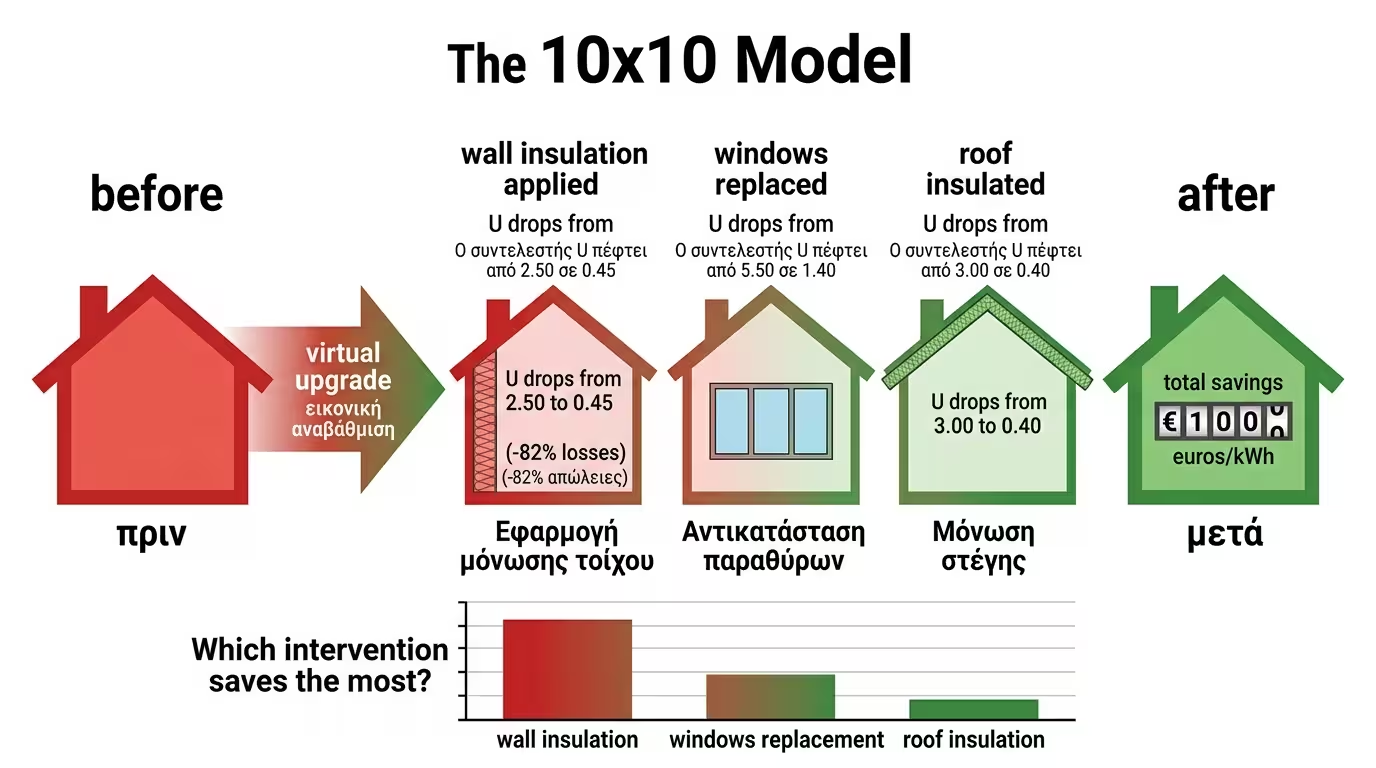
💡 The 10x10 Model Experiment: What happens if we wrap the walls with external insulation (EPS) 7cm thick? The U-Value plummets from 2.50 to 0.45 W/(m²K). Wall heat losses are reduced by 82%, saving hundreds of euros in electricity or oil.
You will be able to instantly compare whether it is better to first replace old windows or insulate your flat roof.
Everything based on the same 100 sq.m., with the same mathematics, completely measurable.
Every "upgrade" will show exactly how many euros and kWh it saves, so you can make decisions based on real data.
Return to category.
Go to categoryReturn to the central guide.
Go to guide