The Impact of Windows: Single vs. Energy-Efficient Glass in the 10x10 Model

If you have done an excellent external insulation job on your walls (dropping the U-Value to 0.35 W/m²K) but leave the old sliding aluminium frames with single glazing, it is like wearing an expensive, thick coat in the snow but leaving it unbuttoned.

Windows are usually responsible for 25% to 30% of the total thermal losses of an old house. Modern technology, however, has turned windows from "holes" into thermal shields. Let us see how modern energy-efficient windows work and how much electricity they save us.

1. The Anatomy of an Energy-Efficient Window

A modern window has two main "weapons" to block heat and cold: the frame and the glass.

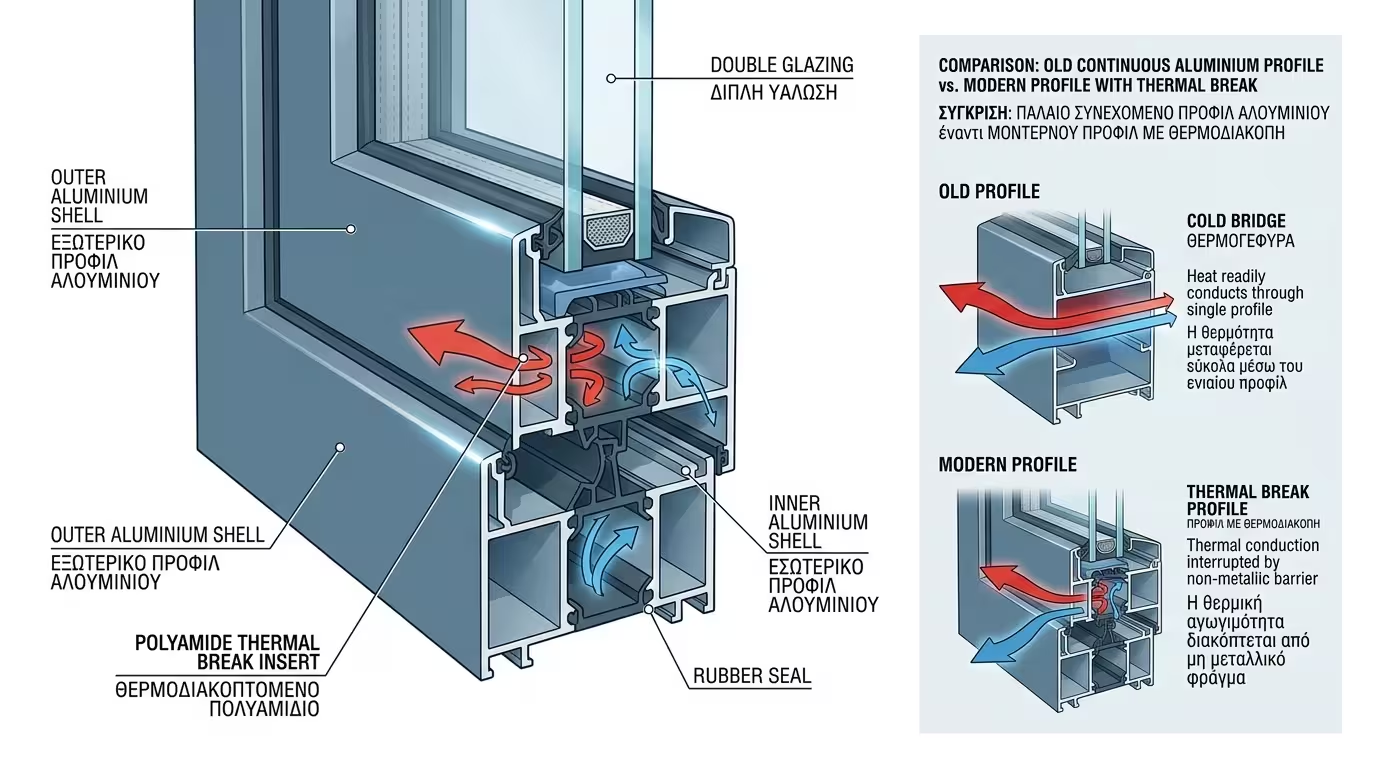
Energy-efficient window anatomy - thermal break

🔲 The Frame (Thermal Break)

Old aluminium frames were one continuous piece of metal from outside to inside. Because aluminium is an excellent conductor (remember the spoon in the soup), it transferred the cold straight to your living room. Modern aluminium windows have a Thermal Break: a piece of special plastic (polyamide) is placed in the middle of the profile and "cuts" the metal in two, breaking the conduction of heat.

Note: PVC or Wood frames are naturally poor conductors, so they do not need a thermal break.
2. The Glass: Low-E & Argon

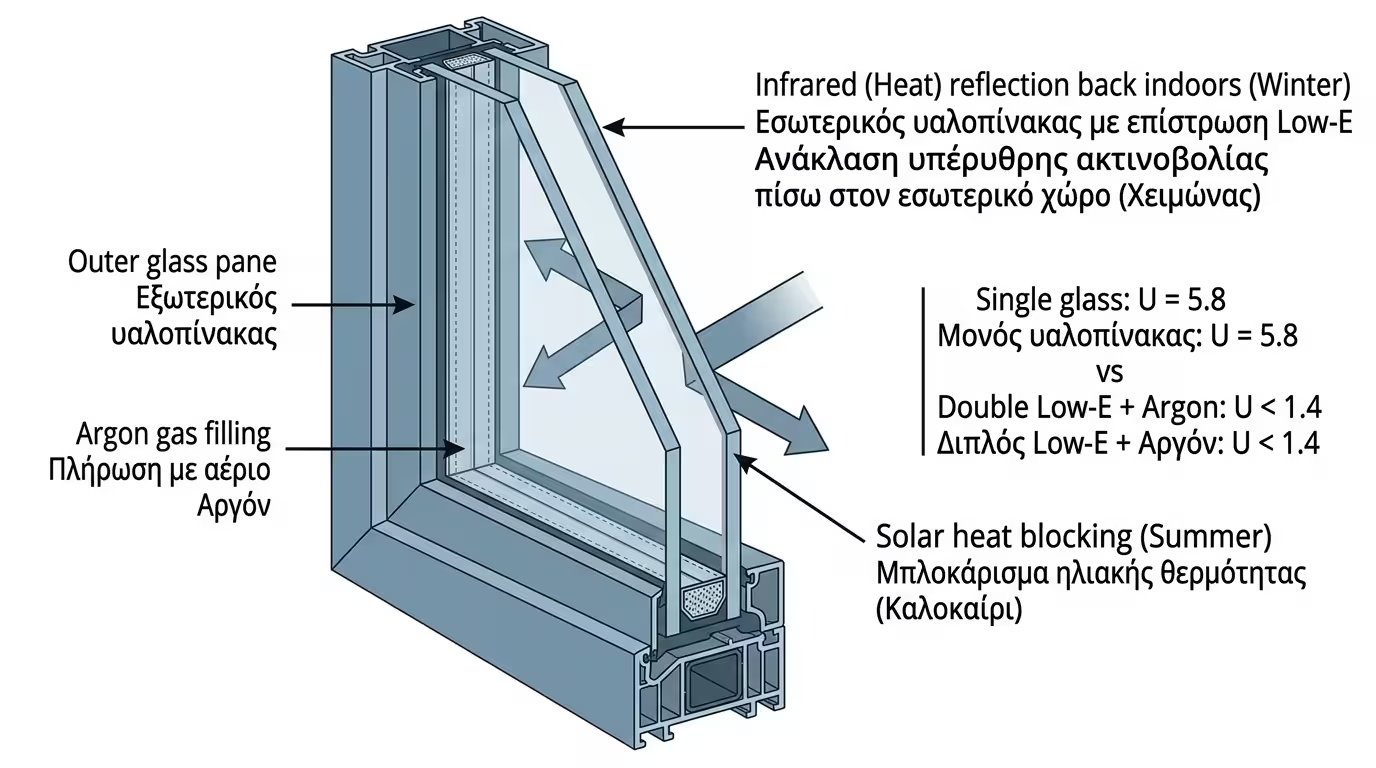
Glass occupies 80% of the window area. Old single glazing had a U-Value of around 5.8 (practically no insulation at all). Modern double energy glass drops this number below 1.4, thanks to three technologies:

Energy glass Low-E with Argon gas

🪟 Double Glazing

Two panes with a gap between them.

💨 Argon Gas

The gap between the panes is not filled with ordinary air but with inert Argon gas, which is heavier than air and "brakes" heat transfer.

🪞 Low-E Coating

An invisible, metallic coating on the inner pane. It works like a radiation "mirror": in winter it reflects the radiator's heat back into the room, and in summer it blocks the sun's infrared radiation.

3. The 10x10 Model Experiment

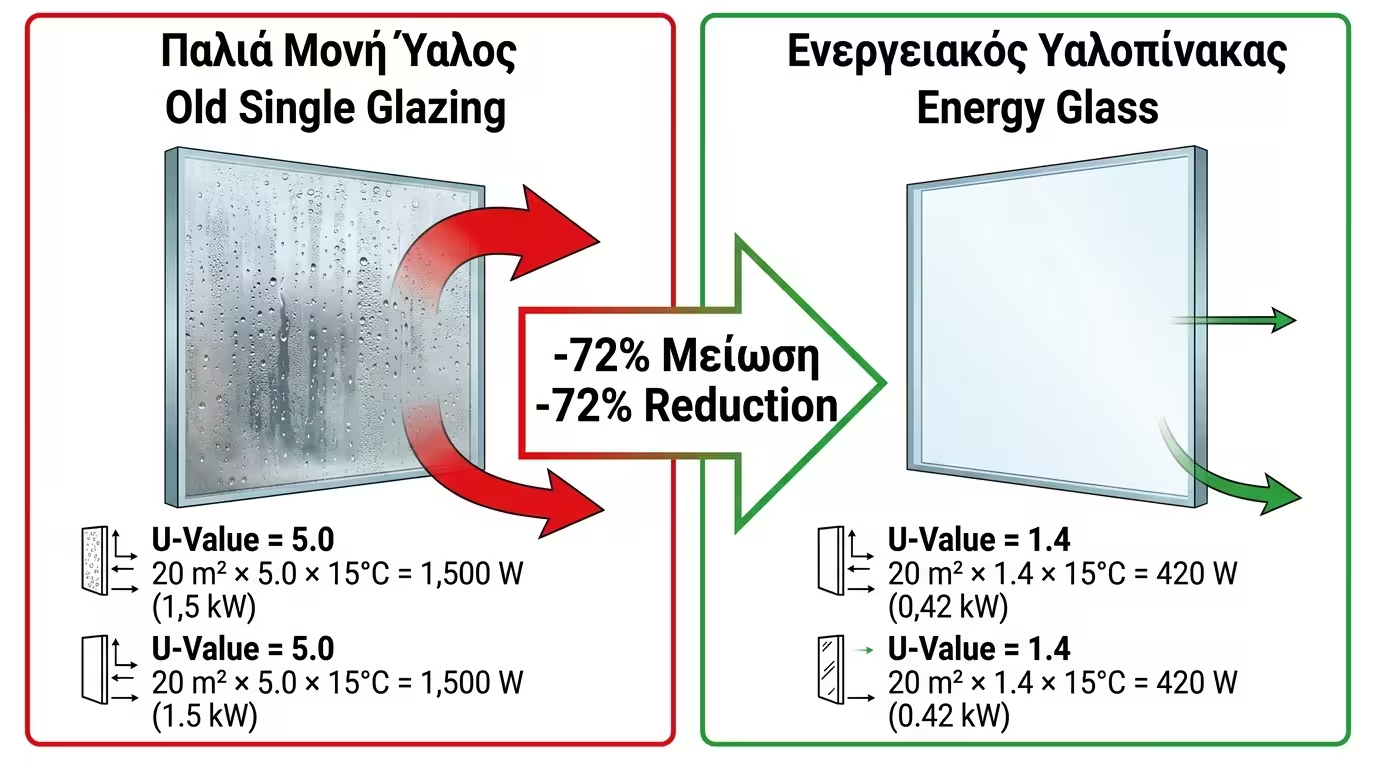
10x10 Model - single vs energy glass

Let us go to our virtual house. Remember we have a total of 20 m² of windows. It is winter, 5°C outside and we want 20°C inside (Temperature difference ΔT = 15°C). Let us compare the losses from the glass surfaces only!

❌ Scenario A: Old Sliding, Single Glazing

The overall U-Value of the window is tragic (about 5.0 W/m²K).
Calculation: 20 m² × 5.0 × 15°C = 1,500 Watts (1.5 kW) heat loss per hour.
The problem: The glass is freezing, sweats constantly (Dew Point) and beside it you feel a permanent cold draught (Convection).

✅ Scenario B: New Aluminium with Thermal Break & Energy Glass

The new overall U-Value is 1.4 W/m²K.
Calculation: 20 m² × 1.4 × 15°C = 420 Watts (0.42 kW) heat loss per hour.
The result: We just cut window losses by 72%! Mould vanished, air no longer "leaks" thanks to new seals, and you can sit by the window without feeling cold.

4. The Payback Reality (ROI)

Here we must state a hard truth. Changing windows is usually the most expensive intervention in a renovation. While roof insulation costs little and delivers huge savings (immediate payback), new windows can cost many thousands of euros.

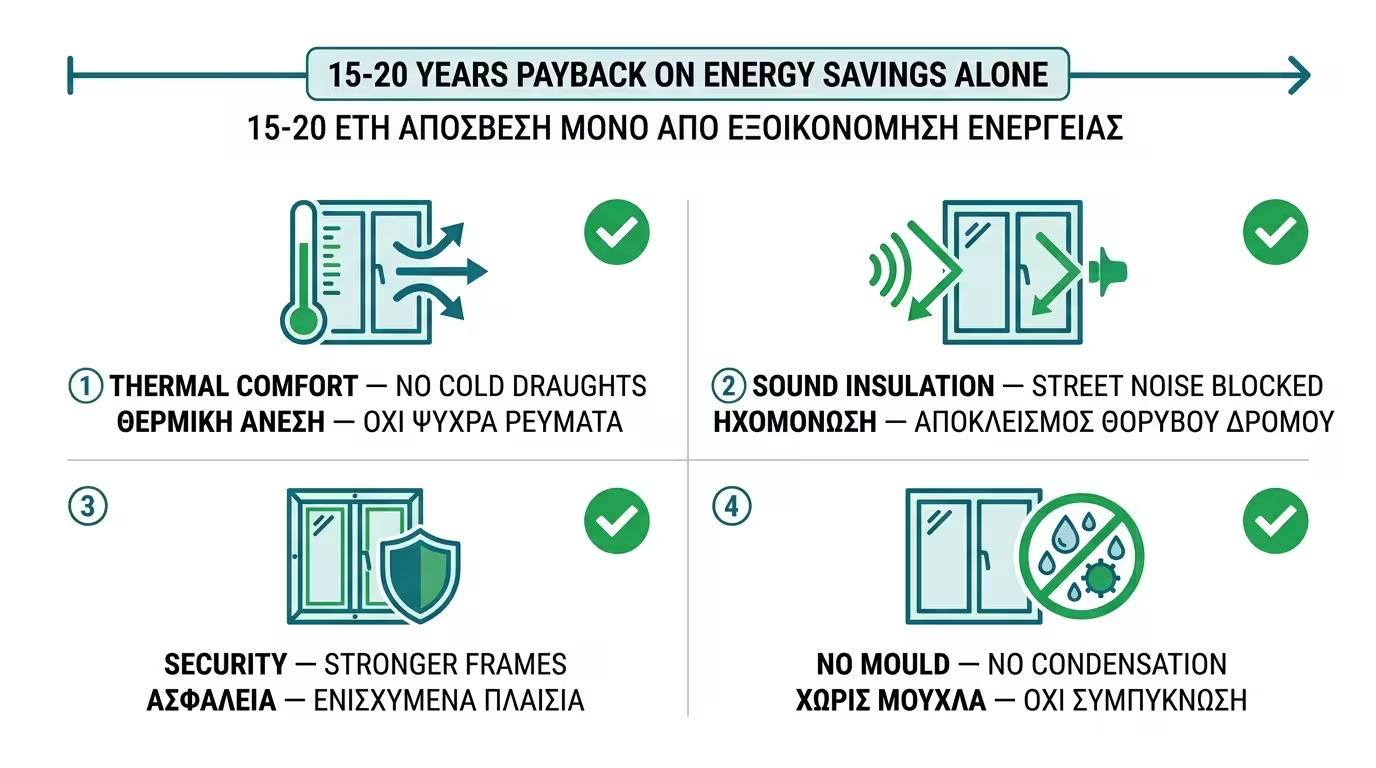
If you calculate only the euros saved on oil, the payback of new windows may take 15 or 20 years.

Window payback - cost vs benefits
💡 Yet they are worth every euro! Why? Because you do not change them just for savings. You change them for absolute thermal comfort (no more cold draughts), top-tier sound insulation (leaving street noise outside), security, and above all never seeing "sweating" glass and mould in your house again.
💡 Final Conclusion: An insulated house with old windows is half a job. Energy-efficient windows are the shield (Low-E) and airtightness needed to complete your thermal fortress. If your budget is limited, start with roof insulation, but put new windows as the next big, essential target!

Related Articles

Thermal Physics & Calculations: From Theory to kWh and Euros

Return to category.

Go to category

Preview