
🌬️ Breathability (Humidity Regulation)
Thanks to its porous structure, it naturally absorbs excess room moisture without becoming waterlogged, then releases it when the air dries out. It acts as a natural indoor microclimate regulator.
Wood Fibre Insulation (also known as wood wool) is a high-tech, 100% ecological material manufactured from timber industry residues (branches, sawdust, offcuts) that are pulped, dried and compressed into dense, rigid boards.
Thermally it performs similarly to rock wool (λ ≈ 0.038 W/mK), but it hides a unique superpower that no lightweight insulation material can replicate: Thermal Mass - the ultimate saviour for the Mediterranean summer. Let us see why this property changes the rules of the game entirely.
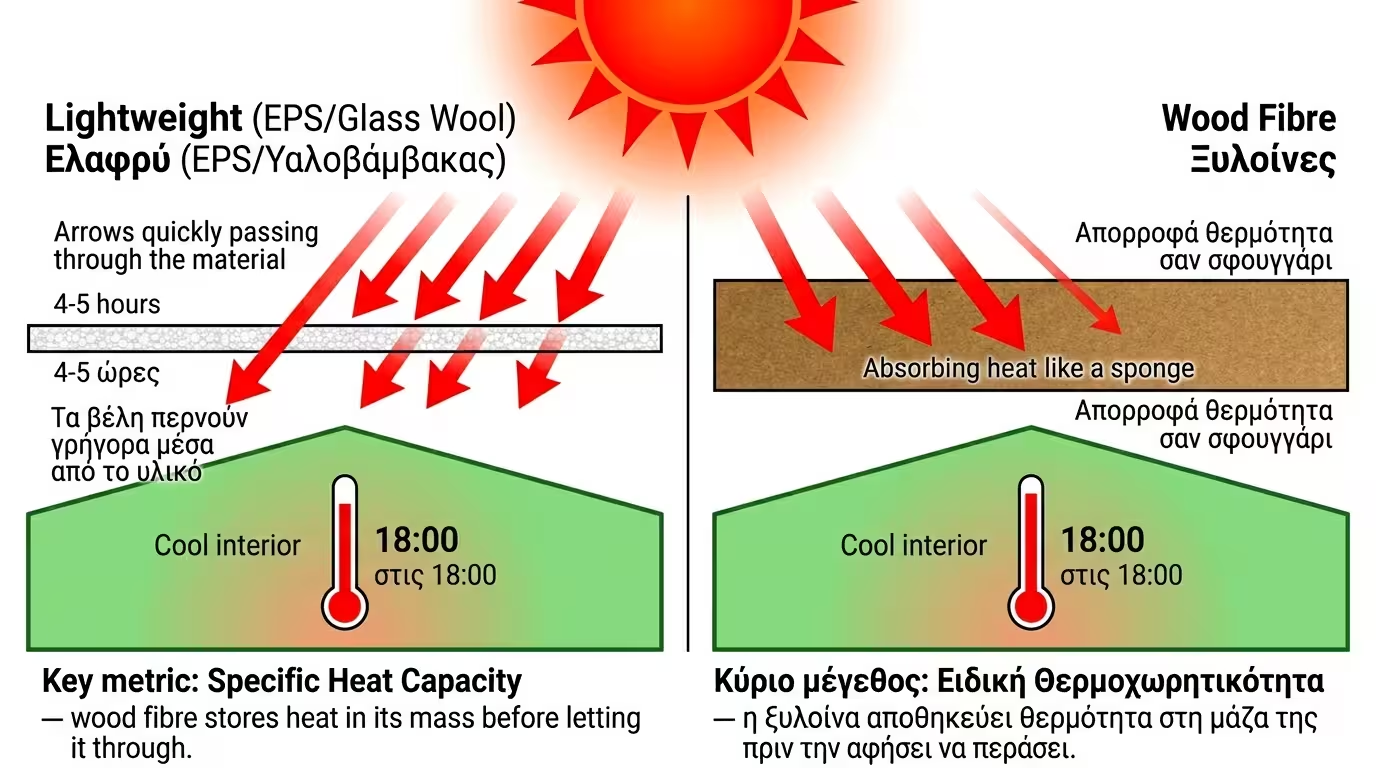
Lightweight insulation materials (EPS, glass wool) are excellent at blocking heat transfer in winter. However, because they have very little mass, they cannot store heat within themselves. During a hot Greek summer, the heat penetrates them in just 4-5 hours and invades the interior.
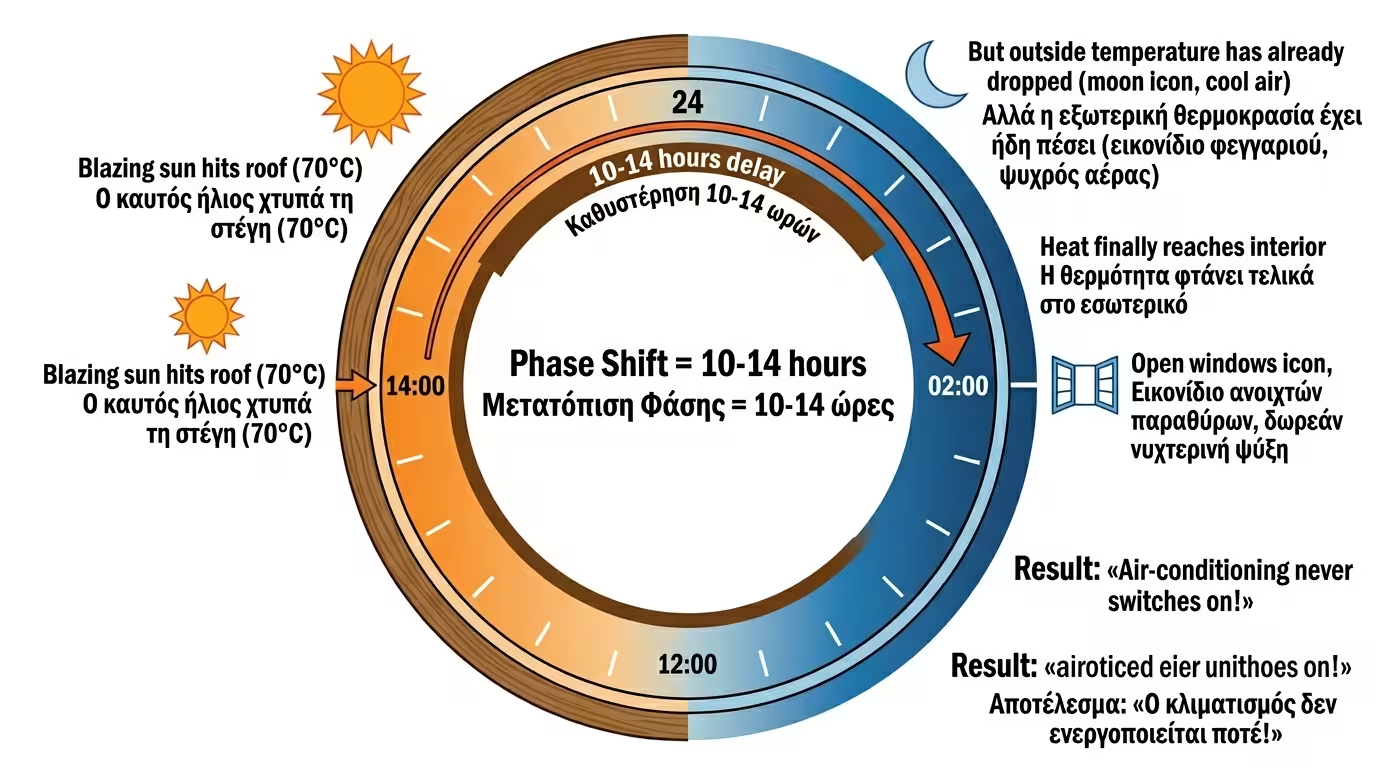
Wood fibre works in a completely different way. It is heavy and dense, with an enormous Specific Heat Capacity: it "absorbs" heat into its mass like a sponge, preventing it from reaching the interior quickly. This ability translates into a phenomenon called Phase Shift.
The Phase Shift of wood fibre insulation reaches 10-14 hours. This means that the peak heat hitting your roof at 14:00 (with tiles at 70°C) does not reach your ceiling until 02:00 AM - and even then at a much reduced intensity.
By 02:00 the outside temperature has already dropped dramatically. Simply open your windows or skylights and the house cools for free with night air. The result: the air-conditioning does not need to switch on at all during a typical Greek summer!
Beyond thermal mass, wood fibre brings additional, unique ecological and functional advantages that make it particularly attractive for bioclimatic buildings.
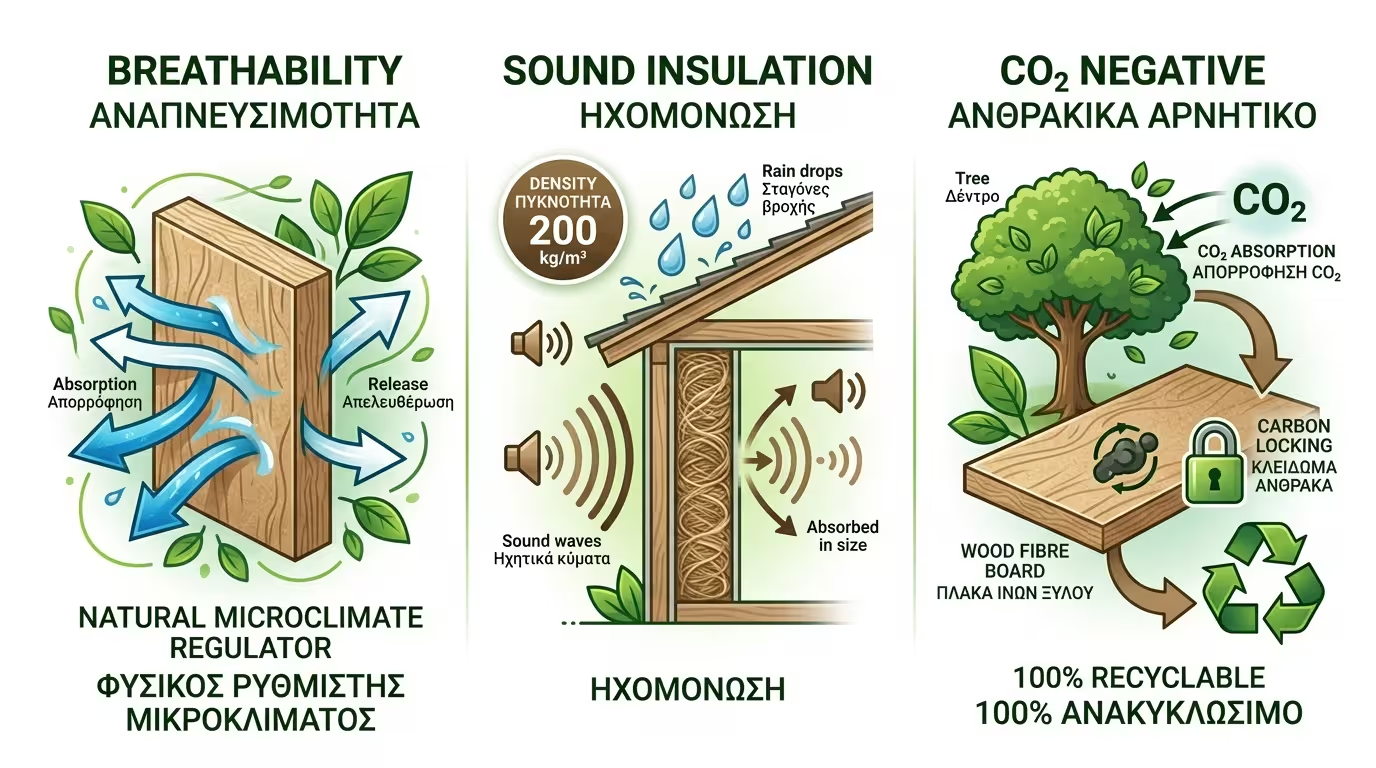
Thanks to its porous structure, it naturally absorbs excess room moisture without becoming waterlogged, then releases it when the air dries out. It acts as a natural indoor microclimate regulator.
With density reaching 200 kg/m³ and a porous structure, it makes an excellent sound trap. Ideal especially for roofs (absorbing rain noise) and for timber floors (dampening footsteps).
The trees from which it originates sequester CO₂ throughout their lifetime. This means every board of wood fibre acts as a "carbon store." At the end of its life cycle, it is 100% recyclable or biodegradable.
Timber-framed attic beneath a tiled roof, mid-July. Tile temperature reaches 70°C at peak sunshine. We test two insulation scenarios of equal thickness in the roof.
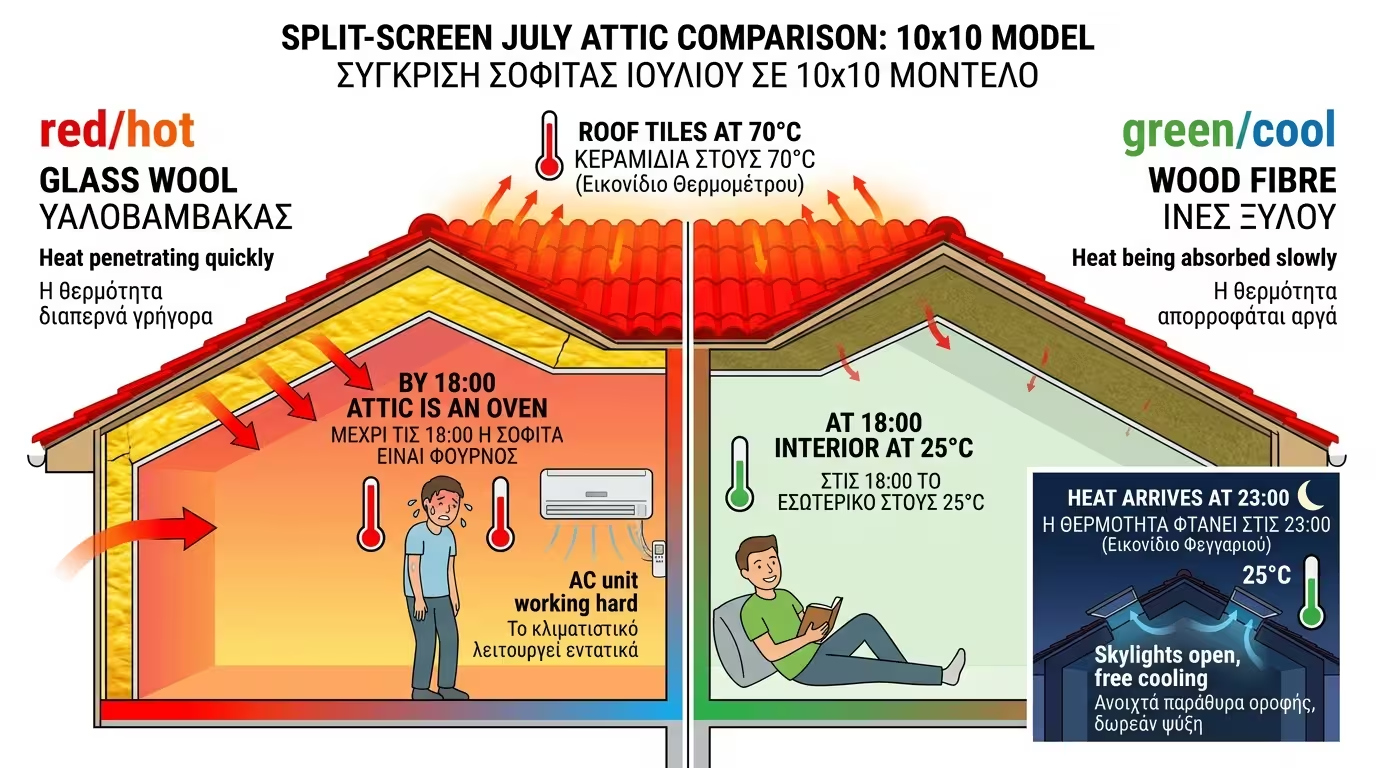
Excellent in winter thanks to its low λ value, but negligible thermal mass. Summer heat penetrates it within 4-5 hours. By 18:00 the attic has become an oven. The air-conditioning runs on overtime and the electricity bill skyrockets.
Wood fibre absorbs the heat like a thermal sponge. The interior temperature stays at 25°C well into the late afternoon. The heat finally arrives at the interior around 23:00 at night - open the skylights and the night breeze cools the space for free!
💡 Conclusion: If your roof bakes every summer under the Greek sun and you pay enormous air-conditioning bills, wood fibre insulation may be the smartest bioclimatic investment you can make. It is worth every extra penny.
Return to category.
Go to categoryReturn to the central guide.
Go to guide