🔥 The Huge Thermal Bridge
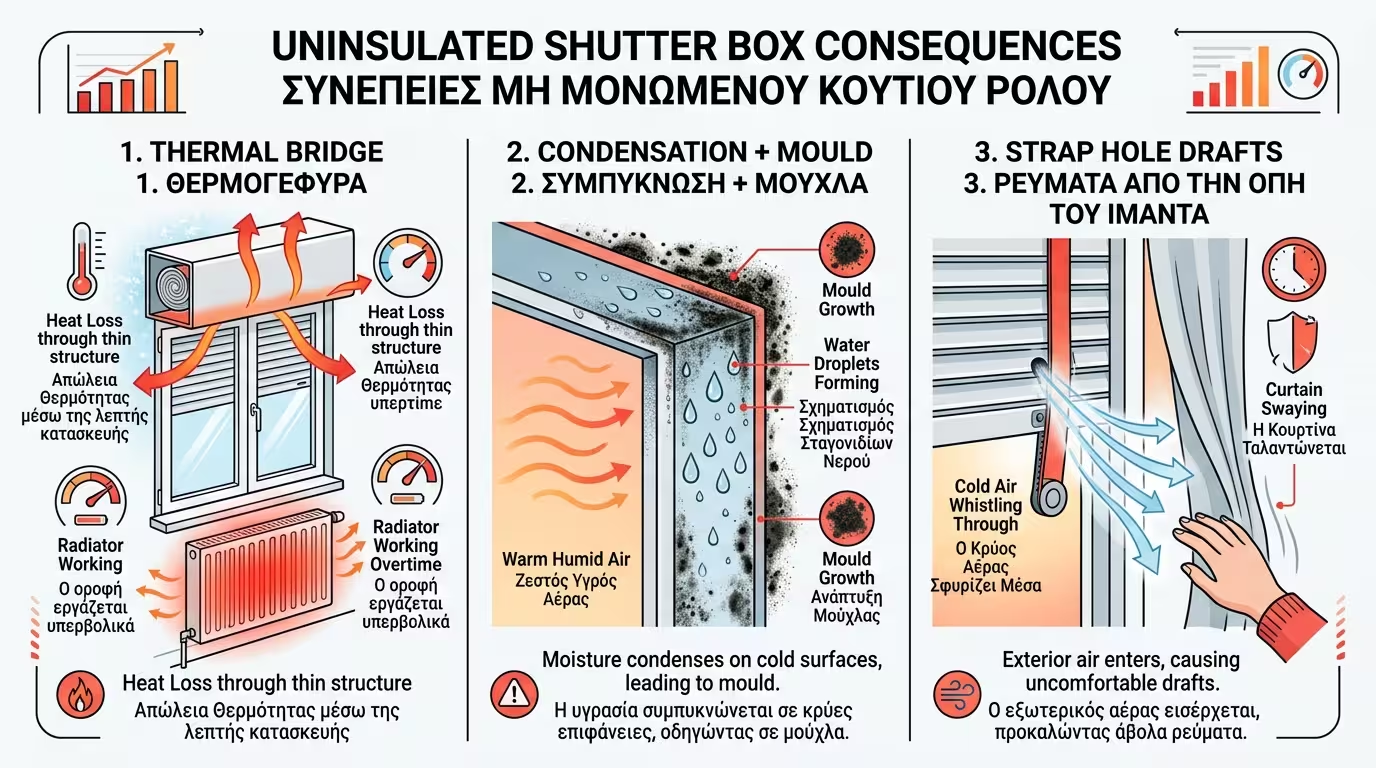
Your radiator works at full blast to heat the room, and the warmth escapes at lightning speed through that thin cover.
Imagine wearing a heavy, expensive winter jacket, but with the zip left open at the neck. No matter how good the jacket is, the cold will get in and you will freeze.
In a home energy upgrade, the open "zip" is the shutter box. Traditionally, this box is embedded inside the wall, directly above the window. The problem? To let the shutter roll up and down, the box is open from the bottom and the external side.
This means freezing winter air enters the box freely. And what separates that freezing air from your warm living room? A thin cover of plastic, wood or aluminium, just millimetres thick!
When freezing outside air enters the box, the internal cover (the one you see inside the room) becomes an "ice cube".
Your radiator works at full blast to heat the room, and the warmth escapes at lightning speed through that thin cover.
The warm, humid room air touches the freezing shutter cover. It condenses immediately. Water drips, the wall around the shutter box swells, and black mould makes its appearance.
If your shutter is manual, the hole through which the strap (belt) exits is a straight path for cold air to enter and "whistle" into the living room.
If you keep your old shutters, you need to open the box and "line" it internally. Because the space inside the box is limited (the roller must fit when wound up), we use special, flexible insulation sheets.
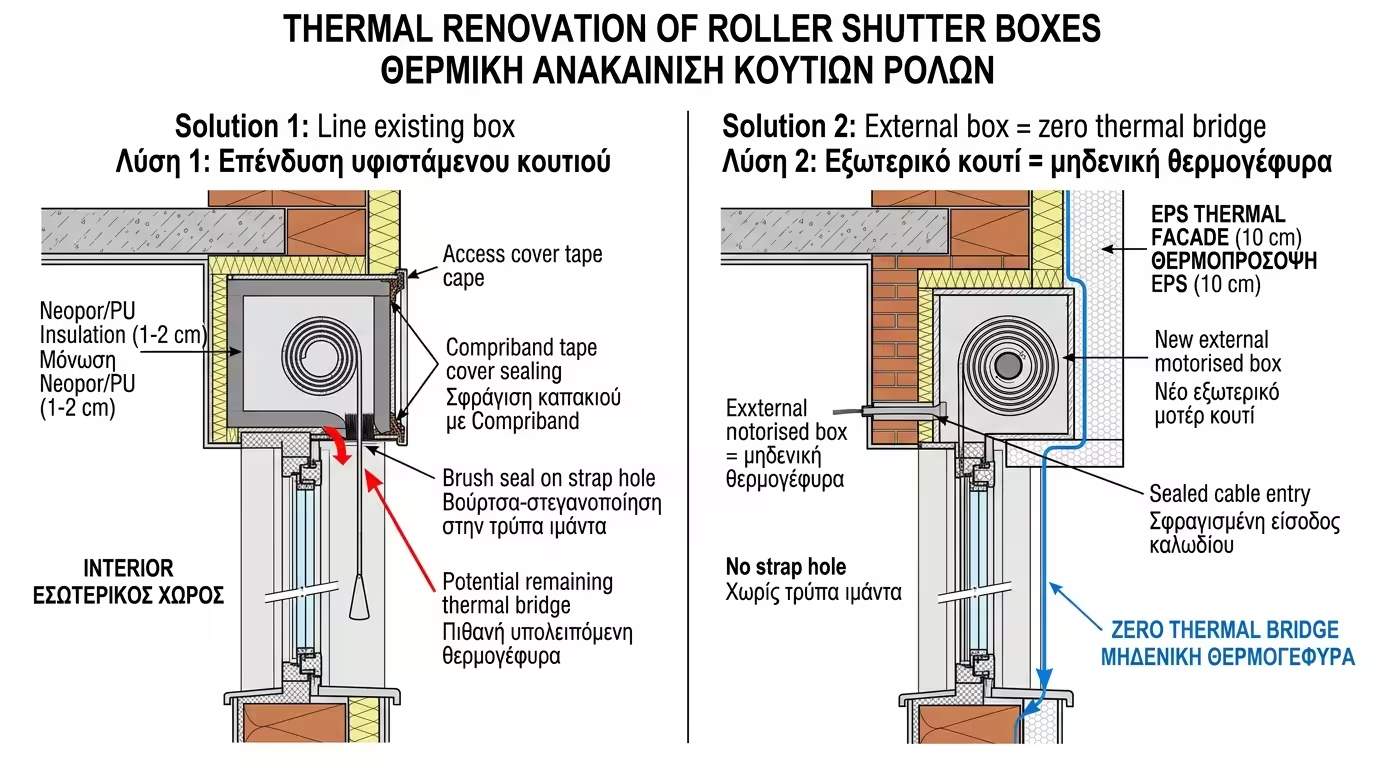
The worker cuts and glues these special sheets (1-2cm thick) to the "back" and top of the box, creating a thermal shield.
The internal cover is sealed airtight (e.g. with self-expanding Compriband tape) and a special fitting with double brushes is installed at the strap hole, "hugging" the belt and cutting air drafts.
If you are replacing your aluminium windows and adding a thermal facade, science prescribes one thing: Take the box outside the wall! Modern, energy-rated shutters are "surface-mounted" or "external". Their box does not hide inside the brick. It sits externally, above the window, and is factory-insulated. When the thermal facade crew arrives, the thick EPS will "cover" the entire box from outside. The shutter is now outside the building's thermal envelope. The thermal bridge is eliminated entirely!
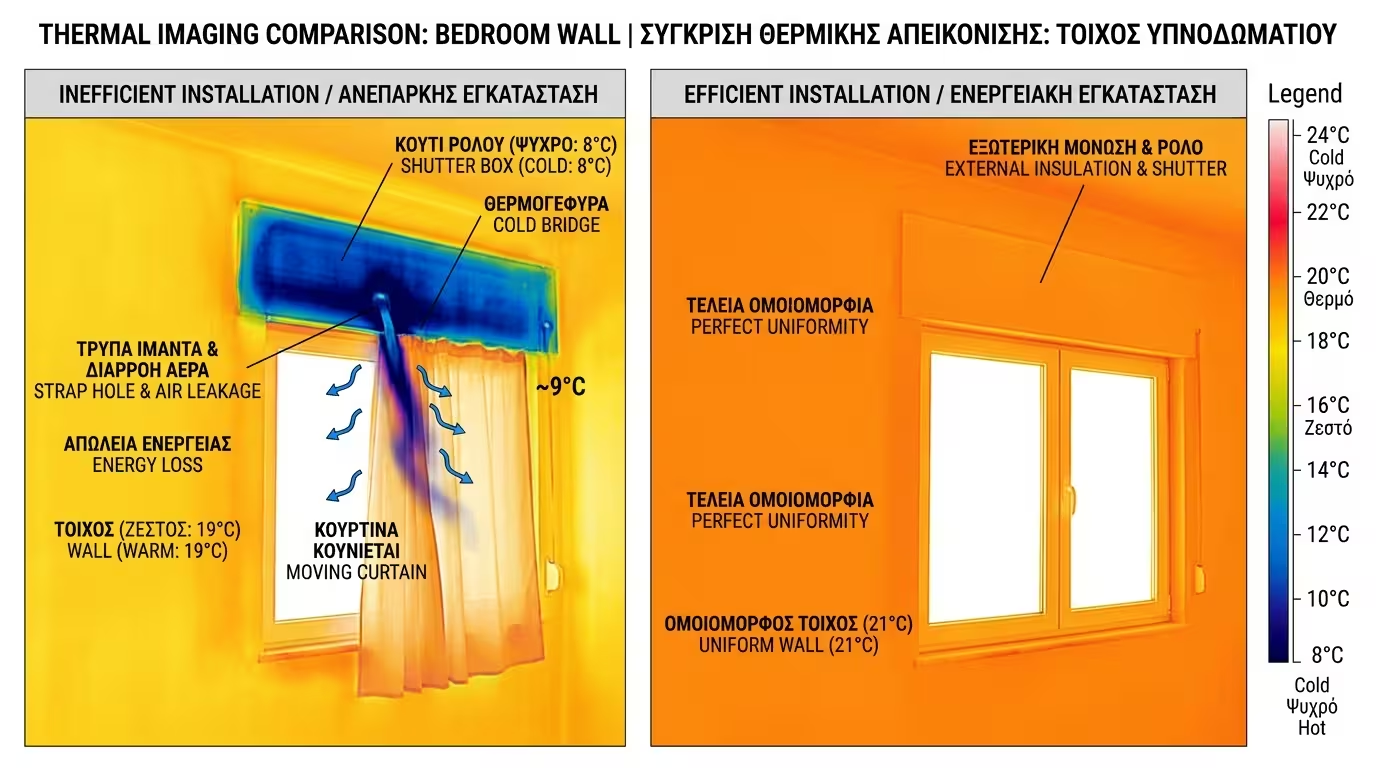
We are in the bedroom and outside it is 0°C.
The thermal camera shows our wall is warm (we have a thermal facade), but the shutter box "blazes" in deep blue! Its temperature is just 8°C. Every time it blows, the curtain sways slightly from the air coming through the strap hole. The loss is enormous.
The old box was removed and the hole in the wall was bricked up and insulated. The new shutter was installed externally and covered by the thermal facade. Because it is motorised, there is no strap hole at all (just a small sealed cable). The thermal camera shows perfect uniformity. The wall and the spot above the window are exactly the same temperature (21°C).
The Final Conclusion: Do not spend thousands of euros on thermal facades and energy-rated glazing if you intend to leave your shutter boxes bare. Ask your aluminium fabricator to insulate them internally, or better yet, choose to replace them with new, motorised external shutters. It is the detail that makes the difference between a "good" and a "perfect" house!
Return to category.
Go to categoryReturn to the central guide.
Go to guide