Cellulose Insulation: The Ecological Solution from Recycled Paper -
Complete Guide
If you want a 100% "green" renovation with excellent thermal performance
but a tight budget, the answer literally lies in the
recycling bin.
Cellulose Insulation is a material manufactured from 80-85% recycled paper, mainly old newspapers and cardboard boxes. It is arguably the
smartest, most affordable and most environmentally friendly insulation
solution, and it is applied in a way that is completely different from
conventional boards. Let us see why.
1. Paper in the Wall? The "Magic" of Boron
Most people's first reaction when they hear "paper in the wall" is
fear: fire, mould, rodents. The "magic" that minimises these risks
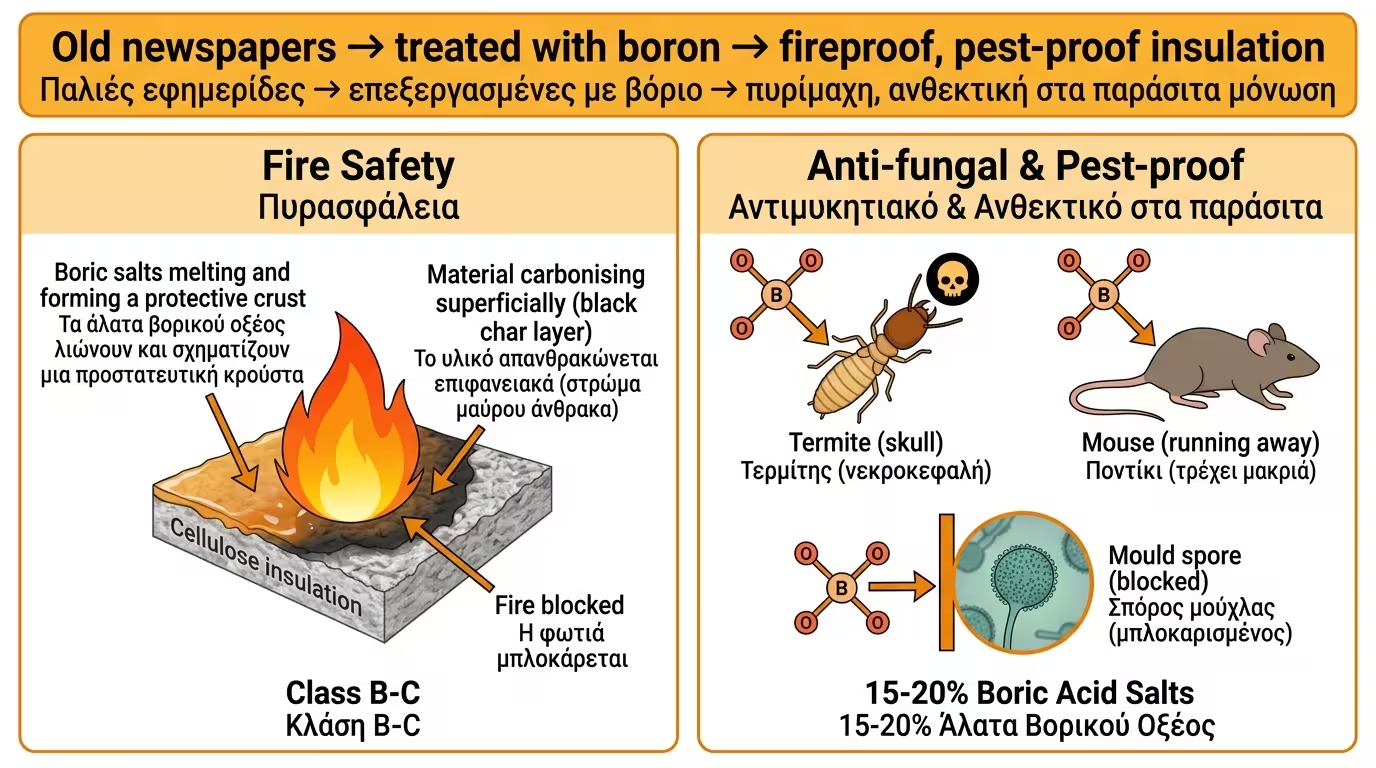
lies in the composition: 15-20% of the material consists of boric acid salts (borate), which completely change the paper's behaviour regarding fire and
pests.
🔥 Fire Safety
Cellulose does not ignite the way you might imagine. The boric salts
melt under heat, forming a glassy crust on the surface. The material
carbonises only superficially, preventing the flame from spreading.
Fire classification: Class B-C (Euroclass).
🦠 Anti-fungal and Pest-proof
Boron does not only protect against fire. It is lethal to termites
and ants, prevents mould growth and acts as a repellent for rodents,
which cannot tolerate these borate salts.
2. Seamless Insulation: The Blow-in Method
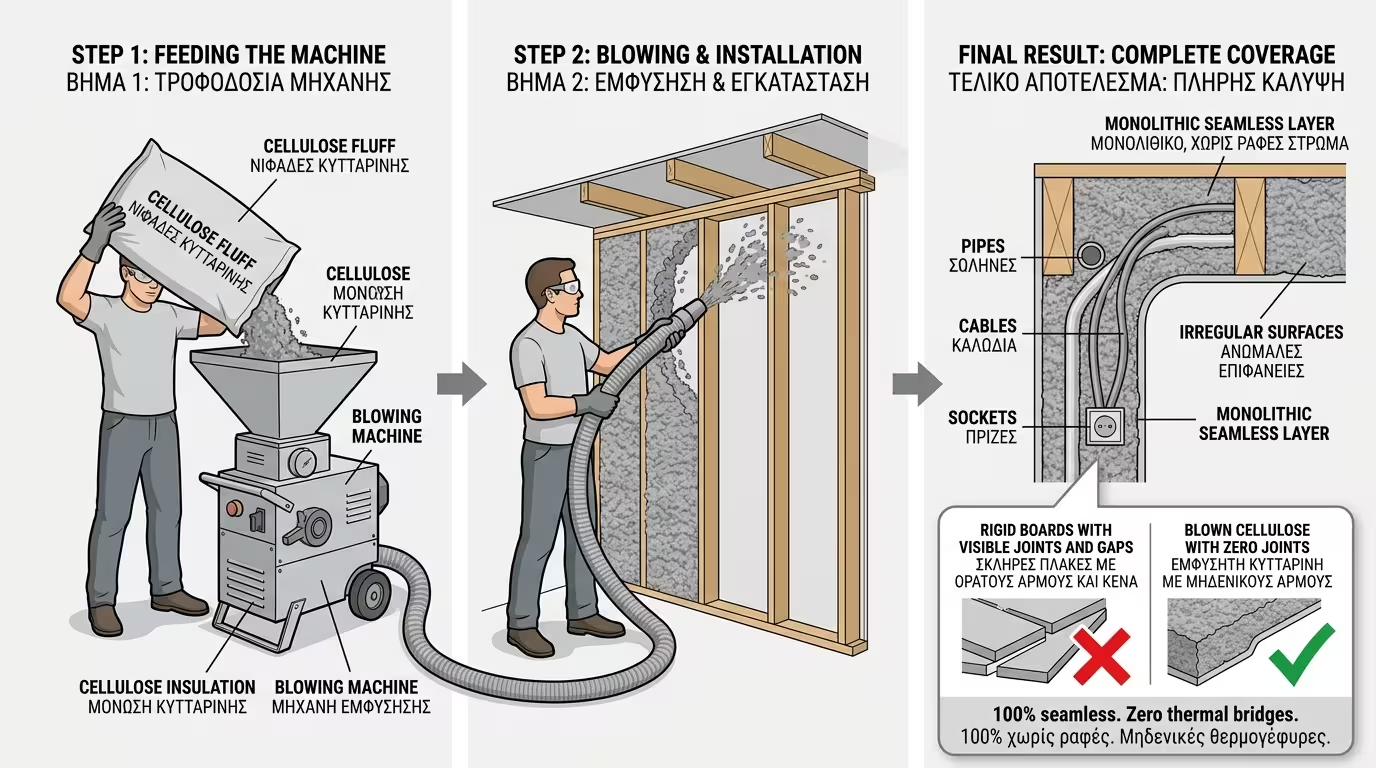
Cellulose is not sold in boards or rolls, but in bags as loose grey
fluff. A specialist blowing machine mixes this fluff with air and
blows it through a flexible hose into wall cavities, ceiling voids or
attic spaces.
The result is remarkable: the cellulose literally reaches every
corner, wrapping around pipes, cables, sockets and every irregularity
in the structure. It creates a completely monolithic insulation layer with zero joints or gaps. This means it eliminates the thermal bridges and air currents that
escape between conventional boards.
3. Three Key Reasons to Choose Cellulose
Among so many insulation alternatives, three critical advantages set
cellulose apart.
🏠 Ideal for Roofs and Ceilings
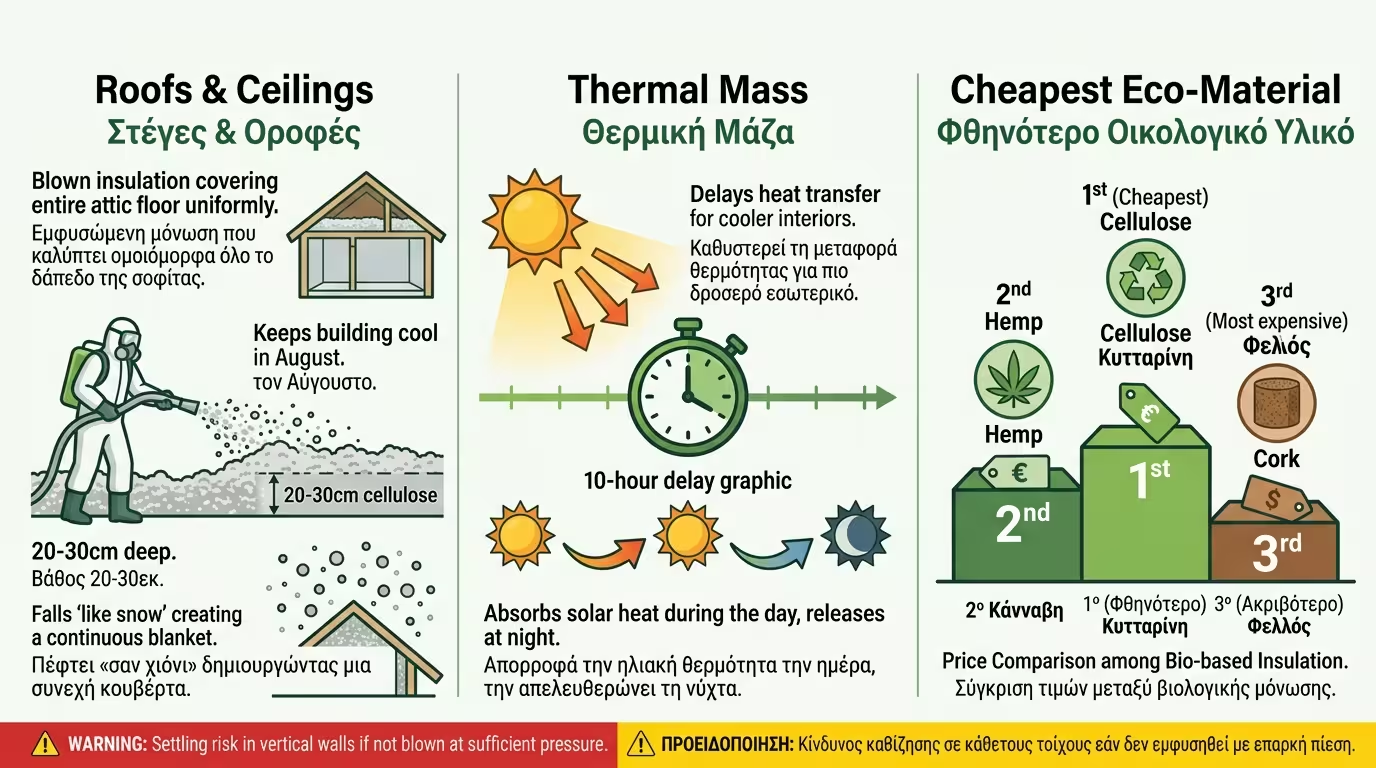
Cellulose is the ultimate solution for horizontal surfaces: the
technician sprays 20-30 cm "like snow" above a plasterboard ceiling
or onto an attic floor, covering everything uniformly in minimal
time.
☀️ Thermal Mass
As a wood derivative, cellulose inherits significant thermal mass.
It stores solar heat and delays its entry into the interior by up to 10 hours. This translates to coolness even in August, without
air-conditioning!
💰 The Most Affordable Green Option
Of all biological and natural insulation materials (cork, wood
fibre, hemp, wool), cellulose is consistently the cheapest. The ideal choice for an eco-friendly renovation on a limited
budget.
⚠️ Watch for "Settling": In vertical walls, if cellulose
is not blown at sufficient density, gravity gradually pulls it downward, leaving
uninsulated gaps at the top of the wall cavity. This work is not a DIY job - it requires specialist equipment and an experienced operator.
4. The 10x10 Model Experiment: Old Timber Roof
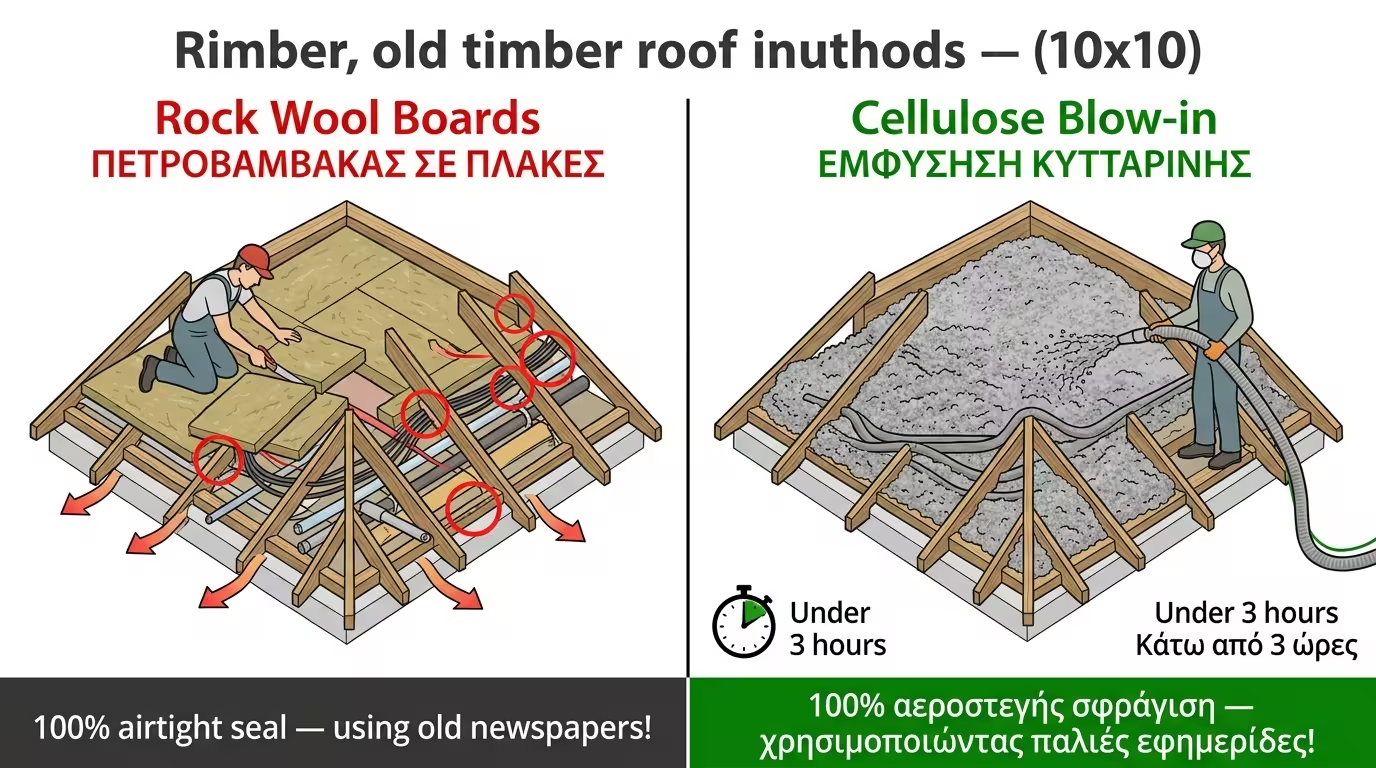
We want to insulate an old timber roof crammed with electrical cables,
water pipes and uneven gaps between the wooden joists. We test two
approaches.
🟡 Scenario A: Rock Wool Boards
The installer painstakingly cuts the boards to exact sizes,
struggling to fit them around the pipes. Despite their best efforts,
small gaps remain around the cables - cold air leaks through.
🏆 Scenario B: Cellulose Blow-in
In under 3 hours the specialist operator has sprayed
the entire roof. The cellulose hugs every cable, fills every millimetre
like a foam. Result: 100% airtight seal - using a material made from old
newspapers!
💡 Conclusion: If you are renovating an old house or dealing
with a cold roof full of pipework, cellulose delivers rock-wool-level performance
with the massive bonus of total seamless sealing, a 100% recycled ecological
profile - and the lowest price in its category.