
❌ Conventional Paint
A conventional paint absorbs solar (infrared) radiation and converts it to heat. The surface becomes extremely hot.
"Paint your exterior wall with our magical nanotechnology coating and save yourself the expense of external insulation!". If you have searched for affordable insulation solutions, you have surely come across such advertisements.
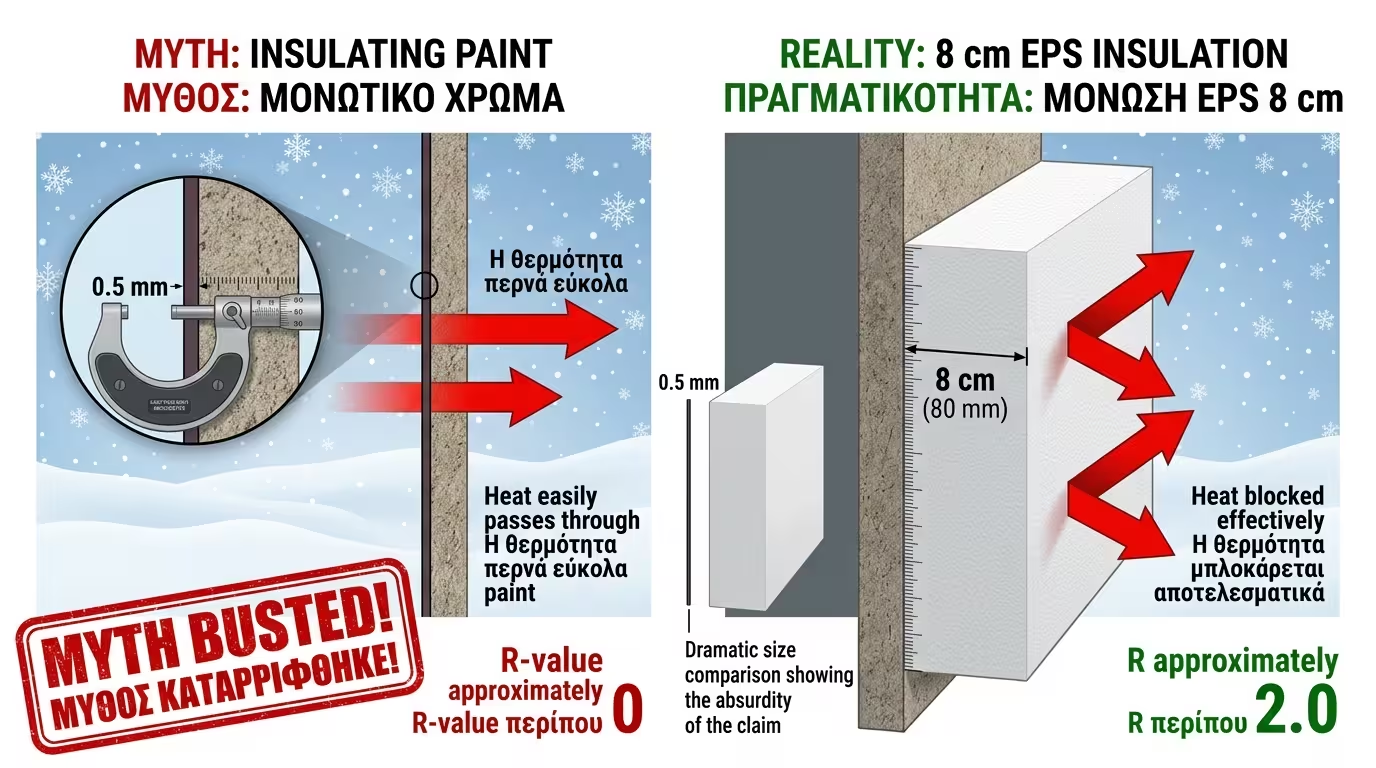
The promise is enormous: a one-millimetre coat of paint equivalent to 5 centimetres of EPS. However, physics is unforgiving. Expecting a paint to insulate your home in winter is like expecting to stay warm in the snow wearing a... windbreaker vest.
Let us separate myth from reality and discover the true (and extremely useful) function of these coatings.
As we analysed in the previous article about insulating renders, thermal resistance (the ability to block heat leakage in winter from inside out) requires thickness.
Even if a paint contains the best insulating microspheres (ceramic or glass), its final thickness on the wall does not exceed 0.2 to 0.5 millimetres. With such minimal thickness, the thermal resistance it provides (R-value) is practically zero. In winter, the heat from your radiator will pass through the wall and the paint as if they did not exist.
If they are useless in winter, why do we buy them? Because in summer they work wonders! The correct term is not "insulating" but reflective coatings. These paints (usually brilliant white) are designed to have an enormous Solar Reflectance Index (SRI).
When the summer sun hits your wall or flat roof:
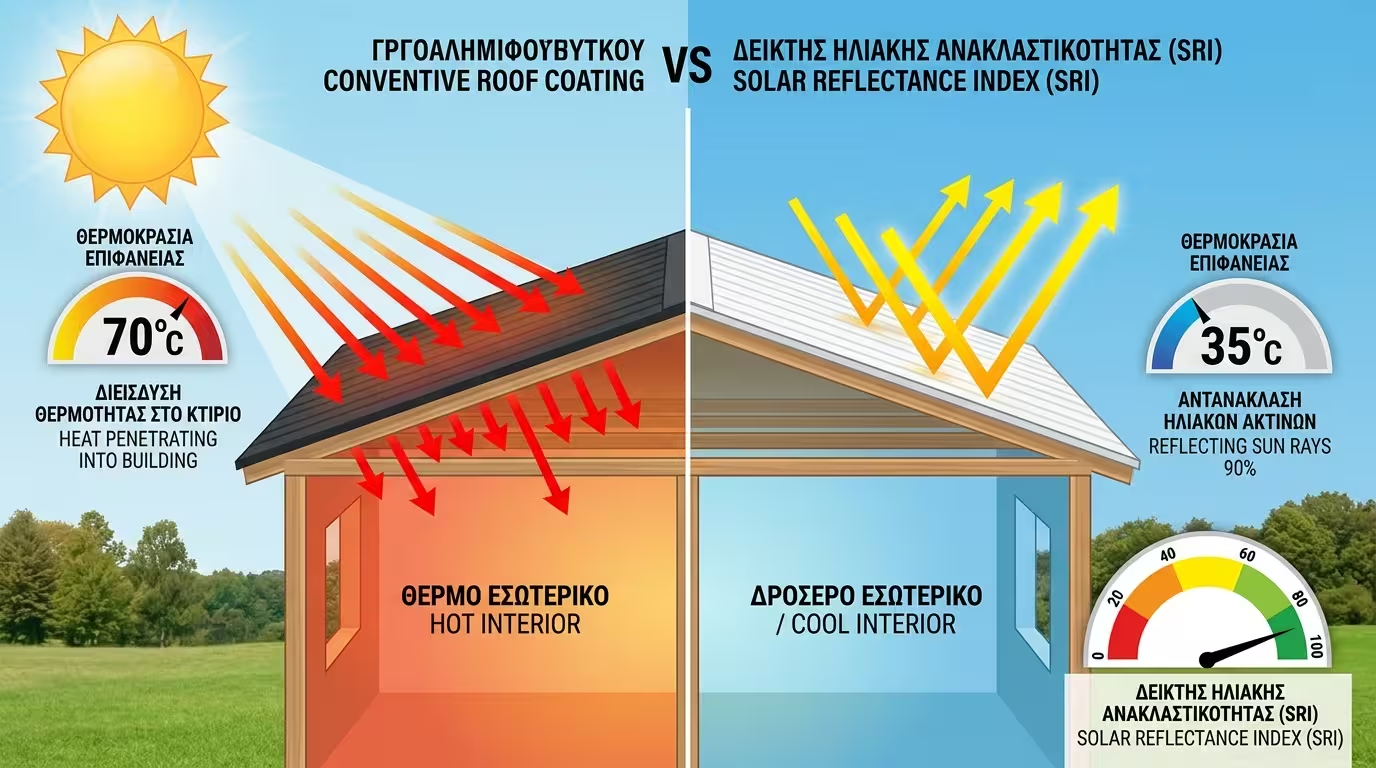
A conventional paint absorbs solar (infrared) radiation and converts it to heat. The surface becomes extremely hot.
A reflective (elastomeric) coating acts like a "mirror". It reflects up to 90% of solar radiation back into the atmosphere. The surface simply does not heat up!
The result? Since the roof does not overheat, no heat passes into the penthouse below.
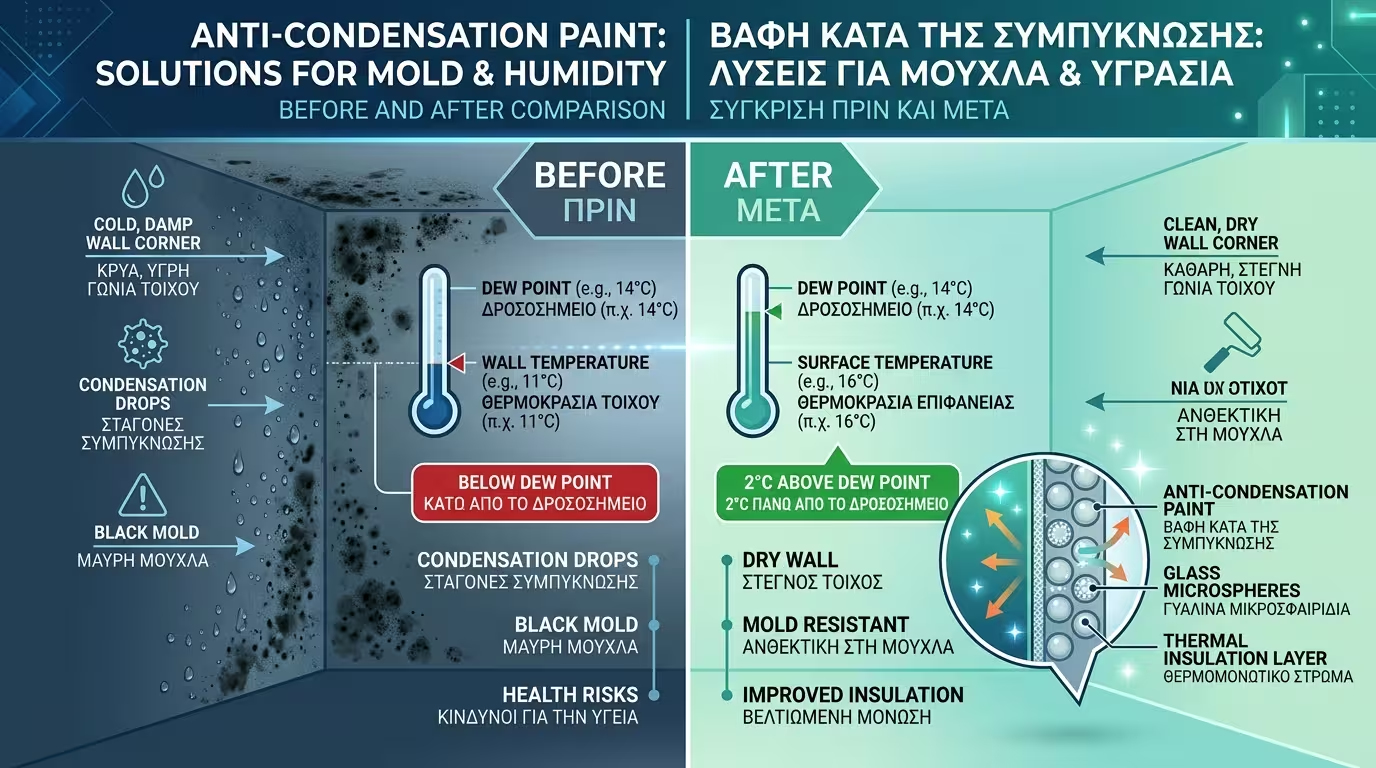
What about paints intended for interior use? These usually contain microscopic hollow glass spheres (air voids). They will not reduce your heating bill either. However, they have another fantastic property: they "break" the feeling of iciness when you touch the wall.
By raising the wall surface temperature by just 1 to 2 degrees Celsius, they manage to keep it above the critical Dew Point. This means the room's water vapour does not condense on it, and the black mould in corners disappears permanently. These are known as anti-condensation paints.
Let us go to the uninsulated flat roof (100 sq.m.) of our digital house at noon in August. The old roof coating is dark grey.
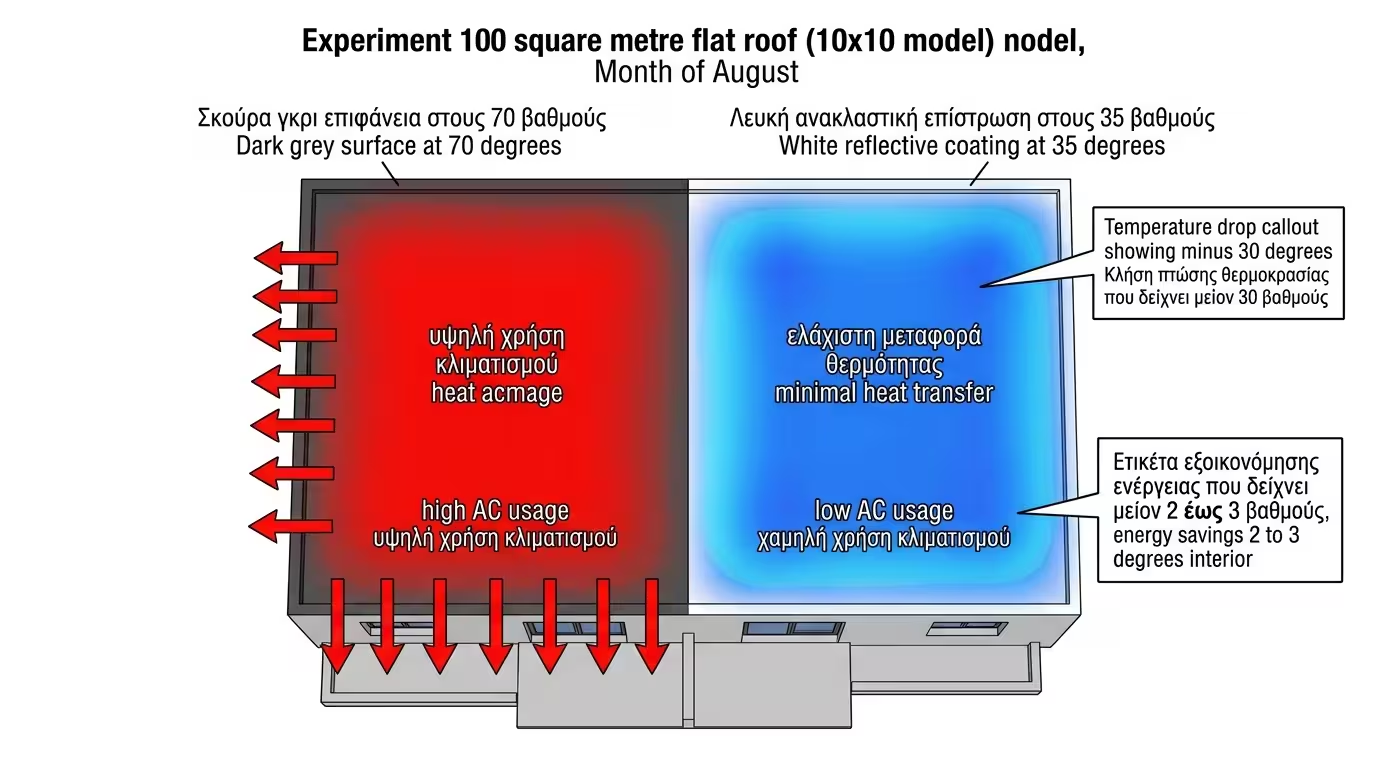
The sun "blasts" the dark colour. The concrete surface reaches 70°C. The slab becomes a massive radiator, roasting the living room. The air conditioner runs at full power.
We paint the roof with a certified "cool" (reflective) white polyurethane coating. The surface reflects the radiation and its temperature drops to 35°C to 40°C!
Without installing a single centimetre of insulation material, we reduced the slab temperature by 30 degrees. The interior temperature dropped by 2-3 degrees and cooling costs decreased dramatically.
💡 Final Conclusion: Do not buy "magical" paints to keep warm in winter. Buy exterior reflective coatings to protect (and waterproof) your roof in summer, and interior anti-condensation paints to eliminate mould in north-facing rooms. For real winter energy savings, the solution remains conventional insulation.
Return to category.
Go to categoryReturn to the central guide.
Go to guide