📐 Dimensions
10 metres wide × 10 metres long. Floor area: 100 square metres (m²). The typical size of an average family home.
When you ask an engineer "How much money will I save if I insulate?", the most honest (but also infuriating) answer they can give you is: "It depends".
It depends on where you live, how your home was built, how many windows it has and what heating habits you have. But because in energy upgrading we need tangible evidence and numbers, we created the "10x10 House".
This is our digital, virtual laboratory. A perfectly typical, simplified Greek house, on which we will run all the financial and energy experiments of the following articles. Let us look at its "anatomy", so you know how the mathematics work.
To keep the calculations understandable, we chose the simplest geometric shape. Our house is a single-storey, detached square building with the following characteristics:
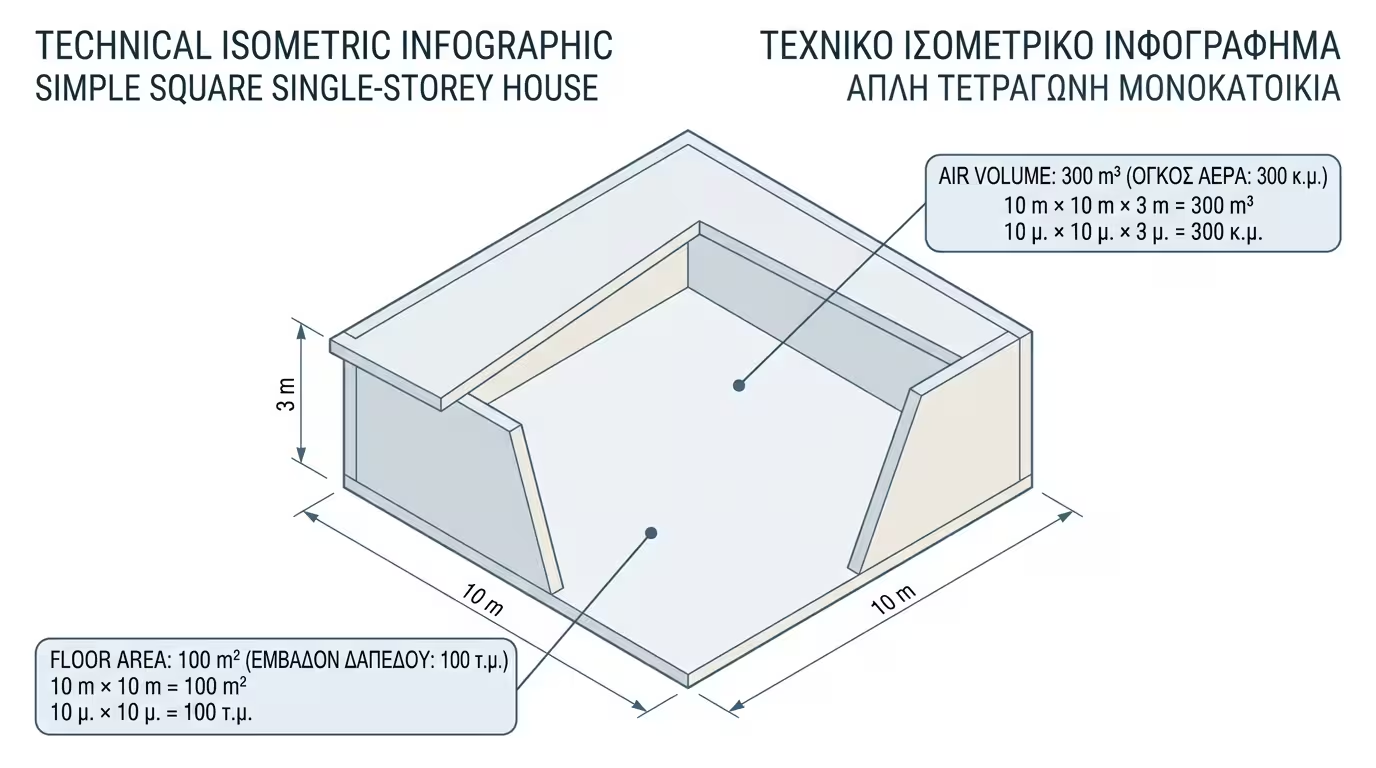
10 metres wide × 10 metres long. Floor area: 100 square metres (m²). The typical size of an average family home.
Ceiling height: 3 metres. Total air volume: 300 cubic metres. This is the air we must heat in winter and cool in summer.
To calculate the losses, we need to know the surfaces in contact with the external environment (the so-called Thermal Envelope). In our model we have:
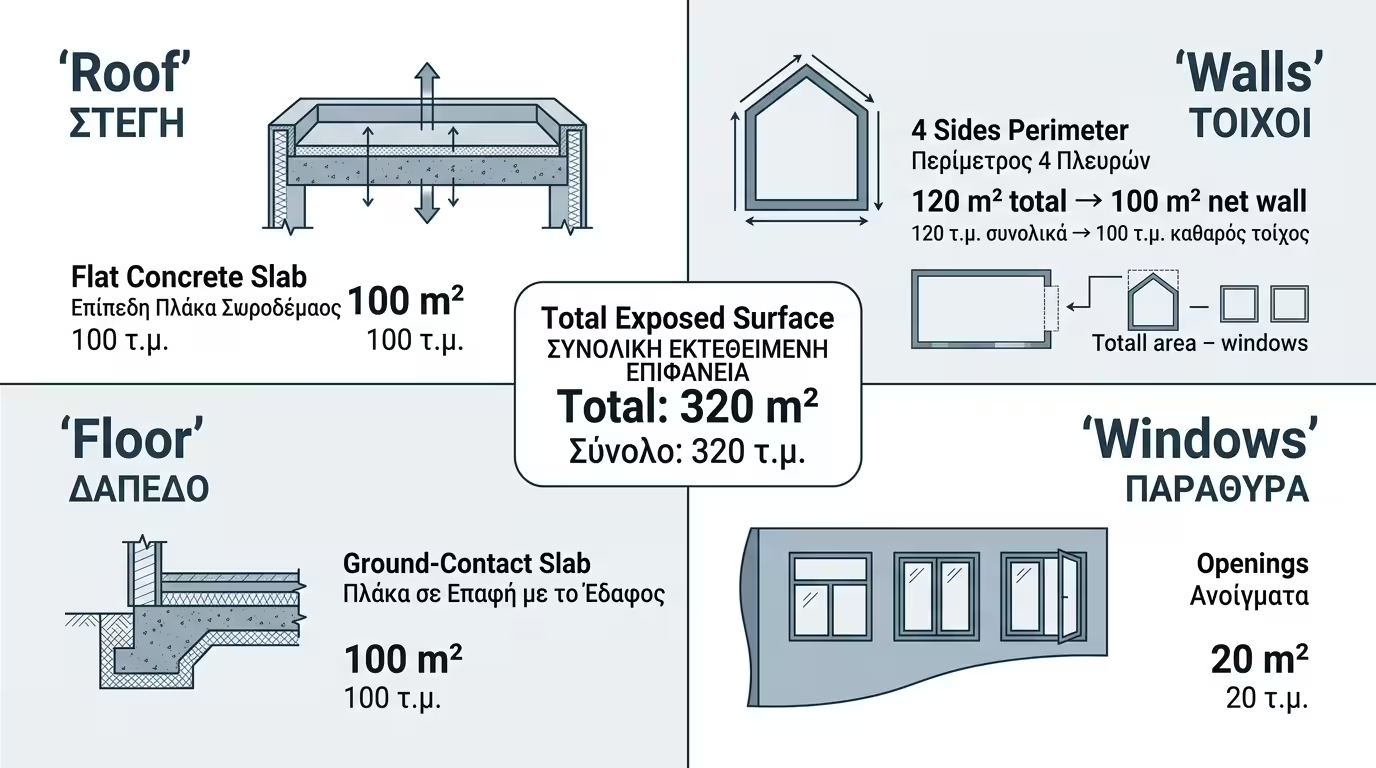
A flat concrete slab, area 100 m².
A slab of 100 m² resting directly on the ground (no pilotis).
The total perimeter wall area is 120 m² (4 sides × 10 m length × 3 m height).
We subtract 20 m² from the walls for windows and doors. This leaves 100 m² of net wall.
📊 Mathematical Summary: Our home loses energy through a total of 320 m² of exposed surfaces (100 floor + 100 roof + 100 walls + 20 windows).
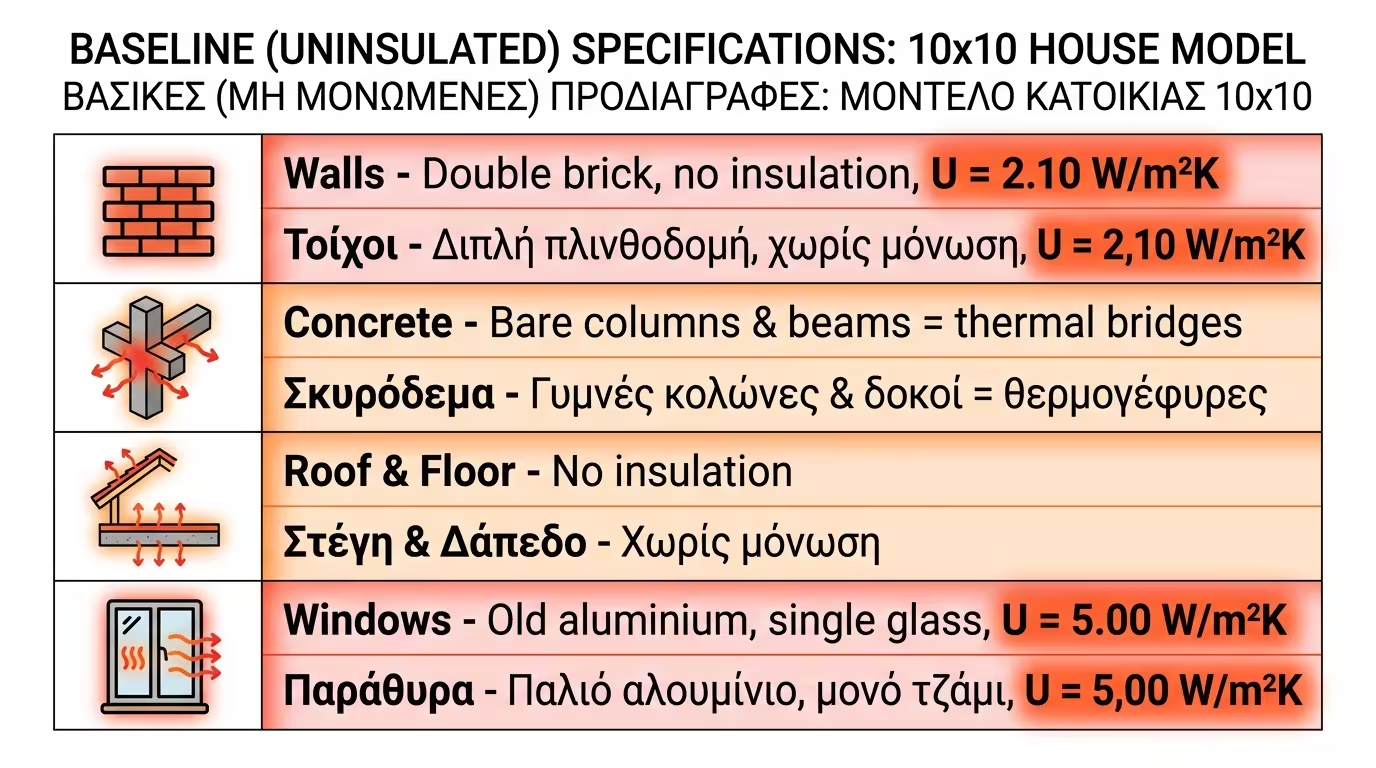
To see the gains, we must start from the worst case. The "10x10 House" in its Baseline Scenario is assumed to be a 1970-1980s construction, before the modern Insulation Regulation:
Double brick with an air gap, no insulation at all. U-Value approximately 2.10 W/m²K.
Bare, forming enormous thermal bridges.
Absolutely no insulation whatsoever.
Old aluminium frames with single glazing that let air in. U-Value approximately 5.00 W/m²K.
To make the numbers realistic, we "build" our house in Greece's Climate Zone C (e.g. in Macedonia). This means we have a typical, cold winter.
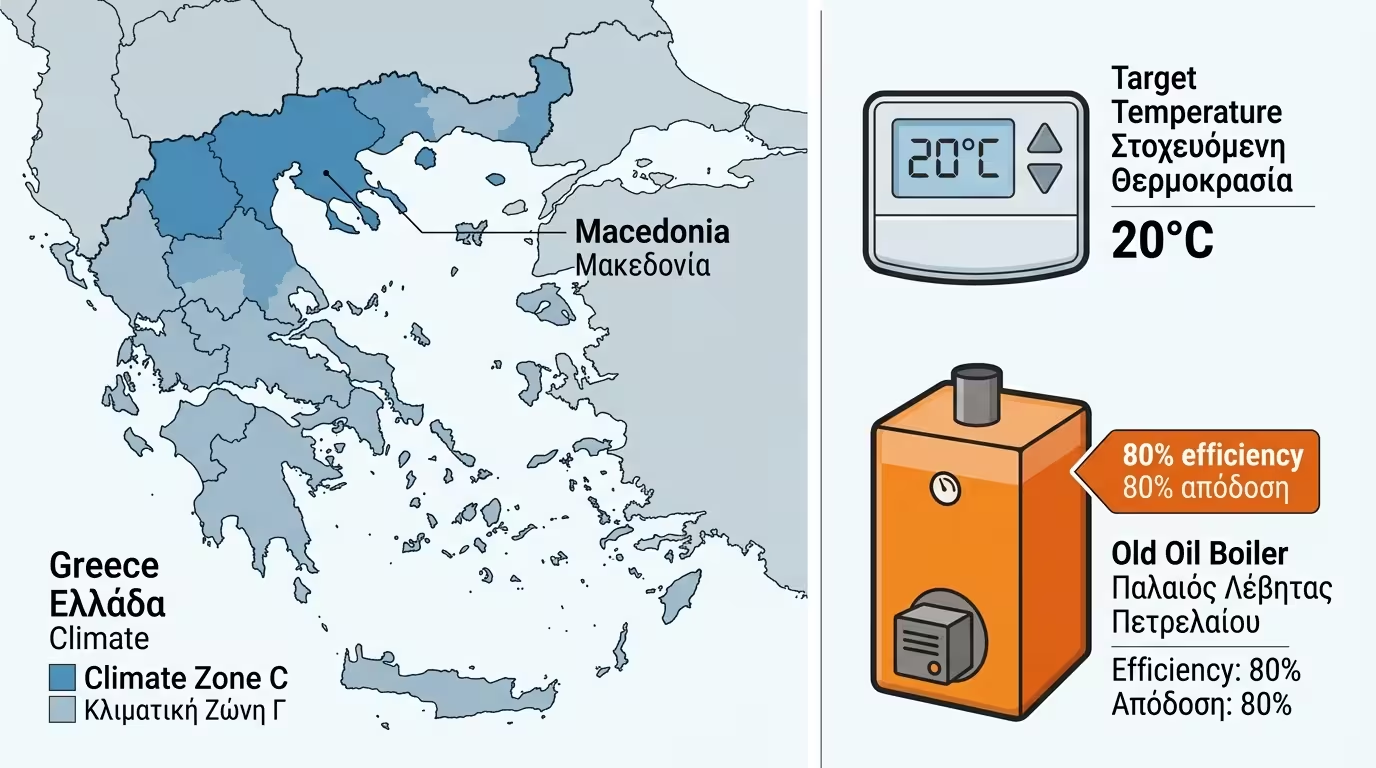
We want our thermostat fixed at 20°C all winter.
For cost calculations, we initially assume the house is heated by a typical old-technology oil boiler, which "burns" our money with an efficiency of only 80%.
💡 Final Conclusion: The "10x10 House" is now ready. We have its dimensions, we know where it leaks and we know how cold it is outside. In the following articles, we will begin adding insulation materials to it and seeing, with precise calculations, how hundreds of litres of heating oil magically evaporate!
Return to category.
Go to categoryReturn to the central guide.
Go to guide