Condensation (Mould) vs. Active Leak (Water): How to Tell Where the
Problem Is Before Calling a Contractor
In the world of damp, there are two completely different enemies that
often look the same to the naked eye, but require entirely different
treatments. Enemy A is an Active Leak: water coming
from outside (e.g. rain through the roof) or a burst pipe. Enemy B is Condensation (Mould): water created from inside - household vapour (breathing, cooking,
showering) that liquefies on a cold wall.
If you confuse the two, you'll spend thousands on the wrong contractor.
Here's how to tell them apart.
1. The Visual Test (What the Stain Looks Like)
Your eyes are the first diagnostic tool. Water leaves a different
"fingerprint" depending on how it got there:
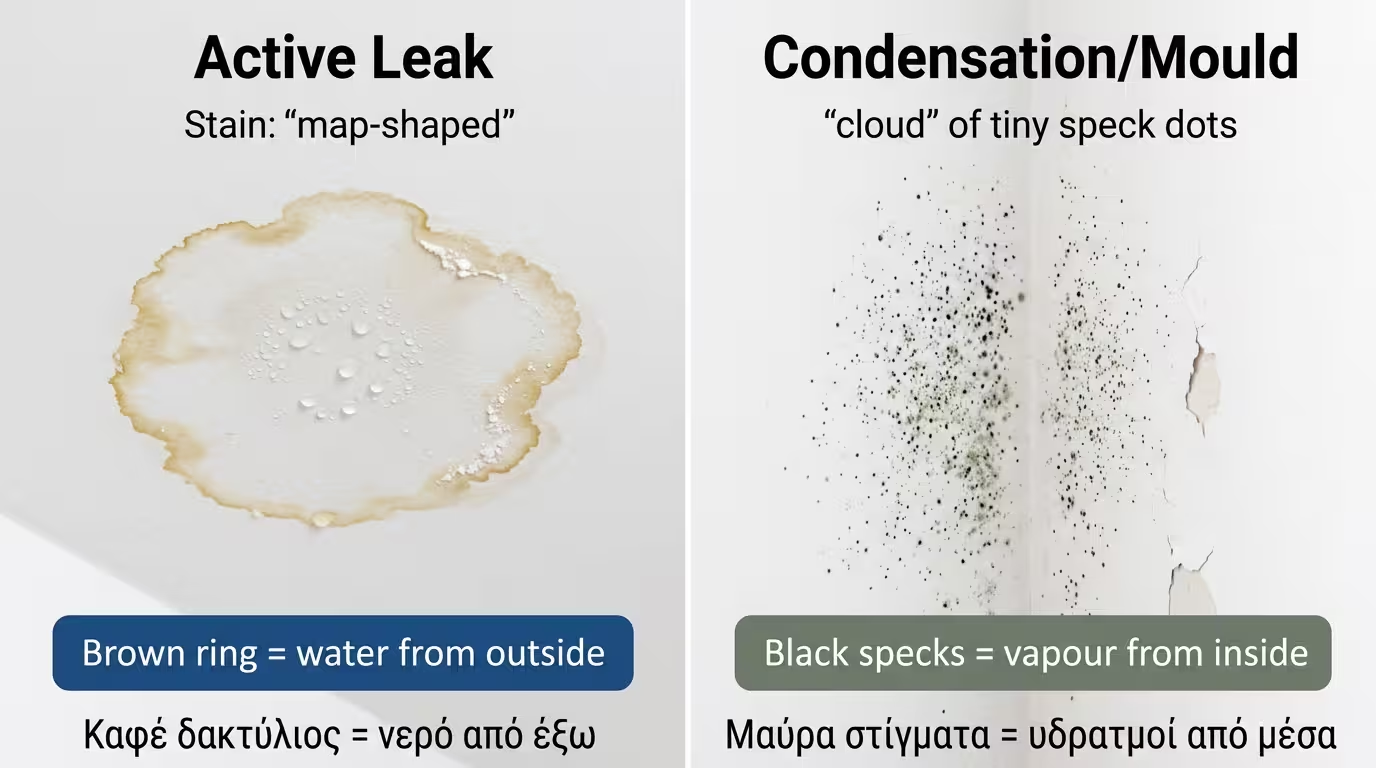
💧 Leak Signature
An active leak (e.g. from the roof) typically creates a stain that
looks like a "map". It has a clear, dark-coloured
(often brown or yellowish) ring on its perimeter. This happens
because water carries salts and dirt from the cement and deposits
them at the edges as it dries. The centre may be swollen or
dripping.
🦠 Condensation Signature
Condensation rarely leaves brown rings. It usually appears as a "cloud" of tiny black or green specks (mould). There's no dripping water. Paint may peel lightly, but the
plaster underneath is usually sound, unlike a leak which "rots" the
wall deep down.
2. The Location & Time Test
Where and when does the problem appear?
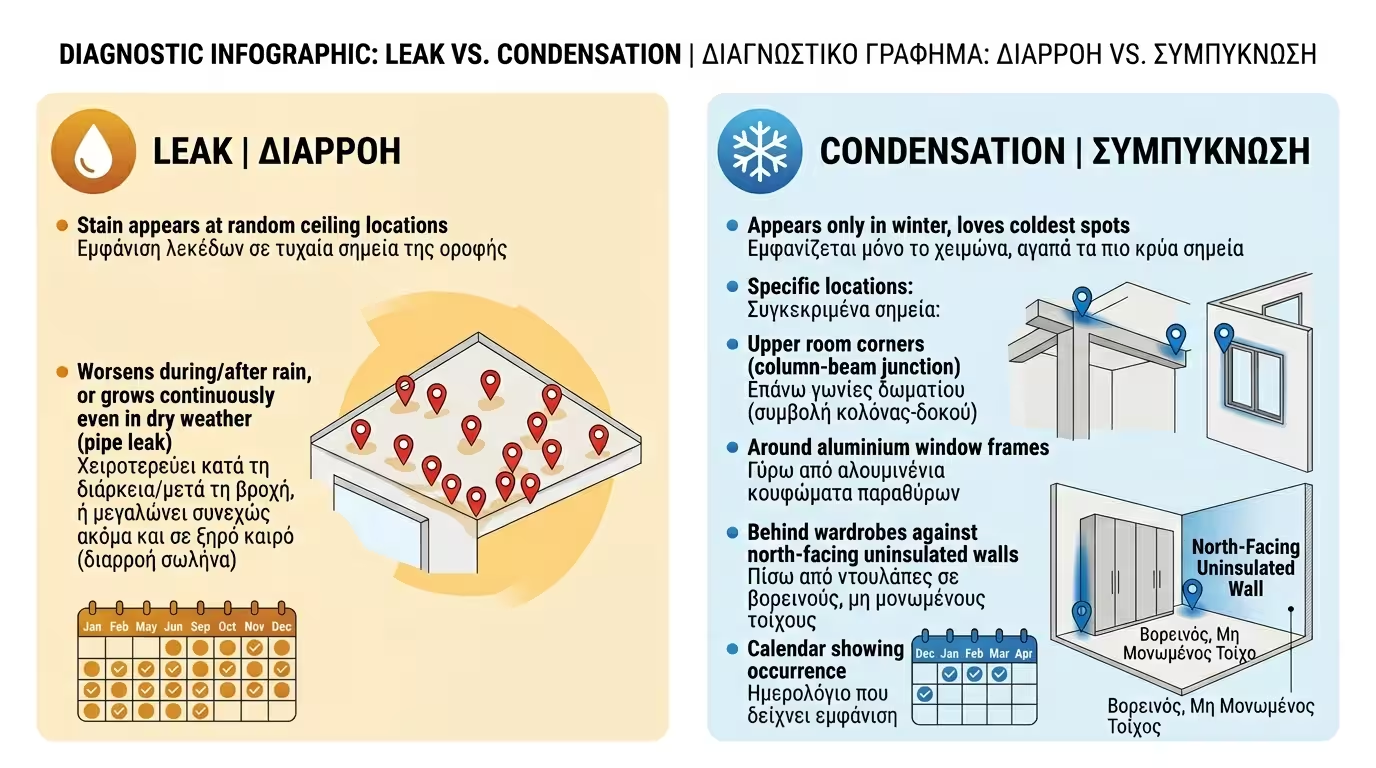
🌧️ Leak
Can appear in the middle of the ceiling or at random spots. If
it's from the roof, it appears or worsens during or right after rain.
If it's from a supply pipe, the stain grows continuously - even after
a month of sunshine!
❄️ Condensation
Appears exclusively in winter (cold outside, heating inside).
It loves the coldest spots - thermal bridges: upper room corners (where
columns meet beams), around window frames, and (most classically) behind wardrobes or furniture against north-facing, uninsulated walls.
3. The Tin-Foil Test (DIY Diagnosis)
Still not sure? Try the oldest and most reliable engineering trick:
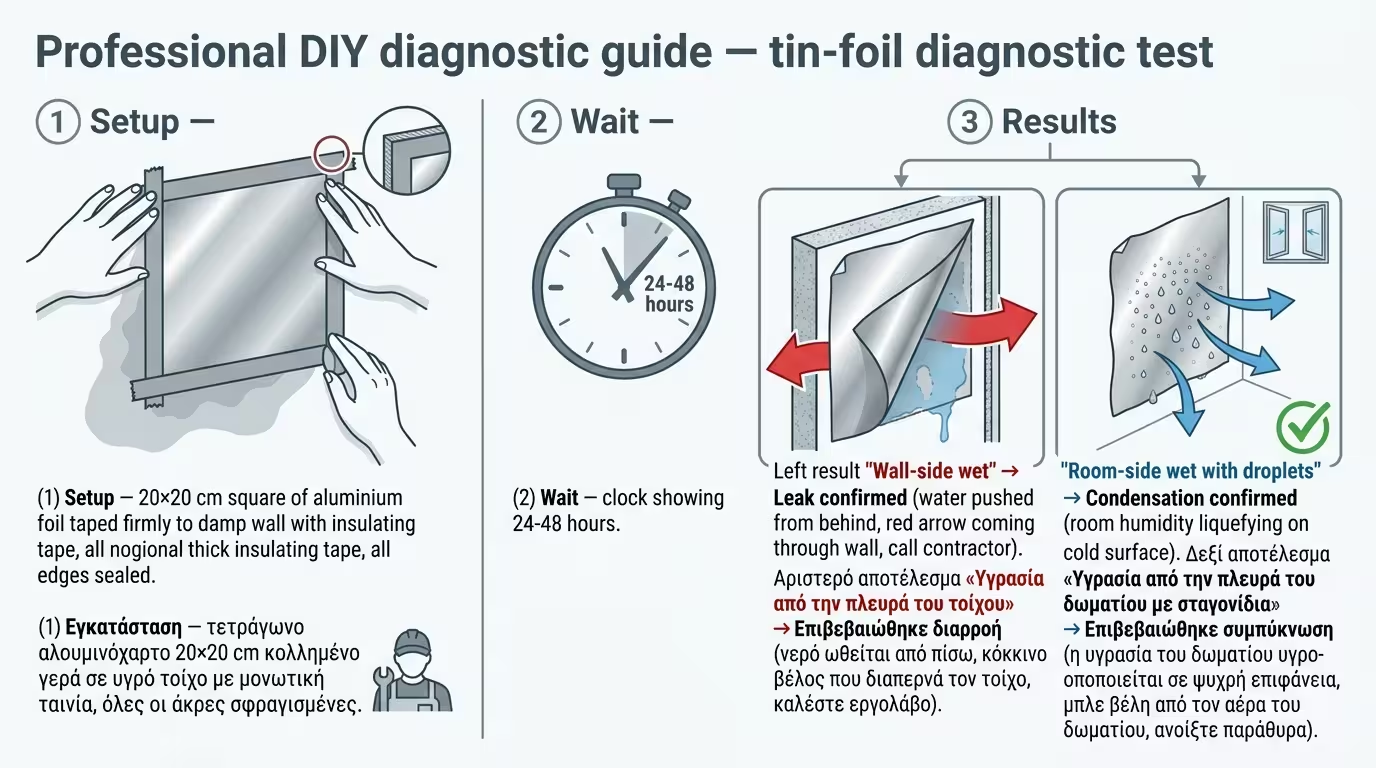
📋 Method
Cut a square piece (approximately 20×20 cm) of household aluminium
foil or thick transparent nylon sheeting. Tape it tightly over the
problematic, damp wall with insulating tape, sealing all four edges
completely so no air can get through. Leave it undisturbed for 24 to
48 hours.
🔍 Results
If the wall-side is wet → Leak (moisture
is being pushed through from a pipe or roof). Call a contractor. If the
room-side is covered in droplets → Condensation (room humidity is liquefying on the cold surface). Open your windows!
4. The Experiment: The 10×10 Living Room
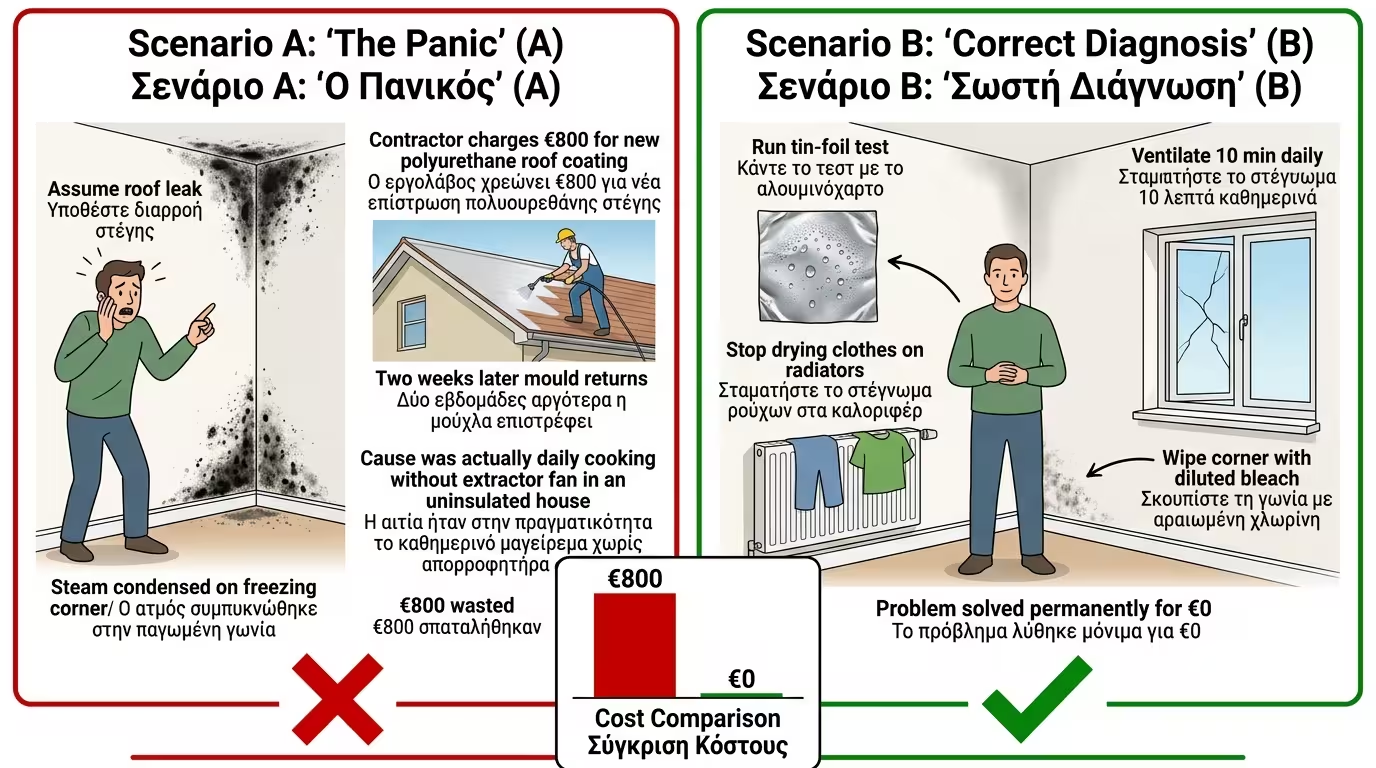
It's January. We spot black blotches high in the corner of the living
room.
🔴 Scenario A (The Panic)
We assume the roof membrane tore. We call a contractor who charges
€800 for applying brand-new polyurethane membranes across the entire
roof surface. Two weeks later, the black blotches return in exactly
the same corner! What happened? The family had been cooking every
single day without switching on the kitchen extractor, and the
poorly insulated house filled with steam and moisture. The vapour
hit the freezing concrete corner, condensed into liquid water and
grew mould.
€800 wasted on a completely unnecessary roof repair.
🟢 Scenario B (Correct Diagnosis)
We run the tin-foil test. Droplets are on the room side. We stop
drying clothes on radiators, ventilate for 10 minutes every morning,
and wipe the corner with diluted bleach. Problem solved for €0.
Bottom Line: Don't shoot the messenger (the wall). Mould
is usually a ventilation and insulation problem, while a yellow stain is a
structural waterproofing or plumbing issue. A correct diagnosis is half the
(and cheaper) cure!