1️⃣ Step 1 - Single Brick
You have a wall made of single brick (10 cm thick) weighing 100 kg per square metre. It gives you roughly 40 dB of sound insulation. You can hear your neighbour talking.
If you ask a structural engineer how to soundproof a wall, his first (perfectly correct) instinctive answer will be: "Make it heavier".
This principle is described by the Mass Law. The law says something simple: The heavier and denser a material, the more acoustic energy is required to make it vibrate. Therefore, it lets less sound through to the other side.
Here's where it gets tough. The Mass Law has a very specific limitation: Every time we double the weight (mass) of a wall, the insulation we gain increases by ONLY 6 dB!
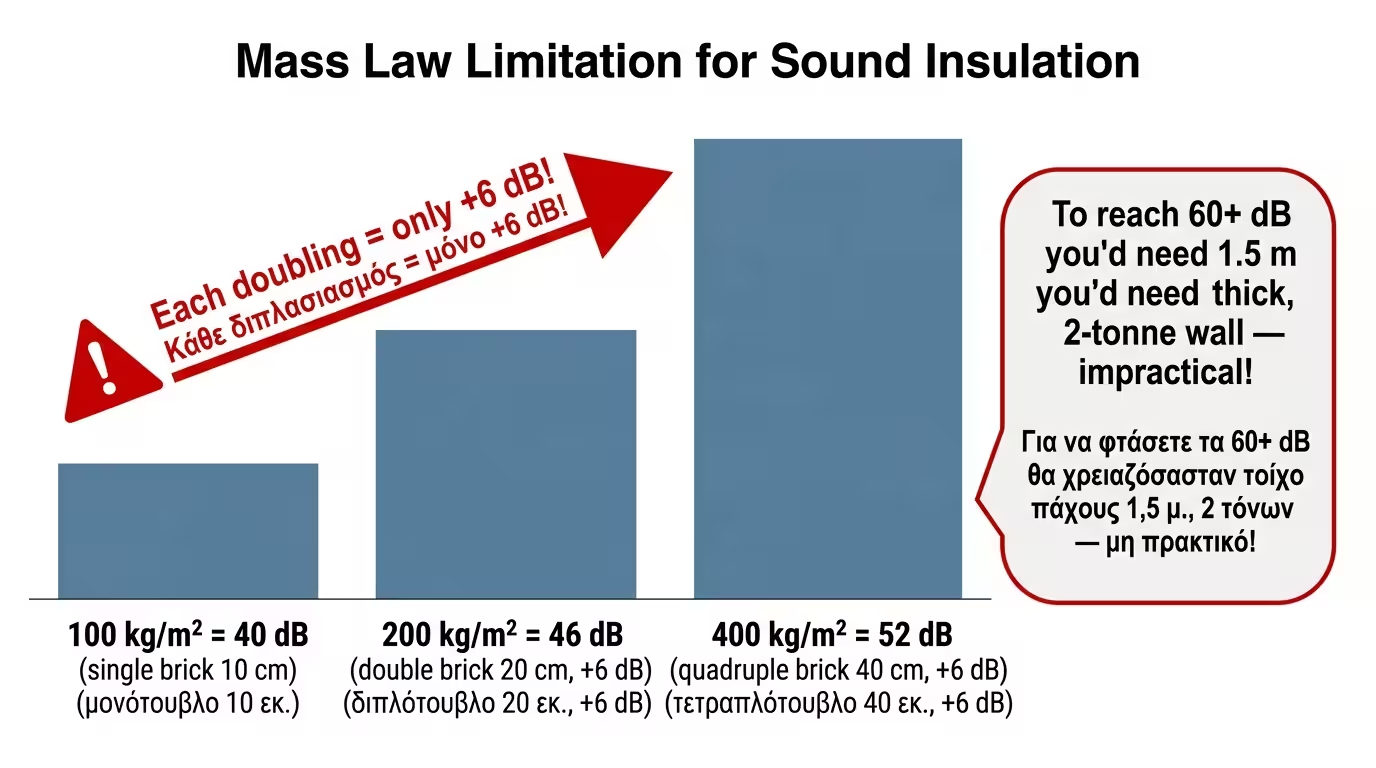
You have a wall made of single brick (10 cm thick) weighing 100 kg per square metre. It gives you roughly 40 dB of sound insulation. You can hear your neighbour talking.
You decide to double the wall. You add another layer, reaching 20 cm and 200 kg. You gain 6 dB. Insulation is now 46 dB.
You still hear the music. You double it again! Now 40 cm thick, 400 kg/m² (a real "monster"). You gain another 6 dB. You're at 52 dB.
See the issue? To cut the noise of a loud stereo (which needs a 20-25 dB reduction), you'd have to build a concrete wall 1.5 metres thick weighing 2 tonnes! That's neither practical, nor can the building's foundations support it, nor would you have any room left in your living room.
Since we can't beat sound with brute force (weight), we outwit it. Instead of building one massive solid wall, we build two thin walls with an air gap between them.
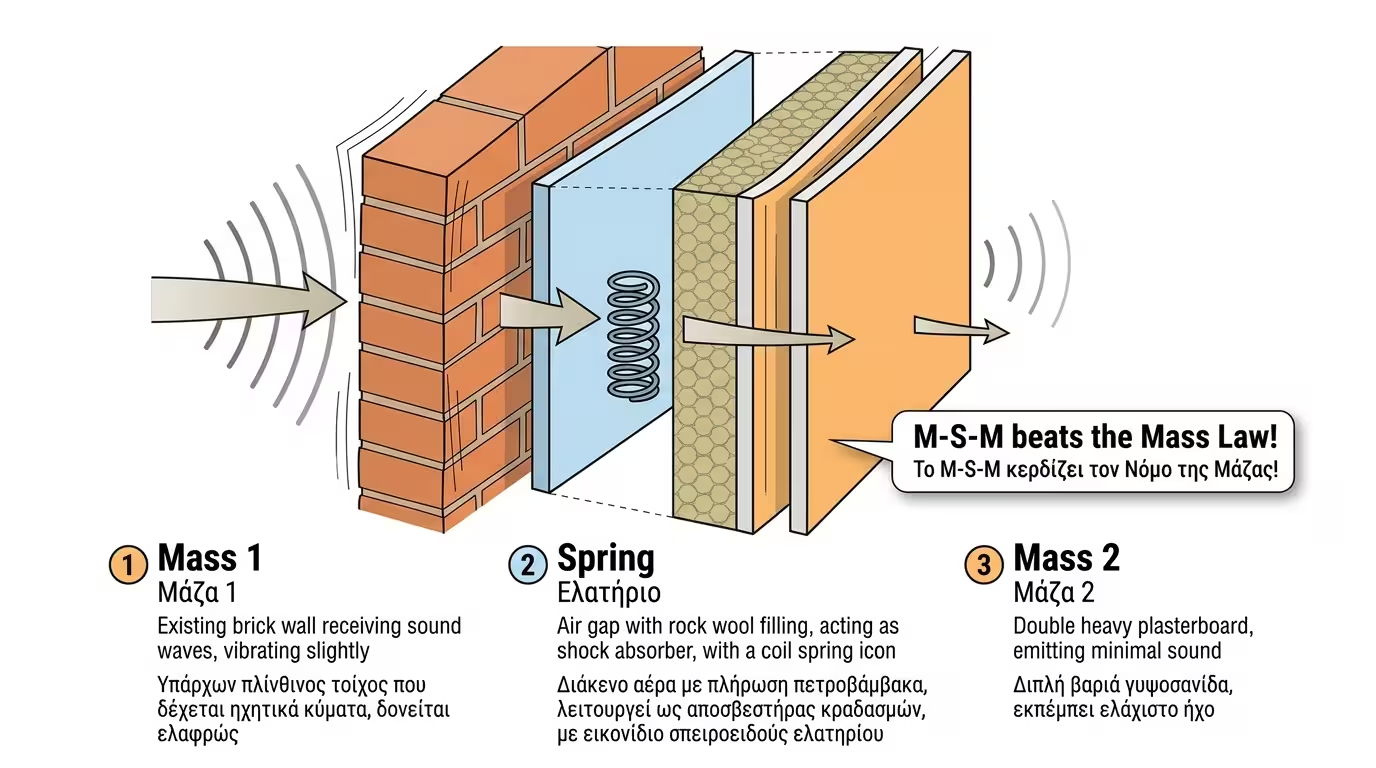
The first thin wall (e.g. the party wall with your neighbour). It receives the sound waves and starts vibrating.
The air gap between the walls. The air acts like an elastic spring (shock absorber) that "breaks" the mechanical transfer of vibration. (This is also where we place rock wool to absorb the sound trapped inside the cavity.)
The second thin wall (e.g. double plasterboard). It receives the weakened vibration and emits minimal sound into your space.
With this system, we beat the Mass Law! A "Mass-Spring-Mass" system only 15 cm thick can offer the same (or even better) insulation as a solid concrete wall 50 cm thick, weighing one-tenth of the weight!
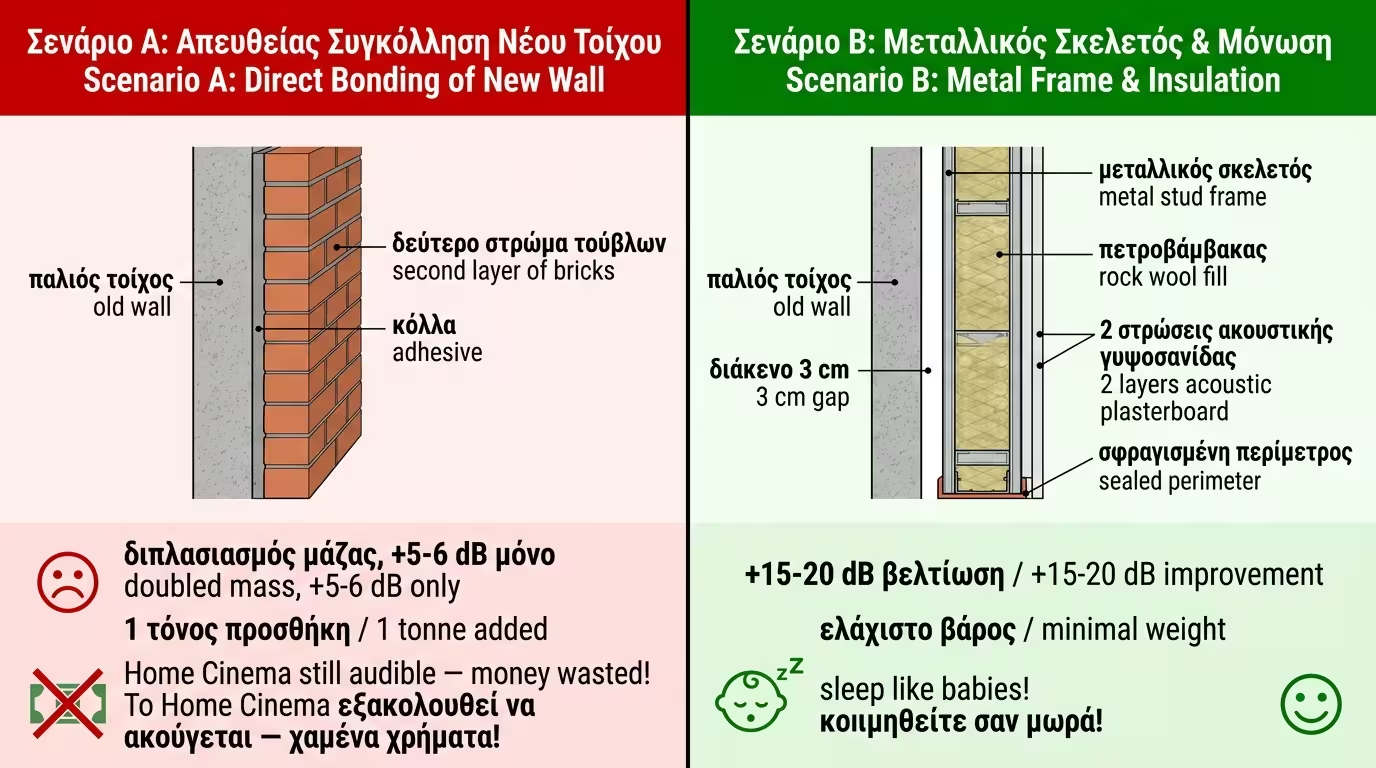
Our bedroom is separated from the neighbour's living room by a simple wall (single brick). The neighbour watches movies on a Home Cinema system and we can't sleep.
We decide to build a second layer of bricks and render them, bonded directly to the old wall. We bring in mortar, lose 10 cm of room space and add 1 tonne of weight on the floor slab. We've doubled the mass. We gain a mere 5-6 dB. The neighbour's Home Cinema is still clearly audible. The money (and the sweat) went down the drain.
We build a metal stud frame that leaves a 3 cm gap from the old wall. We fill the frame cavity with rock wool. We screw 2 layers of specialist heavy acoustic plasterboard onto the frame. We seal the perimeter with acoustic sealant. The system is 8-10 cm thick with minimal weight. Result? +15 to +20 dB improvement! The sound energy hits the brick, gets lost in the cavity/rock wool and cannot vibrate our plasterboard layers. We sleep like babies!
The Bottom Line: Mass (weight) is essential, but on its own it's "dumb". Smart soundproofing doesn't require tonnes of concrete. It requires layers of different materials, air gaps and "breaking" physical contact (decoupling).
Return to category.
Go to categoryReturn to the central guide.
Go to guide