Insulation Combustibility Guide: Which Materials Burn Like Torches,
Which Are Fireproof, and Which Pass the Test
Your building's insulation saves energy, but in a fire it can become a
massive problem. One of the most critical factors to know before
insulating your home is the Combustibility (Reaction to Fire) of the insulation material.
This guide classifies popular insulation materials into three
"at-a-glance" categories, using the Euroclasses, so you know exactly
what's going on your walls.
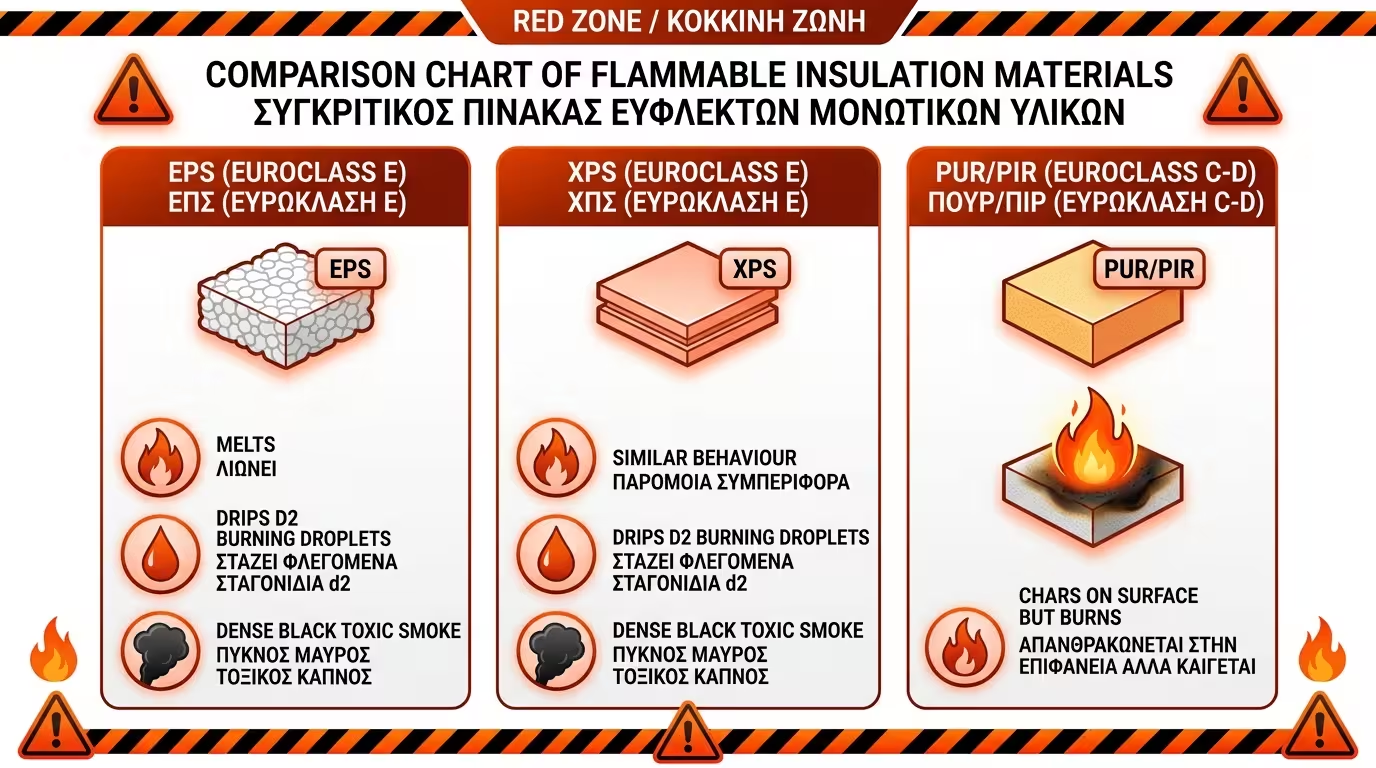
The "Reds" – Highly Flammable Materials (Classes D & E)
These materials, if not properly protected, can become fuel in a fire.
They are the materials that "feed" the fire instead of stopping it.
EPS (Expanded Polystyrene / "Styrofoam") – Euroclass E
Highly flammable. Ignites easily, melts, drips burning plastic
droplets (d2) that can start fires below, and produces dense, black, toxic smoke. Must always be enclosed behind thick render (ETICS system) or
masonry.
XPS (Extruded Polystyrene) – Euroclass E
Similar behaviour to EPS. Ignites, melts and produces toxic smoke.
Primarily used in foundations and floors.
PUR burns with a toxic flame. PIR (improved) chars on the surface,
slowing the flame, but is not non-combustible.
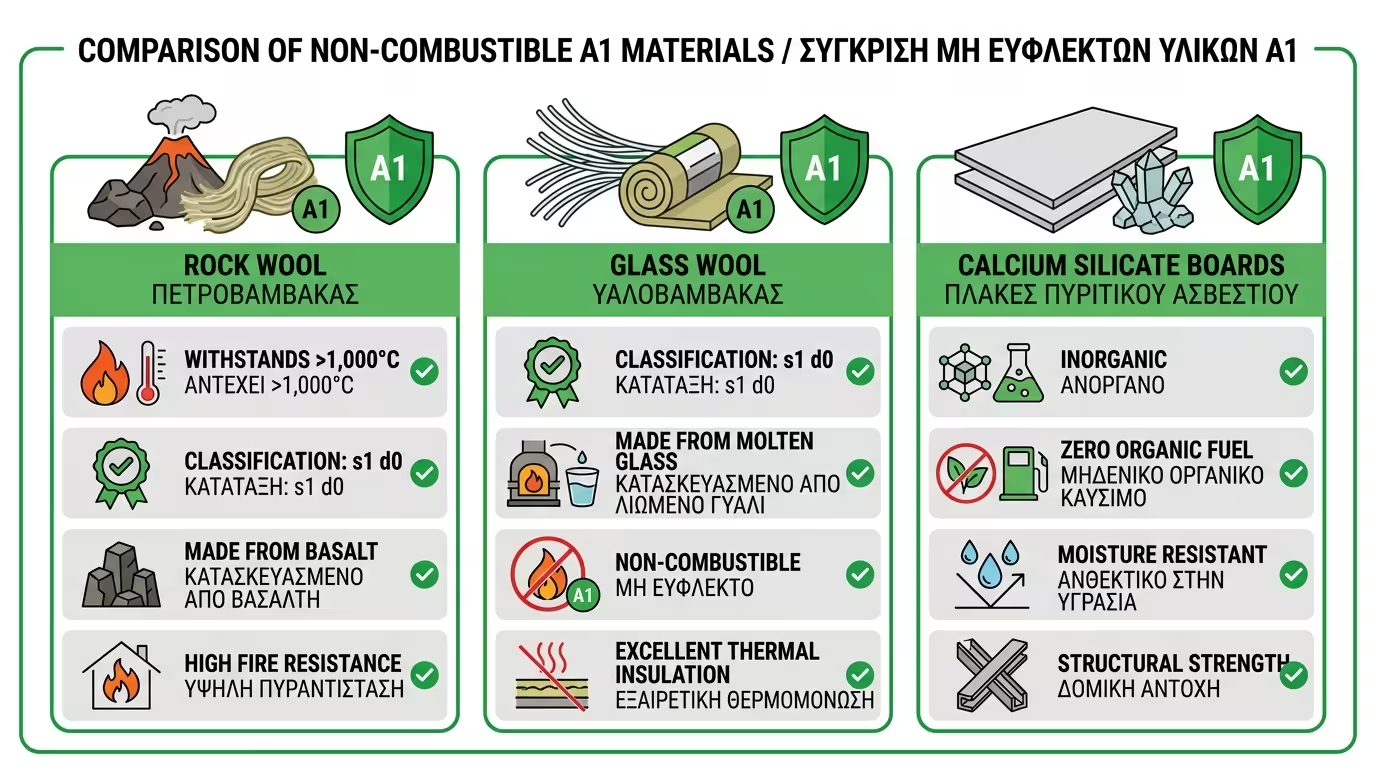
The "Greens" – Totally Non-Combustible Materials (Class A1)
These materials play no part whatsoever in a fire. They don't ignite,
don't produce smoke, don't drip droplets. Fire finds no "fuel" to burn
on them. They act as thermal shields.
Rock Wool (Stone Wool) – Euroclass A1
The "king" of non-combustibility. Withstands over 1,000 °C without change. Doesn't ignite, doesn't melt (class s1,d0 - zero smoke,
zero droplets). Made from molten volcanic rock (basalt).
Glass Wool – Euroclass A1
Also entirely non-combustible. Made from molten glass. Same fire
reaction as rock wool (doesn't ignite, no droplets or smoke).
Calcium Silicate Boards – Euroclass A1
Inorganic material with zero organic "fuel" for fire. Used in the
most demanding fire protection applications.
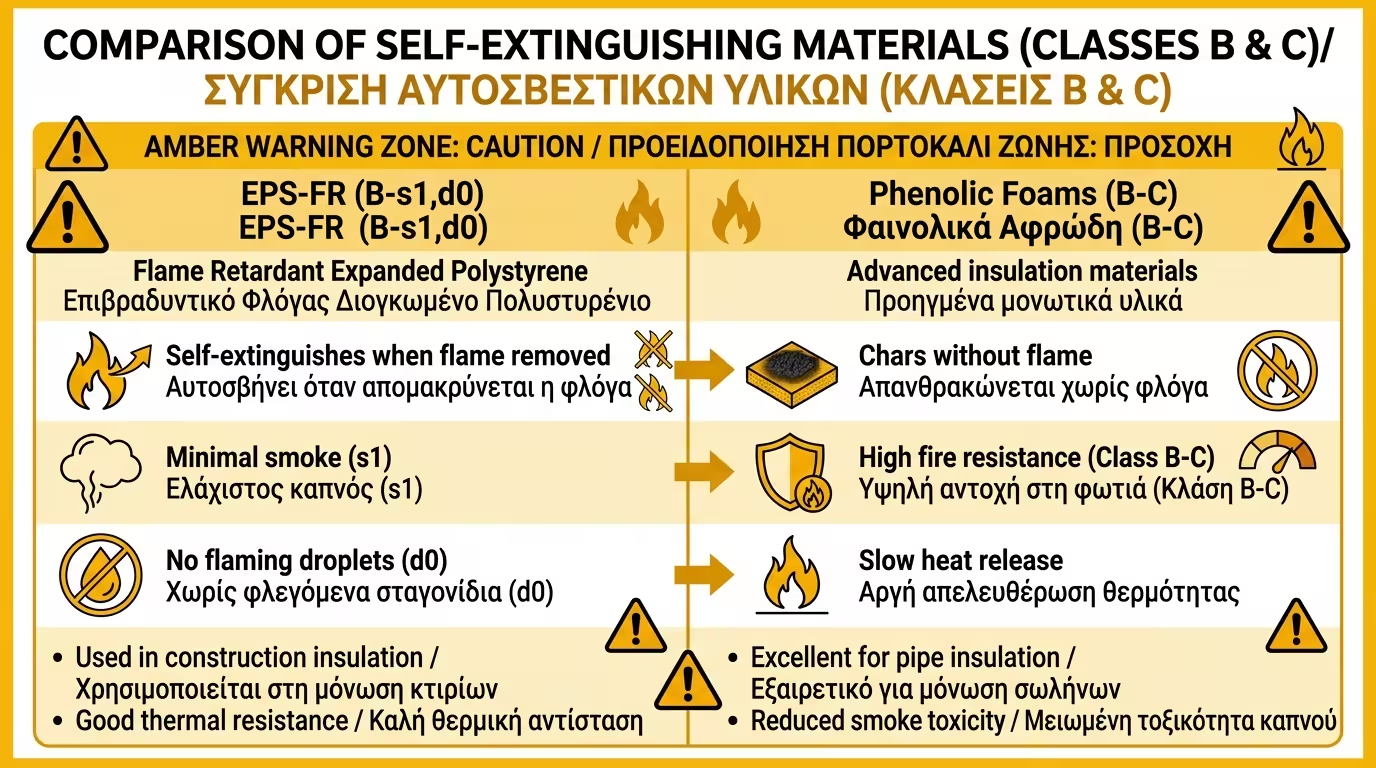
The "Yellows" – The Middle Zone (Classes B & C)
These materials are not entirely non-combustible, but they don't feed
the fire on their own. If the external flame source is removed, they
stop burning.
EPS-FR (Fire Retardant) – Euroclass B-s1,d0
Improved polystyrene with added retardant. Self-extinguishing:
remove the flame and it goes out. Minimal smoke, zero droplets.
Phenolic Foams – Euroclass B-C
Char without flame, minimal smoke.
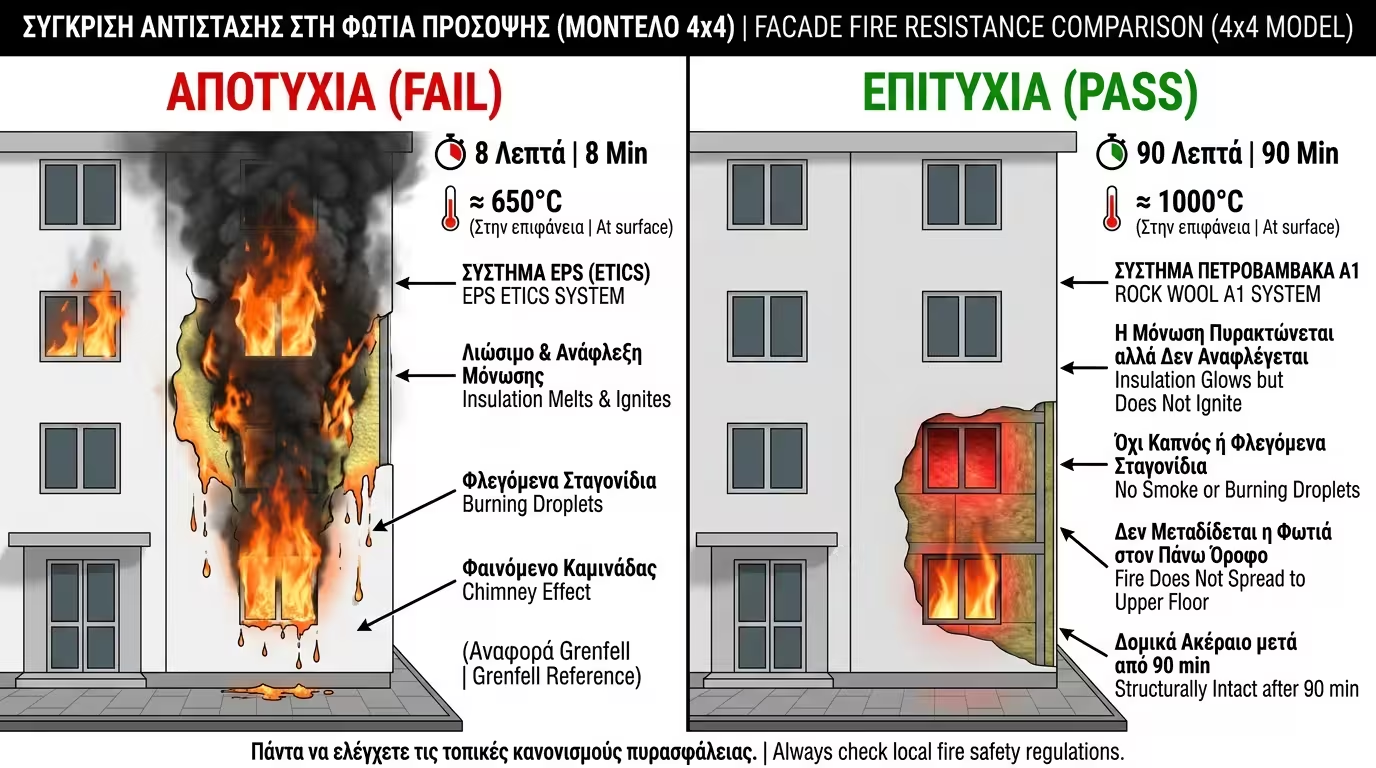
The Experiment in Our Model (The Façade of the 4×4)
We're insulating our room's façade. Fire breaks out inside the room
and the flames come out of the broken window and lick the external
insulation.
❌ Scenario A (EPS without Proper Render)
The façade has EPS (class E) with a thin 3 mm render (poor
workmanship). Flames emerge, crack the render and reach the
polystyrene. In 8 minutes, the polystyrene melts,
burning droplets drip onto the pavement and the entire façade is
engulfed in flames (like the Grenfell Tower in London - a tragedy of
72 deaths in similar conditions).
✅ Scenario B (Rock Wool A1)
The façade has rock wool (A1). Flames come out of the window and
"lick" the insulation. The rock wool glows red but does not ignite. It drips nothing, produces no toxic smoke. Fire finds no fuel to
spread to the upper floor. After 90 minutes, the rock wool still
stands, slightly darkened but structurally intact.
Final Takeaway: Choosing insulation isn't just about thermal
performance - it's literally about your life. If you live in a multi-storey
block above 3 floors or a public building, rock wool (A1) is the only logical
choice. If you use polystyrene (unavoidable in many low-rise homes), make
sure there's always a thick render and fire barrier.