When Full Soundproofing Is Impossible: Learning to Set Realistic Limits on Expectations (and Spending)

If you ask a homeowner what they expect from the soundproofing they just paid for, the answer is almost always: "I want to hear absolutely nothing".

That expectation is perfectly logical psychologically, but entirely unreasonable mechanically. Converting a typical apartment into an "anechoic chamber" (where the noise level drops below 0 dB) is not just extremely expensive - it is practically and structurally impossible.

Let's look at the three reasons you must stop chasing "absolute zero" and aim instead for acoustic comfort.

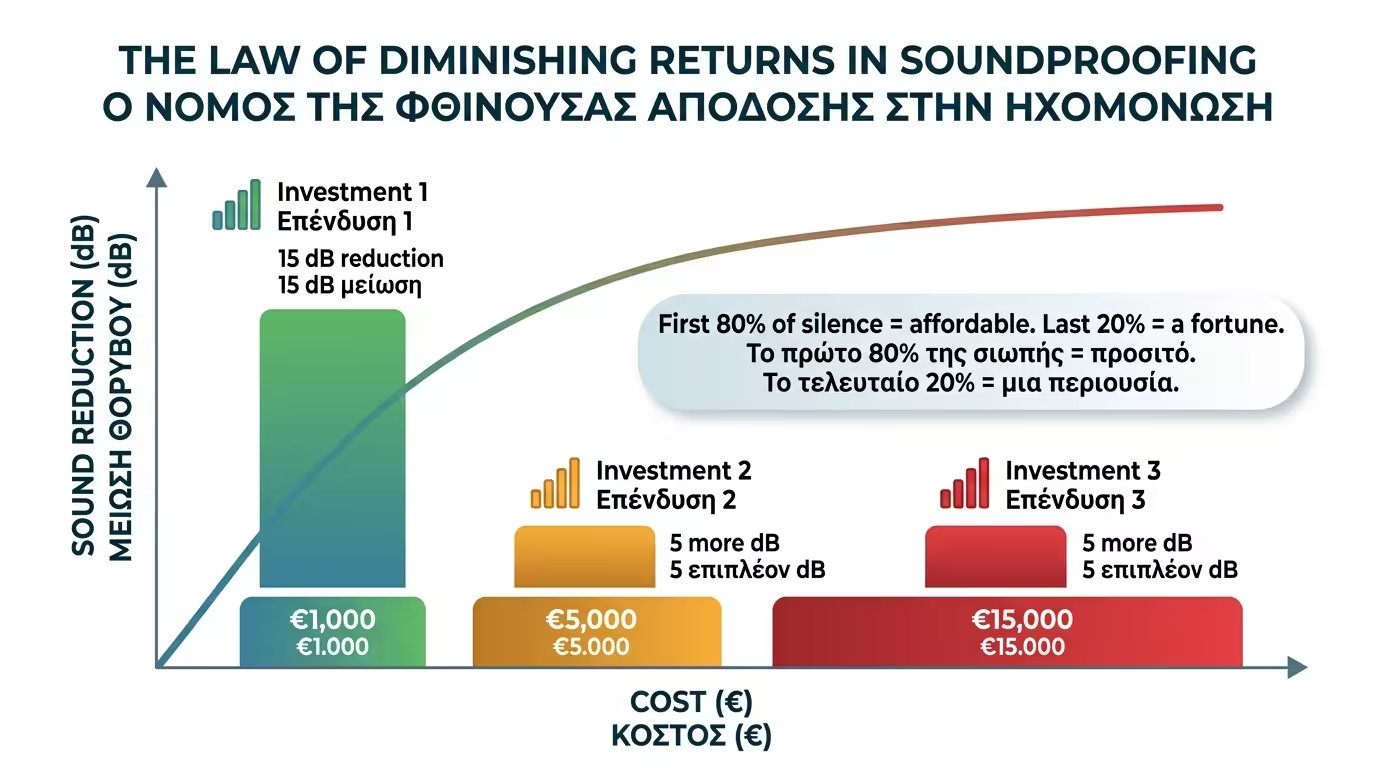
1. The Law of Diminishing Returns

In soundproofing, the money you spend does not yield linear results.

  • If you have a completely bare, thin wall and spend €1,000 on a proper stud wall with rock wool and double plasterboard, you may cut 15 dB. That is a huge, lifesaving improvement.
  • If you want to cut another 5 dB (to reach 20 dB total), another €1,000 won't do. You'll need to rip up the floor, build a Room-in-Room and spend another €5,000.
  • If you want to cut yet another 5 dB (the ultimate dead room), you may need another €15,000 for specialist doors, spring-mounted floating floors and HVAC silencers.

The lesson: The first 80% of silence costs sensibly. The last 20% (absolute silence) costs a fortune. You need to know when to say "This is good enough".

Chart: €1,000 = 15 dB, €5,000 = 5 more dB, €15,000 = 5 more dB - exponential cost increase

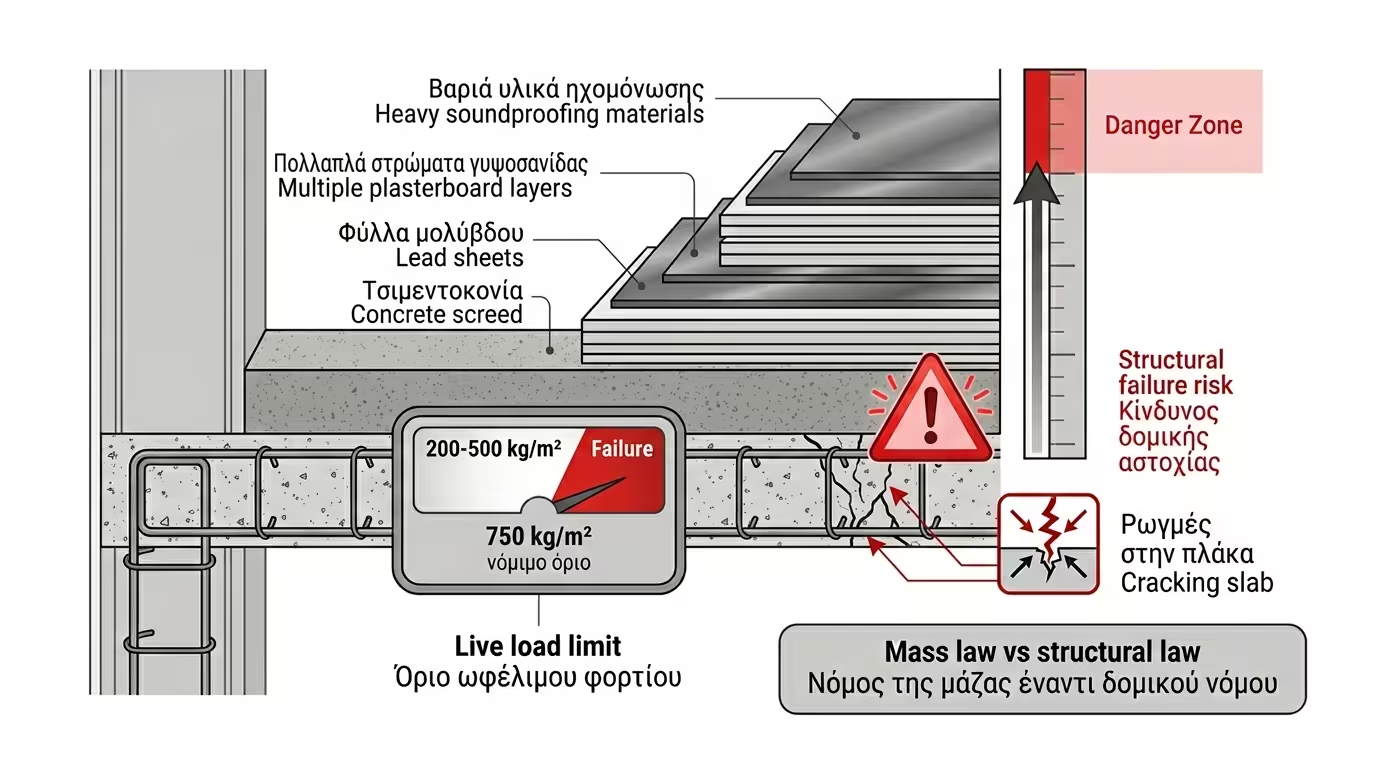
2. The Building's Structural Limits (The Weight)

As we have learned repeatedly, sound is stopped by Mass (weight). To block very low frequencies (like a huge speaker from the local club or the metro passing underneath), you need concrete, heavy bricks, floating screeds and tonnes of lead or vinyl.

However, the slab of your apartment block was designed to carry a specific, legal load (live load, usually around 200-500 kg per square metre, depending on age and the structural study). If you try to build a 100% impenetrable "bunker" inside your living room by piling on tonnes of materials, you risk collapsing the building's slab! Structural laws set a hard, insurmountable limit on how much mass you can add.

Apartment slab: legal load 200-500 kg/m², risk of collapse with excessive materials

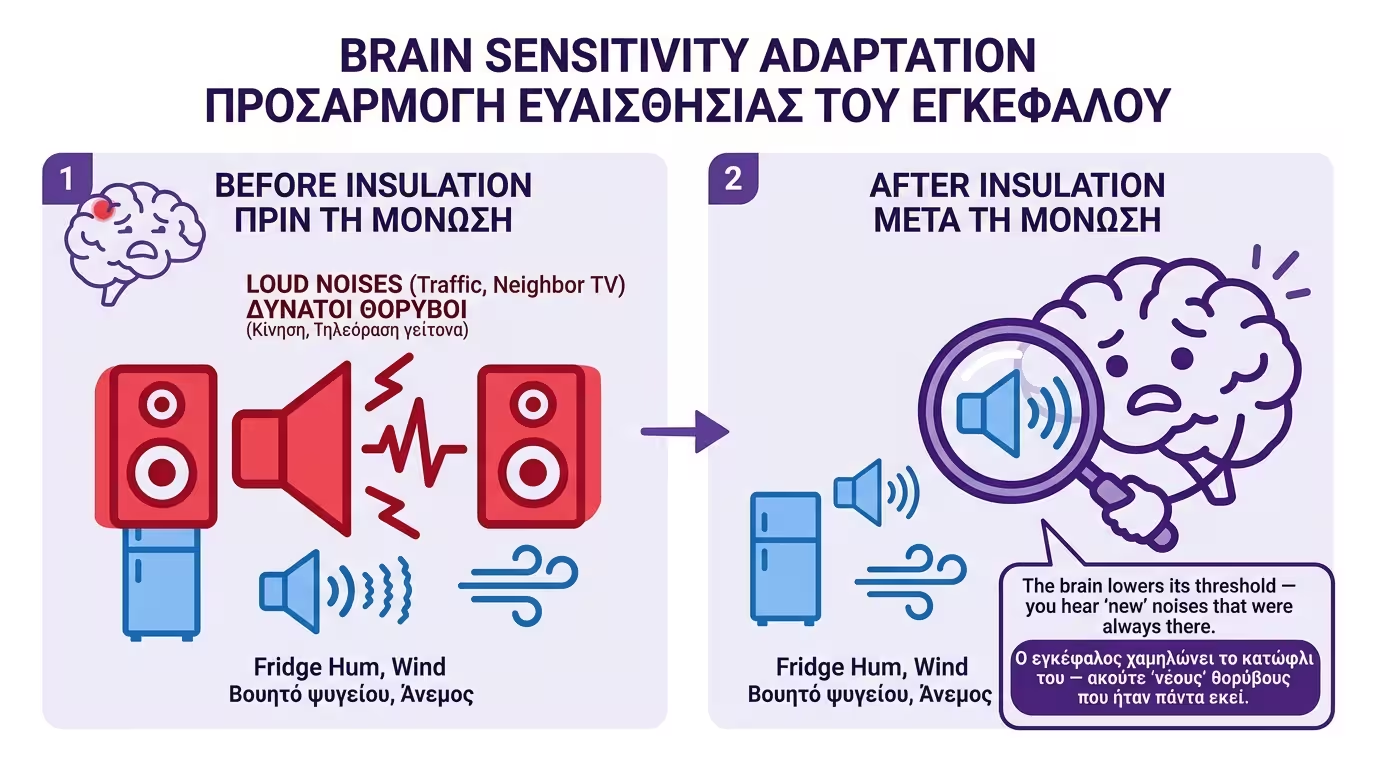
3. The Human Factor (Chasing Ghosts)

Our brain is a survival machine. When you eliminate the loud, annoying noise (e.g. traffic or the neighbour's television), it doesn't relax. It simply "lowers its sensitivity threshold" and starts hearing noises that were previously masked!

You may spend thousands on soundproofing, and suddenly the hum of your own fridge motor in the kitchen begins to annoy you, or the faintest whisper of wind. Chasing every small sound is a psychological trap with no end.

The brain lowers its sensitivity threshold: after insulation you hear noises that were previously invisible

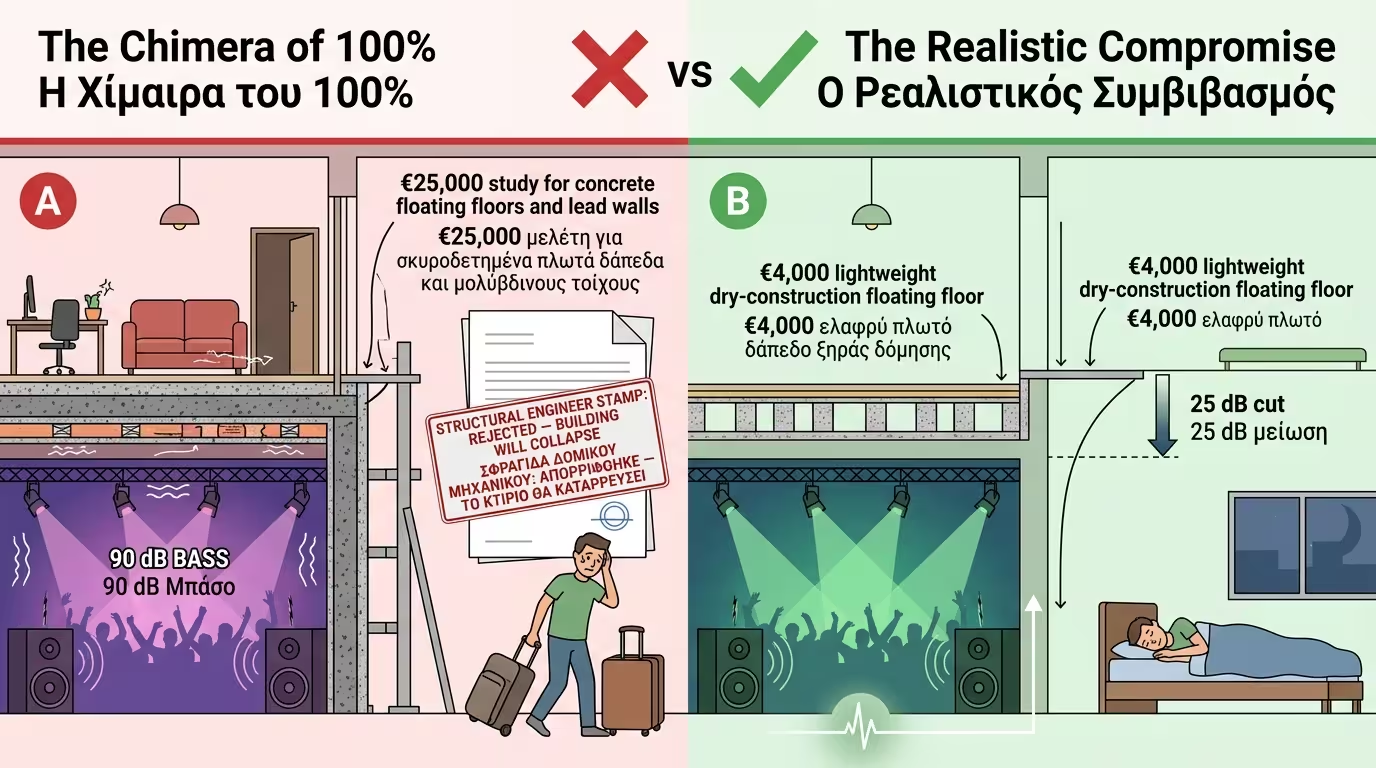
4. The Experiment in Our Model: The 4×4 vs the Club

Experiment: Scenario A (100% demand, impossible, moving out) vs Scenario B (realistic compromise, 25 dB reduction)

Our room is directly above a nightclub. The floor shakes with bass (90 dB low-frequency). We want to sleep.

❌ Scenario A (The Chimera of 100%)

We demand the contractor ensures we hear nothing. The contractor brings us a €25,000 study for concrete floating floors and lead-lined walls. The structural engineer rejects it because the building would collapse under the weight. We're disappointed, do nothing and move house.

✅ Scenario B (The Realistic Compromise)

We accept that the club won't disappear. We spend €4,000 on an excellent, lightweight dry-construction floating floor and resilient plasterboard (as we learned in Category D). We cut 25 dB. The bass hasn't vanished entirely. A very faint, muffled thud lingers in the background (like a heartbeat). But it's so low that we can now sleep comfortably. Mission accomplished!

The Bottom Line: Perfect soundproofing (100%) exists only in laboratories and isolated bunkers. In real homes, success is measured by whether you can read a book, watch a film or sleep without your blood pressure rising. "Tolerance" is just as important as "insulation".

Related Articles

Sound Insulation: Silence and Noise Protection

Return to category.

Go to category

Preview