🛡️ How It Works
When water rises through the concrete and reaches this barrier, it stops. It cannot proceed into the brick, so the walls of your home stay dry forever, regardless of how much groundwater is present.
In construction, the biggest mistakes are not the ones that cost millions, but those made through ignorance or haste to save a few euros. The absence of a horizontal DPC is arguably the most striking example.
As we have seen, soil is permanently damp. The concrete foundation sits on that soil and absorbs its moisture. On top of the concrete, the bricklayer lays mortar and places the first course of bricks for the ground-floor walls. If nothing is inserted between concrete and brick, water will continue its upward journey (capillary rise) straight into your living room. The solution? The Damp Proof Course (DPC) - a Horizontal Barrier.
It is a physical, impermeable barrier placed exactly on top of the foundation concrete (or ground-floor slab), BEFORE the first mortar bed is laid.
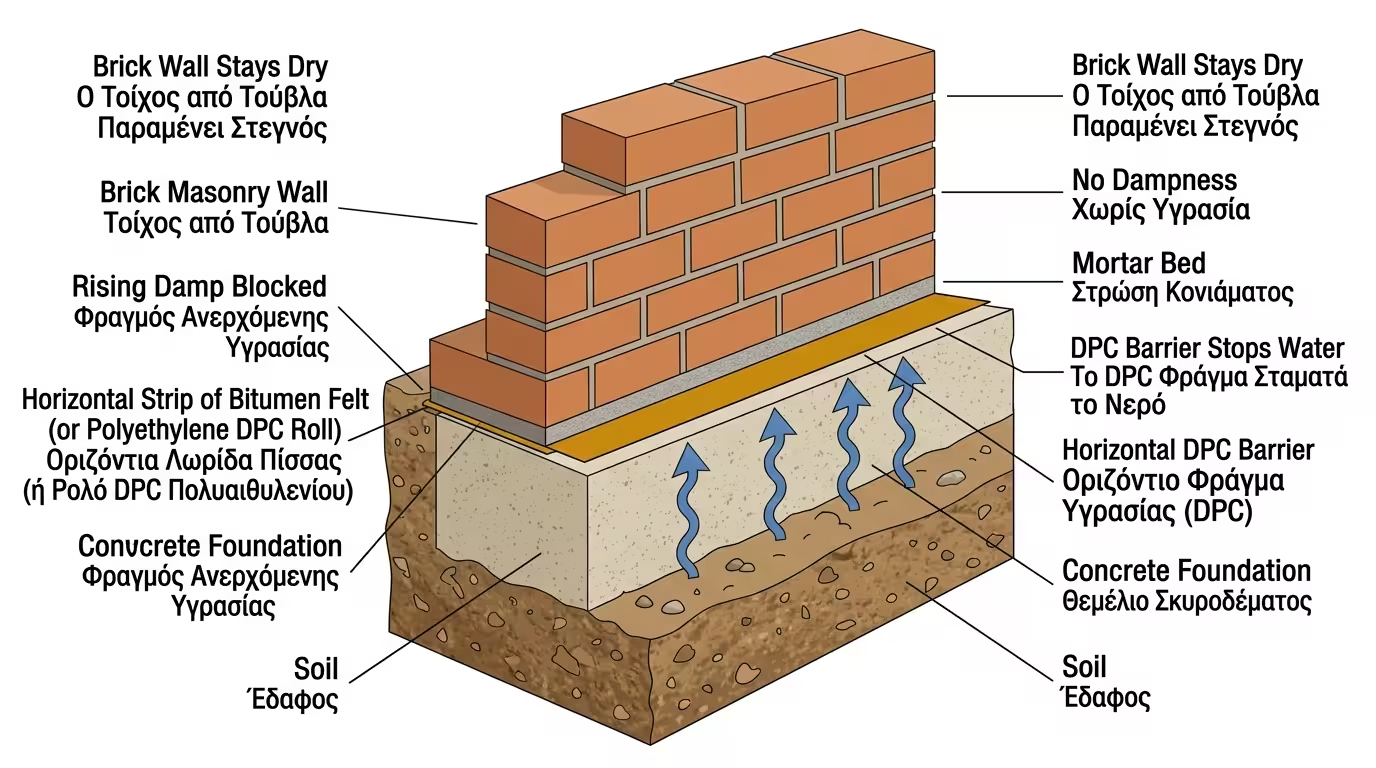
When water rises through the concrete and reaches this barrier, it stops. It cannot proceed into the brick, so the walls of your home stay dry forever, regardless of how much groundwater is present.
Fortunately, we are not talking about rocket science. Horizontal waterproofing relies on extremely cheap and simple materials:
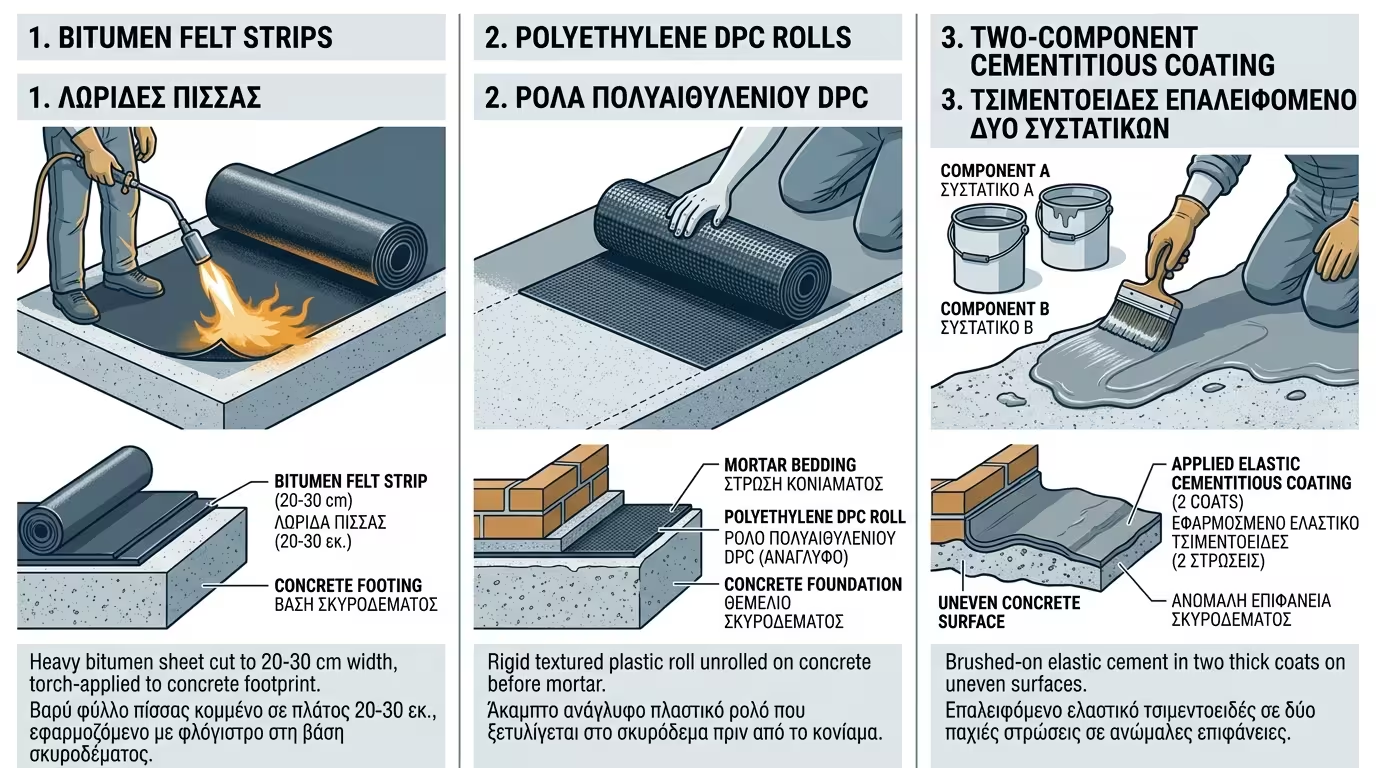
The classic and most reliable method. A heavy bitumen sheet is cut into strips (matching the wall width, e.g. 20 or 30 cm) and lightly torch-applied to the concrete along the exact line where the wall will sit.
In many countries, builders use special rigid, textured plastic rolls. The bricklayer unrolls them on the concrete, lays mortar on top and starts building. These membranes are practically indestructible over time.
If the concrete surface is very uneven, two thick coats of elastic cementitious waterproofing are brushed onto the wall footprint. Once dry, the bricklayer works normally on top.
If it costs almost nothing and saves the house, why do most Greek homes from the '70s, '80s and '90s lack it?
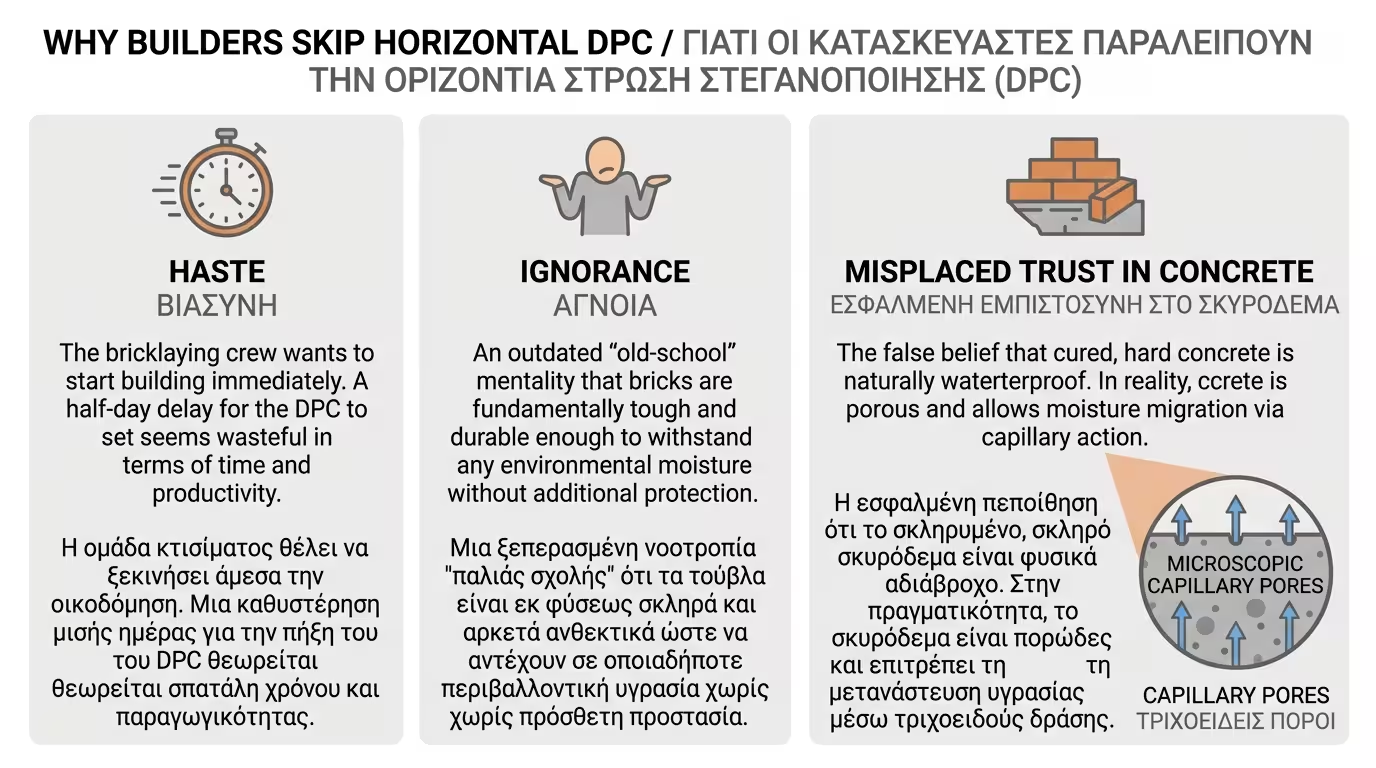
The bricklaying crew wants to arrive, "throw up" the bricks and leave. Bonding bitumen-felt strips requires another tradesman, cleaning, measuring and half a day's delay.
The classic mentality: "Come on - we've been building like this all our lives, what's going to happen to a brick?"
Many believe that because concrete is hard, water cannot pass through it. A huge mistake! Concrete is riddled with microscopic pores that readily absorb moisture.
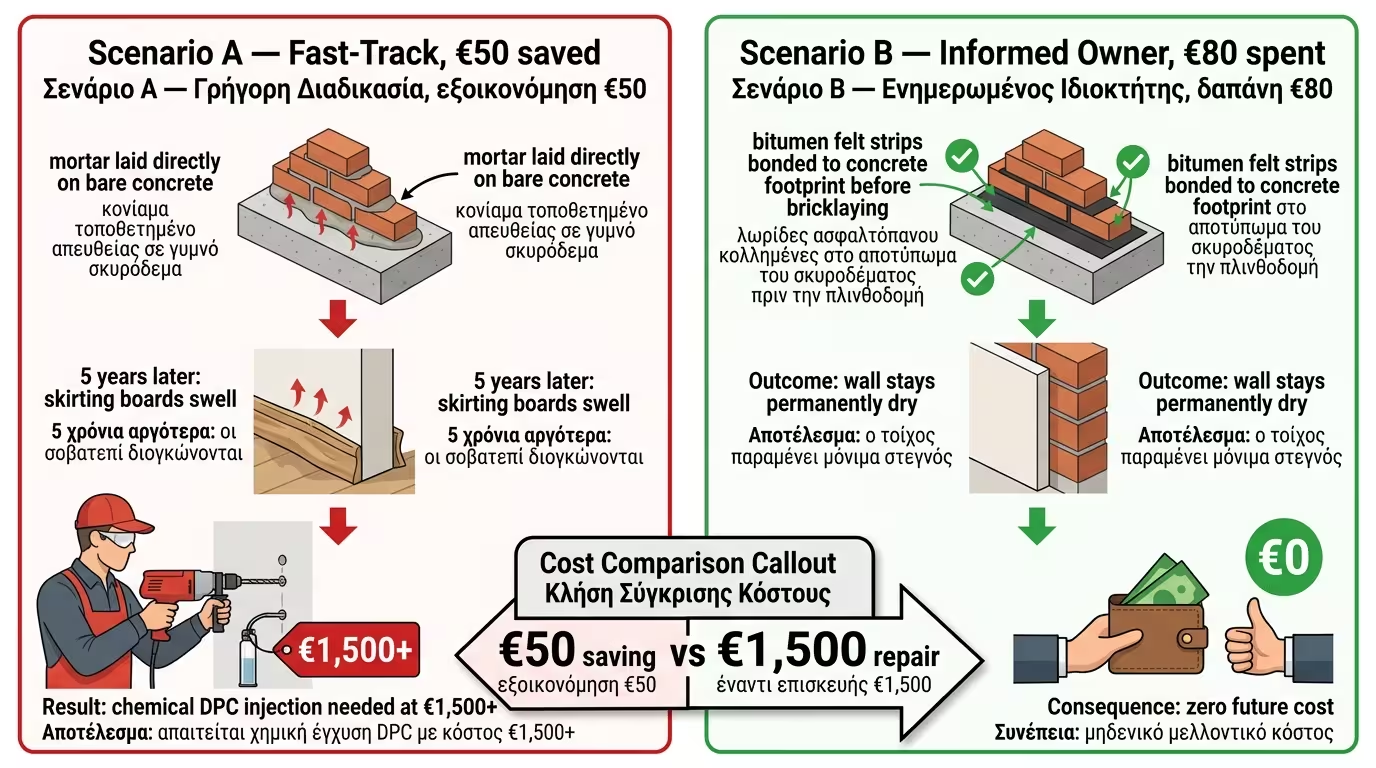
We are in the construction phase. The ground-floor slab has been poured and the bricklayers are about to start the external walls.
The contractor tells the bricklayers to start immediately. They lay mortar on bare concrete and build the bricks. We saved €50 and 2 hours of work. Five years later, the house is handed over. After the first harsh winters, the skirting boards in the living room swell. To fix the problem retrospectively, we must resort to chemical resin injections (as discussed in the previous article) at a cost exceeding €1,500.
Before the bricklayers arrive, we pause the build. We clean the wall footprint (the line where the bricks will sit). We purchase 2 rolls of bitumen felt (cost €80), cut them into strips and torch-bond them to the concrete. The bricklayers lay their mortar on top of the felt and build the wall. Groundwater is trapped forever below the bitumen line. Our wall will NEVER show rising damp.
Final Verdict: If you are in the construction phase, demand a horizontal DPC under ALL ground-floor walls (external and internal). It is perhaps the only material in the entire build whose cost-to-benefit ratio (ROI) is simply… incalculable.
Return to category.
Go to categoryReturn to the central guide.
Go to guide