
Rock Wool vs. Polystyrene (EPS): The Ultimate Comparison Test - 5 Rounds

You have decided to add external insulation (ETICS) to your home. The contractor gives you two quotes: one with Graphite Expanded Polystyrene (grey EPS / Neopor) and one with Rock Wool (Mineral Wool).

The price difference is noticeable, but which material is truly worth the money? We put the two materials in the "ring" and score them in 5 critical rounds, examining thermal insulation, sound insulation, fire safety, moisture handling and cost.

Round 1: Thermal Insulation - Which Retains More Heat?

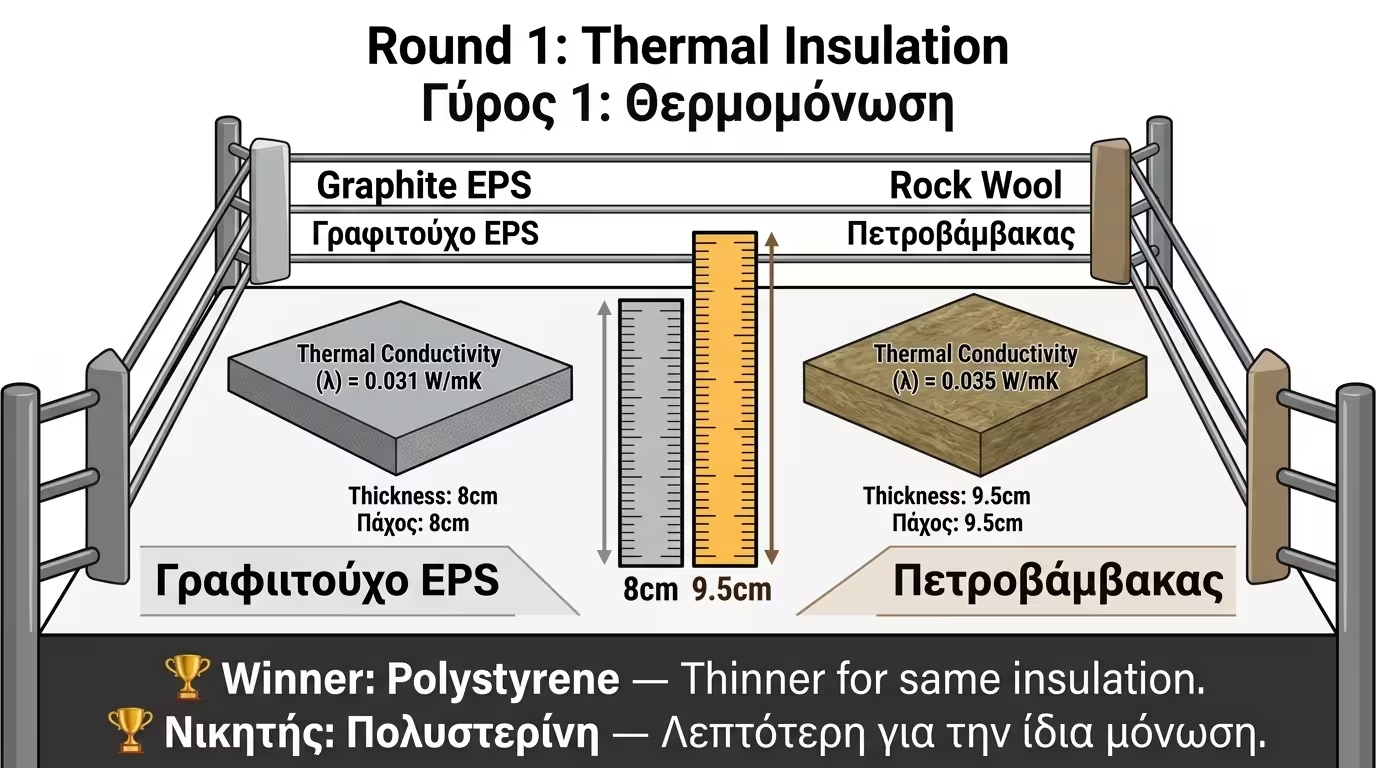
Both materials are excellent, but Graphite Polystyrene (grey EPS) has a slight edge. Thanks to graphite particles reflecting infrared radiation, it has a lower thermal conductivity coefficient (λ = 0.031 W/mK) compared to rock wool (λ = 0.035 W/mK).

In practice: To match the insulation provided by 8 cm of grey polystyrene, you would need approximately 9.5 cm of rock wool. That means a slightly thicker wall assembly and a somewhat higher material cost.

🏆 Winner: Polystyrene (thinner profile needed).

Round 1 - thermal conductivity comparison EPS vs rock wool

Round 2: Sound Insulation - Which Stops the Noise?

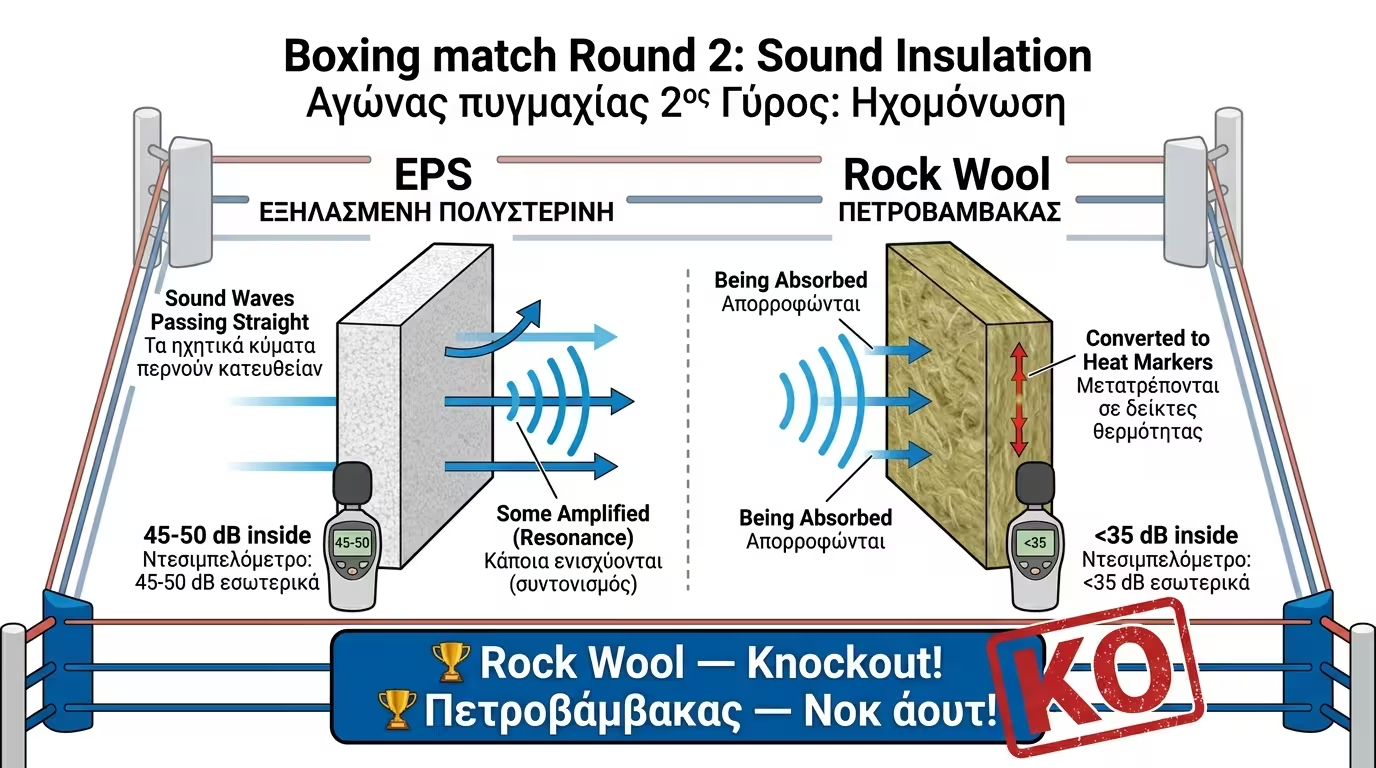
There is no contest here. Rock Wool "swallows" sound. Its open, fibrous structure absorbs sound waves and converts acoustic energy into heat through microscopic friction. The result: street noise is neutralised.

Polystyrene, by contrast, is rigid and closed-cell. Not only does it not soundproof, but at certain frequencies it can even act as a "loudspeaker" (mass-spring-mass resonance effect), transmitting noise indoors.

🏆 Winner: Rock Wool (by knockout).

Round 2 - sound insulation rock wool vs polystyrene

Rounds 3-5: Fire, Moisture and Cost

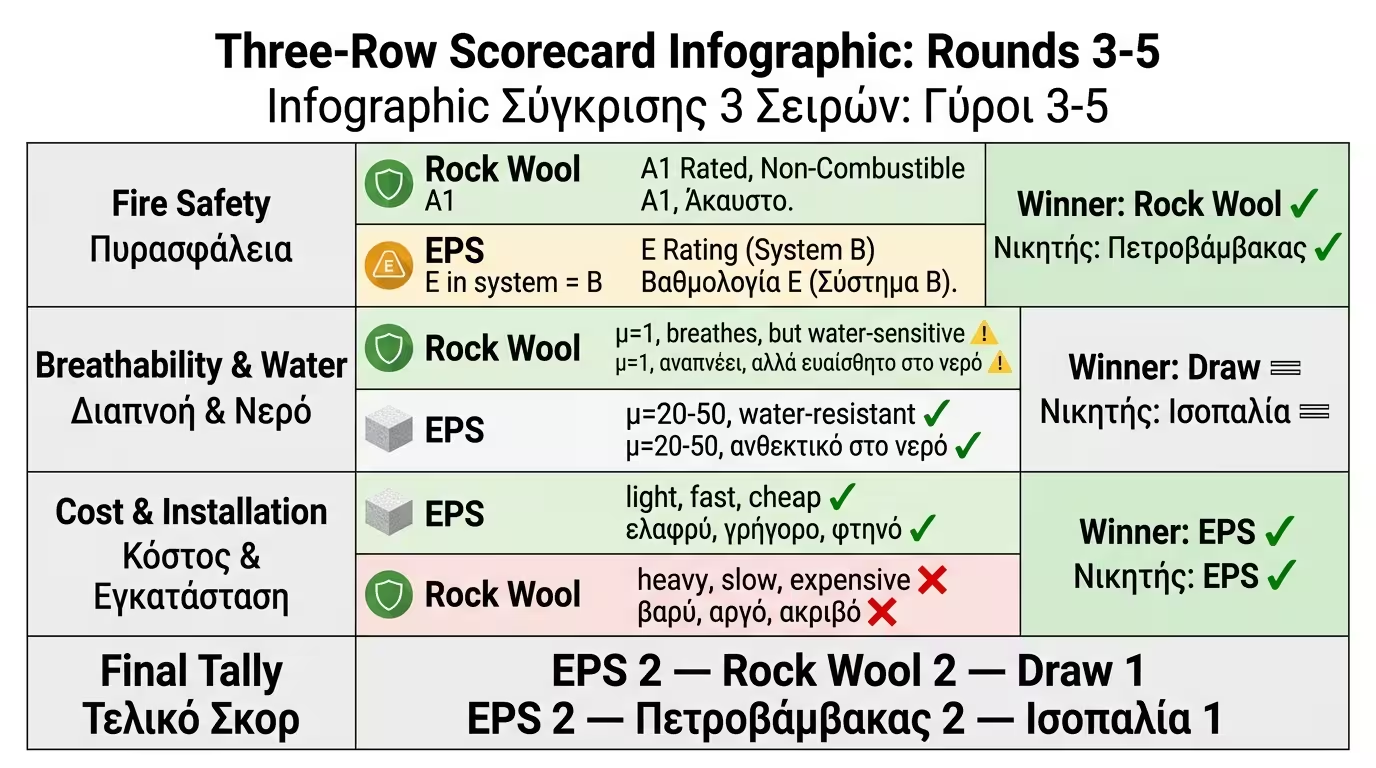
Rounds 3-5 - fire safety, moisture, cost comparison

We now put the two materials through three more critical rounds to complete the battle.

🔥 Round 3: Fire Safety

Polystyrene within a proper ETICS system is safe (as a system it reaches Class B). But rock wool is literally stone (Class A1). It does not burn, does not melt, produces no smoke, and withstands temperatures in excess of 1000°C. It acts as a fire barrier that protects the building's structural frame.

Winner: Rock Wool.
💧 Round 4: Breathability & Water

Breathability: Rock wool (μ=1) lets the wall breathe fully, ensuring a healthy indoor environment. EPS breathes but with considerably more difficulty (μ=20-50).

Liquid water: If the render cracks, polystyrene is unaffected. Rock wool soaks and loses its properties.

Winner: Draw (depends on your priority).

💰 Round 5: Cost & Installation

Polystyrene is ultra-light and cuts cleanly with a simple hot wire without any dust. It installs very fast with fewer fixings. Rock wool, on the other hand, is heavy, rigid, requires specialised cutting tools, more mechanical fixings and mandatory use of masks and gloves due to the itchy fibres it releases.

Winner: Polystyrene (cheaper and faster).

The 10x10 Model Verdict: What Wins Where?

Let us see what we would choose for our digital house, depending on its location.

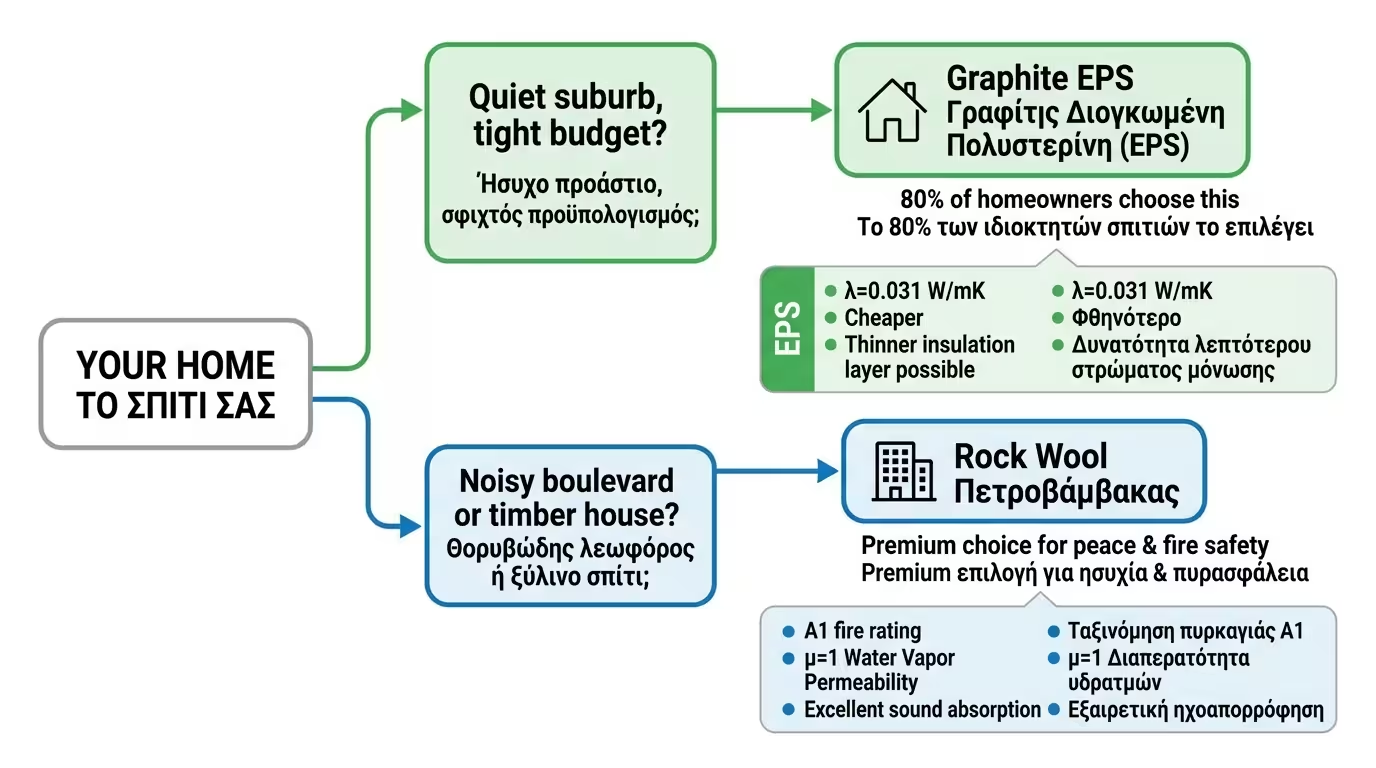
10x10 Model - rock wool vs polystyrene verdict

🏠 Scenario A: House in a Quiet Suburb

Tight budget, no noise problem. We choose Graphite Polystyrene (EPS) - the value-for-money solution chosen by 80% of homeowners for external insulation in Greece.

🏢 Scenario B: Flat on a Noisy Boulevard

Noise pollution and strict fire regulations in a tall building. We choose Rock Wool - the cost difference pays for itself through absolute peace and quiet and superior fire protection every single day.

💡 Conclusion: There is no "bad" material, only the wrong choice for your specific needs. Weigh what matters most to you and your family (cost and thickness vs quiet and fire safety) and choose your own winner!

Related Articles

Insulation Materials: The Complete Selection & Characteristics Guide

Return to category.

Go to category

Preview