🔩 Special Metal Brackets
The window is screwed onto strong metal angles that protrude from the wall. This solution is simple but creates small thermal bridges at the fixing points.
For decades, the way we installed windows in Greece was one and only: the bricklayer built the wall and left an opening. Then the aluminium fabricator screwed the window exactly in the middle (or on the inner face) of that opening.
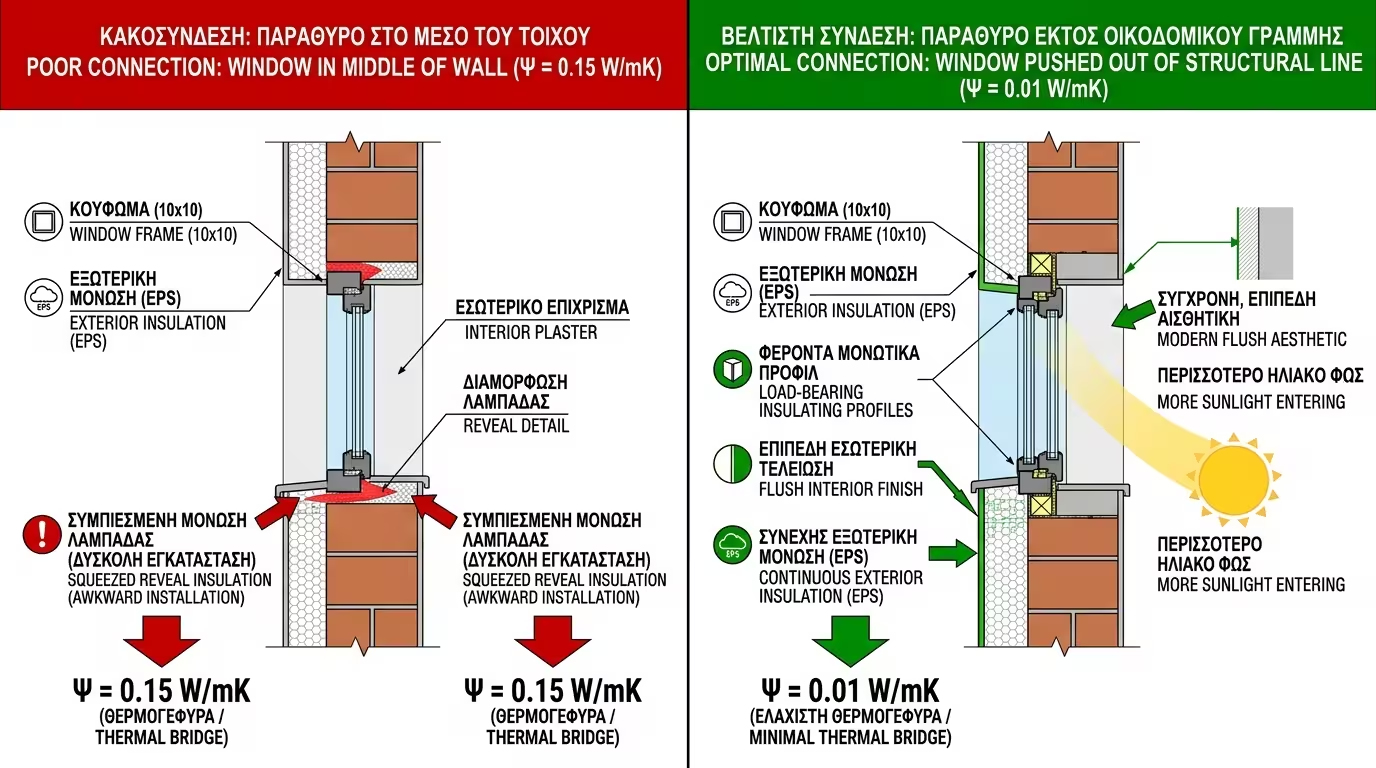
This traditional method, while easy, creates an enormous energy problem: it leaves a large piece of brick (the reveal) exposed around the window, which we then have to struggle to insulate with thin, "squeezed" materials, as we saw in the previous article.
In modern energy construction (nZEB and Passive Houses), science found the ultimate solution: We push the window outward!
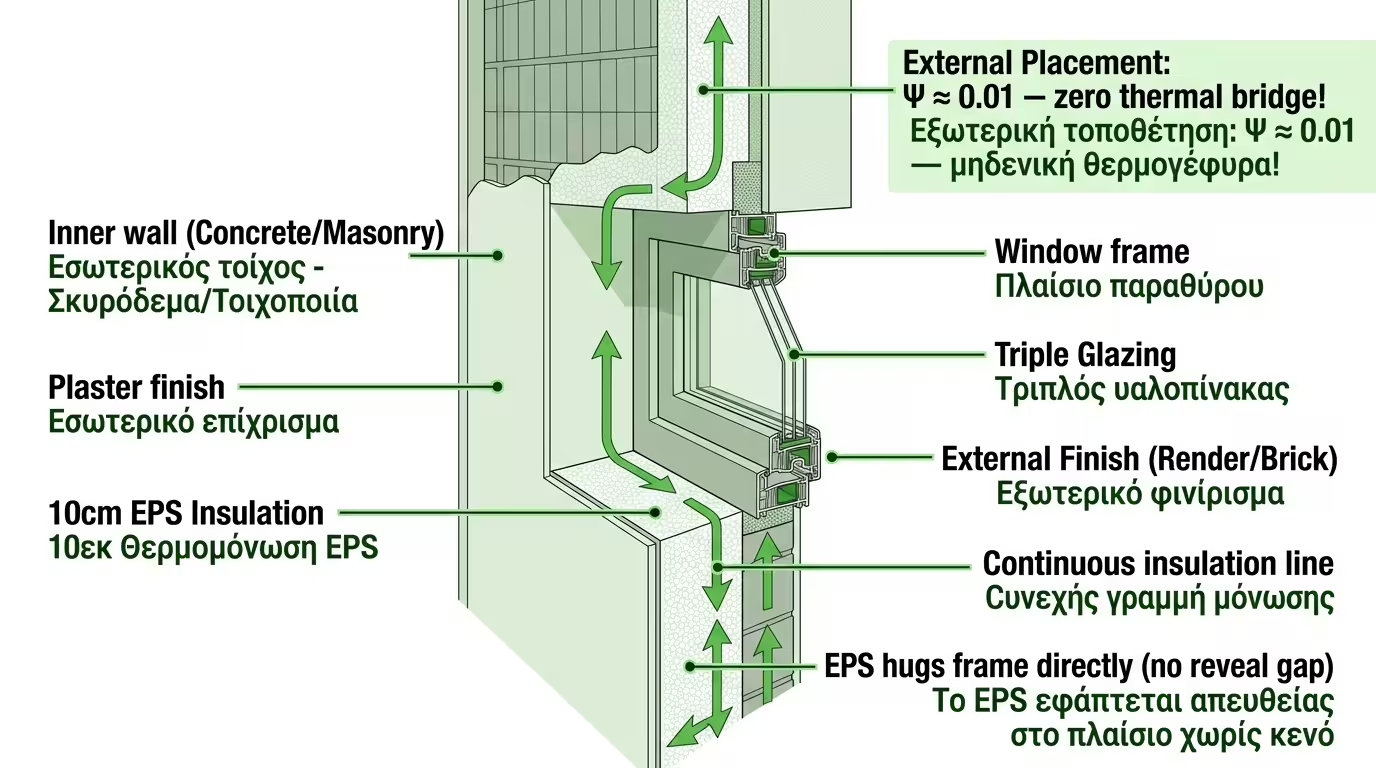
Instead of the window sitting inside the brick, it is moved so far outward that it comes flush with the external face of the brick, or even extends entirely outside the wall, floating within the insulation thickness!
When the window is already outside, the thermal facade (e.g. 10cm EPS) comes and "hugs" the window frame directly. There are no corners, no reveals, no gaps. The house's "thermal blanket" connects perfectly with the window in one absolute, straight line.
This is where many homeowners wonder: "But the polystyrene is soft. How will it hold a window with triple glazing that weighs 100 kg?"
Of course, the window is not screwed onto the insulation. Special, advanced support systems are used:
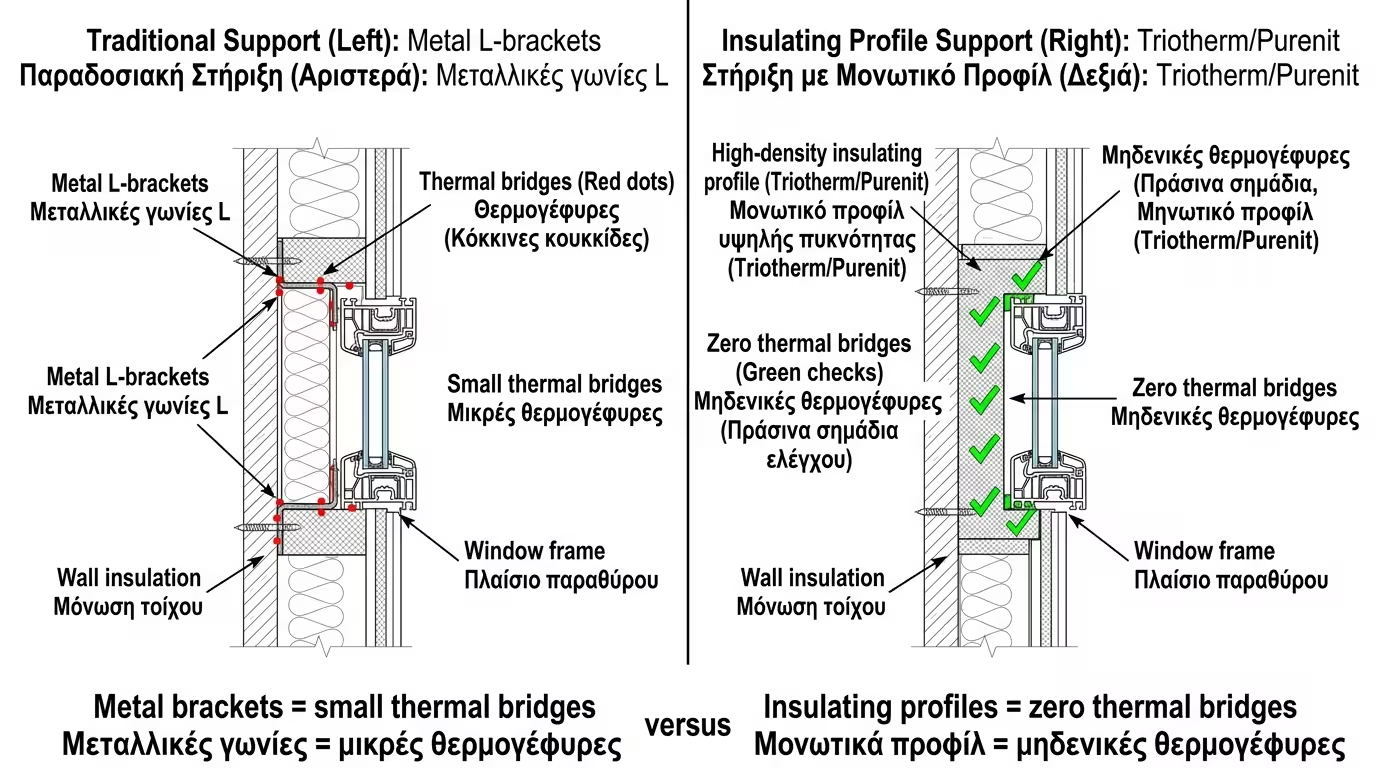
The window is screwed onto strong metal angles that protrude from the wall. This solution is simple but creates small thermal bridges at the fixing points.
This is the most state-of-the-art solution. Around the window opening, special beams (made from recycled PET or polyurethane) are screwed to the wall. These materials are so hard they withstand tonnes of weight, yet they are simultaneously thermally insulating! The window is screwed onto them, and then the standard thermal facade covers everything.
We are building our house from scratch and must decide where to place the brand-new aluminium windows (which have an excellent U-Value).
We place the window in the middle of the brick. We install 10cm of thermal facade externally and try to "squeeze" 3cm EPS inside the reveal to reach the window. The engineer calculates the linear thermal bridge (Ψ-Value) at 0.15 W/(mK). There is loss, but it is tolerable.
We screw special insulating profiles (Triotherm) around the wall and move the window entirely outside. We install the 10cm thermal facade, which perfectly covers both the profile and the frame. The engineer recalculates the thermal bridge. The result? Ψ-Value = 0.01 W/(mK). The loss has just been eliminated! The window and wall now function as one seamless, impenetrable body.
The Aesthetic Bonus: Because the window is further out, sunlight enters the house more easily (not shadowed by the deep wall), while externally the building gains an ultra-modern, minimalist and flat appearance (flush design).
The Final Conclusion: If you are simply renovating, dismantling everything to push the windows outward may be economically unfeasible. But if you are building a new house, "external placement" is the ultimate secret to success. With minimal extra cost for the support brackets, you step directly into the elite of energy performance.
Return to category.
Go to categoryReturn to the central guide.
Go to guide