📉 The first 5cm
Deliver a gigantic drop in losses.
One of the most classic questions when deciding to install external insulation or insulate the roof is: "Should I go with 5 centimetres, 8 or 10?" Human logic (and often the materials salesperson) tells us that if 5cm of insulation saves €1,000 a year, 10cm will save us €2,000. An absolutely logical thought, which in physics is however completely wrong.
In thermal insulation there is a relentless rule called the Law of Diminishing Returns. Let us see why the first centimetres do all the work, and why the last ones simply empty your wallet with no return.
Imagine going out in the snow wearing only a t-shirt (Uninsulated wall). You are freezing. If you put on a thin but good jacket (5cm insulation), you feel enormous relief. The improvement in comfort is 80%.
If you then put a second, identical jacket on top (another 5cm, total 10cm), you will warm up a little more, but the difference will not be as dramatic as when you put on the first one. The extra improvement is perhaps 10-15%.
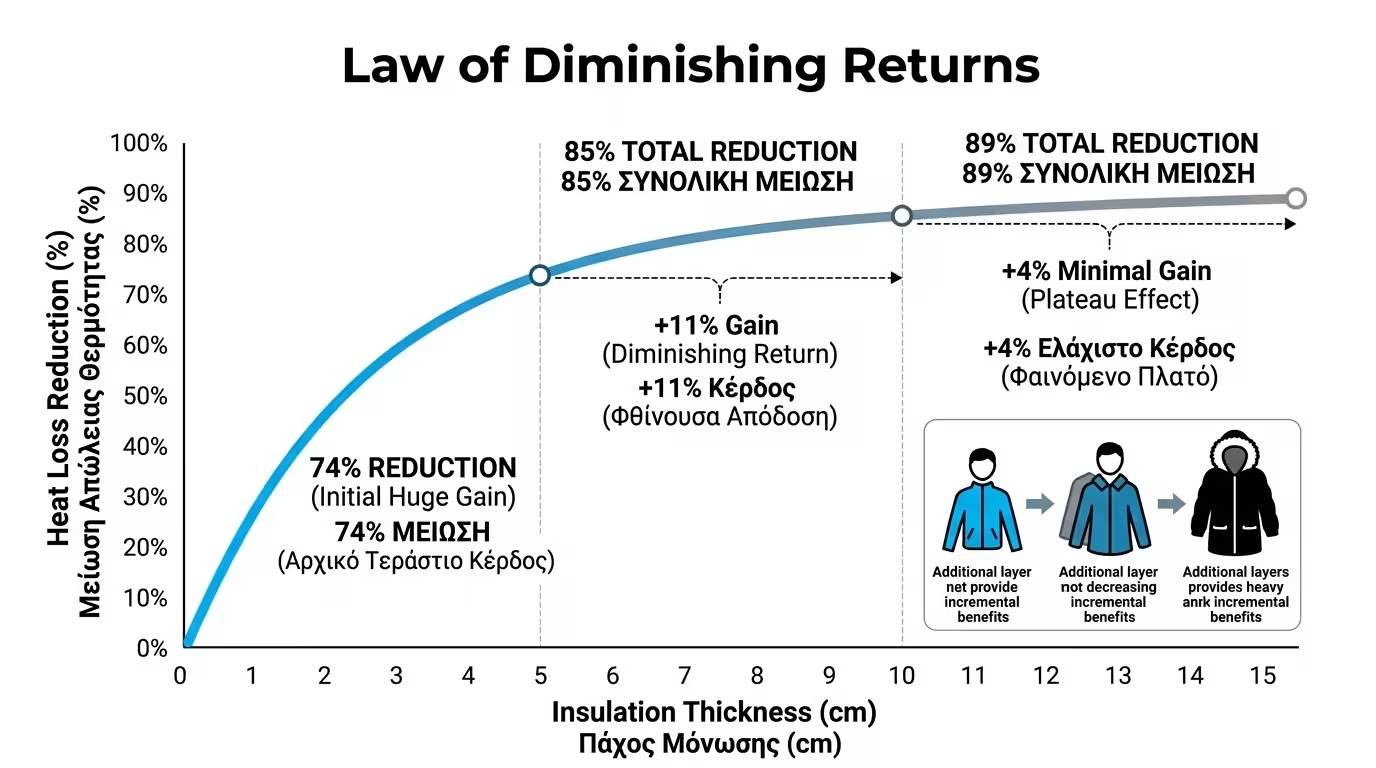
Exactly the same happens inside your walls:
Deliver a gigantic drop in losses.
The gain is much smaller.
The gain is almost negligible, while the cost of materials and special fixings skyrockets.
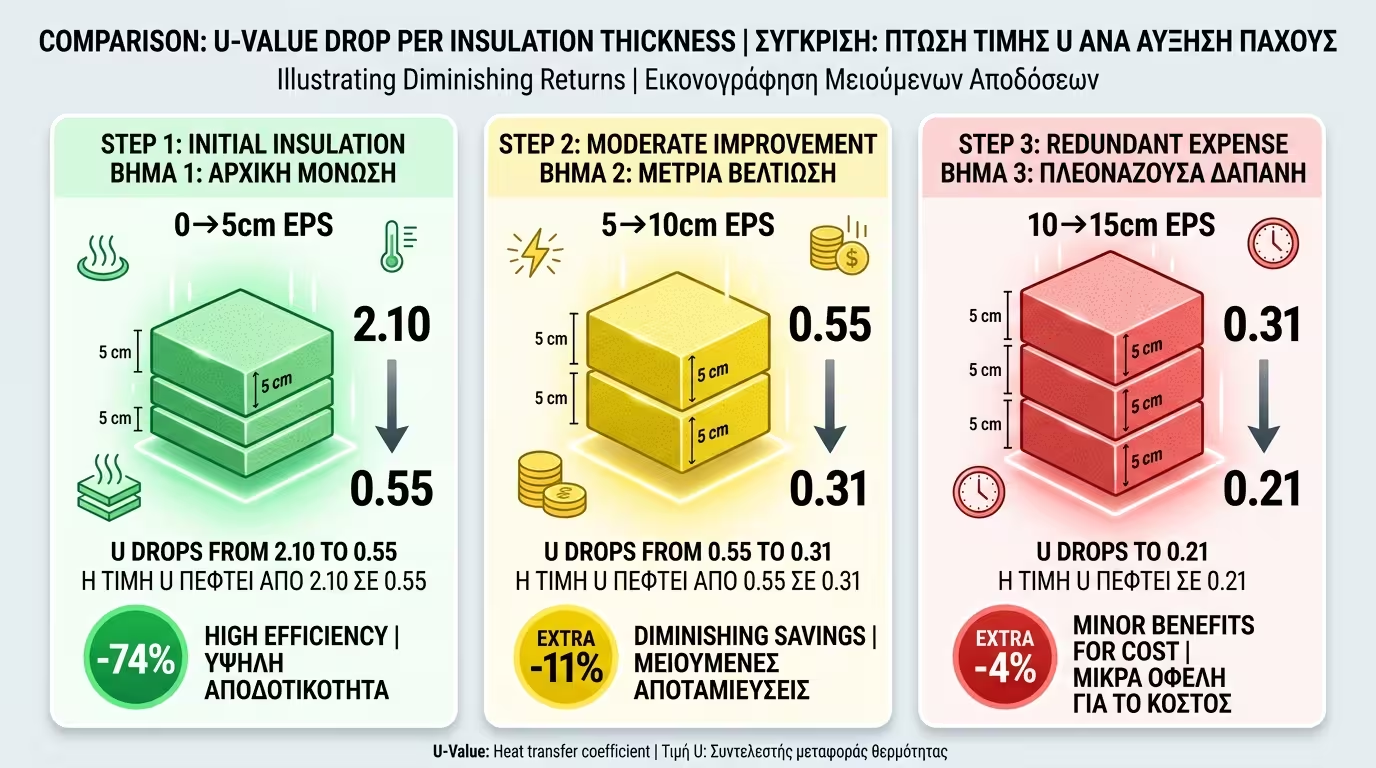
Let us take the uninsulated wall of our digital house, which loses energy at a U-Value of 2.10 W/m²K, and see what happens as we add white EPS (polystyrene) in 5cm increments.
We add 5cm EPS. The U-Value plummets from 2.10 to 0.55 W/m²K.
Result: We cut losses by 74%! The
house is "transformed".
We double the thickness with another 5cm. The U-Value drops from
0.55 to 0.31 W/m²K.
Result: We cut an additional 11% compared
to the original state.
We add 15cm. The U-Value goes to 0.21.
Result: We gained just an extra 4%.
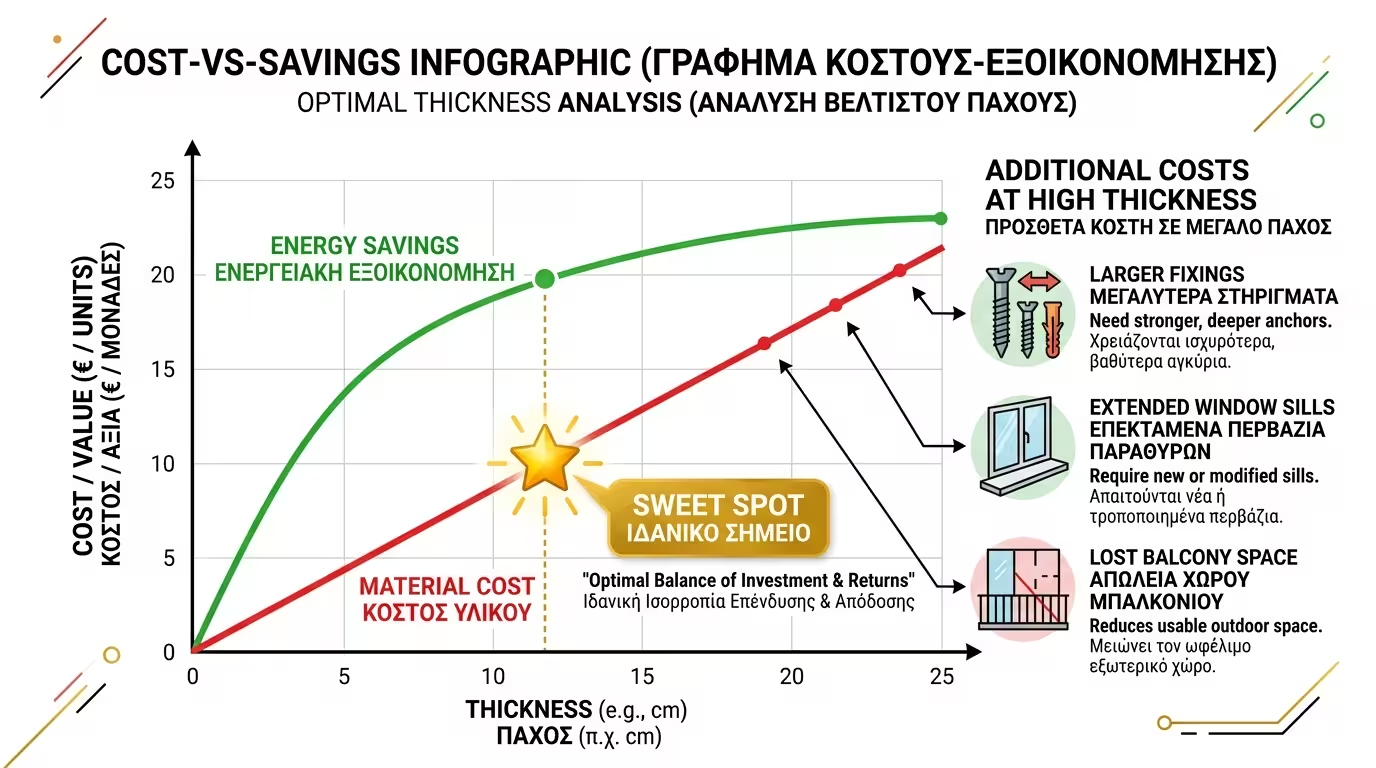
When you go from 5 to 10 centimetres, you pay almost double for the insulation material, you use larger fixings, the window sills must be extended considerably, and there may be problems with balconies from lost space.
If all this extra hassle and cost only gives you 10% more oil savings, the payback (ROI) of the extra centimetres may take decades!
For Greece, it depends on the Climate Zone you are in:
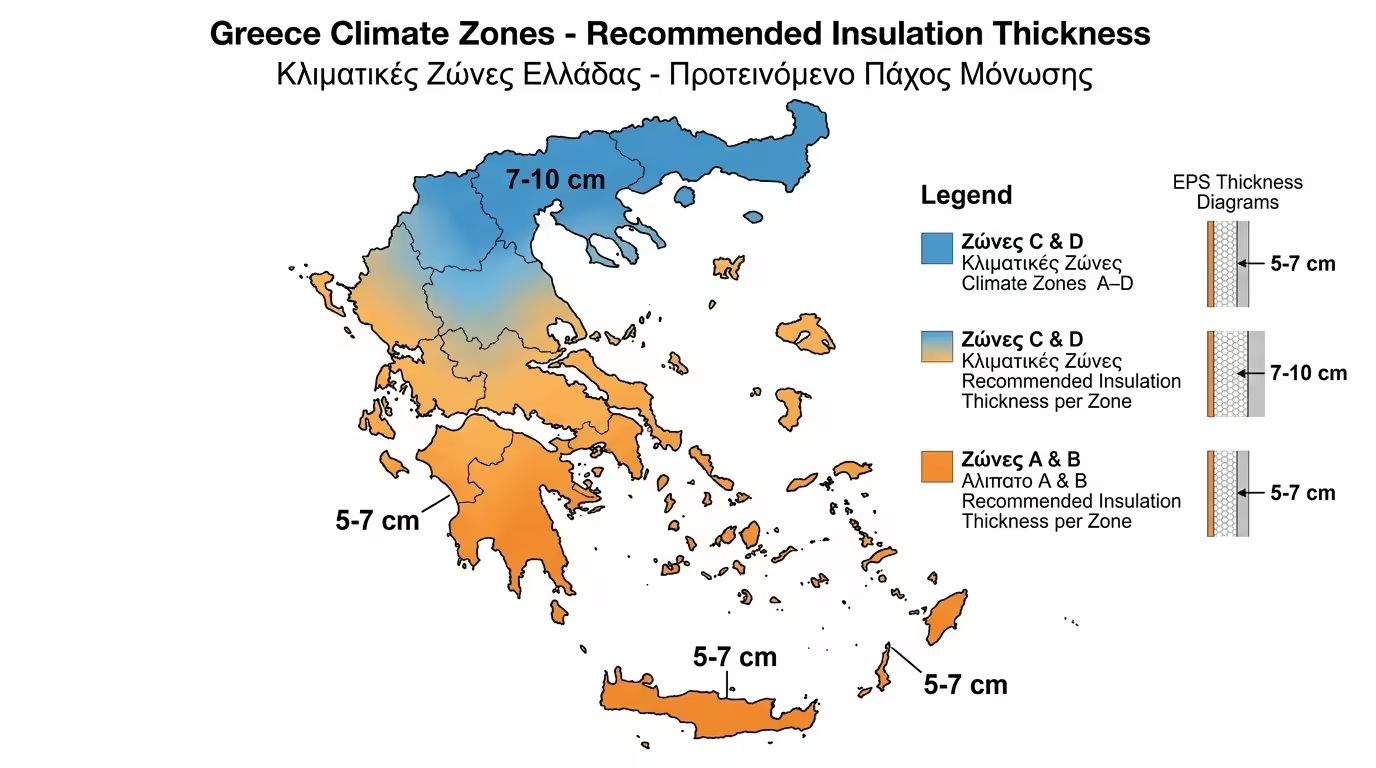
5 to 7 centimetres is usually the ideal cost/performance sweet spot.
Due to the heavier winter, the sweet spot shifts to 7 to 10 centimetres at most.
💡 Final Conclusion: Do not chase extreme insulation thicknesses (12-15cm) unless you are building a specialised "Passive House". The money you would spend going from 8 to 12cm of polystyrene will deliver infinitely better returns if you invest it in replacing your old windows with new, energy-efficient ones!
Return to category.
Go to categoryReturn to the central guide.
Go to guide