🏗️ Fixed Costs
Scaffolding rental and erection, labour (installation, filling, sanding, painting), adhesive, anchors, fibreglass mesh, primers and the final coloured render - cost exactly the same whether you install 5cm, 10cm or 15cm of insulation!
You've decided to go ahead with external insulation (ETICS). You found the crew, chose the material (e.g. graphite polystyrene) and now face the big dilemma: What thickness should I choose?
Many homeowners, trying to reduce the total renovation cost, choose the minimum thickness (e.g. 5cm). However, building physics and economics show this is one of the biggest mistakes you can make. Let's see why, and where the real performance "ceiling" lies.
The biggest misconception about ETICS is that doubling the insulation thickness will double the project cost. This is absolutely wrong.
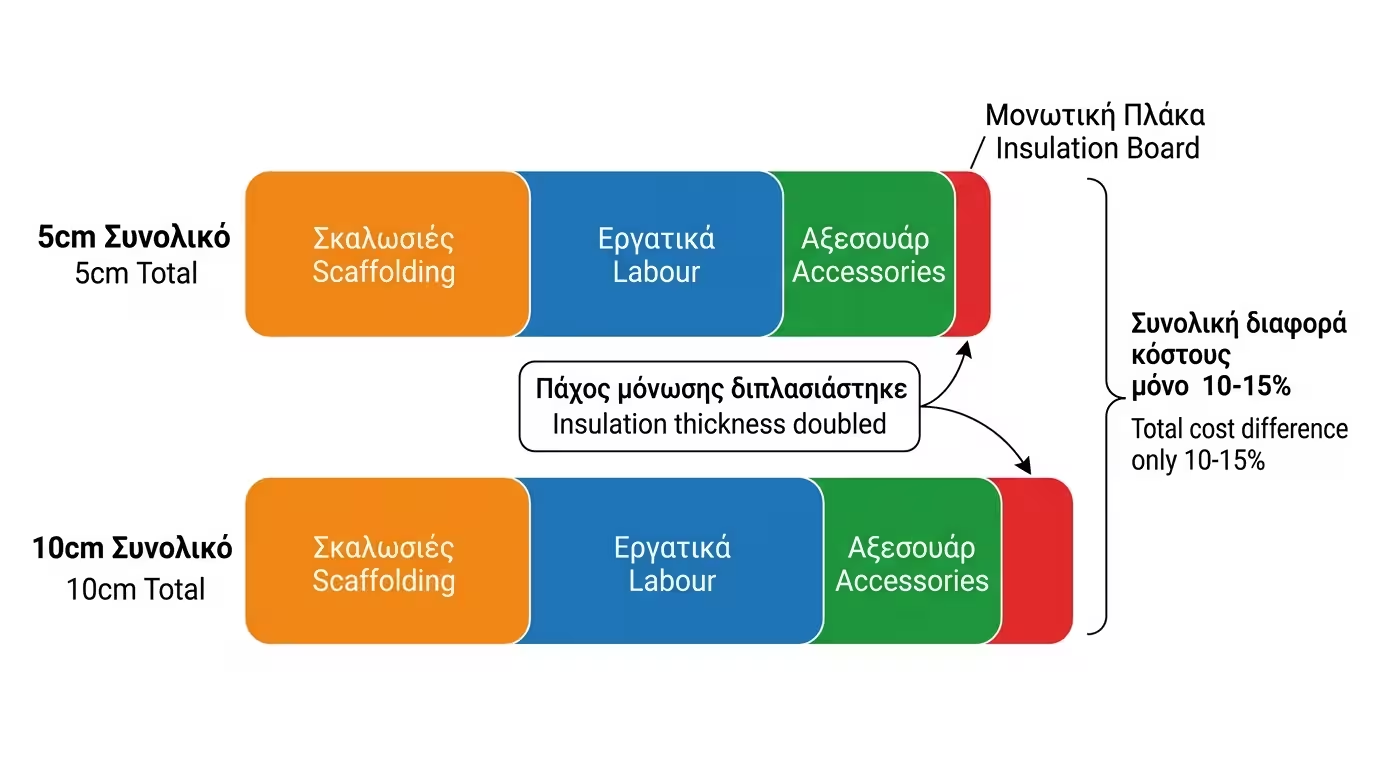
Scaffolding rental and erection, labour (installation, filling, sanding, painting), adhesive, anchors, fibreglass mesh, primers and the final coloured render - cost exactly the same whether you install 5cm, 10cm or 15cm of insulation!
The only price difference is the cost of the insulation boards themselves (EPS or rock wool). In practice, upgrading from 5cm to 10cm increases total project cost by only 10% to 15%, while giving you almost double the thermal protection.
Here is where science puts things in perspective. If 10cm is so good, why not install 20cm or 30cm and never pay for electricity again?
The answer lies in the Law of Diminishing Returns. The relationship between insulation thickness and heat retention is not a straight line but a curve that gradually flattens out.
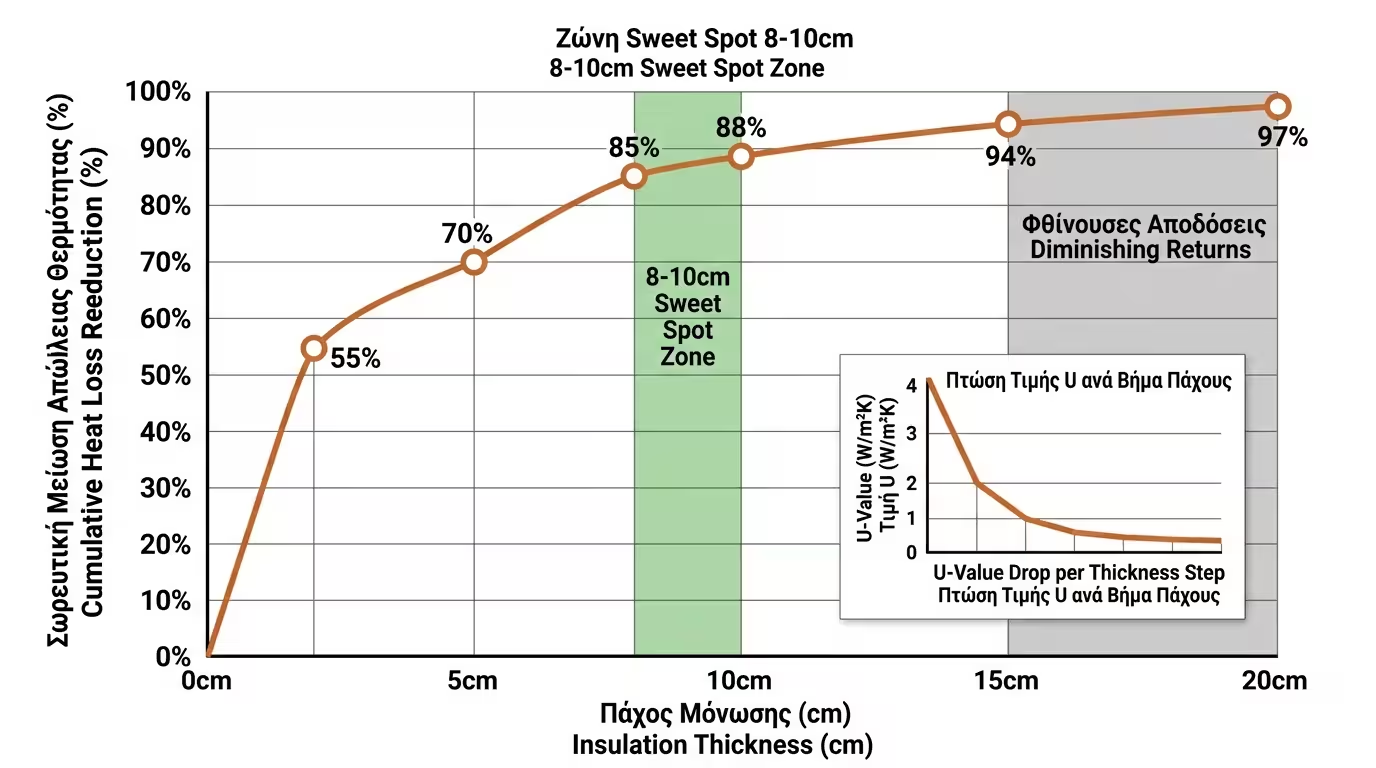
A huge leap. You cut approximately 70% of wall losses.
Another very significant step, cutting an additional 15-20% of losses. This is the "sweet spot" (optimal cost-performance ratio) for the Greek climate.
Further improvement is single-digit (e.g. 4-5%).
Additional consumption savings are practically unmeasurable for a conventional home.
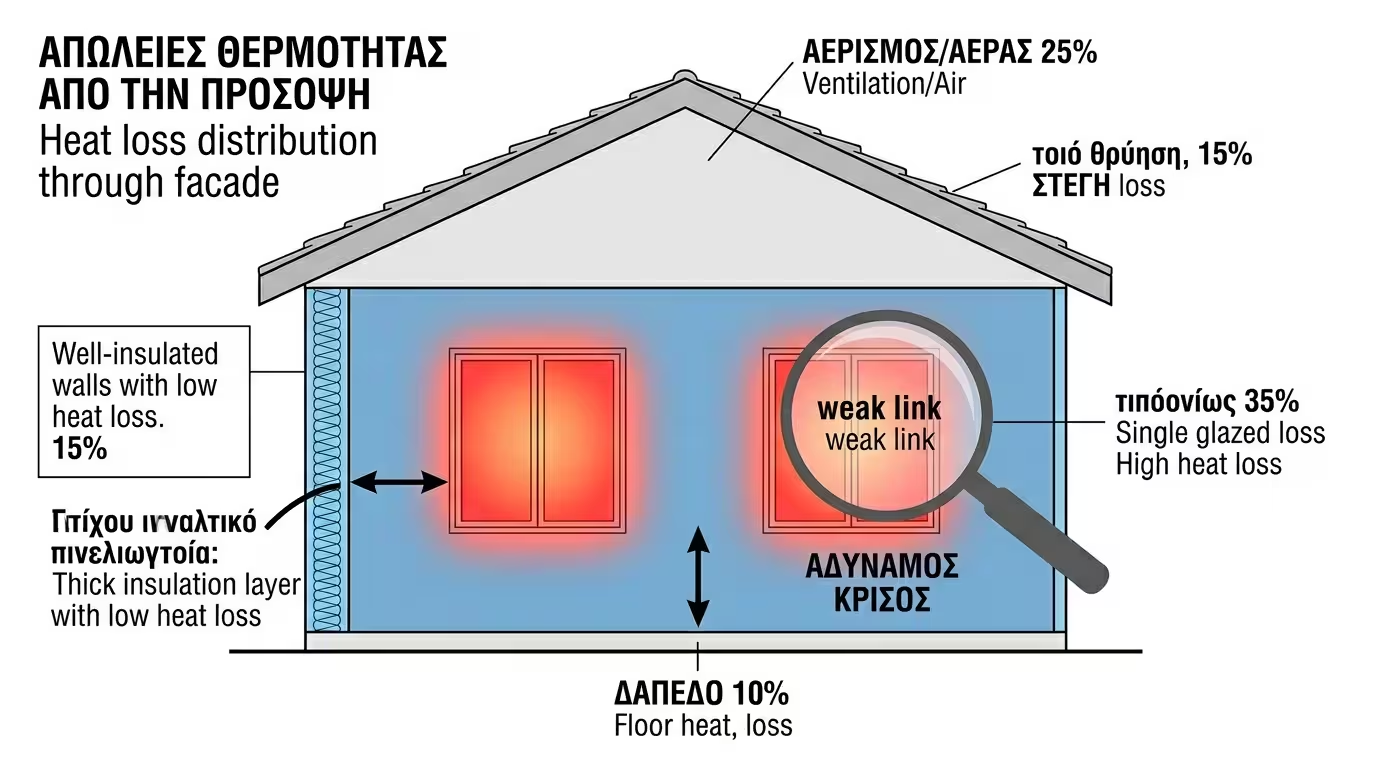
Why does diminishing returns happen in practice? Because walls are not the only point from which a house loses heat.
When you have installed 8 or 10cm of insulation, the wall is no longer the problem. Even the best double-glazed windows lose more heat than a well-insulated wall.
Air that is renewed (whether by opening windows to ventilate or through gaps) carries the warmth away with it. These are unavoidable losses.
📐 Rule: No matter how thick the polystyrene on your wall - even half a metre! - you won't save an extra euro if your heat escapes through the glass or air. The smart choice: optimal wall thickness (8-10cm) and invest the rest in better windows or airtightness.
💡 The Experiment in Our Model (100sq.m. House): In the "10x10 Model" with uninsulated wall (U-Value: 2.50 W/m²K): 5cm insulation → U-Value ~0.55, savings ~€1,000/year. 10cm insulation → U-Value ~0.30, additional ~€250/year (payback on extra cost in 2-3 winters). 15cm insulation → U-Value ~0.21, additional only ~€40/year.
⚠️ Conclusion: Don't skimp on thickness by choosing 5cm. Pay once for labour and scaffolding and select the optimal "sweet spot" of 8-10cm (always in consultation with your engineer and based on your climate zone). Beyond that, save your budget for upgrading your windows!
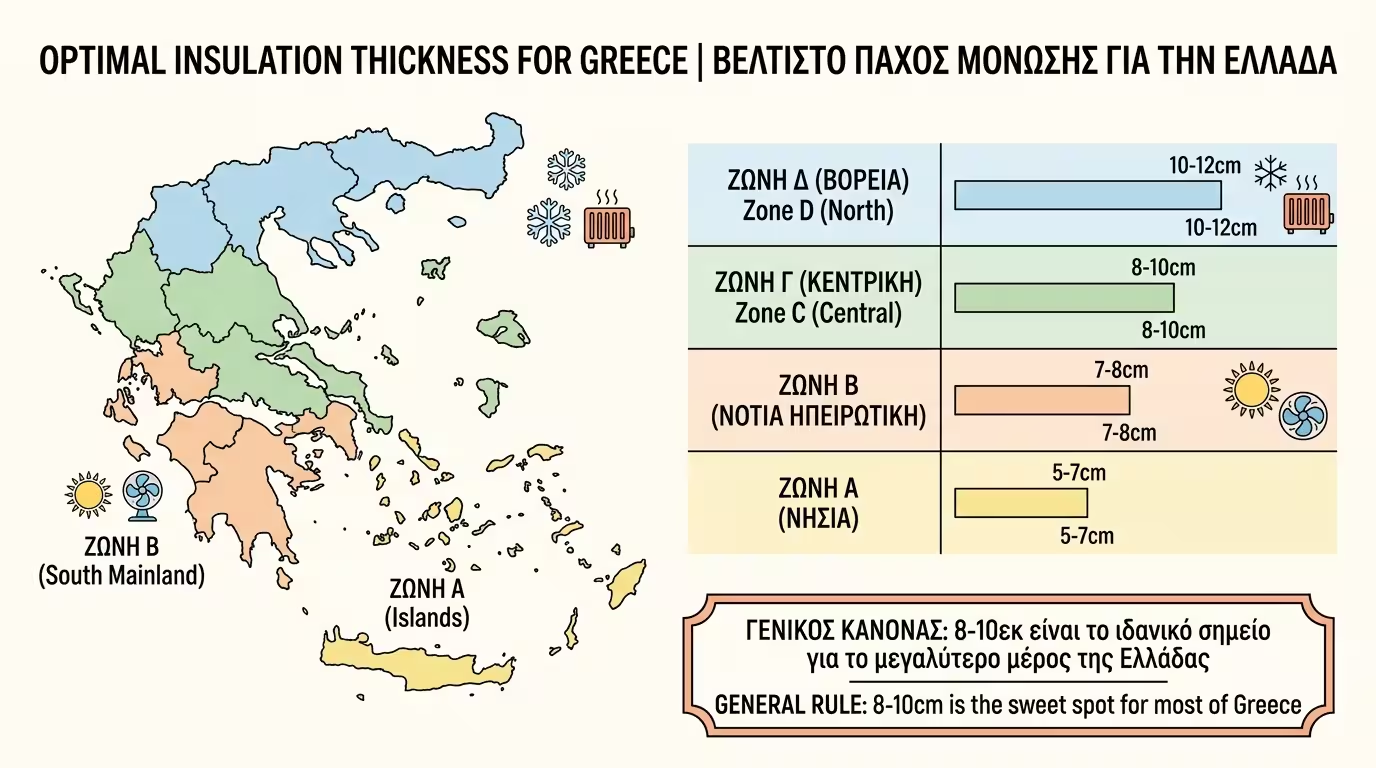
Greece is divided into 4 climate zones (A–D). The optimal thickness depends on your area: Zone A (islands) 5–7cm, Zone B (south) 7–8cm, Zone C (central) 8–10cm, Zone D (north) 10–12cm. For most of mainland Greece, 8–10cm is the sweet spot.
Return to category.
Go to categoryReturn to the central guide.
Go to guide