🌅 Morning (Solid Phase)
Your wall (containing PCM) is cool and the wax inside the microcapsules is solid. The PCM is ready for the new day.
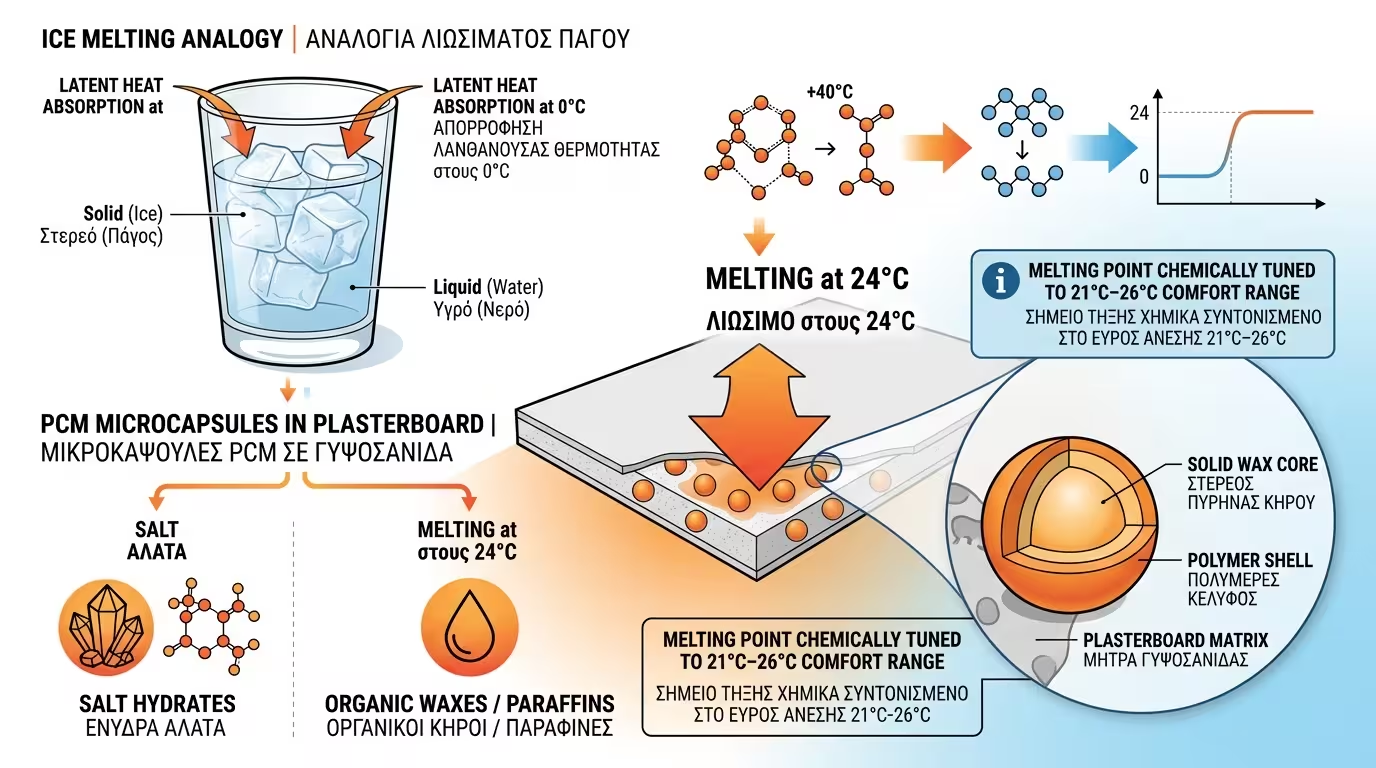
Imagine a glass of ice-cold water with ice cubes on a hot summer day. As long as the ice cubes are melting, the water stays ice-cold at 0°C. The ice absorbs all the environmental heat in order to change form (from solid to liquid), protecting the water from warming up.
This exact principle of physics (Latent Heat) lies behind the most innovative building climate technology: Phase Change Materials (PCM). In construction, of course, we do not put ice inside the walls. We use special "smart" materials engineered to melt at the ideal temperature of your living room!
The PCMs used in buildings are usually special salt hydrates or organic waxes (paraffins). These materials are not applied loose, but are encapsulated in microscopic capsules (microcapsules) which are embedded inside plasterboards, renders or thin panels.
The manufacturer chemically "tunes" the material so that its melting point (the temperature at which it melts) is exactly where we want it, e.g. at 24°C. The phase change from solid to liquid absorbs enormous amounts of energy, exactly like the ice cubes in your glass.
Let us see how this material "works" for you over a 24-hour period during summer:
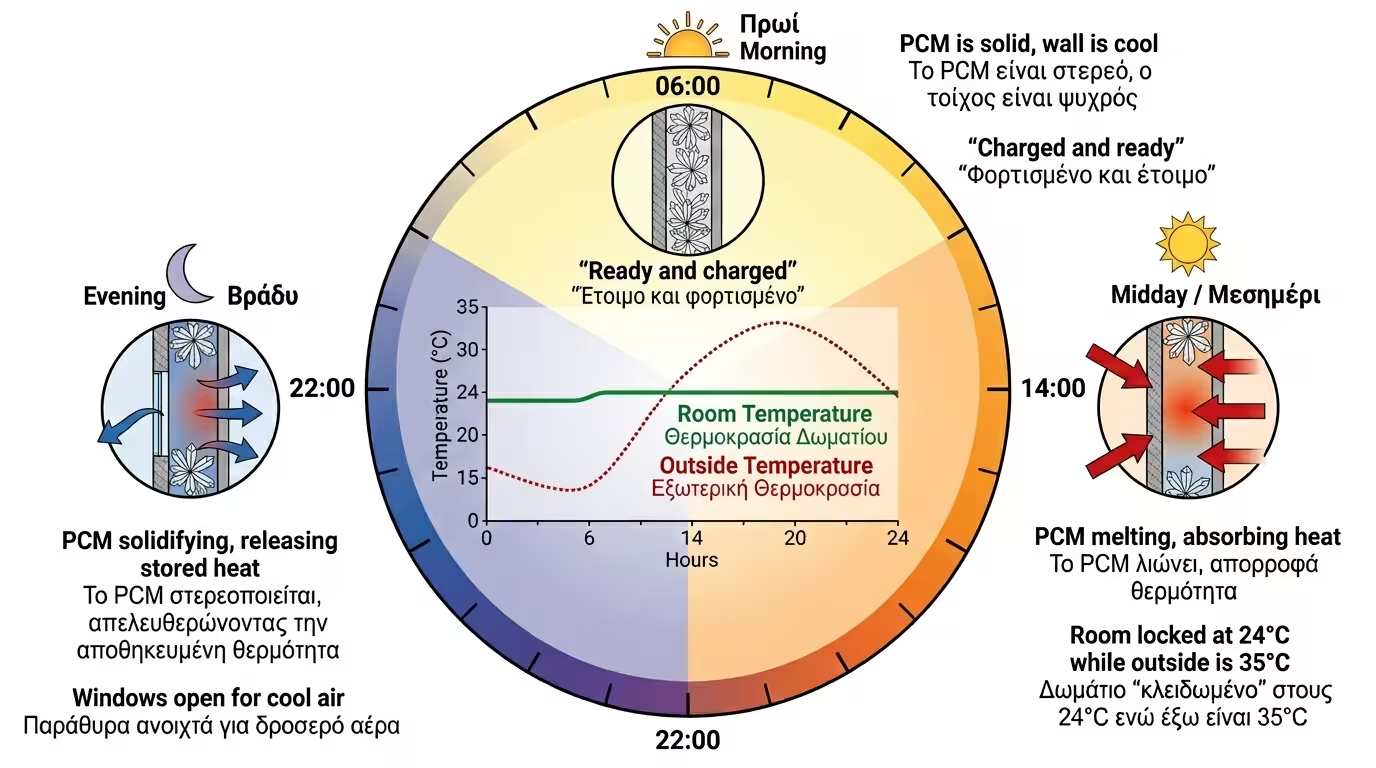
Your wall (containing PCM) is cool and the wax inside the microcapsules is solid. The PCM is ready for the new day.
The sun "beats" the house and the temperature in the living room is about to exceed 24°C. The PCM wakes up. It begins to melt internally (turns liquid), absorbing enormous amounts of heat from the air. While it is 35°C outside, your room "locks" at 24°C for hours, without air conditioning!
The outside temperature drops. You open the windows for cool air. The liquid PCM cools down, expels the heat it collected at midday, and turns solid again. It is ready for the following day.
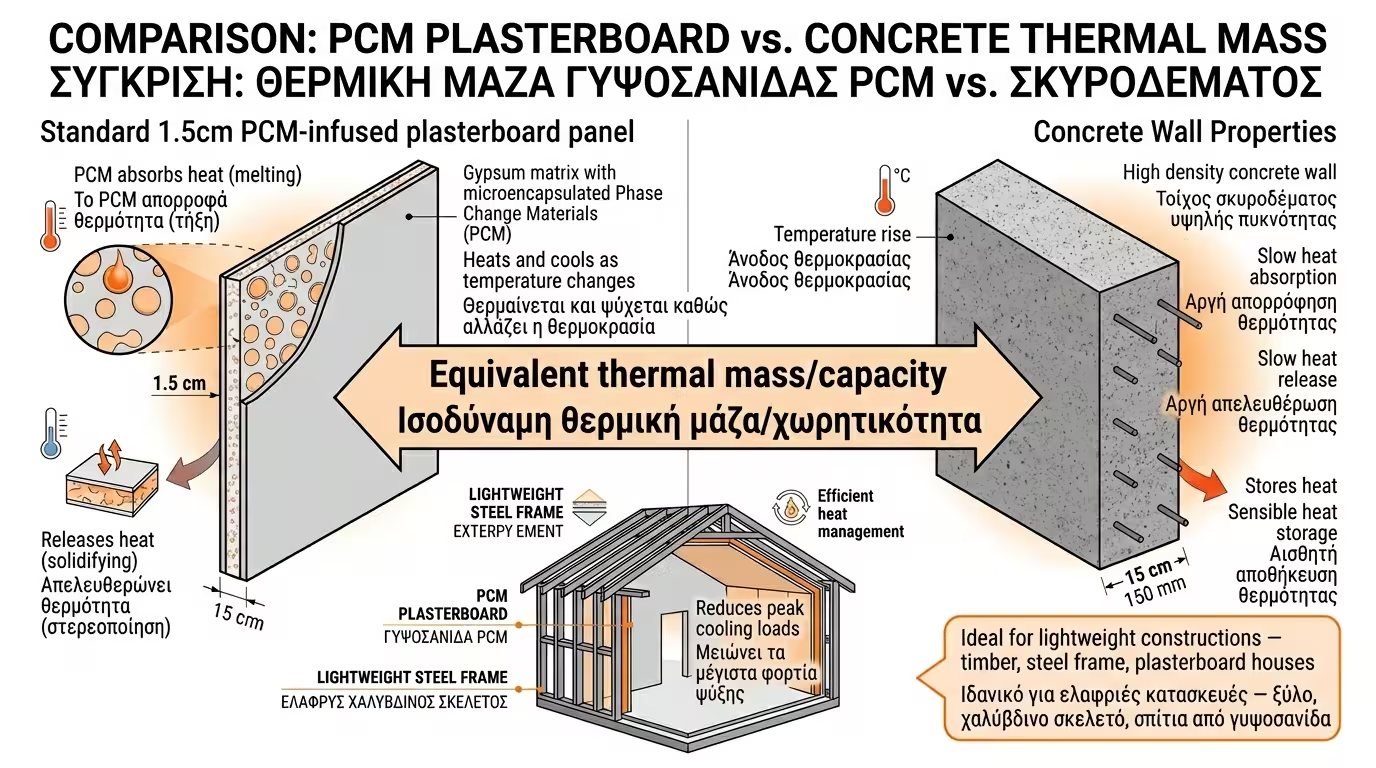
In traditional stone houses, the thick walls do this job because they have enormous thermal mass. Today, however, we build many homes with "lightweight" materials (steel frame, timber, plasterboard). These lightweight homes heat up and cool down at lightning speed.
By incorporating a special PCM plasterboard just 1.5 centimetres thick, you add to the room the thermal mass (capacity) of a concrete wall 15 centimetres thick!
Unlike air conditioning that blows cold air, PCMs deliver a natural, uniform, silent coolness that feels like being in a concrete house in August. No air conditioner can replicate this natural sensation.
We are in the attic of our digital house in July. The attic is made of lightweight plasterboard and insulated with conventional glass wool.
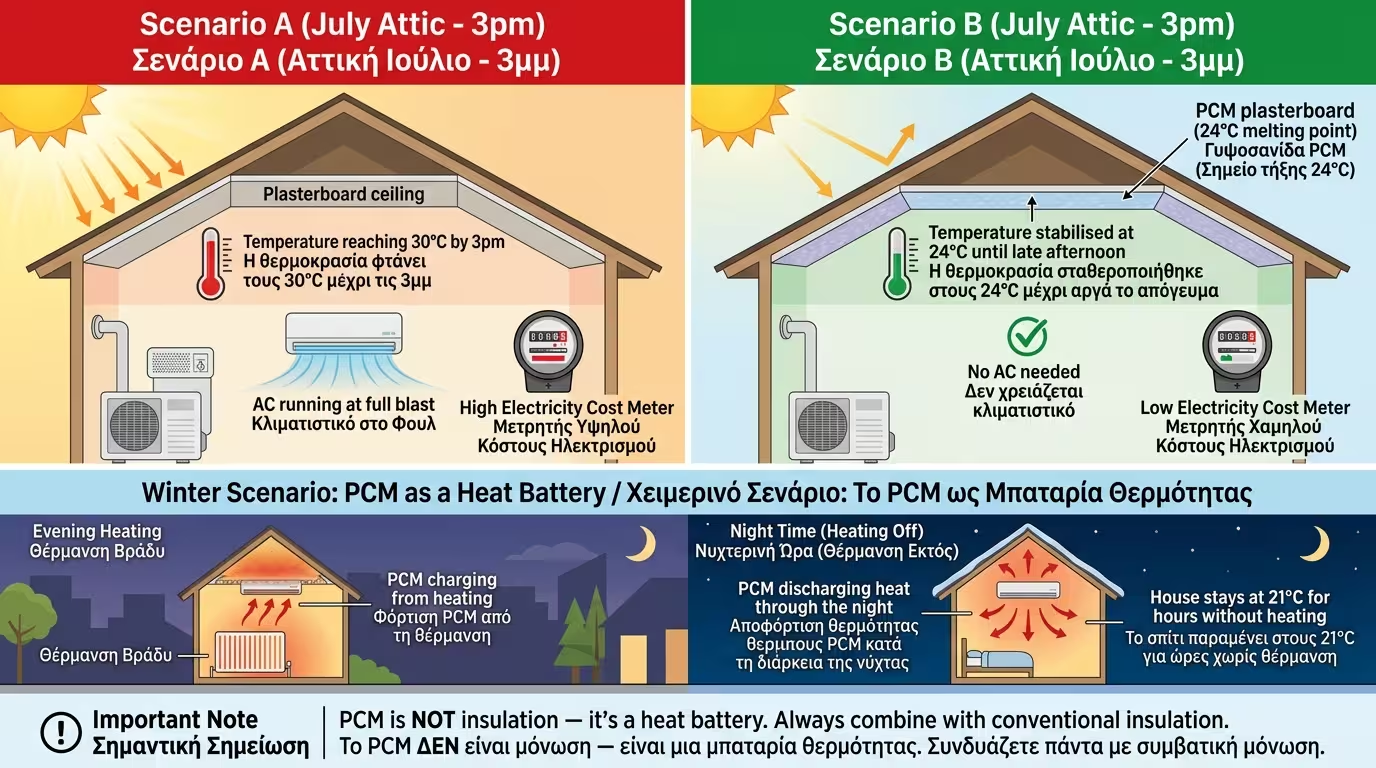
The sun hits the roof. Heat passes through. Because the plasterboard has no mass, the room temperature reaches 30°C by 3 pm. The air conditioning runs at full blast.
Heat enters the room, but as soon as the thermometer touches 24°C, the PCM starts melting. It absorbs all the thermal energy. The thermometer "sticks" at 24°C until late afternoon. Comfort is absolute and natural, and the electricity bill plummets.
⚠️ Critical: PCM on its own is not insulation material. It does not have a good λ coefficient, meaning it cannot block cold from entering the house. If conventional insulation (e.g. polystyrene) is your "coat", PCM is your "hot water bottle". A hot water bottle without a coat in the snow will cool down immediately.
For this reason, PCM is always installed in combination with conventional insulation. Let us see what happens during a freezing, rainy 24 hours with no sun at all, where you must turn on the heating. The external wall already has conventional insulation (the "coat") and internally we have installed PCM plasterboard (the "hot water bottle").
We turn on the central heating. Once the room reaches 23°C, the PCM wakes up. It begins to melt, "absorbing" part of the heat produced by the radiator. This means the heating system runs smoothly and steadily to charge the wall, avoiding the constant (and energy-hungry) "on-off" cycling of the thermostat.
At 23:00 we turn the heating off completely to sleep. In a simple lightweight home, the temperature would drop quickly to 17°C. Here, however, the PCM wall begins to cool and solidify again. In doing so, it returns all the heat it stored back to the room! The house stays at 21°C for many hours through the night, as if you had an enormous, invisible radiator burning without a single drop of oil.
💡 Final Conclusion: Phase Change Materials (PCM) are not "insulation" in the conventional sense (they do not have a low λ). They are heat batteries. Although still quite expensive, they are the ultimate high-tech upgrade for anyone building houses from plasterboard, timber or steel who wants to eliminate sharp temperature swings.
Return to category.
Go to categoryReturn to the central guide.
Go to guide