Perimeter Drainage (French Drain): How to Keep Rainwater Away from Your
Building
Imagine your house is a castle. To protect it from the enemy (water),
the best thing you can do is dig a moat around it. In construction, that
"moat" is called a Perimeter Drainage System (internationally
known as a French Drain).
When it pours with rain, water falling in your yard or running down from
the roof gutters tends to pool next to the external walls. If your soil
is clay-rich, water gets trapped there for weeks, exerting enormous
hydrostatic pressure on the foundations and basement. The Drainage
System is the "invisible highway" that captures this water and channels
it away safely.
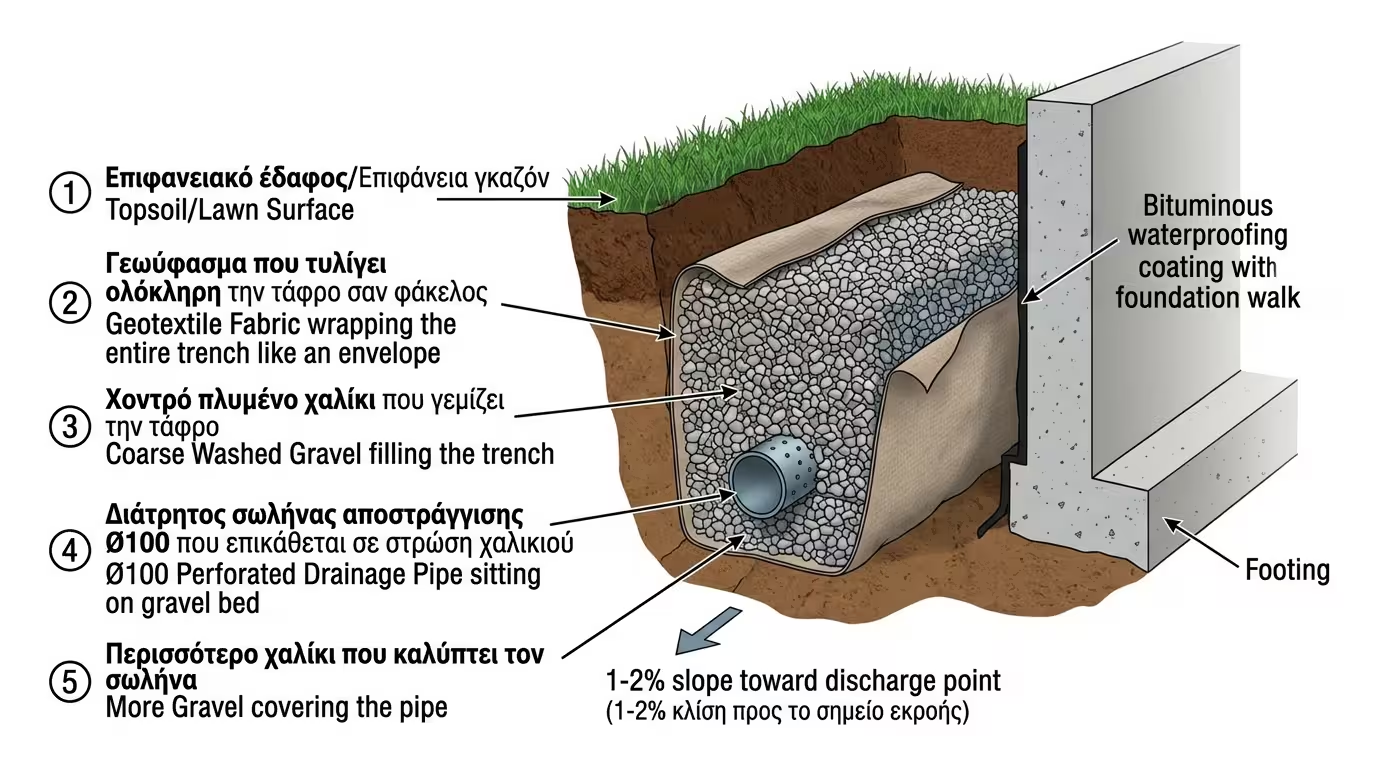
1. Anatomy of the Perfect Drainage Trench
A proper drainage system is not just a hole in the ground with a
plastic pipe. It is a multi-layered filter. When dug correctly
(usually around the entire perimeter at foundation depth), the
material layers from outside to inside are:
1️⃣ The Slope (Non-Negotiable)
The trench (the channel you dig) must have a gentle, constant fall
of approximately 1-2% toward the discharge point (storm
drain, soak-away pit or lowest point on the plot). If the trench is perfectly
level, the water will simply sit there indefinitely.
2️⃣ Geotextile (The "Guard")
Before adding anything, the entire trench is lined with a tough
non-woven fabric called geotextile. Its role? It lets water through
but blocks mud, soil and roots. Without geotextile, the system clogs
with silt within the first year!
3️⃣ Gravel (Aggregate)
A first layer of coarse, washed gravel (no fines) is poured in. The
large voids between the stones let water flow freely without
resistance.
4️⃣ Perforated Pipe (The Channel)
On top of the gravel, the perforated drainage pipe is laid (usually
yellow or black, with small slits around its circumference). Water
passes through the stones, enters the slits and, thanks to the
slope, travels rapidly away from the house.
5️⃣ Closing the "Parcel"
The pipe is covered with more gravel almost to the surface, and the
geotextile is folded shut like an "envelope". Finally, a thin layer
of topsoil is spread for the lawn. The trench disappears visually
but works tirelessly underground!
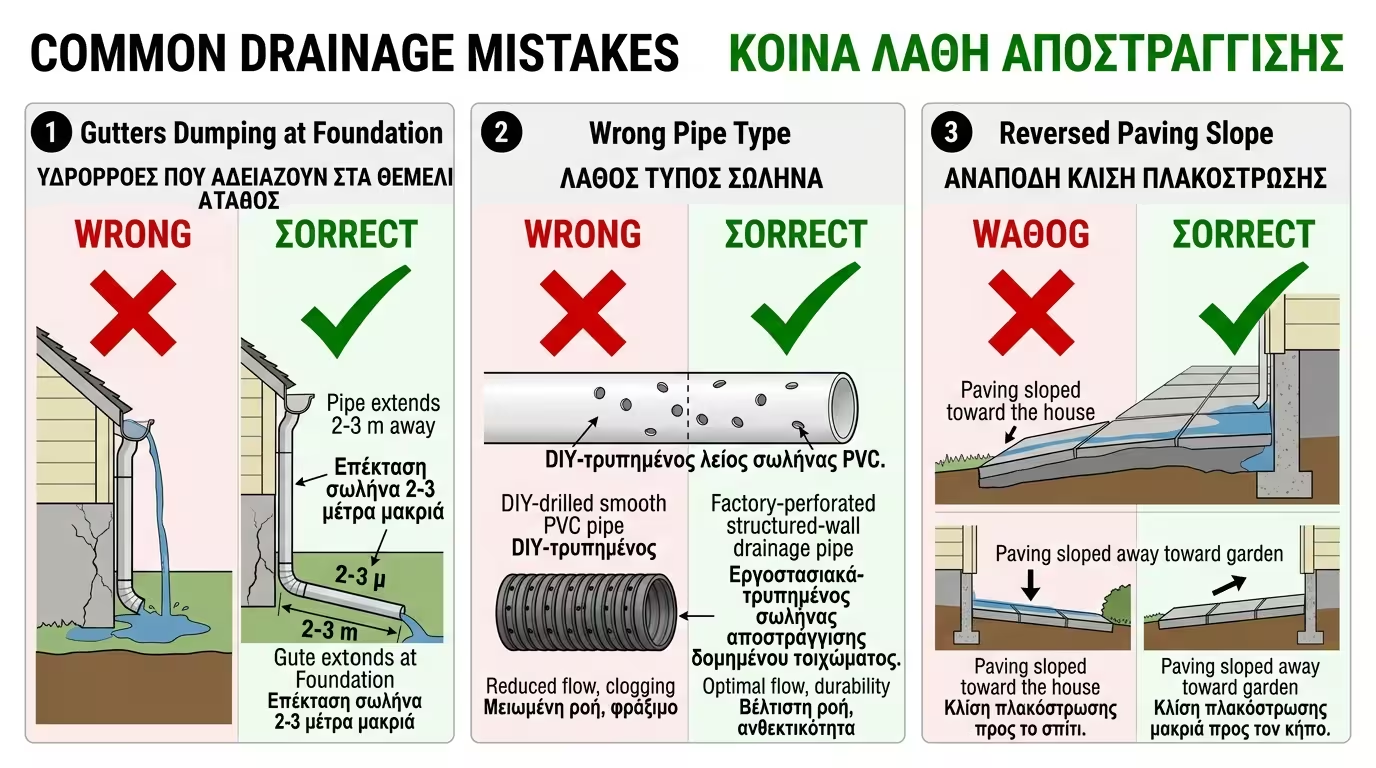
2. Three Tragic Mistakes to Avoid
Whether you are doing it yourself or supervising a contractor, watch
out for these three traps:
❌ Mistake #1: Gutters Dumping at the Foundation
The most common error in Greek construction. Perfect roof gutters
run down the wall and discharge cubic metres of water… right next to
the foundation! Gutter downpipes must connect to closed pipes
(not perforated) that carry the water at least 2-3 m away from the building.
❌ Mistake #2: Wrong Pipe Type
Do not use plain smooth PVC pipes that you drilled yourself at home
with a power drill. Use certified, factory-perforated drainage pipes
instead (rigid structured-wall PVC is the top-tier choice, although
corrugated flexible pipes are a cheaper alternative).
❌ Mistake #3: Reversed Paving Slope
If you have poured concrete or laid tiles around the house, make
sure the slope "pushes" water toward the garden, not toward the
living-room wall.
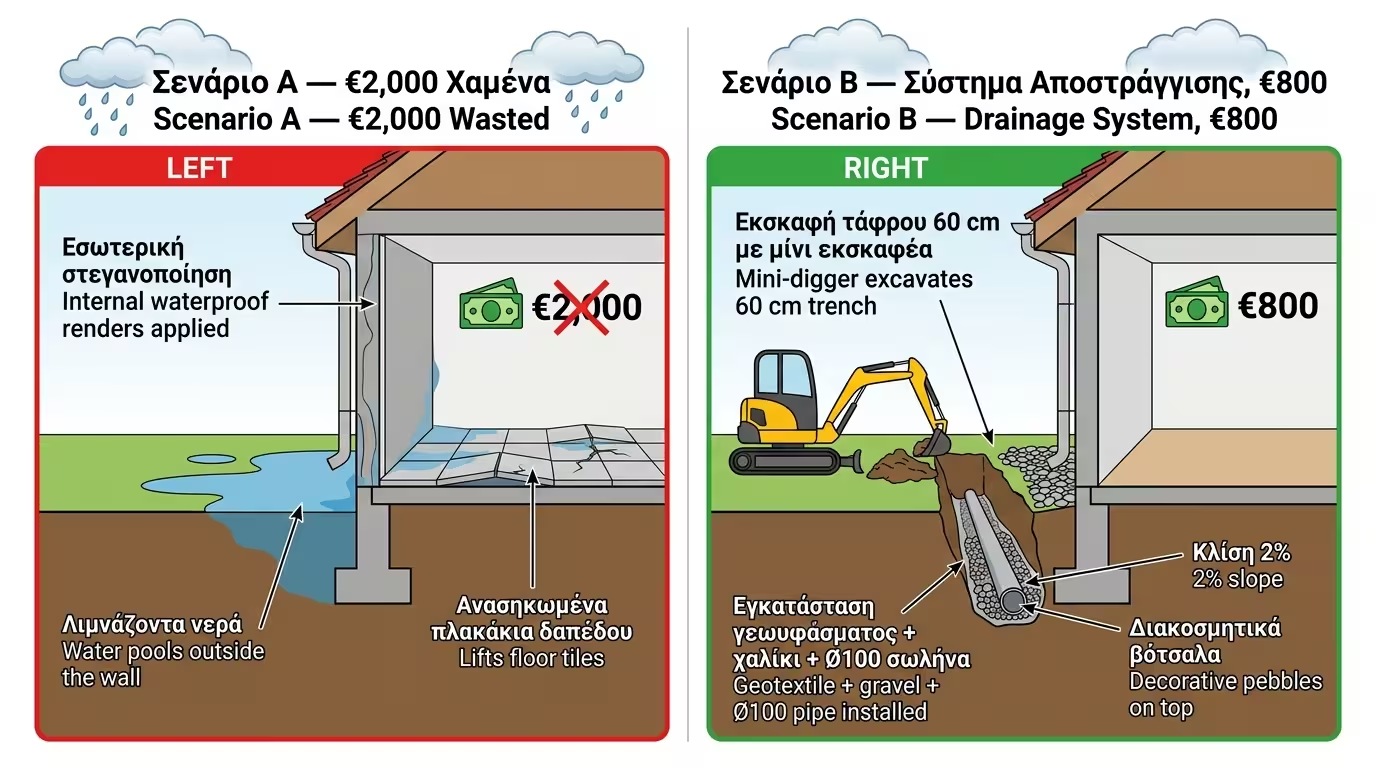
3. The Model Experiment (The 10×10 Yard)
Our digital house has a damp ground floor after every heavy rain,
because the plot slopes slightly… toward the building.
🔴 Scenario A (Money Down the Drain)
Instead of looking at the ground, we call tradesmen, open up the
interior wall and apply "magic" waterproof renders. We spend €2,000. At the next storm, water pools again like a lake outside the
wall. Hydrostatic pressure is so great that it finds another route
and lifts the living-room floor tiles!
🟢 Scenario B (The Drainage System)
We bring in a mini-digger. We excavate a trench around the house, 60
cm deep. We lay geotextile, pour gravel and install a Ø100
perforated pipe. We set a 2% slope and run the pipe outlet to the
street drain. We seal the geotextile and top with decorative
pebbles. Cost? About €800. Result? No matter how
hard it rains, water vanishes into the pebbles, flows through the
pipe and the house stays bone-dry, as if it never rained!
Final Verdict: Don't fight the water. Outsmart it. A well-designed
perimeter Drainage System is the smartest, most permanent and most effective
defence you can give your home, keeping foundations dry and the soil stable.