🔊 Fibres Rub
As the sound waves try to bounce (echo) between the two walls, they fall upon the millions of microscopic fibres of the rock wool.
To understand the value of rock wool, we need to imagine what happens inside the "Mass – Spring – Mass" system when we leave it completely empty inside.
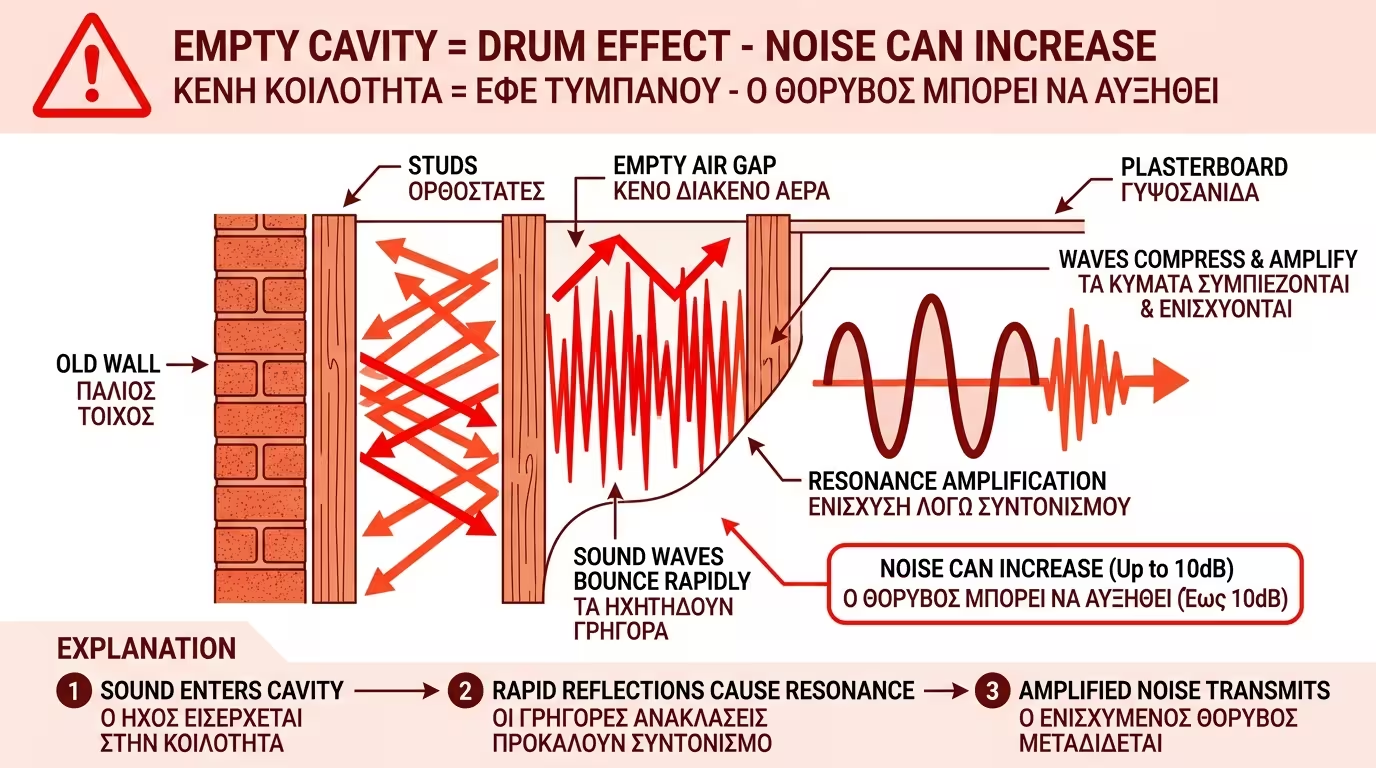
We have the old wall (Mass 1), a 5-centimetre air gap (Spring) and our new plasterboard (Mass 2). When the neighbour's voice penetrates the old wall, it enters that 5-centimetre cavity. What will the sound do in there?
If the cavity is empty, sound will start bouncing (reflecting) at enormous speed between the plasterboard and the old wall. The air inside the cavity will compress and our wall will literally turn into a giant drum or a guitar speaker!
At certain specific frequencies (resonance frequencies), the empty wall will not only fail to cut the noise, but may actually amplify it! You will hear the neighbour more bassy and louder.
This is where rock wool (or mineral wool) enters the picture. We place it between the vertical metal studs of the plasterboard, filling the cavity (without squeezing or compressing it forcefully).
Its role is NOT to act as a brick. Its role is to act as a sound absorber inside the cavity.
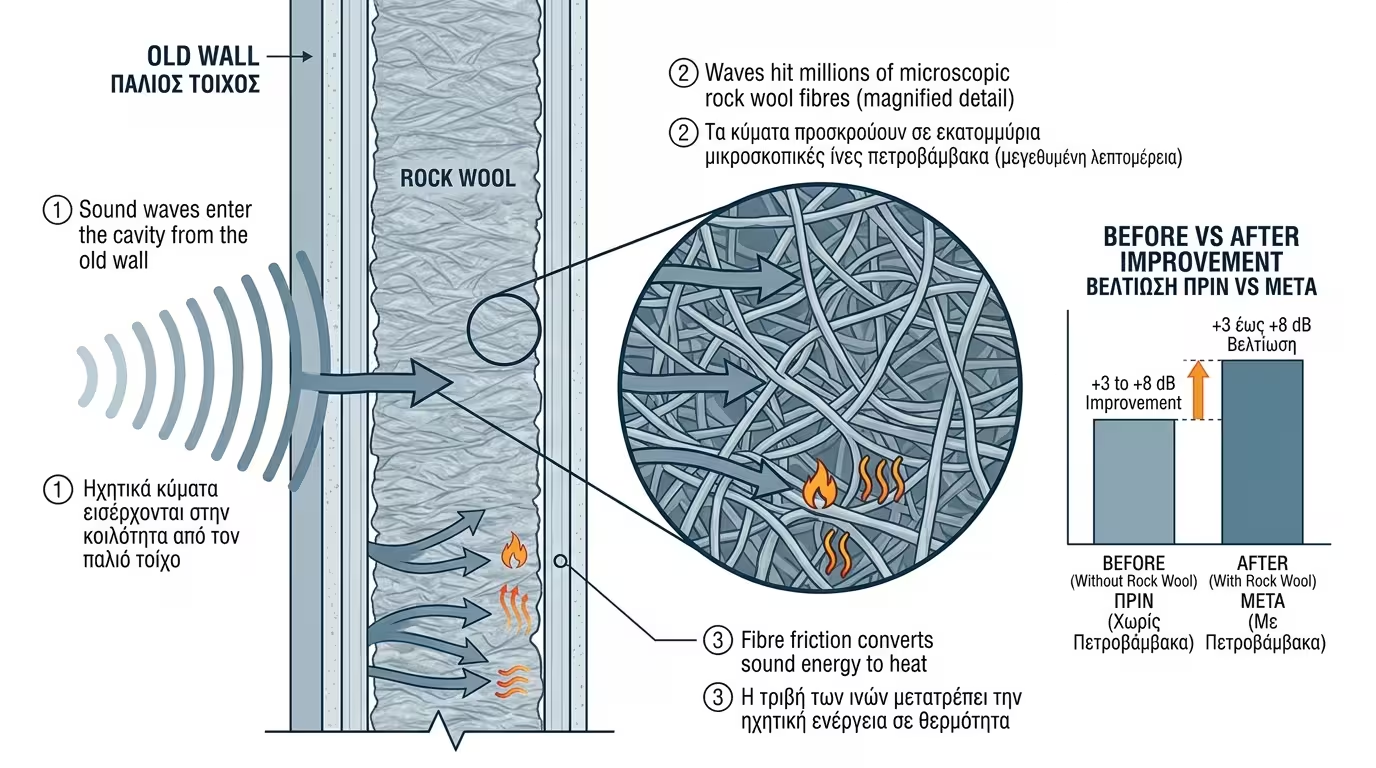
As the sound waves try to bounce (echo) between the two walls, they fall upon the millions of microscopic fibres of the rock wool.
The acoustic energy forces the fibres to rub against each other. This friction converts the sound into… a negligible amount of heat!
The sound is "drowned" before it has a chance to strike our plasterboard. Adding rock wool to a double-wall system adds +3 to +8 dB to the total sound insulation of the system (depending on wall thickness).
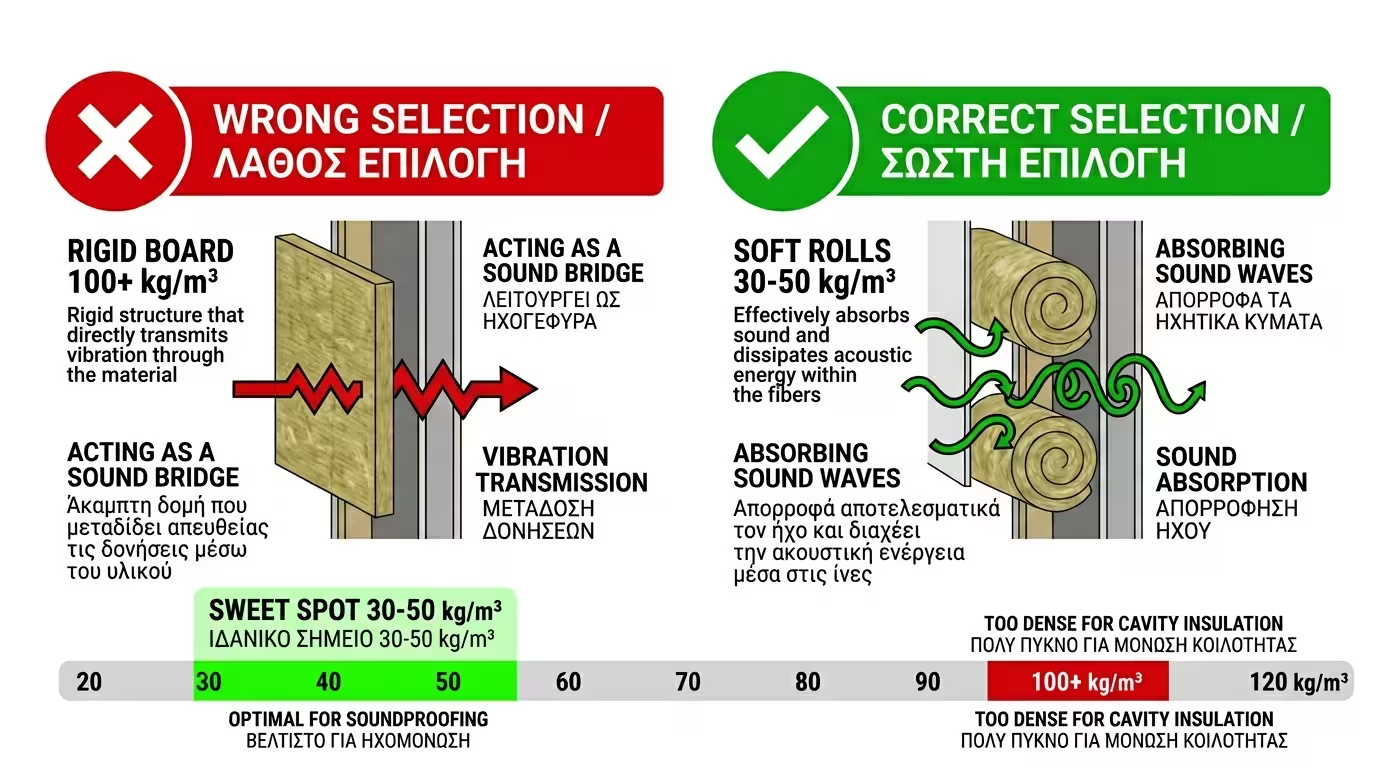
Many clients, thinking that "hard" means better, ask for rock wool with enormous density (e.g. 100 kg/m³), which is as rigid as a plank. Wrong!
If the rock wool is excessively rigid, it starts behaving like a solid body and will transmit vibration from the old wall to the plasterboard (i.e. it becomes a sound bridge). For soundproofing in stud walls, we need soft to semi-rigid rock wool (typically 30 to 50 kg/m³).
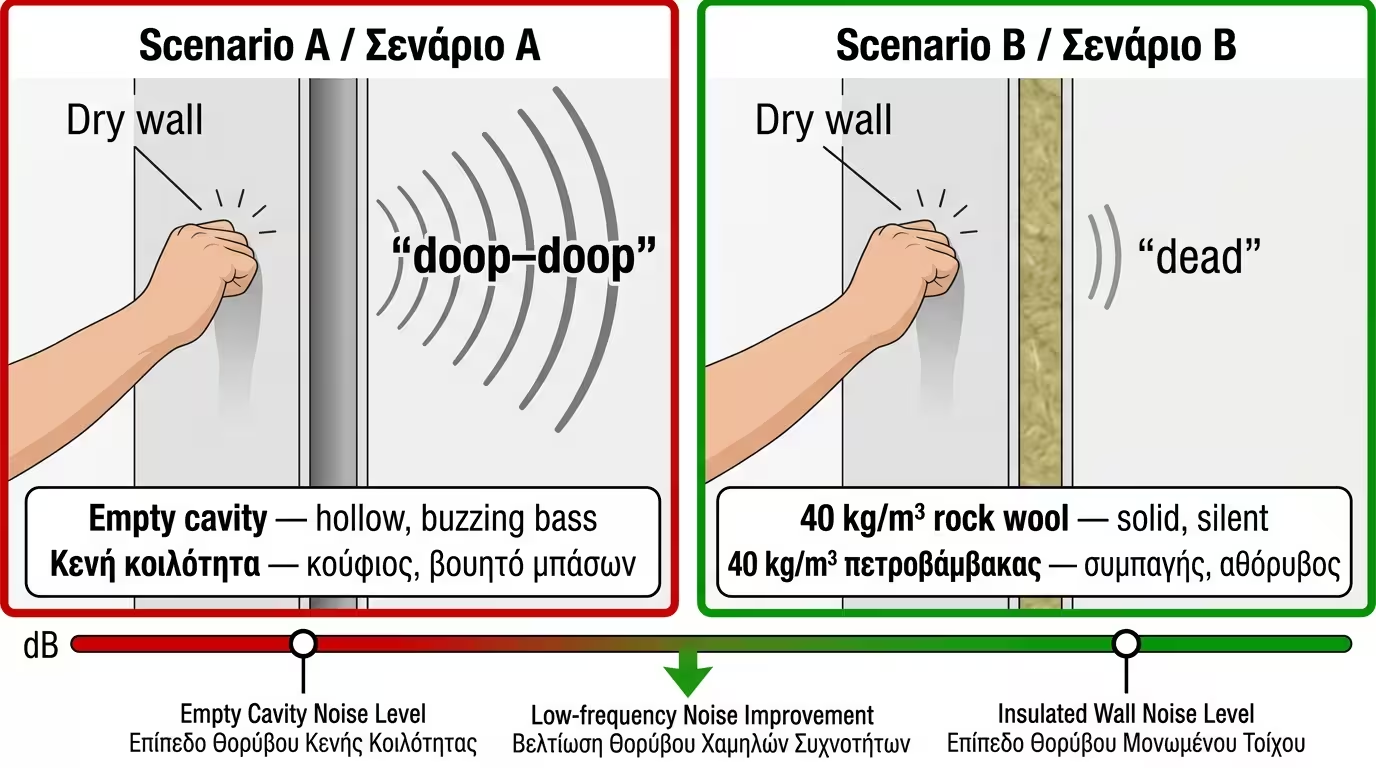
We have erected the frame in our room. We have a 5-centimetre cavity.
The tradesman can't be bothered and doesn't install rock wool. He screws on the double plasterboard. When we knock on the wall with our hand, it sounds hollow (a "doop-doop"). The neighbour turns on the TV. We have cut the mid-range voices, but the low frequencies (the explosions from the film) resonate in the empty air of our wall and the room buzzes.
We buy rolls of soft rock wool (5 cm thick, density 40 kg/m³) and fill the frame without pressing it. We screw on the plasterboard. When we knock on the wall, it sounds solid, "dead". At night, the explosions from the neighbour's TV enter the cavity, get trapped in the rock wool fibres, die out inside and never reach our ears.
The Final Conclusion: Rock wool is not the "shield" - it is the "sponge" that mops up the water that managed to get past the shield. The double plasterboard blocks the sound (through mass) and the rock wool "strangles" it (through sound absorption). This is the ultimate combination!
Return to category.
Go to categoryReturn to the central guide.
Go to guide