
Rock Wool: The King of Fire Protection and Sound Insulation - Complete Guide

If synthetic polymers (EPS, XPS) are the "lightweight champions" of thermal insulation, rock wool (mineral wool) is the undisputed heavyweight champion.

When an architect designs a hospital, a skyscraper, a timber house or a recording studio, rock wool practically always dominates the specification. Let us explore how a material literally made from... rocks manages to provide the ultimate protection for a building.

1. How to Make "Wool" from Rock: The Production

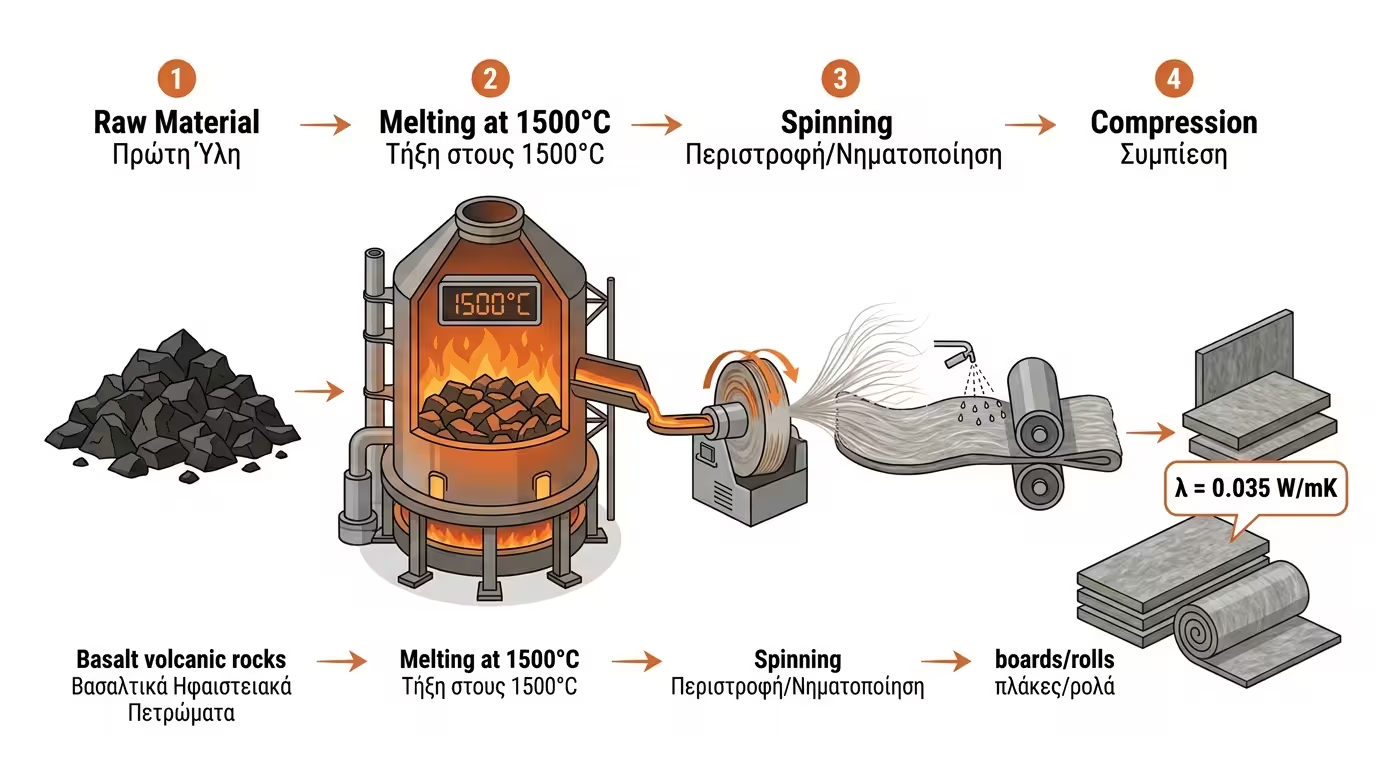
The production process is spectacular and resembles making candy floss! The primary raw material is basalt (a hard volcanic rock). These rocks are melted in massive furnaces at temperatures exceeding 1500°C (as hot as volcanic lava).

The molten rock is spun at tremendous speed and converted into millions of fine, long fibres. Special resins are added to "bind" the fibres and the material is compressed into boards or rolls. The result is a dense, fibrous "blanket" that traps enormous quantities of air between its fibres (hence its excellent thermal insulation, with λ ≈ 0.035 W/mK).

Rock wool production from basalt - volcanic rock melted at 1500°C

2. Rock Wool's 2 Absolute "Superpowers"

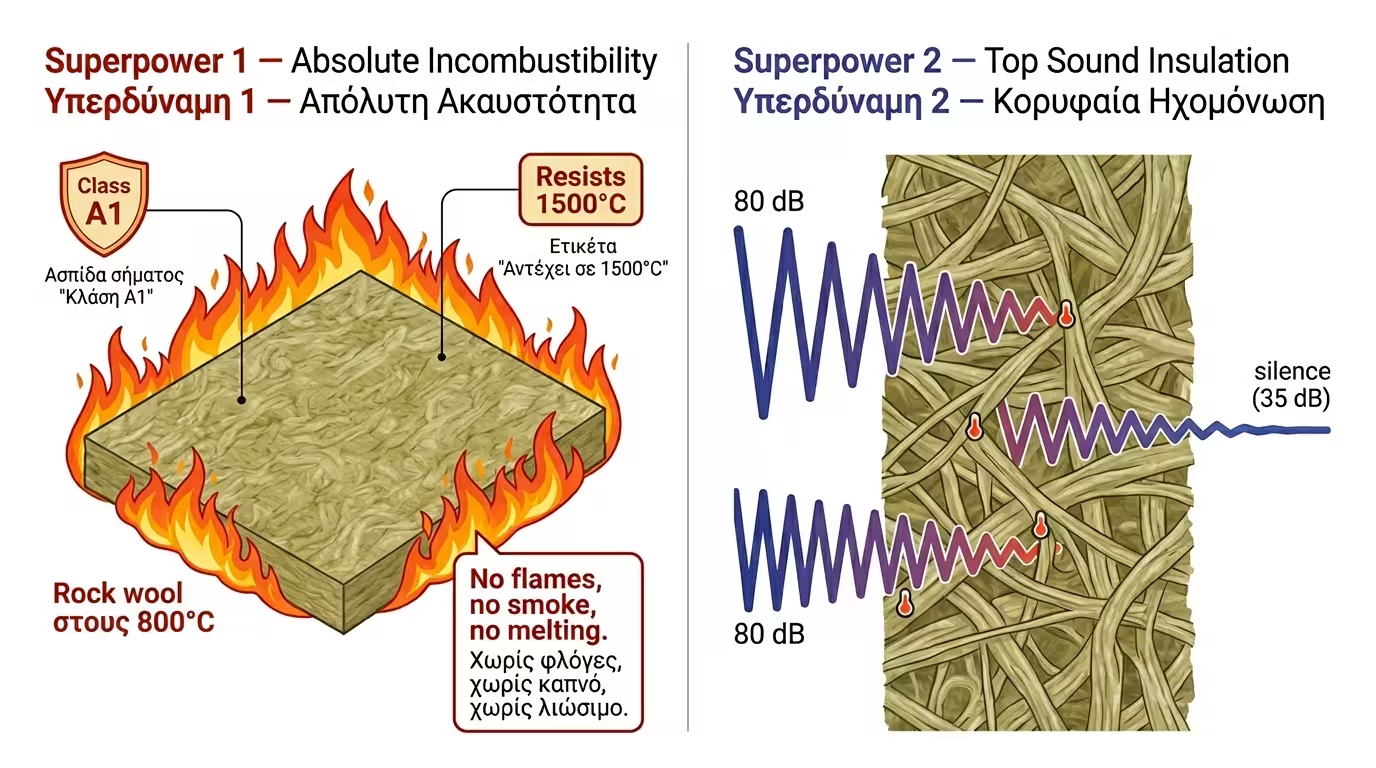
Rock wool - A1 fire safety and sound insulation superpowers

While thermally it performs similarly to white polystyrene (EPS), rock wool is chosen for two reasons that plastics simply cannot compete with.

🔥 Absolute Incombustibility (Class A1)

Rock wool does not merely resist fire - it does not burn at all. Since it comes from stone already melted at 1500°C, it is completely unaffected by a typical house fire (600°C-800°C). It belongs to the top Class A1 of Euroclasses. It produces no flames, no toxic smoke (which is the No.1 cause of death in building fires) and does not melt. Instead, it acts as a fire barrier, protecting the structural frame (columns and beams) from collapse and providing precious time for occupants to evacuate the building.
🔇 Superior Sound Insulation

Sound travels through air. When sound waves hit a rigid, closed surface like XPS, much of the energy reflects or passes through. In contrast, rock wool's fibrous, "open" structure acts as a sound trap. Waves enter the fibres, create microscopic friction and kinetic energy converts to heat. Rock wool literally "absorbs" noise, delivering absolute tranquillity indoors.

3. The Disadvantages: Weight, Difficulty and Water

This top-tier material does have its quirks.

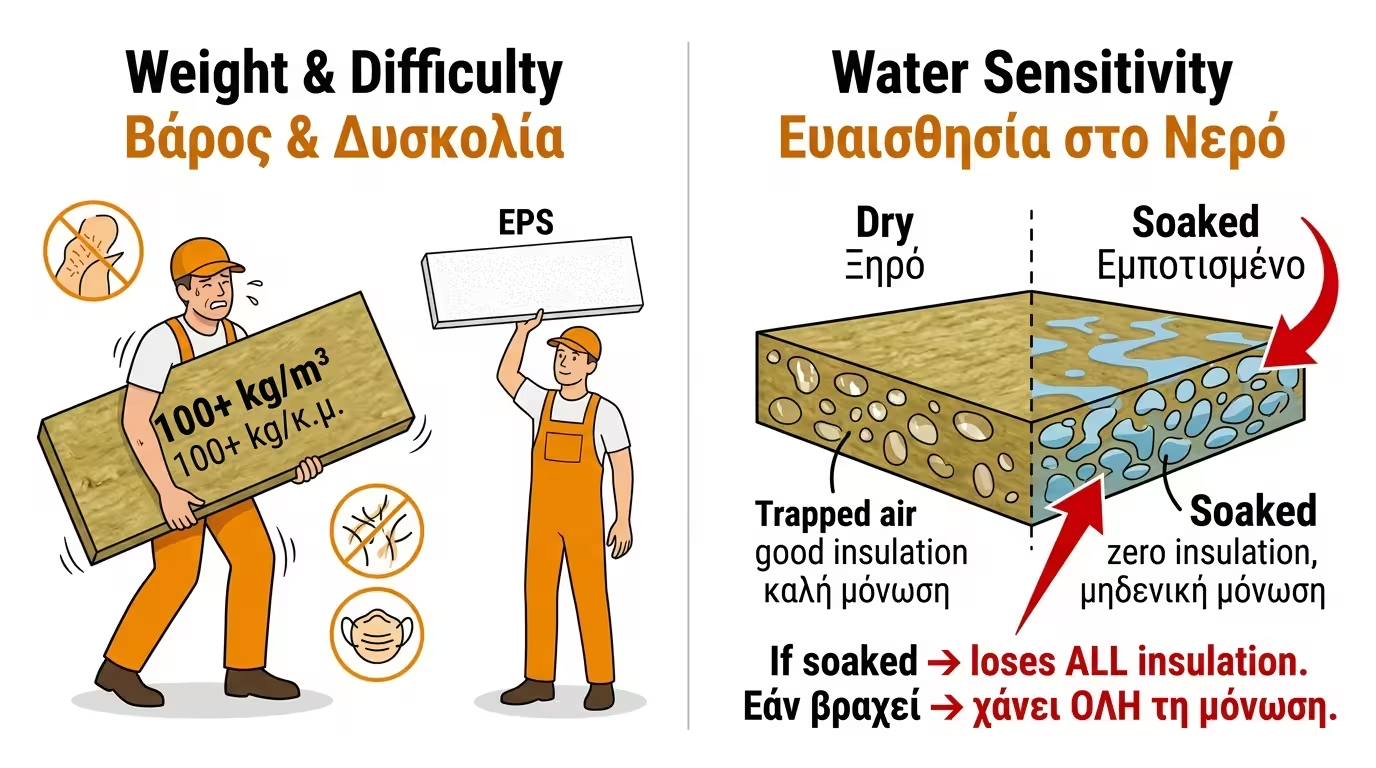
Rock wool disadvantages - weight, fibres, moisture

⚖️ Weight & Installation Difficulty

Much heavier than EPS. A rock wool facade board can weigh over 100 kg per cubic metre! This makes transport and installation by crews far more demanding (so labour costs go up). During cutting it also releases dust and fibres that cause intense itching, requiring workers to wear masks and gloves.

💧 Water Sensitivity

Although its fibres are impregnated with hydrophobic agents, if rock wool is exposed to continuous running water (e.g. on a poorly maintained flat roof or if the external render cracks badly), it will become waterlogged. When waterlogged, the trapped air is replaced by water and the material completely loses its insulating ability. It must ALWAYS be properly protected.

4. The 10x10 Model Experiment: The Noise Battle

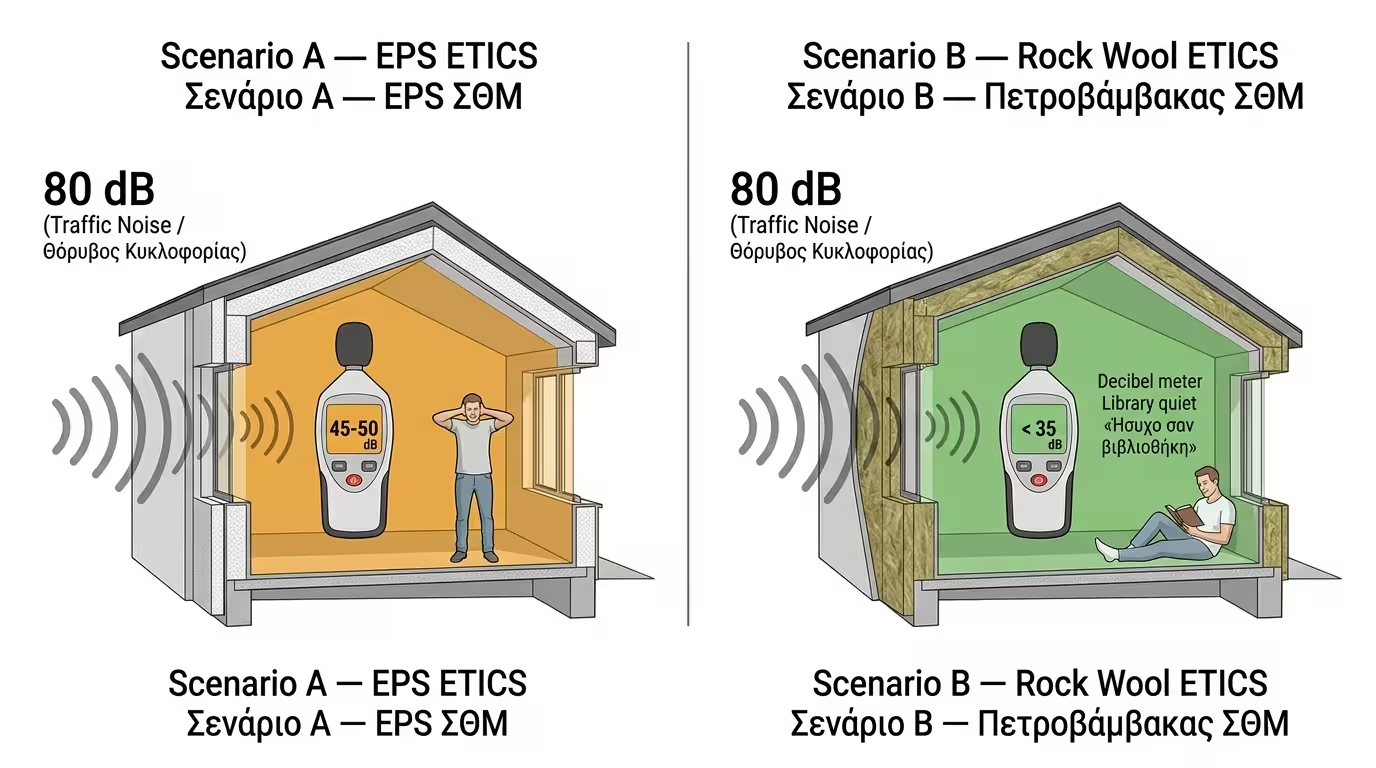
Our house sits on a busy boulevard. Street noise levels reach 80 dB. We want external insulation and peace and quiet.

10x10 Model - noise comparison EPS vs rock wool on a boulevard

🟡 Scenario A: ETICS with EPS

The house heats perfectly. However, because rigid plastics act as a "loudspeaker" with the render (mass-spring-mass resonance effect), street noise from the boulevard is barely reduced. Inside the living room we still hear the traffic clearly (around 45-50 dB).

🏆 Scenario B: ETICS with Rock Wool

We clad the building with specialist rock wool boards. The material acts as the ultimate sound shock absorber. Acoustic comfort skyrockets. Interior living-room noise drops below 35 dB (quiet library levels). Our house is both warm and absolutely peaceful!

💡 Conclusion: Rock wool is a premium choice. It costs more and requires experienced crews. If you live in a noisy area, are building a timber house, or want no compromise on fire safety, it is the only solution to consider.

Related Articles

Insulation Materials: The Complete Selection & Characteristics Guide

Return to category.

Go to category

Preview