Thermal Facade Certifications: What Papers to Ask For (CE & ETA)

One of the biggest "tricks" to make a thermal facade quote unnaturally cheap is cutting corners on material quality.

A thermal facade is not a simple paint job. It is a serious construction expected to withstand heatwaves, frost, gale-force winds and minor earthquakes for decades. To be protected - both legally and practically - you must demand specific papers before even the first bag of adhesive is opened.

1. The "Frankenstein System" Trap

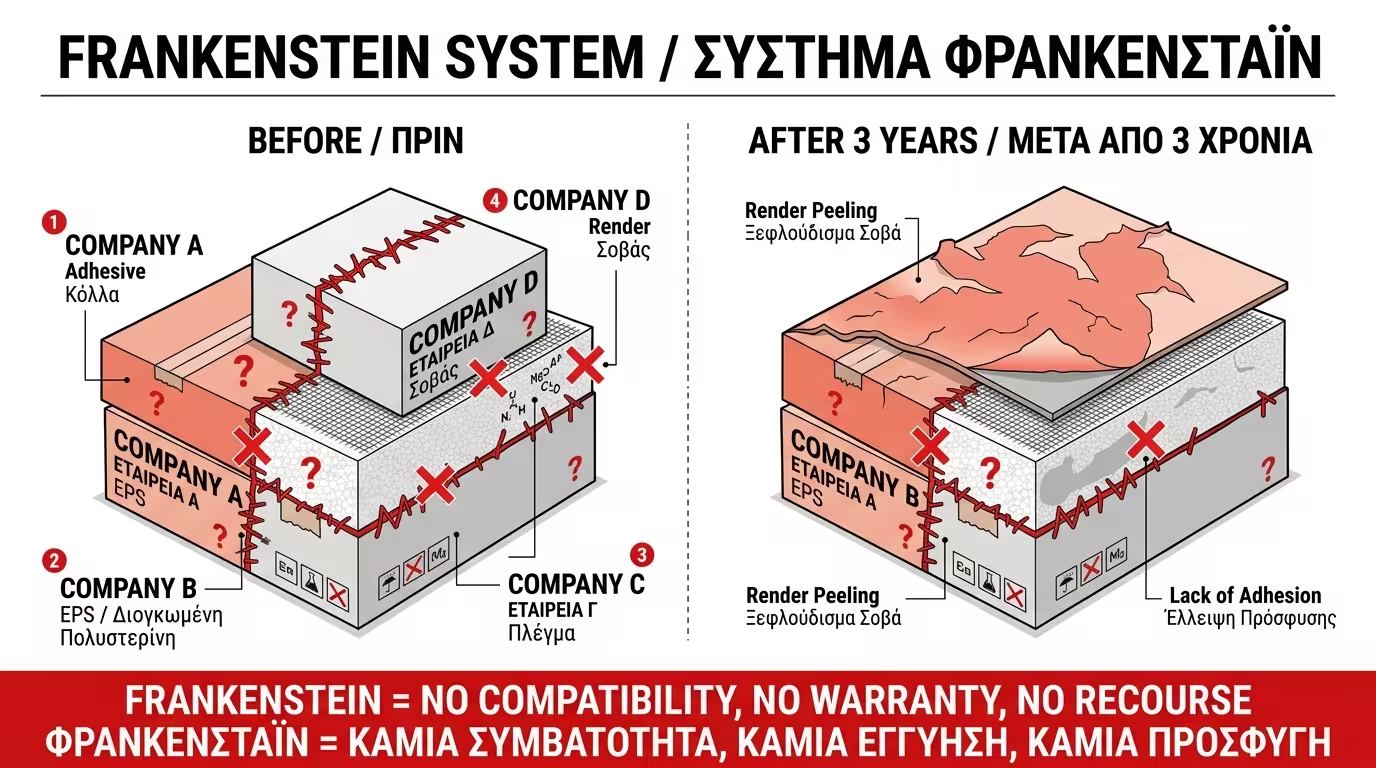
The biggest mistake we encounter on Greek building sites is the so-called "Frankenstein" system. What is it? The contractor, to maximise profit, buys:

  • The cheapest adhesive from Company A.
  • The cheapest, no-brand polystyrene from a local workshop (Company B).
  • A bargain mesh from Company C.
  • The finishing render from Company D.

He "marries" all of these on your wall. The problem? These materials were not designed to work together. The adhesive may be chemically incompatible with the EPS, or the render may not bond well to that particular mesh. When the system fails and throws cracks, Company A blames Company D and you never get justice.

Frankenstein system - materials from companies A, B, C, D mixed

2. The Solution: System Certification (ETA)

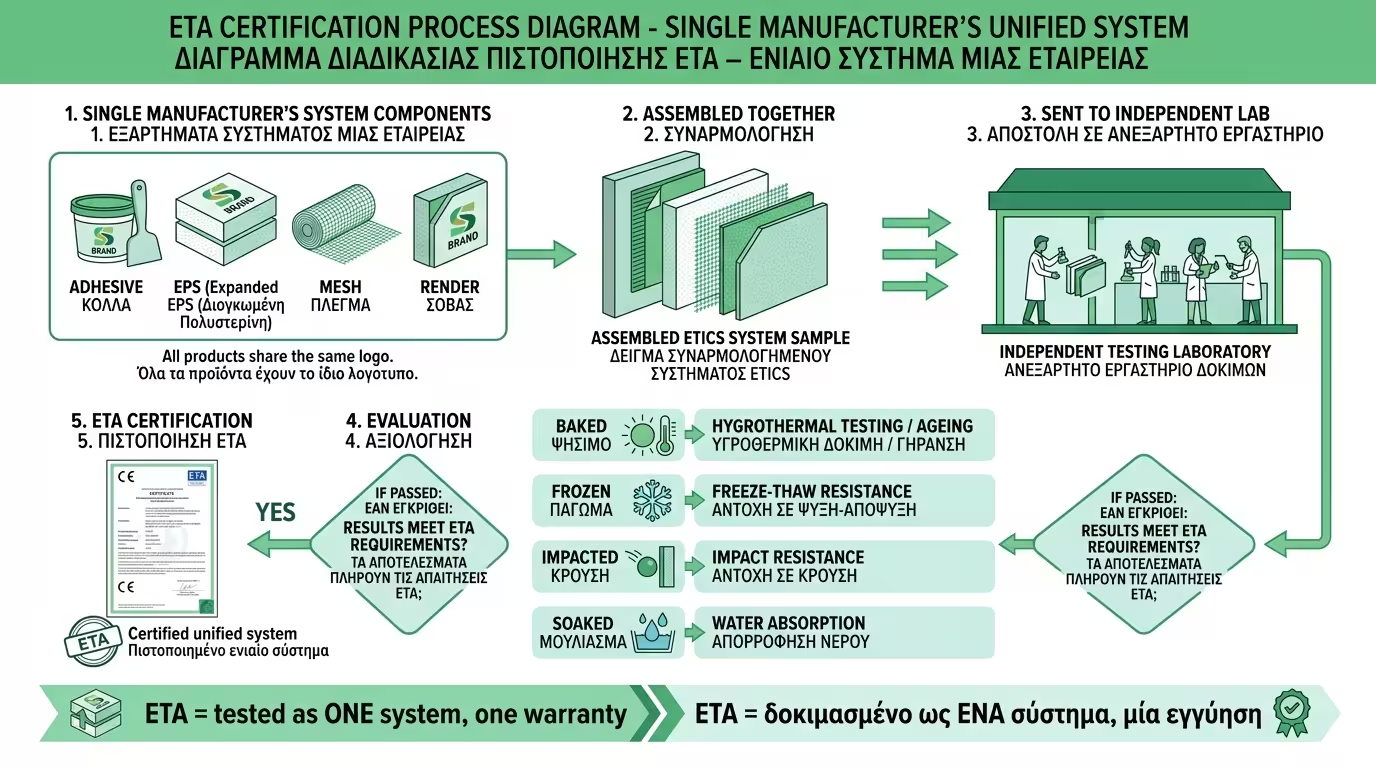
The European Union solved this problem by creating the ETA (European Technical Assessment).

A reputable manufacturer takes its own adhesive, its own EPS, its own mesh and its own render, "builds" them all together and sends the assembly to an independent laboratory. There the system is baked, frozen, impacted and soaked. If it survives, it receives ETA certification as a single, indivisible system.

The Golden Rule: Insist that your contractor's thermal facade is a "Certified System" from one single manufacturer (e.g. all materials bear the same logo). It is the only way to get a real guarantee!

ETA - European Technical Assessment of the whole system

3. The 3 Documents You Must Request

Before work starts, ask the contractor to email you the following three papers:

📜 1. Declaration of Performance (DoP) & CE Marking

Every insulation material (EPS, mineral wool) must have a CE mark and DoP paper. It officially states how well it insulates (the exact U-Value) and its fire resistance. If the material has no CE, it is practically illegal.

🏅 2. ETA Certificate for the System

The document proving that the materials brought to site form a tested, unified system and not a "Frankenstein".

📋 3. Written Factory Warranty

Many major companies provide 10- or 15-year written warranties for their systems, provided they are installed by a certified crew (who has attended their training seminars). Ask for it!

4. The 10x10 Model Experiment

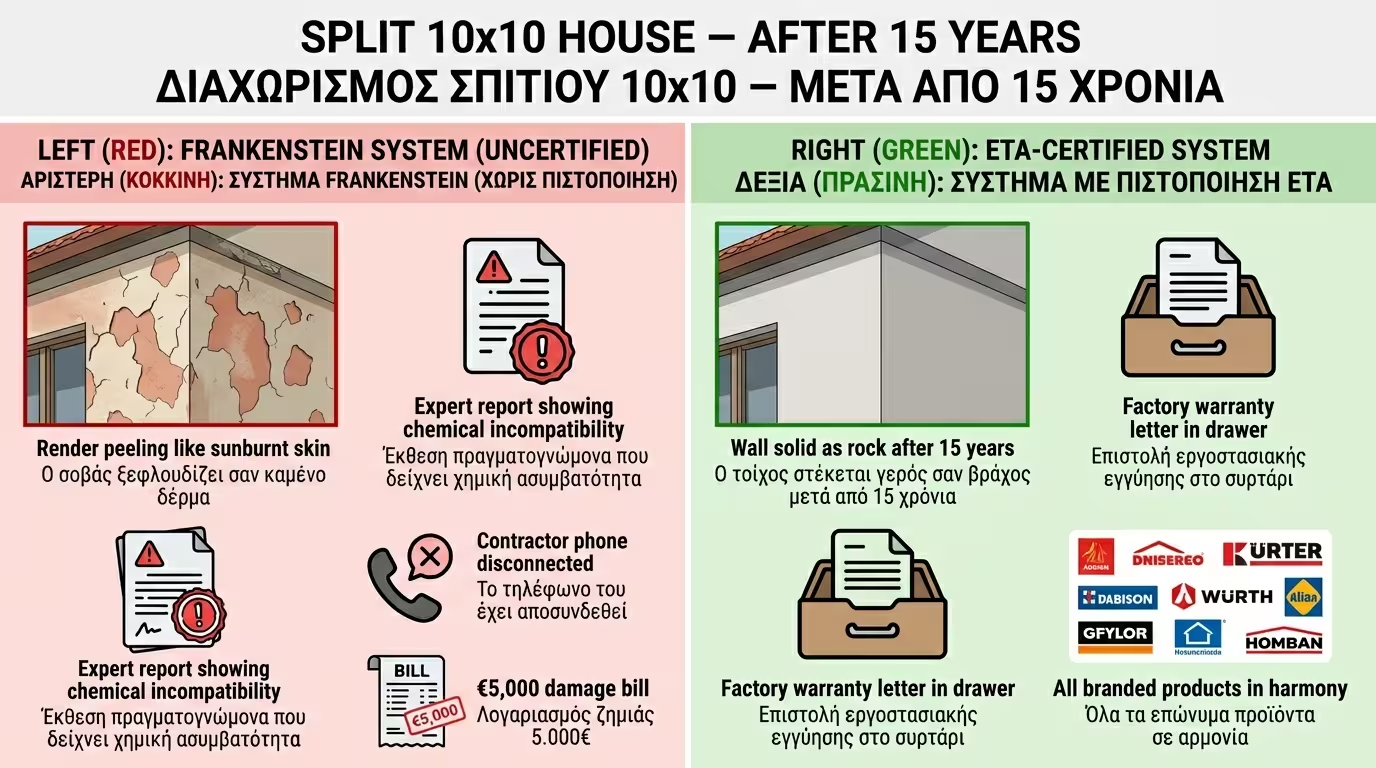
10x10 experiment - Frankenstein vs ETA certified system

What is the difference in practice?

❌ Scenario A (The Cheap "Frankenstein" Solution)

The contractor brings white bags with no labels and EPS with nothing printed on it. After 3 years, the finishing render starts peeling like sunburnt skin. We call an expert. He discovers the base coat did not have the correct elasticity to "cooperate" with the finishing render. The contractor's phone is disconnected. Damage: €5,000.

✅ Scenario B (The ETA-Certified System)

We insist that all materials (from primer to finishing render) belong to the same certified system from a branded company. We request the DoP and ETA. The materials bond chemically and mechanically to perfection. After 15 years the wall is solid as rock, and we have the factory's written warranty in our drawer.

The Final Conclusion: Paperwork is not bureaucracy. It is your "shield" against poor workmanship and substandard materials. Do not be embarrassed to ask for it. A good professional will be happy to show you, because it proves the quality of their work!

Related Articles

Application & Construction Details: Correct Installation Guide

Return to category.

Go to category

Preview