
CE Certifications & Labels: How to Tell If the "Fire-Rated" Door You Bought Is Genuine or a Dangerous Imitation

In fire protection, the law is ruthless: If it isn't proven on paper, it legally DOES NOT EXIST. You may have built the most impenetrable wall in the world, but if the materials lack the correct certifications, the Fire Service will consider it a "plain wall" and will never grant you an operating licence.

The biggest fraud occurs with fire-rated doors. Let's see how you can become a "detective" to protect your money and your life.

1. The CE Mark and the Declaration of Performance (DoP)

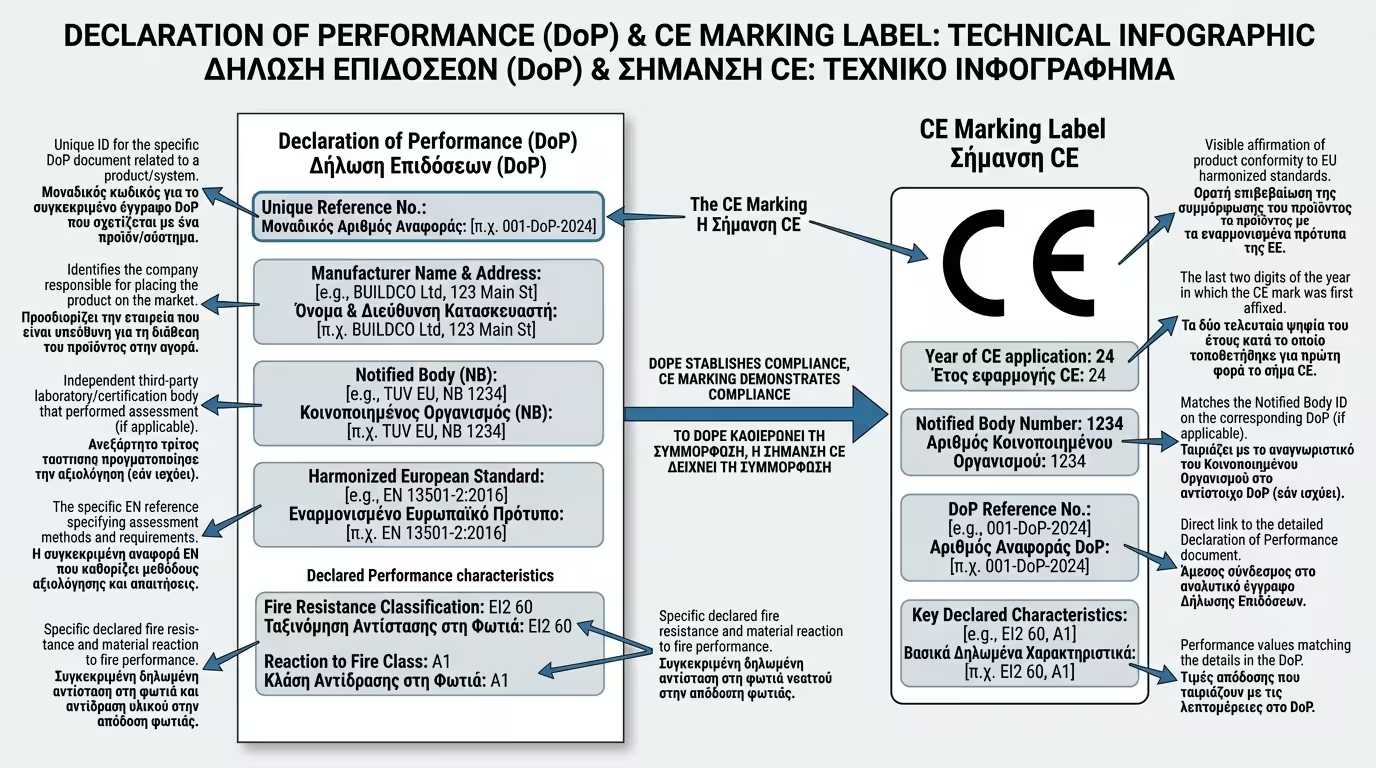
Every construction product sold in the European Union must carry the CE mark (Conformité Européenne). However, the CE mark on its own is merely a logo. The real proof is the document that accompanies it: the Declaration of Performance (DoP).

When you purchase a fire-rated door or a fire-rated paint, the supplier is legally obliged to give you the DoP. In this document (which carries a unique reference number), the manufacturer officially declares: which independent laboratory tested the product, which European standard (EN) was followed, and the exact performance (e.g. EI2 60, Reaction Class A1).

If the salesperson tells you "come on, the door is fine, everyone buys it, I don't have the paperwork handy", turn your back and walk away!

CE mark and Declaration of Performance (DoP) - the real proof

2. The "Holy Grail": The Metal Label on the Door

Let's say you received the paperwork and the door has been installed. How will the Fire Officer (who will come for an inspection in 5 years' time) know that the door in front of them is the same one described in the documents?

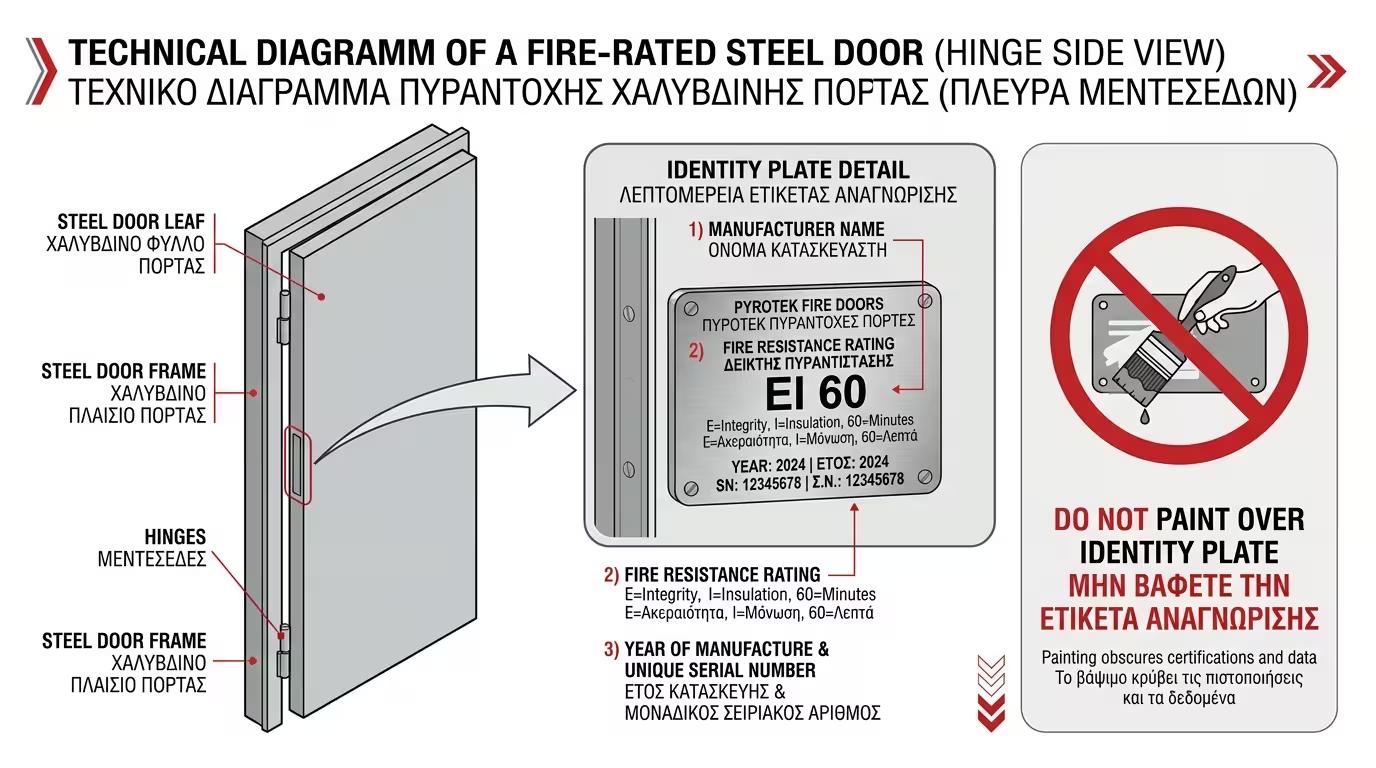
Every certified fire-rated door has a metal (or special plastic) plate, usually nailed to the side of the leaf (on the hinge side). This label displays: 1) the manufacturer's name, 2) the fire resistance rating (e.g. EI 60), 3) the year of manufacture and a unique Serial Number.

The Golden Rule: This label is the door's "identity card." It is strictly forbidden to remove it or paint over it! If the inspector arrives and the label is missing (or painted over and illegible), the door is considered "void" and you will be forced to rip it out!

Metal label on fire-rated door - ID plate with serial number

3. The Trap of "Tampered" Hardware

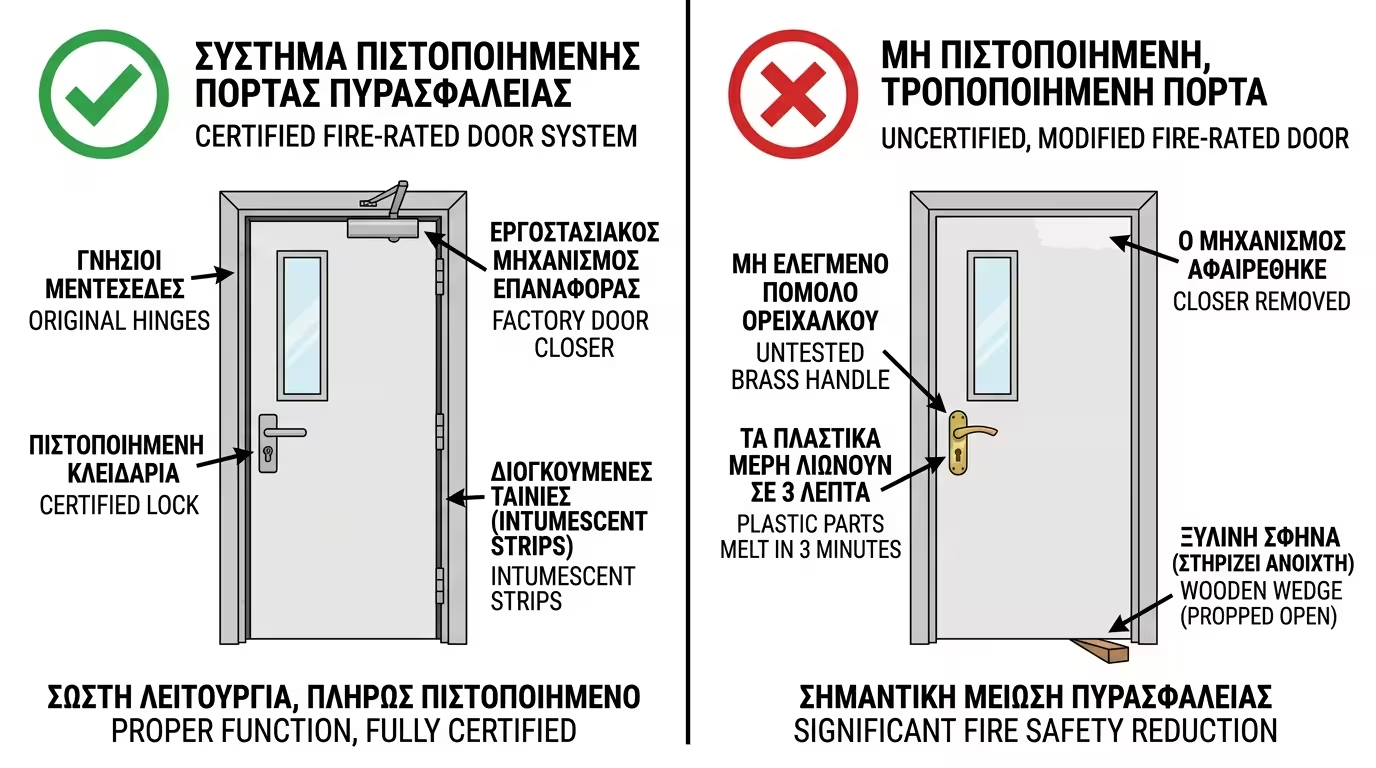
This is the most common mistake that voids the certification. A fire-rated door is certified in the laboratory as a complete system. It was tested with specific hinges, a specific lock and a specific door closer.

If you buy the door and tell the locksmith: "I don't like this handle, take it off and fit a brass one I bought", you have just voided your fire-rated door! The new handle (which was never tested in the furnace) may have plastic parts that will melt in 3 minutes, leaving a hole for fire to pass through. Any hardware change must be made ONLY with parts approved by the door manufacturer.

Changing a handle on a fire-rated door - certification voided

The Experiment in Our Model (Inspecting the 4×4)

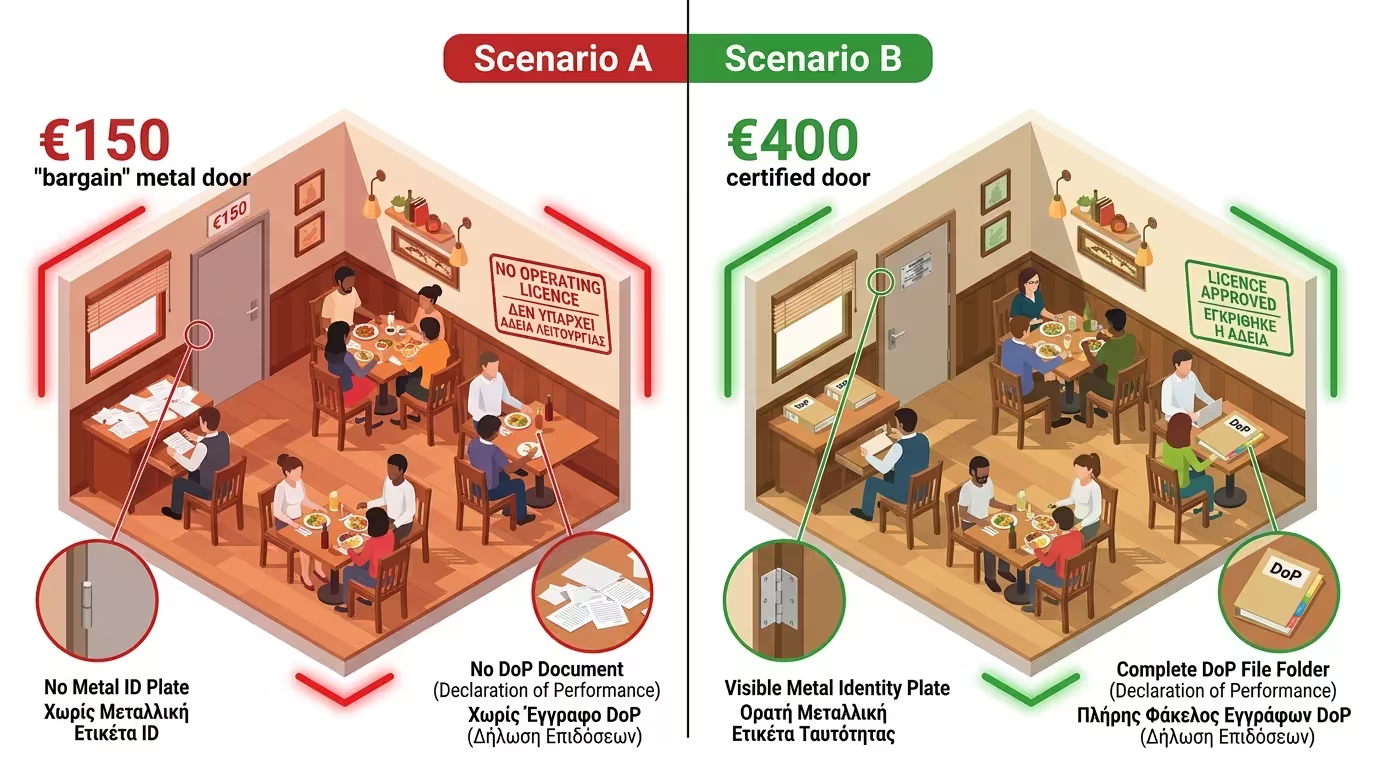
Experiment: restaurant 4×4 - unlabelled door vs certified door

We're opening a small restaurant (the 4×4). We need a 60-minute fire-rated door (EI 60) for the food storage room.

❌ Scenario A (The "Bargain")

We find a heavy metal door online for €150. The seller assures us by phone that "it will last 2 hours." We install it. The Fire Service arrives for the certificate. The officer looks at the side of the door. There is no metal label. They ask for the DoP document. We don't have it. The result? No operating licence. We lose weeks of revenue, rip out the door and buy another one.

✅ Scenario B (The Proper Way)

We go to a certified distributor. We buy the door for €400. They give us the full file with the DoP and the CE marking. The installer fits it, taking care not to soil the metal label on the hinges. The Fire Service arrives, reads the plate, matches it to the file, signs off and we open our restaurant legally, with complete peace of mind!

Final Takeaway: In fire safety, there are no "educated guesses" or "bargains without paperwork." Always demand the CE and DoP documents, protect the labels on your materials like the apple of your eye, and never "tamper" with the hardware of a fire-rated door!

Related Articles

Fire Protection: Passive Safety & Building Protection

Return to category.

Go to category

Preview