Floor Flanking (Structural) Transmission: Making Sure the Floating Floor Never Touches the Walls

In acoustics, there is a term that strikes fear into engineers: Flanking Transmission. It means that sound completely bypasses the insulation you installed, using another "bridge" to reach its destination.

In floors, that bridge is the perimeter walls of the room.

The Floor Short Circuit

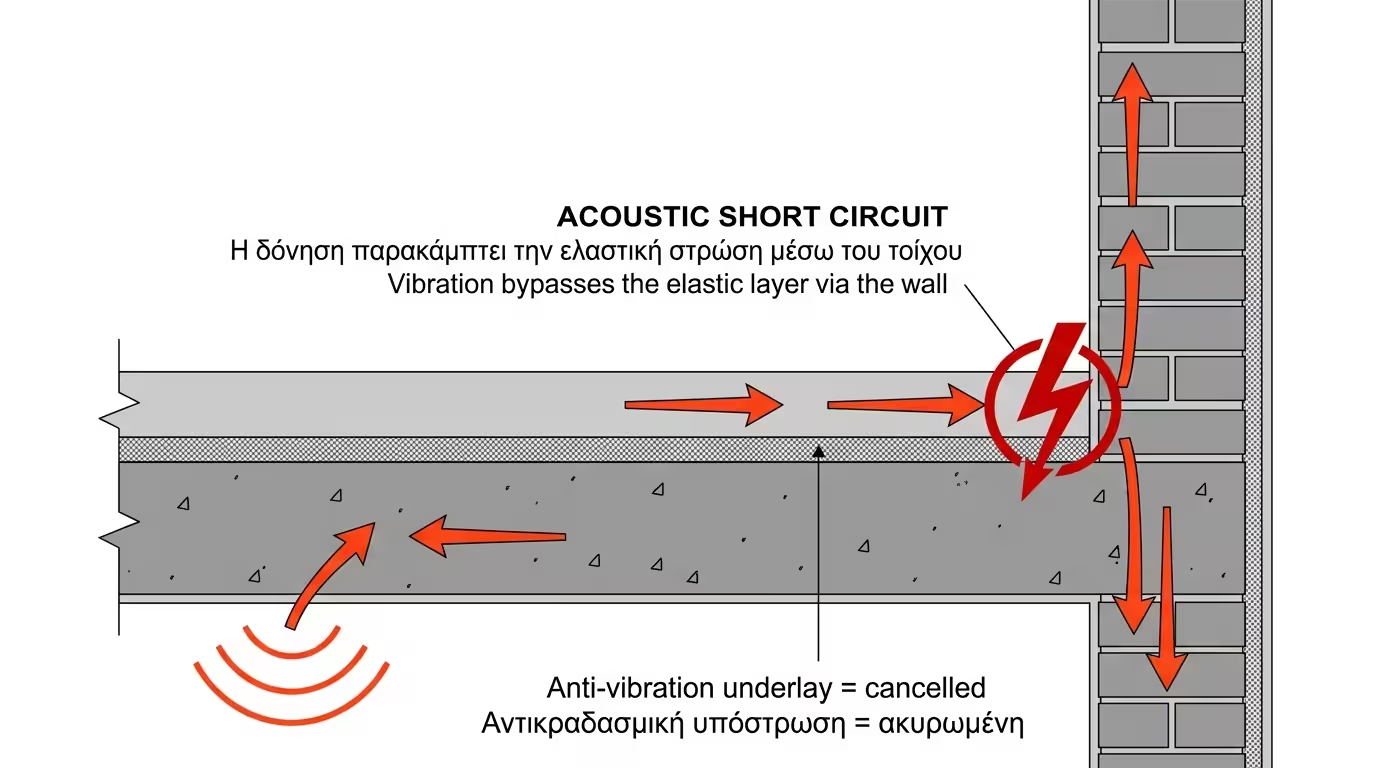
Let's say you have laid a perfect anti-vibration roll and poured 5 cm of screed (or laid laminate). This material will inevitably spread to the edges and "find" (touch) the vertical walls.

The moment your new, hard floor makes rigid contact with the wall, you have created an acoustic "short circuit". When you walk in the centre of the room, the vibration travels through the screed/laminate, reaches the edge, hits the wall, "climbs" through the brick, and descends lightning-fast to the floor below (or passes into the adjacent room)! The anti-vibration layer you installed has simply… been cancelled.

Screed touching the wall: acoustic short circuit

The €10 "Life Saver": The Perimeter Tape

To prevent this nightmare, we use the Perimeter Isolation Tape.

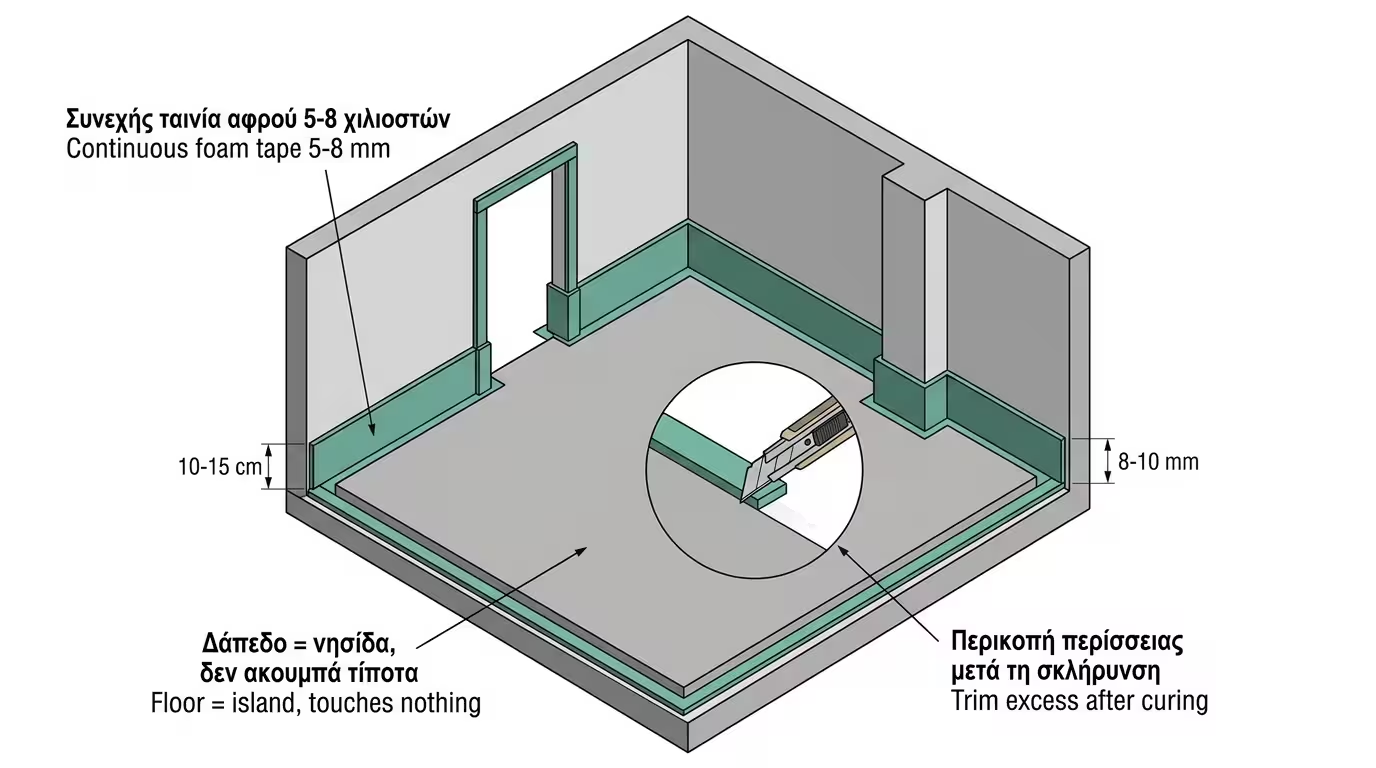
  • What it is: A roll of polyethylene foam (like thin sponge) 5-8mm thick and 10-15 cm high.
  • How it goes on: Before the screed is poured or laminate laid, the builder unrolls the tape and sticks it (self-adhesive back) around every wall, column and door frame.
  • The result: The new floor is poured (or laid) inside this "tray" the tape creates. The floor is now a genuine island - it touches absolutely nothing!
  • Trimming: Once the screed cures or laminate is in place, the protruding strip of tape above the floor level is cut flush with a sharp knife.
Perimeter isolation tape: PE foam 5-8mm stuck to all walls

The Skirting Board Trap (The Final Detail)

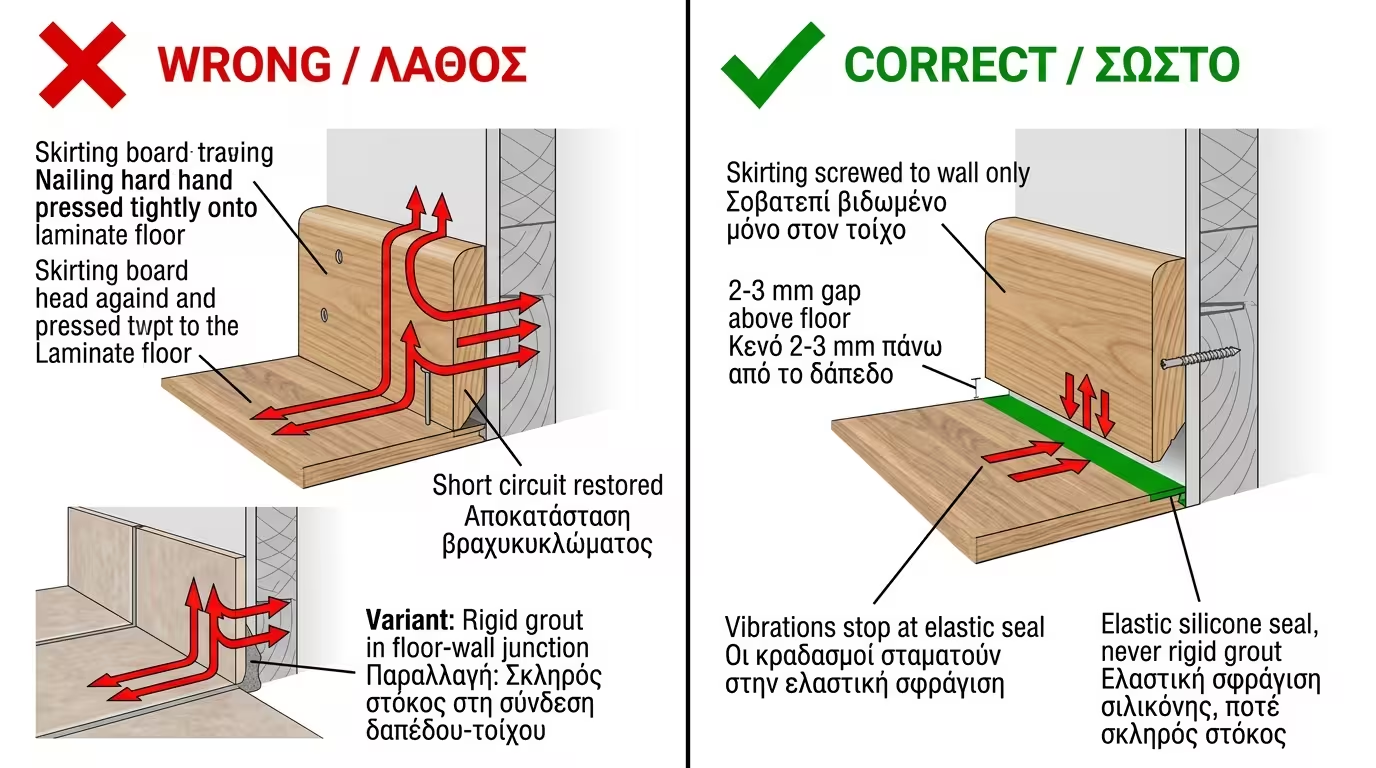
You have installed perimeter tape, anti-vibration layer, everything is perfect. Now the skirting board goes on. If the builder nails a wooden skirting board to the wall and presses it hard onto the laminate, or lays a tile skirting filling the joint with rigid grout… the short circuit is back! Sound from the floor will climb up through the skirting into the wall.

The Rule: The skirting board is screwed/glued only to the wall. Between its bottom edge and the floor, a mandatory 1-2mm gap is left, which is filled only with elastic acoustic mastic (silicone).

Rigid grout on skirting = short circuit - elastic silicone = solution

The Experiment in Our Model (The Final Touch in the 4×4)

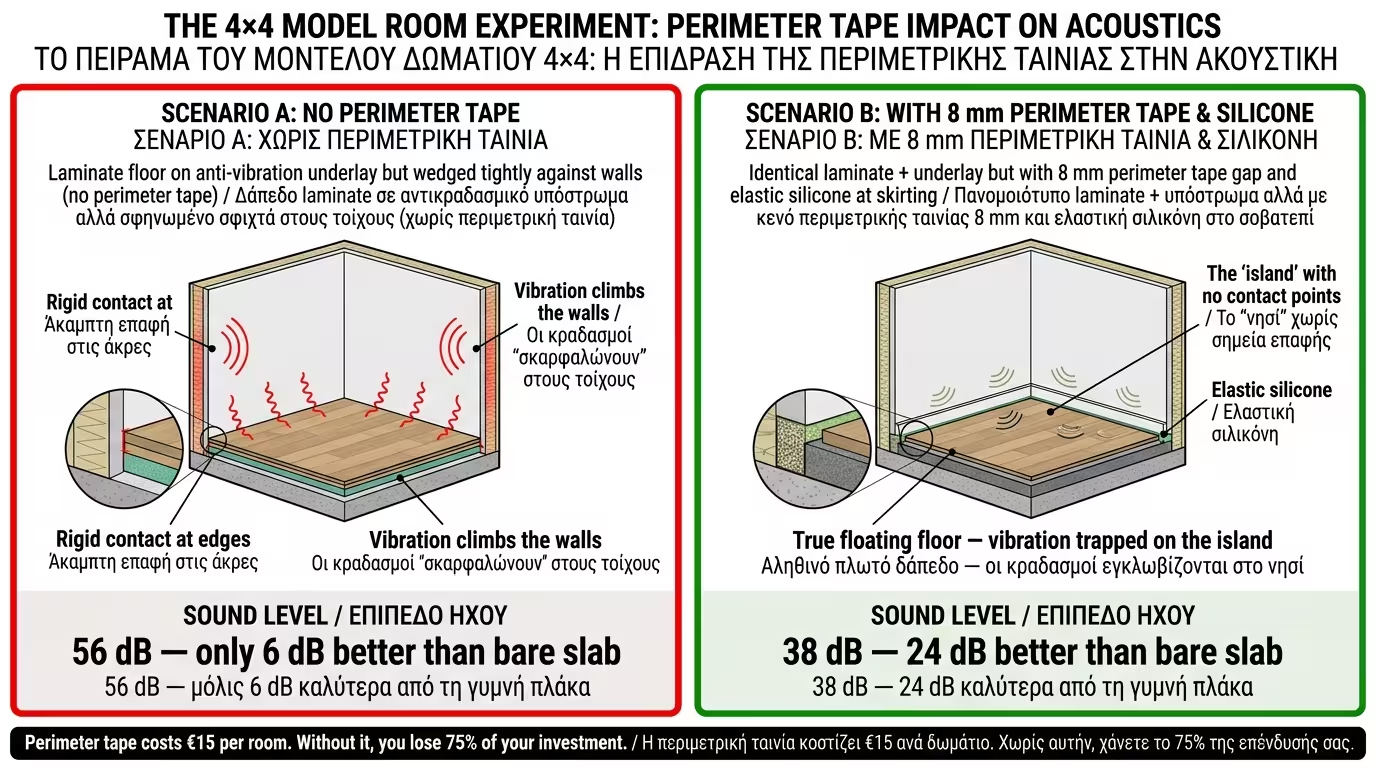
Experiment: Scenario A (tight-fit laminate, noise leaks) vs Scenario B (island 8mm gap, silence)

We have laid anti-vibration material under our Laminate.

❌ Scenario A (Ignorance)

The Laminate is clipped "tight-fit" to the wall so it doesn't move. The skirting is nailed on tightly. We walk, and noise "escapes" from the sides. The wall transmits our footsteps to the next room (where the child sleeps) and wakes them up.

✅ Scenario B (The Absolute Island)

We leave an 8mm expansion/decoupling gap around the perimeter. We install foam tape. The skirting "floats" 1mm above the floor on elastic silicone. Our floor is 100% disconnected from the building. We do little jumps on the spot and the vibration stays strictly within our own 4×4 room!

The Final Conclusion: Soundproofing does not forgive the slightest rigid contact. If your floating floor touches even a single screw, a radiator pipe or a wall corner, the insulation is cancelled. Perimeter tape everywhere!

Related Articles

Sound Insulation: Silence and Noise Protection

Return to category.

Go to category

Preview