
The Floating Floor: How to Fully Isolate the Floor from the Concrete Slab

When we hear the word "floating", we think of boats and water. In construction, however, a floating floor is a floor that is not glued, nailed or screwed to the building. It literally "floats" on an elastic, anti-vibration layer, with absolutely no rigid contact.

It is the Holy Grail of protection against impact noise (footsteps, heels, dropping objects).

The Anatomy of the Floating Floor

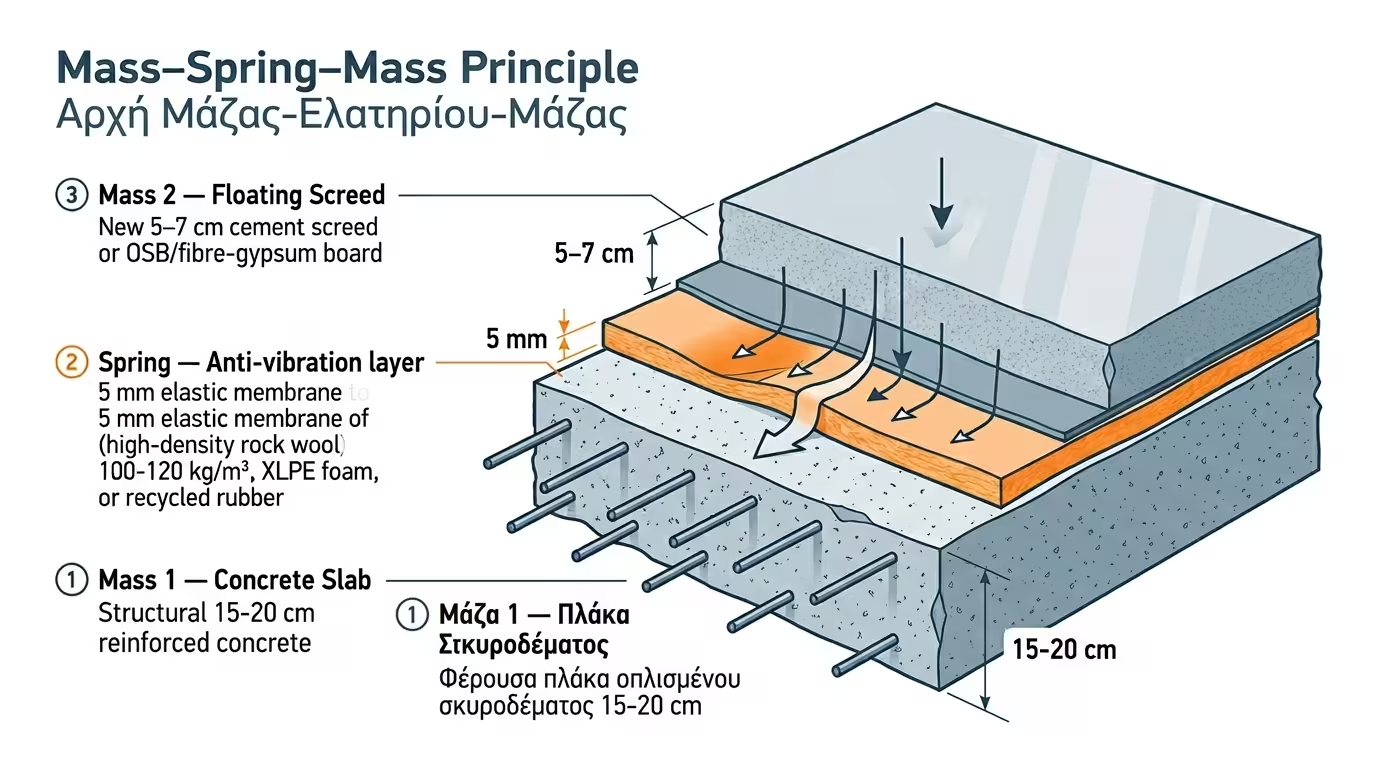
To build a proper floating floor, we apply the Decoupling rule (Mass – Spring – Mass), but this time on the floor:

  • 1. The Base (Mass 1): The bare building slab (concrete). This is what we want to protect from impacts at all costs.
  • 2. The Spring: On top of the bare concrete, we lay a specialised acoustic material. Here we do not use soft rock wool - we use materials resistant to compression: hard floor-grade rock wool (100-120 kg/m³), closed-cell foamed elastomers (XLPE), or recycled rubber.
  • 3. The Floating Mass (Mass 2): On top of the anti-vibration layer we pour new screed (5-7 cm) or lay heavy OSB, plywood or specialised dry fibre-gypsum floor panels, creating a solid floating surface.
Cross-section of floating floor: concrete → anti-vibration layer → new screed

How It Works in Practice

When you put on your boots and walk on this floor, the impact hits the new screed (or OSB). The screed wants to transfer the vibration downwards, but… it hits the elastic "shock absorber"!

The elastic material compresses infinitesimally, absorbs all the kinetic energy of the footstep and does not allow the vibration to reach the building slab. The neighbour below watches TV in complete silence.

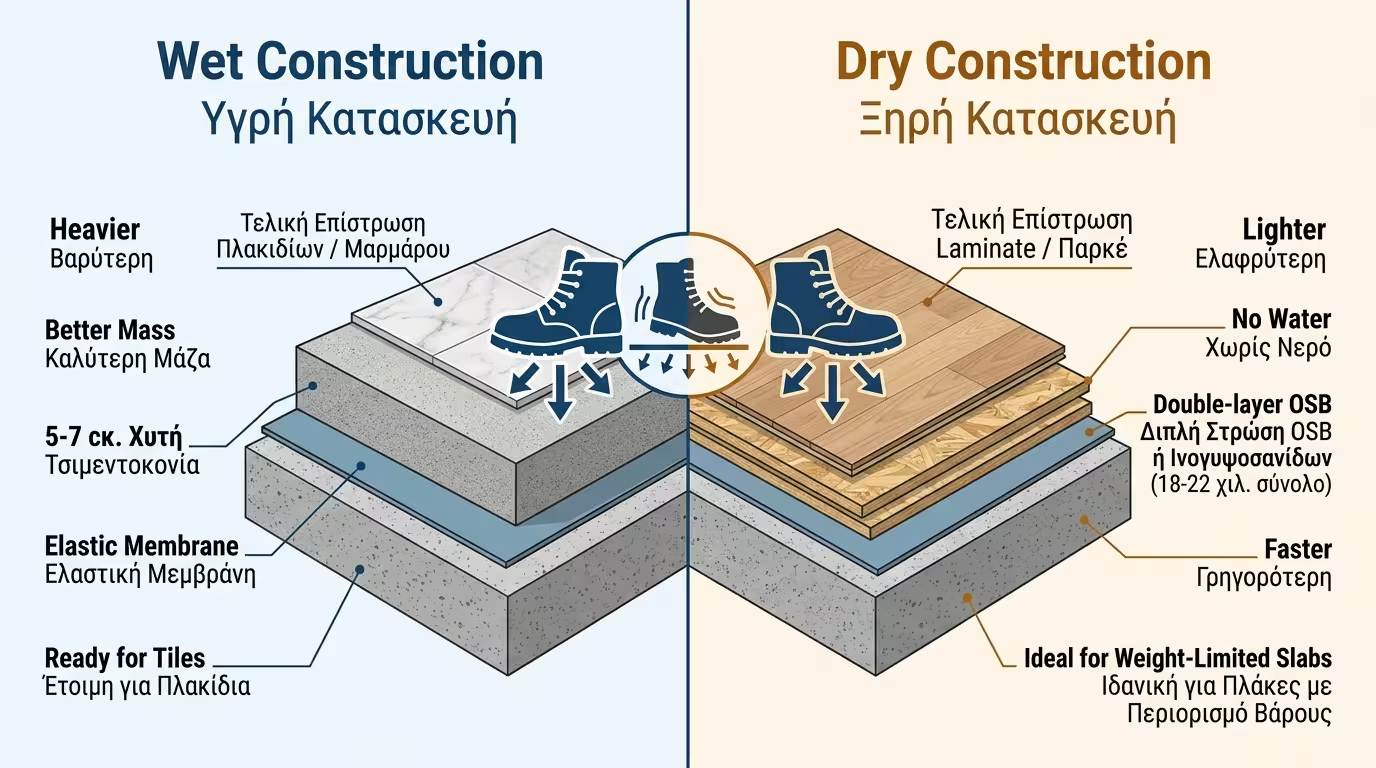
Wet construction (5-7 cm of screed) is the heavier solution - the new slab of cement does not touch the concrete below and is ready to receive tiles or marble. Dry construction (OSB or fibre-gypsum panels) replaces the cement with lighter boards, avoiding weight and water - ideal where the structural slab cannot take extra loads.

Wet construction (screed) vs Dry construction (OSB) on anti-vibration layer

The Golden Rule: Watch the Corners!

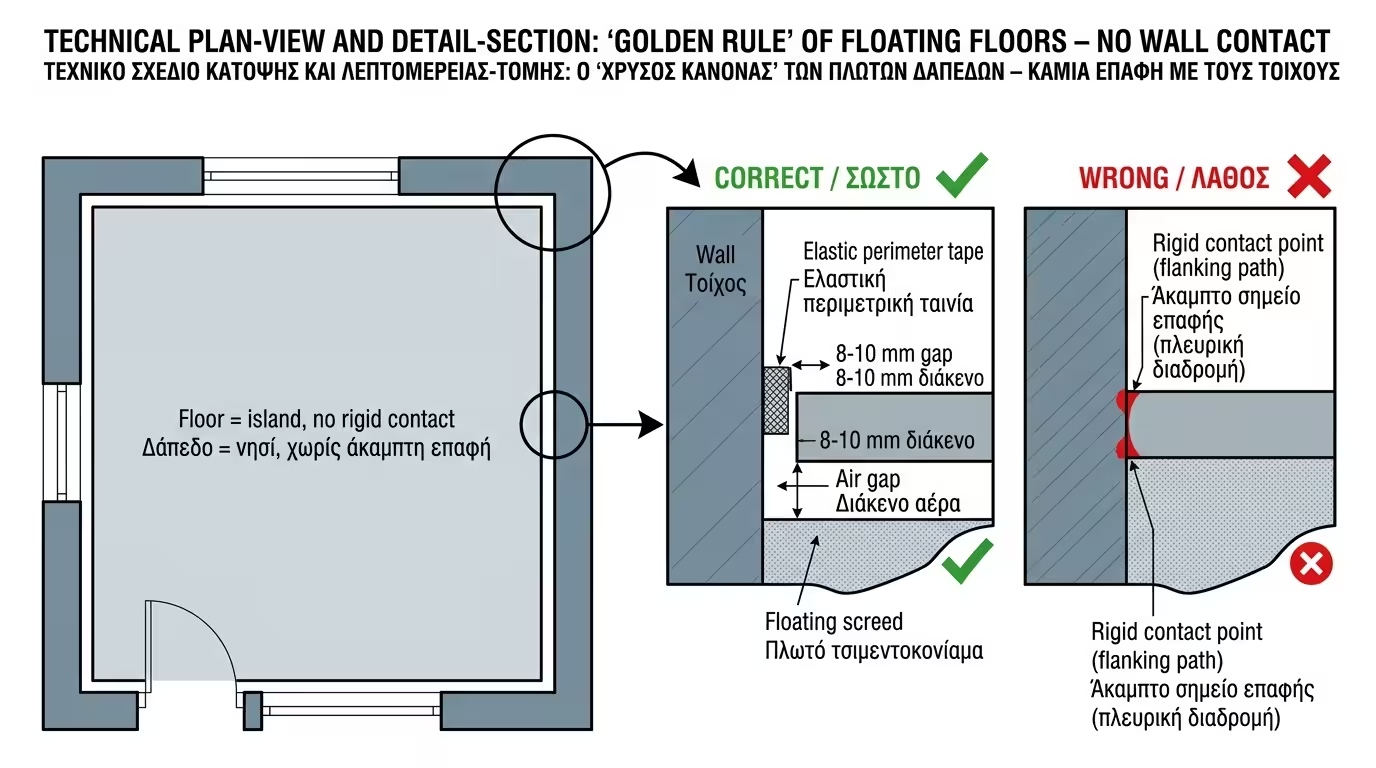
A floating floor is completely useless if it touches the walls. If you pour screed and it sticks to the perimeter walls, the vibration escapes sideways, enters the walls and descends to the floor below (Flanking transmission).

That is why, before any material is laid, an elastic perimeter tape must be installed on all walls, so the new floor resembles an "island" that touches nothing!

Perimeter elastic tape: the floor as an 'island' with no wall contact

The Experiment in Our Model (The Floor Renovation)

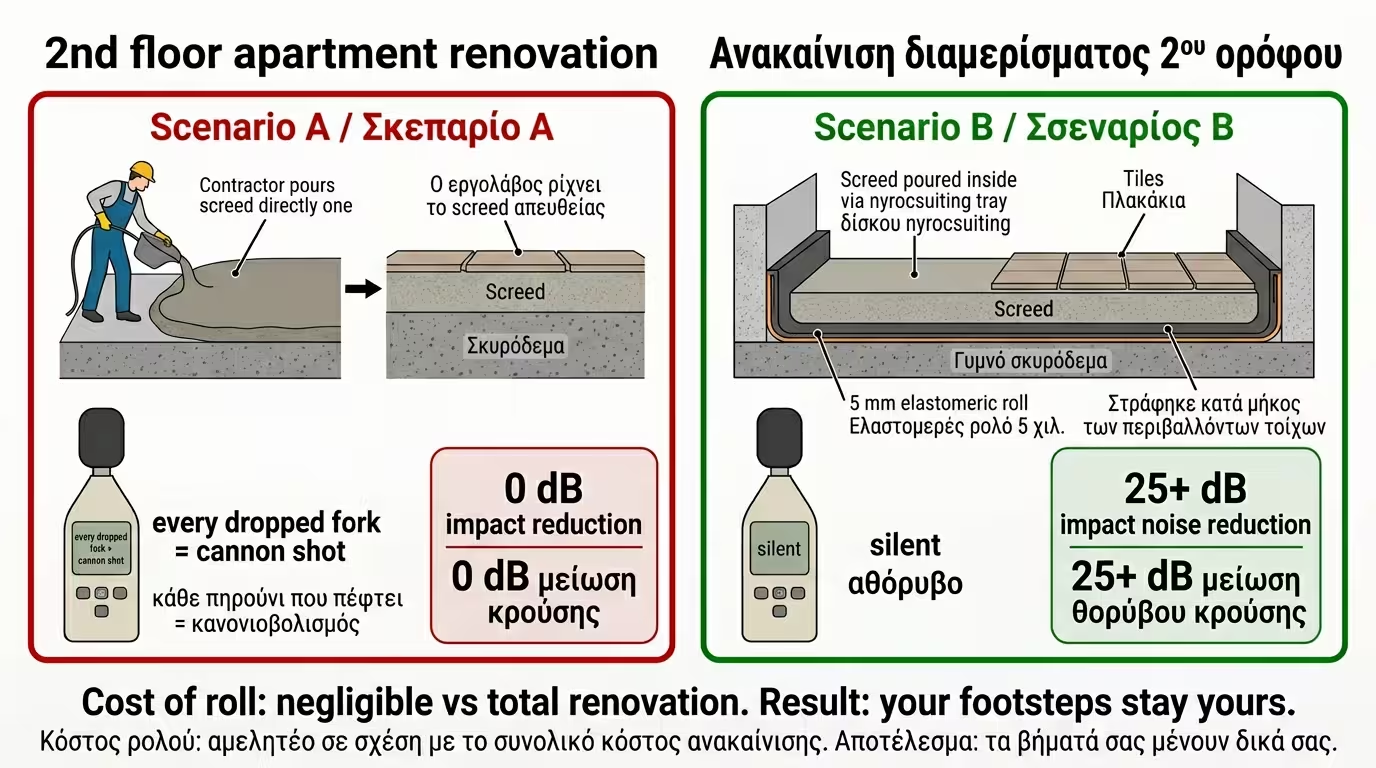
Experiment: Scenario A (classic method, cannon shot) vs Scenario B (floating, 25+ dB cut)

We buy a flat on the 2nd floor and carry out a full renovation. We want to lay tiles, but we don't want to disturb the neighbour below.

❌ Scenario A (The Classic Method)

The contractor pours screed directly onto the concrete slab to level it and then sticks the tiles on top. We have just built a perfect noise conductor. Every time we drop a fork, the neighbour below hears a "cannon shot". Every time we drag a chair, the sharp friction travels through the concrete and sounds crystal-clear on the floor below. They will hate us.

✅ Scenario B (The Floating System)

We roll out a certified acoustic membrane (foamed elastomer 5mm thick) across the entire bare floor. We turn the membrane up the walls (like a tray). We pour screed into this "tray" and stick the tiles. Our floor cuts over 25 dB of impact noise! We walk, dance, move furniture, and the building slab notices absolutely nothing. The cost of the membrane is negligible compared to the overall renovation, but the difference in quality of life is enormous.

The Final Conclusion: If you are fully renovating your floor (stripping back to concrete), it is criminal not to add an anti-vibration membrane before pouring the new screed. It costs very little relative to the overall project and is the only guarantee that your footsteps will stay yours!

Related Articles

Sound Insulation: Silence and Noise Protection

Return to category.

Go to category

Preview