Polyurea (Hot-Spray): The Waterproofing "Miracle" That Cures in 10 Seconds

When a project's demands exceed the ordinary - industrial roofs spanning thousands of square metres, massive tanks, bridges or car parks with heavy traffic - traditional materials show their limits. That is when modern chemistry plays its ultimate trump card: Pure Polyurea.

This is a hyper-elastic polymer (something like liquid rubber) that is not sold in simple tins at the paint shop. It is applied exclusively by specialist crews using equipment that looks like something out of a science-fiction film.

1. The 3 "Unreal" Characteristics of Polyurea

Why has this material become legendary in construction?

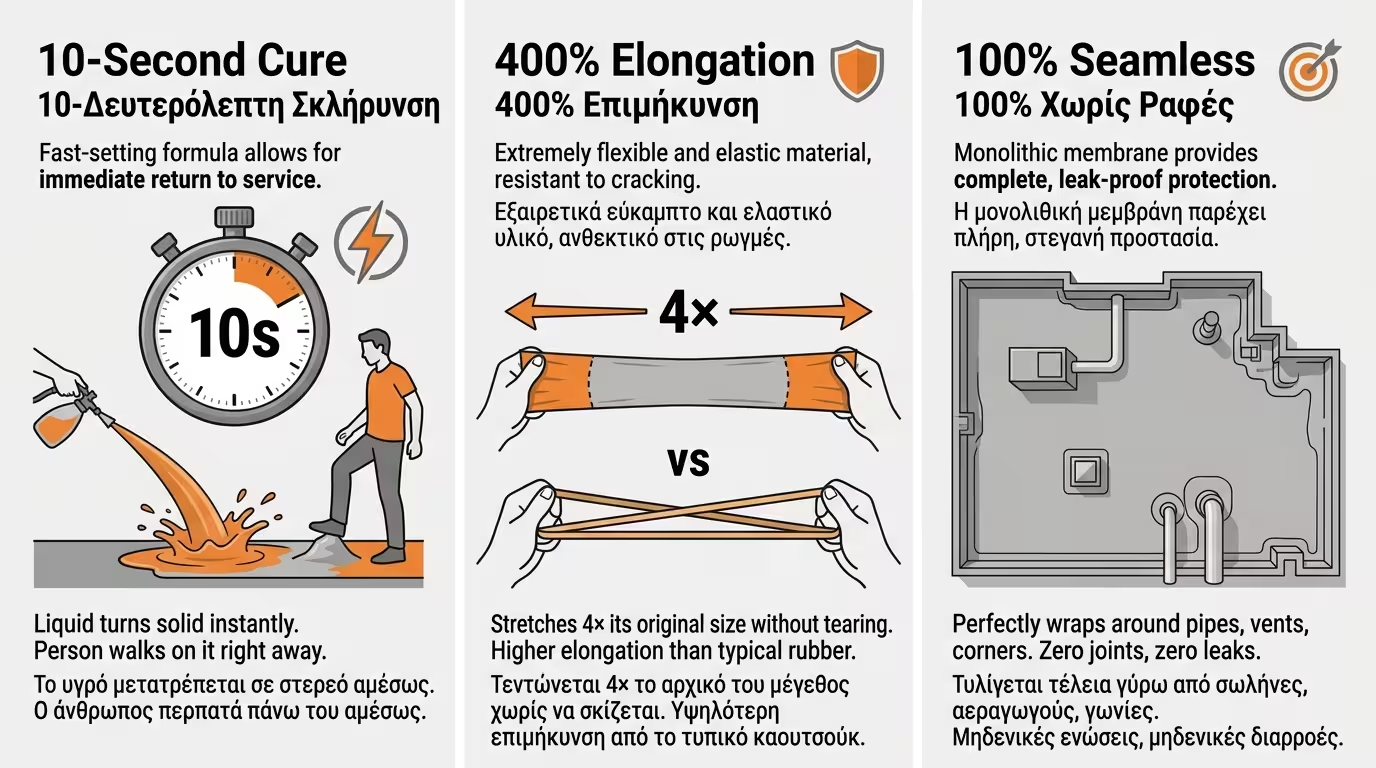
Polyurea characteristics - speed, strength, seamless membrane

⚡ Lightning-Fast Cure (10 Seconds!)

This is the biggest shock for first-time observers. From the moment the liquid leaves the spray gun and touches the surface, it solidifies in 5 to 15 seconds. You can literally spray a metre, take a step and stand on it immediately. Within 1 hour, the roof is ready to face a storm without any damage whatsoever!
🛡️ Extreme Mechanical Strength

Polyurea does not tear. Its elongation exceeds 400%, following every expansion and contraction of the building, yet it is so tough that (in special formulations) it is even used as ballistic protection on military vehicles or as a bed-liner on pick-up trucks to resist stone impacts!

🎯 100% Seamless Membrane

As it is sprayed, it "hugs" every pipe, every corner and every irregularity perfectly, creating an absolutely monolithic, plastic "basin" with no joints or seams whatsoever.

2. How Is It Applied? (The Reactor Secret)

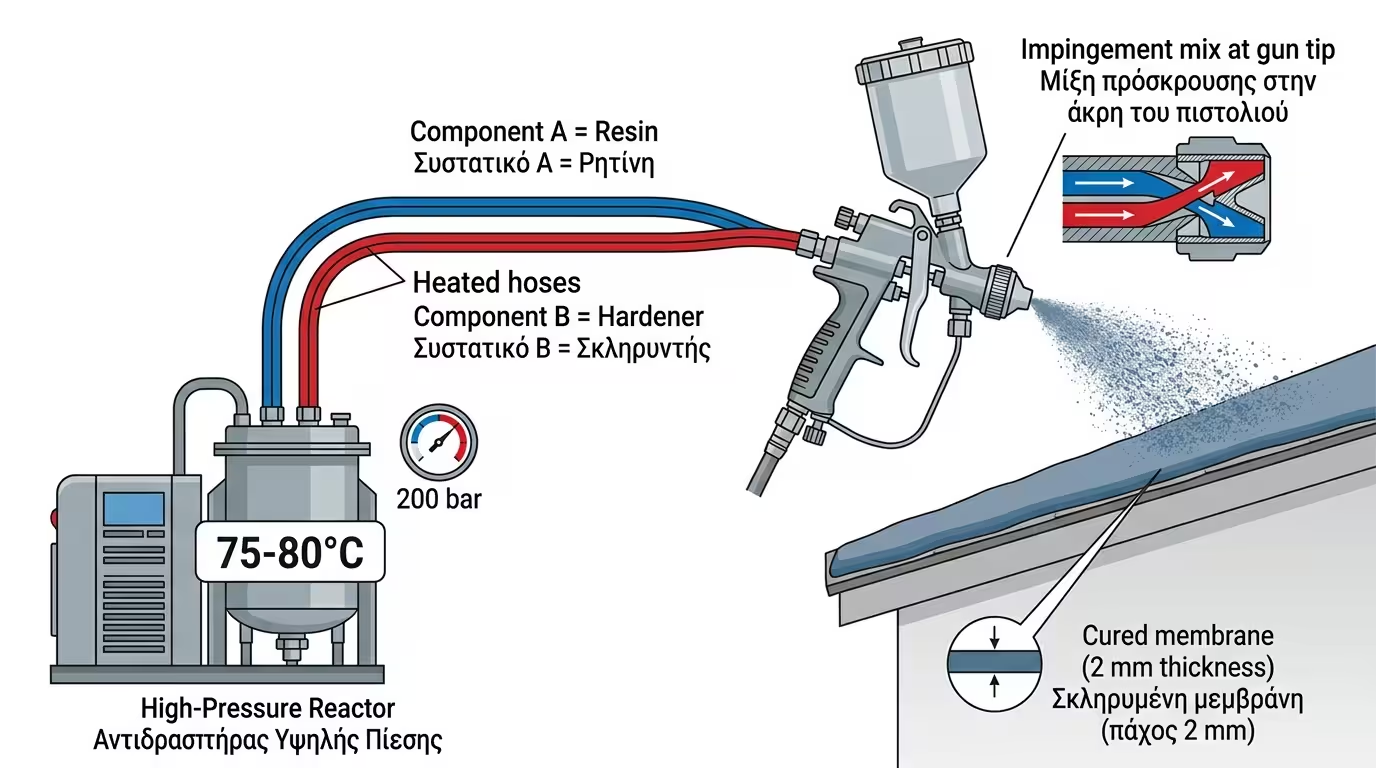
Forget DIY. Polyurea is a 2-component system (Resin + Hardener) that is never mixed in a bucket.

High-pressure reactor - how hot-spray polyurea is applied

⚙️ The Reactor

The crew brings a massive machine (High-Pressure Reactor) costing tens of thousands of euros. The reactor heats both liquids to 75°C – 80°C and forces them at tremendous pressure (up to 200 bar) through specially heated hoses.

🔧 The "Chemical Explosion"

The two materials meet only at the last moment, at the very tip of the spray gun! There, the chemical reaction "explodes", and the hot mix is blasted onto the roof surface.

3. The Critical Point: Surface Preparation (Primer)

Because polyurea cures instantly, it doesn't have time to penetrate the concrete pores to "anchor". If you spray it onto bare, dusty concrete, it will peel off like a carpet.

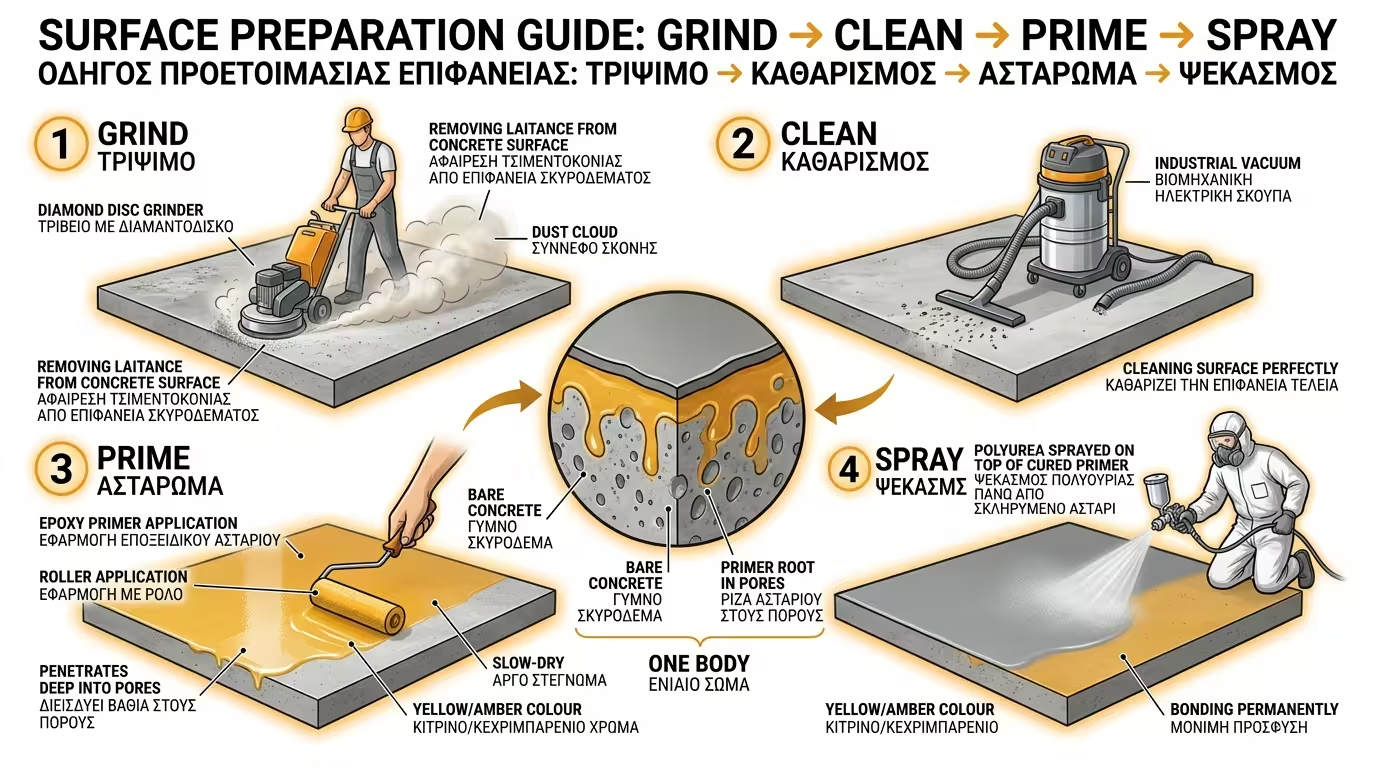
Surface preparation - diamond grinding and epoxy primer

🧹 The Golden Rule

The roof must be ground with a diamond disc, swept perfectly clean and primed with a special epoxy primer (which dries slowly and penetrates deep into the concrete). The polyurea is then sprayed on top of the primer and becomes "one body" with the building.

4. The Model Experiment (The 100 m² Roof)

Roof experiment - hot-spray polyurea vs cold-applied product

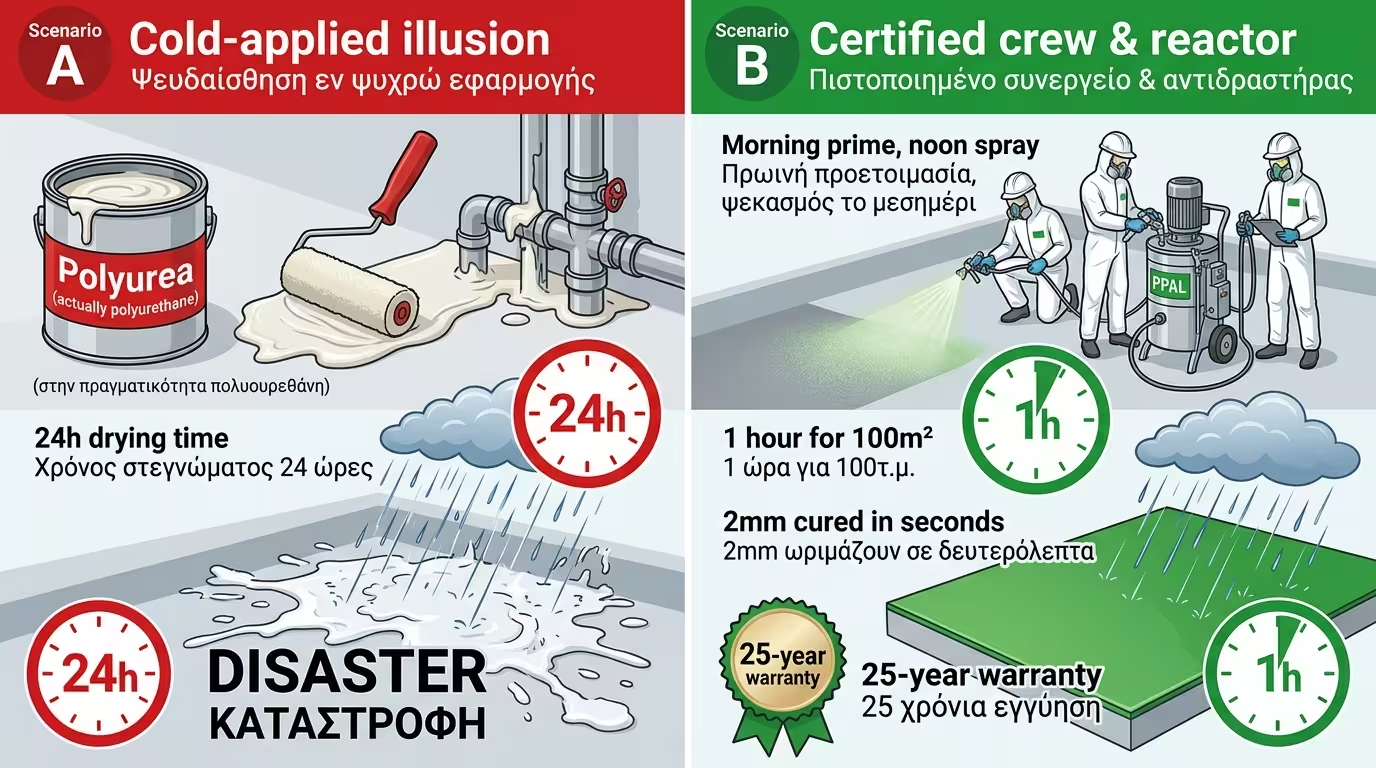
It is November. The weather is unstable and we have only one rain-free day to waterproof our roof, which is covered with heating and solar pipes.

🔴 Scenario A (The "Cold" Illusion)

We buy a tin from the paint shop labelled "Cold-applied Polyurea" (usually polyurethane or hybrid aliphatic - NOT pure polyurea). We roll it on. It is thick, difficult to work around the pipes and takes 24 hours to dry. That evening, a sudden downpour hits. The material hasn't cured, washes off and the roof is covered in white residue. Disaster.

🟢 Scenario B (The Hot-Spray Job)

We bring in a certified crew with a reactor. They grind and prime in the morning. At noon, the operator puts on a respirator and starts spraying. In one hour all 100 square metres are "clad", sprayed perfectly around every pipe. The material has set at 2 mm thickness. Five minutes later, we walk and jump on it. That evening it rains torrentially, but we sleep easy. Our roof is now armoured with "rubber" for the next 25 years!

Final Verdict: Hot-spray polyurea is perhaps the most perfect waterproofing material available to mankind today. It is expensive, demands "surgical" surface preparation and heavy equipment, yet its speed and "immortality" make it the only choice when you want to be done with water… literally in seconds!

Related Articles

Waterproofing: The Ultimate Shield Against Moisture

Return to category.

Go to category

Preview