🧪 PUR (Polyurethane)
The classic form used for decades, renowned for its exceptional bonding ability and top-tier thermal insulation.
In the world of synthetic insulation materials, polystyrene (the familiar "styrofoam") does most of the work. But there are cases where requirements are extreme: tight spaces where every centimetre counts, industrial metal roofs, or surfaces so uneven that no flat board can fit properly.
That is exactly where we call upon the "champion" of conventional insulation: Polyurethane (PUR) and its advanced "sibling," PIR (Polyisocyanurate). Let us explore why this material, despite being more expensive, is often the ultimate solution.
These are rigid, foamed plastic materials with a closed-cell structure (like XPS), but with a very different chemical composition.
The classic form used for decades, renowned for its exceptional bonding ability and top-tier thermal insulation.
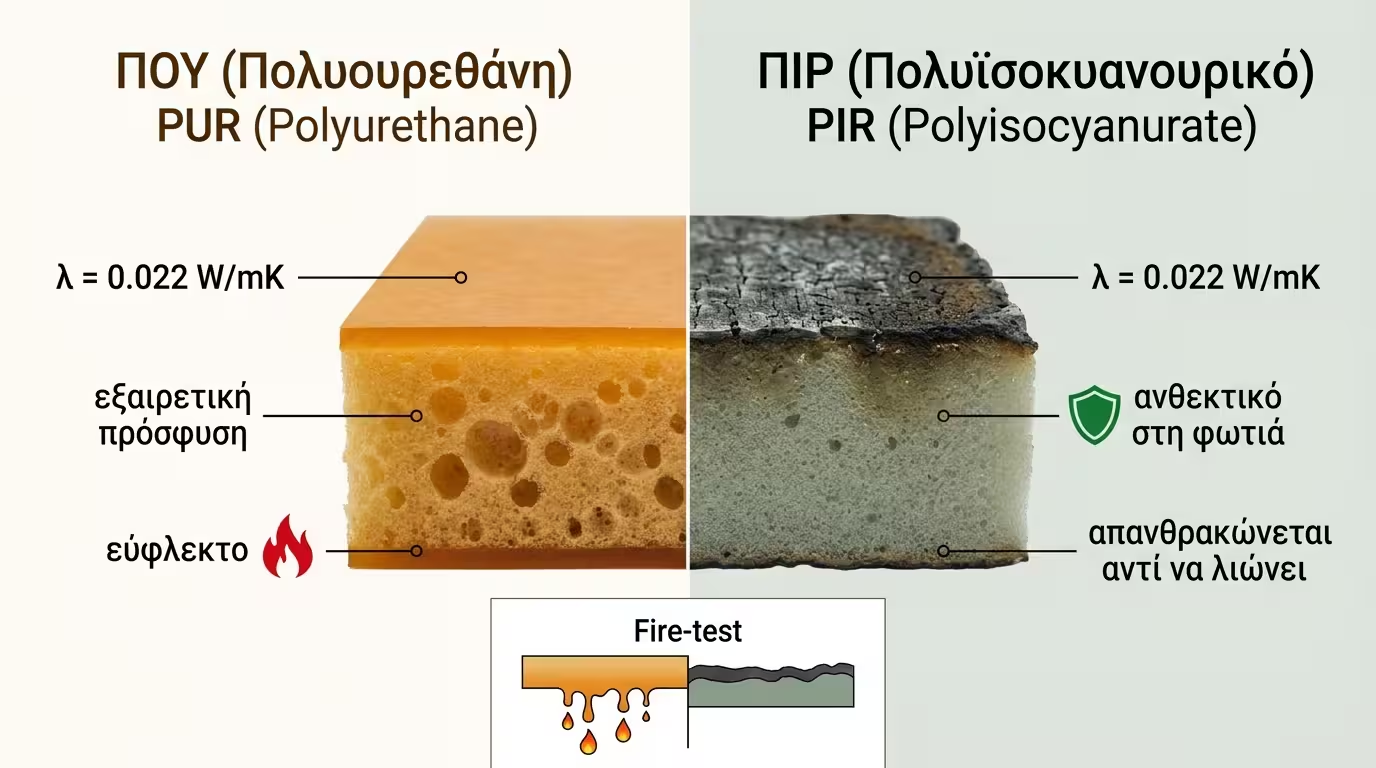
The evolution of polyurethane. It retains all the thermal properties of PUR but has been chemically modified for outstanding fire resistance. While traditional PUR can ignite easily, PIR resists flames, chars on the surface and does not drip burning droplets. In modern construction, PIR has practically replaced PUR in panel form.
Unlike other materials, polyurethane gives us the luxury of choosing how to apply it.
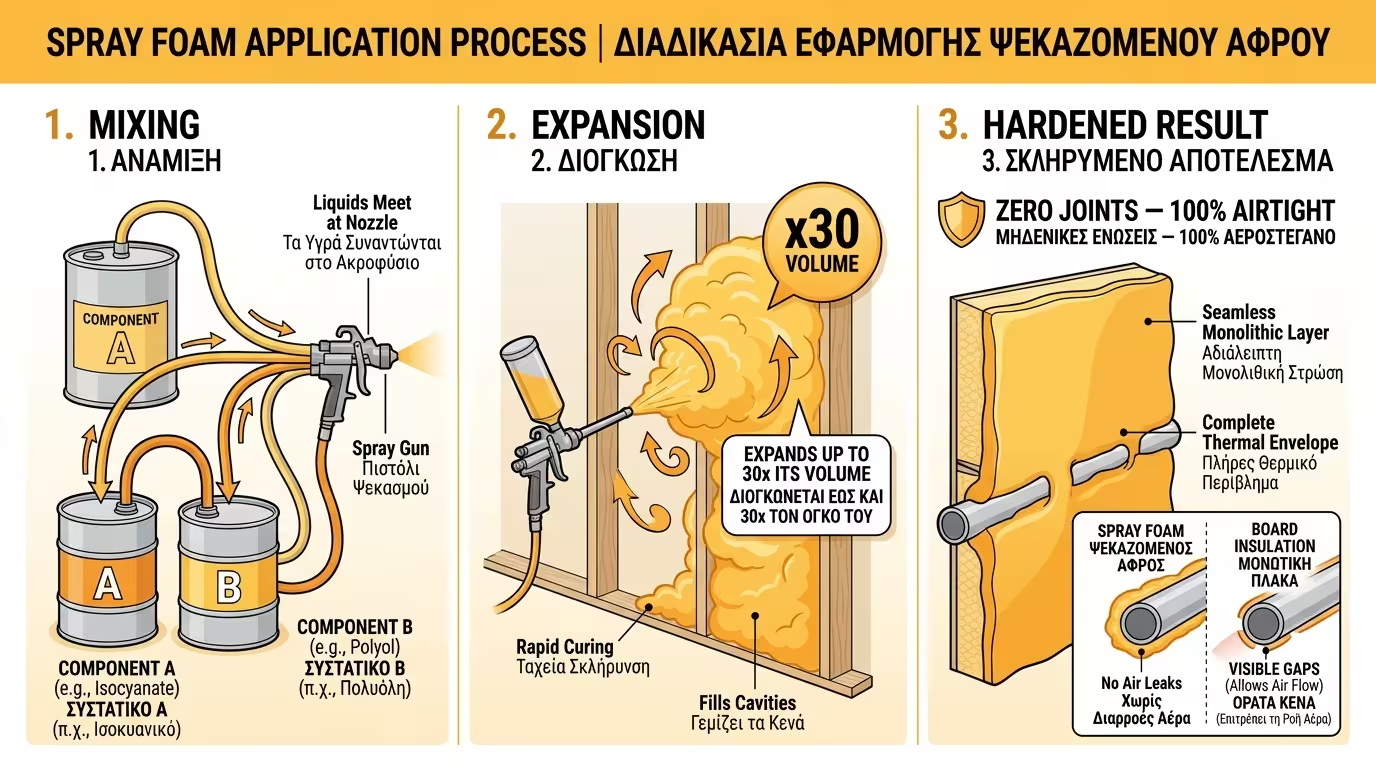
The most spectacular application. Two liquid components mix at the moment they leave the spray gun. Once the liquid touches the surface, it expands instantly (up to 30 times its volume) and hardens within seconds. The foam penetrates every crack, around pipes and on uneven surfaces. It creates a monolithic layer with absolutely zero joints. It eliminates thermal bridges and seals the building 100% from air drafts (airtightness).
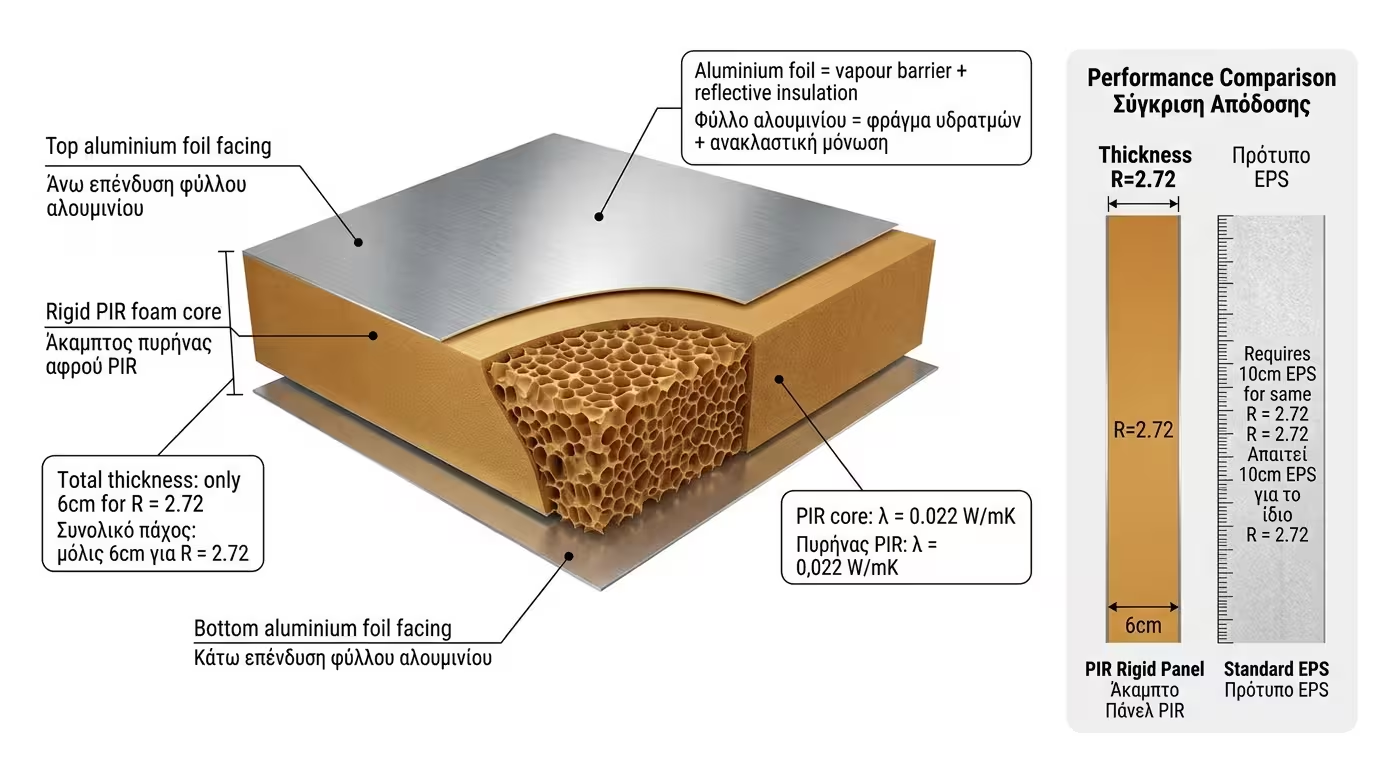
Factory-produced and similar in appearance to polystyrene boards. The key difference is that PIR/PUR panels typically have facing (aluminium foil or special paper) on both sides. The aluminium provides additional reflective insulation and acts as an absolute vapour barrier.
The reason engineers love polyurethane is its thermal conductivity. It has the lowest λ (lambda) coefficient of all widely available conventional insulators (approximately 0.022 W/mK). This means it delivers the same (or better) insulation as other materials at a much thinner profile.
Significantly more expensive than EPS, XPS and rock wool.
Polyurethane deteriorates (turns to dust) if left exposed to sunlight. Spray foam on a roof must be immediately covered with a protective acrylic/polyurethane UV coating.
Spray foam is not a DIY job. It requires expensive equipment, protective suits (due to fumes during spraying) and extensive experience for uniform application.
We have our digital house and want to insulate the floor (above the freezing pilotis). The available space allows us to raise the floor by only 6 centimetres.
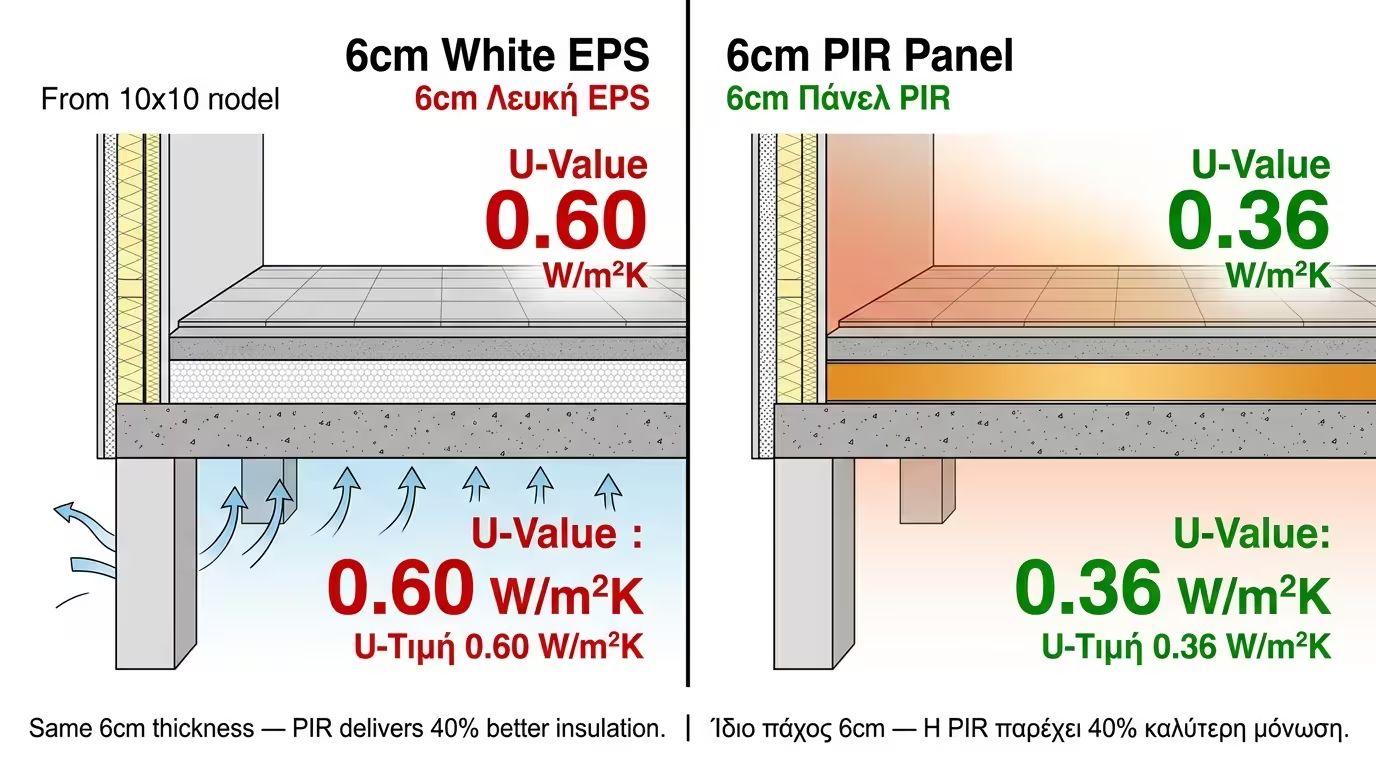
We achieve moderate insulation (U-Value: 0.60 W/m²K), losing considerable heat.
Thermal resistance skyrockets. We achieve a U-Value of 0.36 W/m²K!
💡 Result: With just 6 cm of thickness, we matched the performance that classic polystyrene would deliver at 10 cm. We saved space and heated the home. Polyurethane (especially PIR) is the "Ferrari" of plastic insulators - choose it when available space is minimal.
Return to category.
Go to categoryReturn to the central guide.
Go to guide