
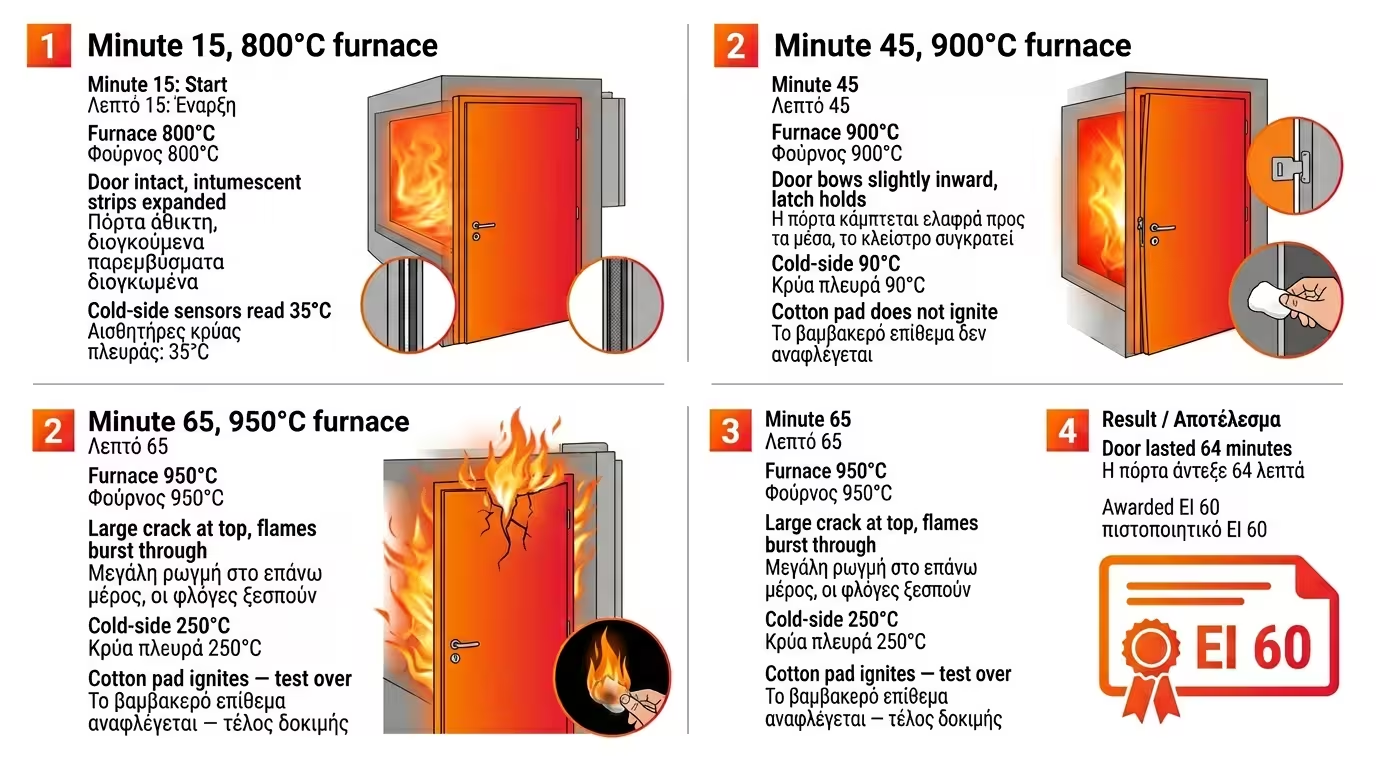
🔥 Minute 0–15
The furnace ignites. The door seals airtight. At 15 minutes (800°C in the furnace), the intumescent strips have already expanded. The door holds firm. On the outer side, the sensors read just 35°C.
If you want to sell a "fire-rated wall" or a "fire-rated door" in Europe, you must send your product to an independent, accredited Testing Laboratory (Notified Body).
There, engineers don't perform theoretical calculations. They take your material, build it exactly as it would be built in reality, and set it on fire. The process is an orchestrated, scientific destruction.
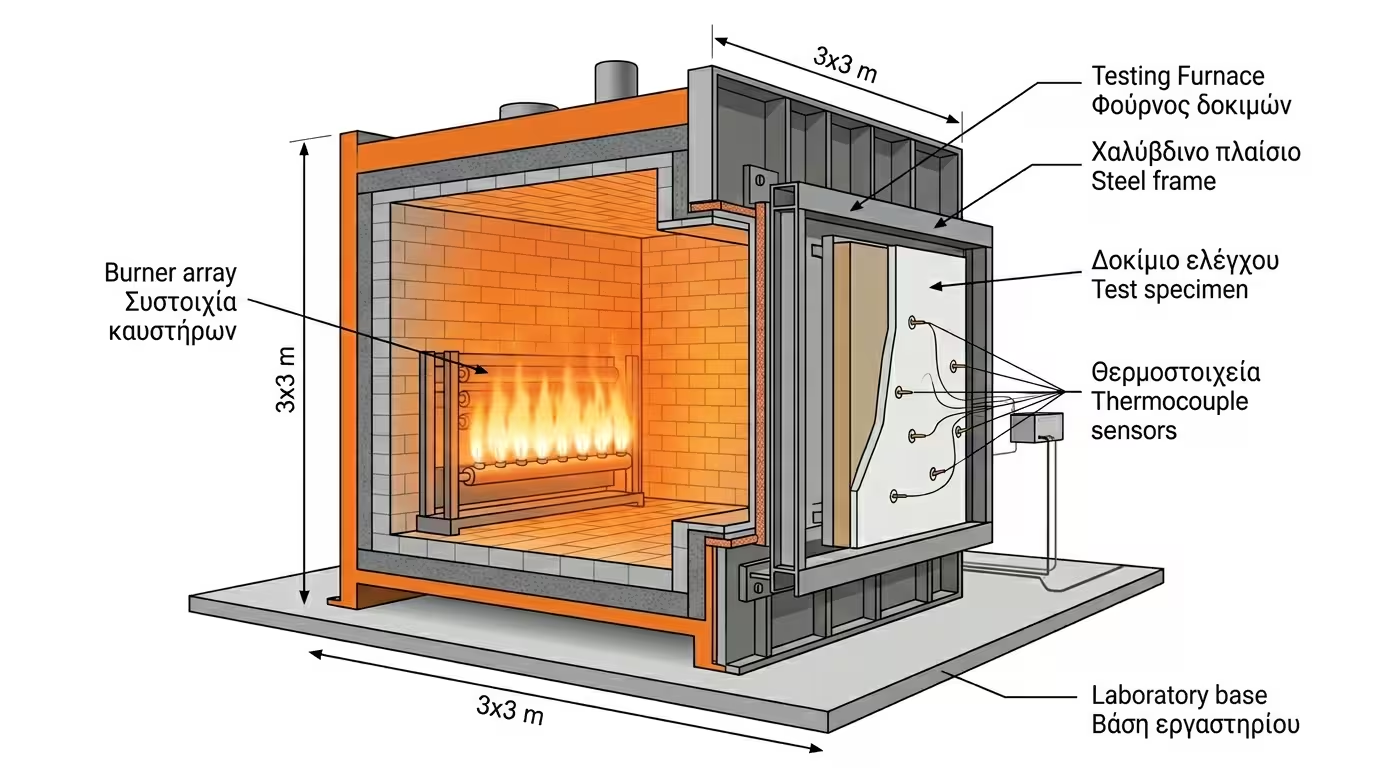
At the heart of the laboratory sits a massive kiln (furnace), usually measuring 3×3 metres or larger. It operates with enormous natural gas or propane burners.
If a door or wall is being tested, the sample is built inside a huge metal frame and "docked" into the front opening of the furnace, sealing it hermetically. This way, one side of the material "faces" into the inferno inside the furnace, while the other side "faces" the safe, cool laboratory.
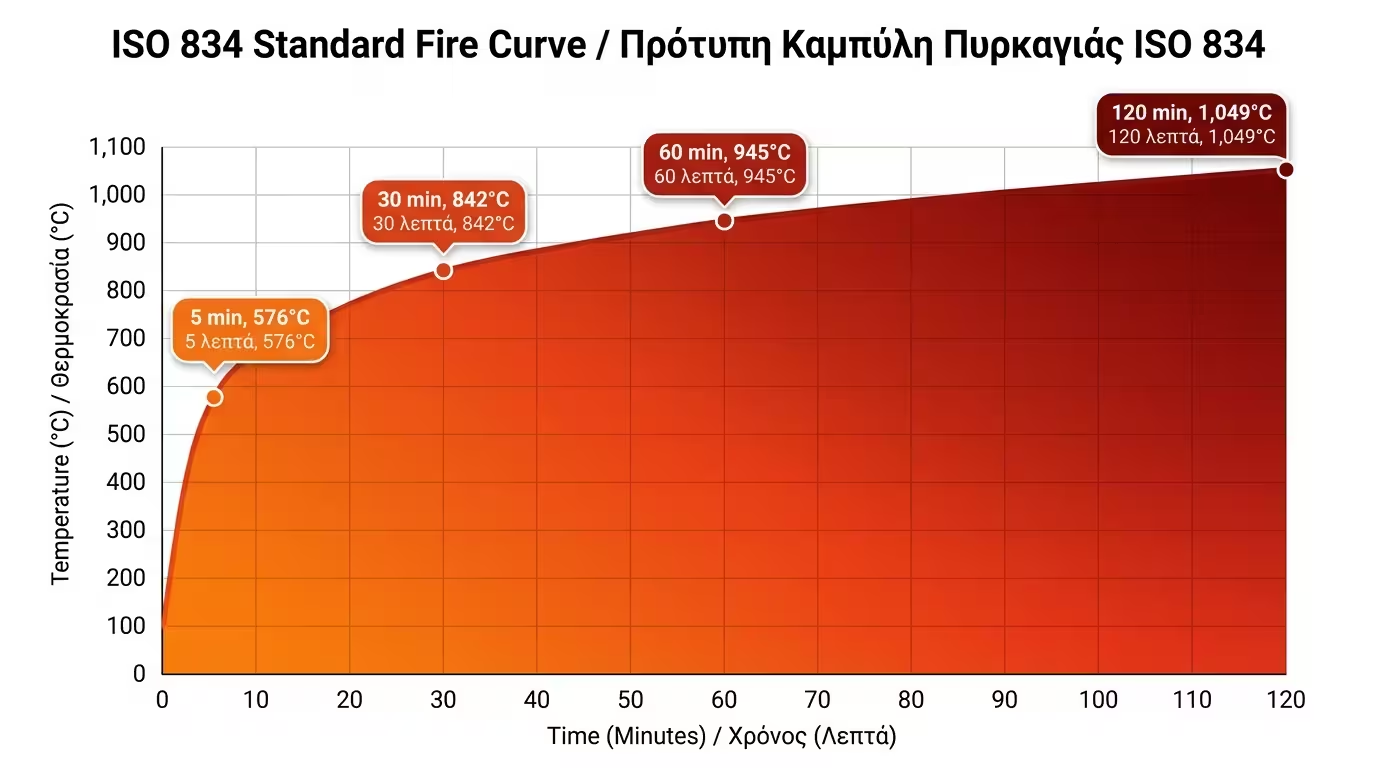
The burners are not ignited randomly. They are controlled by computers that follow a very specific, international temperature-time curve (the Standard Fire Curve - ISO 834). This curve simulates how a real fire develops inside a building:
At 5 minutes, the furnace temperature already reaches 576°C. At 30 minutes, it climbs to 842°C. At 60 minutes, we're at 945°C. At 120 minutes, it exceeds 1,049°C!
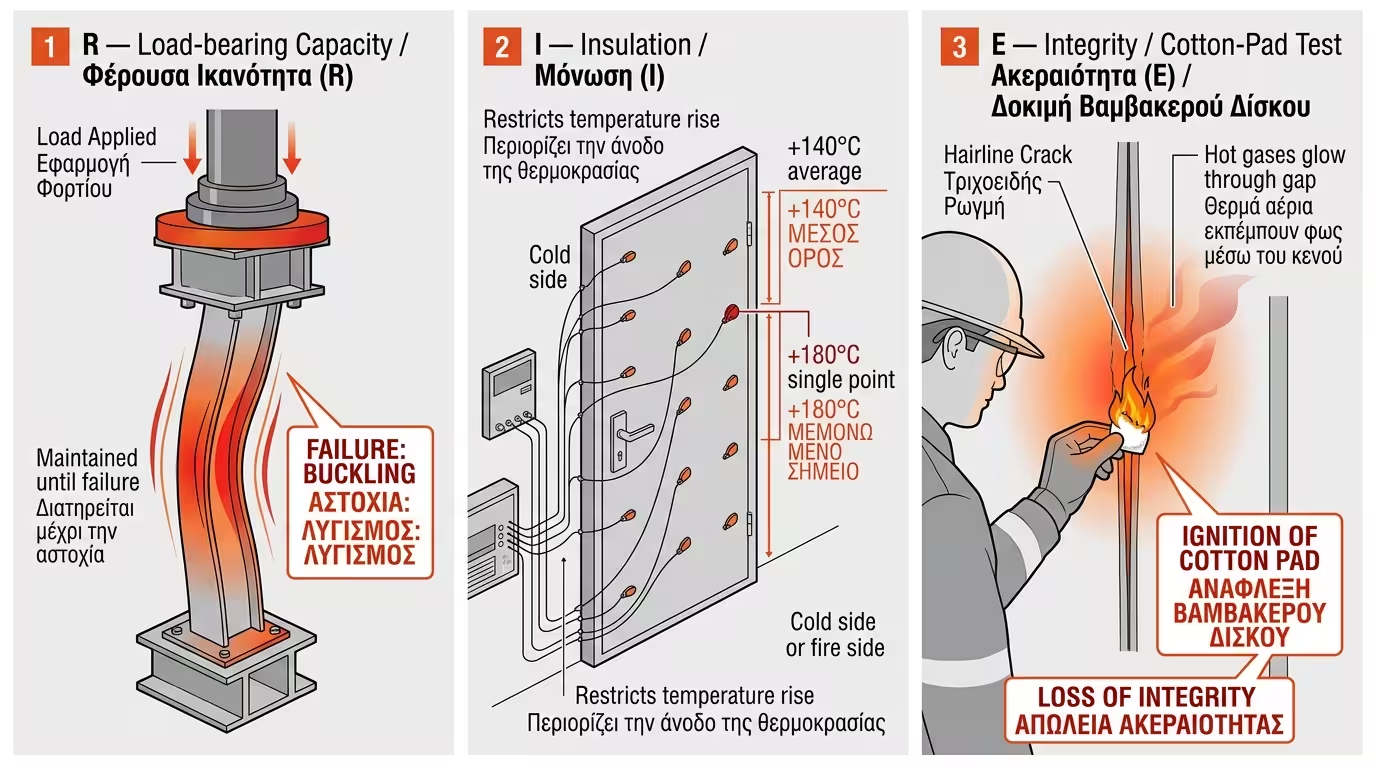
As the furnace roars, the engineers observe the material from the safe (cold) side, waiting to see when it will "break" according to the three criteria:
Load-bearing / R: If the sample is a column or floor, they don't merely burn it. They impose enormous weight with hydraulic presses! The "R" criterion is lost the moment the column buckles or the floor gives way under the load.
Insulation / I: On the cold side, the engineers have glued dozens of temperature sensors (thermocouples). The "I" criterion is lost if the average temperature on the safe side rises by 140°C or if a single point rises by 180°C. If you can fry an egg on the "cold" side of your door, the test has failed.
Integrity / E - The "Cotton-Pad Test": This is the most spectacular. If a crack appears, the engineer holds a small cotton pad near the gap. If the hot gases escaping are hot enough to ignite the cotton (it catches fire by itself), then "Integrity" is lost! Fire has effectively passed through.
The timer stops the moment the material fails. If it lasted 64 minutes, the certificate will state 60 (rounded down).
We are in a testing laboratory in Germany. We are testing the fire-rated door we installed in our room.
The furnace ignites. The door seals airtight. At 15 minutes (800°C in the furnace), the intumescent strips have already expanded. The door holds firm. On the outer side, the sensors read just 35°C.
900°C in the furnace. The door begins to bow slightly inward (due to thermal expansion), but the latch holds. The external temperature has reached 90°C. The cotton pad does not ignite.
950°C in the furnace. Suddenly, the sheet metal can take no more. A huge crack opens at the top. Flames burst into the laboratory. The sensors read 250°C. The cotton pad catches fire. The test is over.
The door held for 64 minutes. It triumphantly receives the EI 60 certification and is ready to be sold on the market and save lives!
Final Takeaway: When you buy a certified fire-protection material, you are paying for precisely this test. You are buying the certainty that someone, somewhere, subjected it to 1,000°C fire and it refused to give in for the time its label promises.
Return to category.
Go to categoryReturn to the central guide.
Go to guide