
🔨 How It Is Checked
The worker taps the wall lightly with a hammer or the handle of a spatula. If a hollow, dull sound is heard, it means the render no longer holds.
Imagine you buy an expensive, ultra-strong adhesive to glue a mirror to the wall. If the wall is full of dust, grease or has an old flaking paint, the adhesive will grip the dust, not the wall. The result? The mirror will fall and shatter.
The exact same thing (but on a much larger, dangerous and expensive scale) applies to External Thermal Insulation (ETICS). The biggest mistake rushed crews make is to start bonding polystyrene boards directly onto the old wall, without checking the so-called "substrate".
If the base is rotten, the entire system will collapse. Let us look at the 4 mandatory preparation steps you must demand from your contractor.
Before a single drop of adhesive is applied, the wall must be checked. In an old house, the old render may look fine to the eye, but internally it may have detached from the brick ("hollow" render).
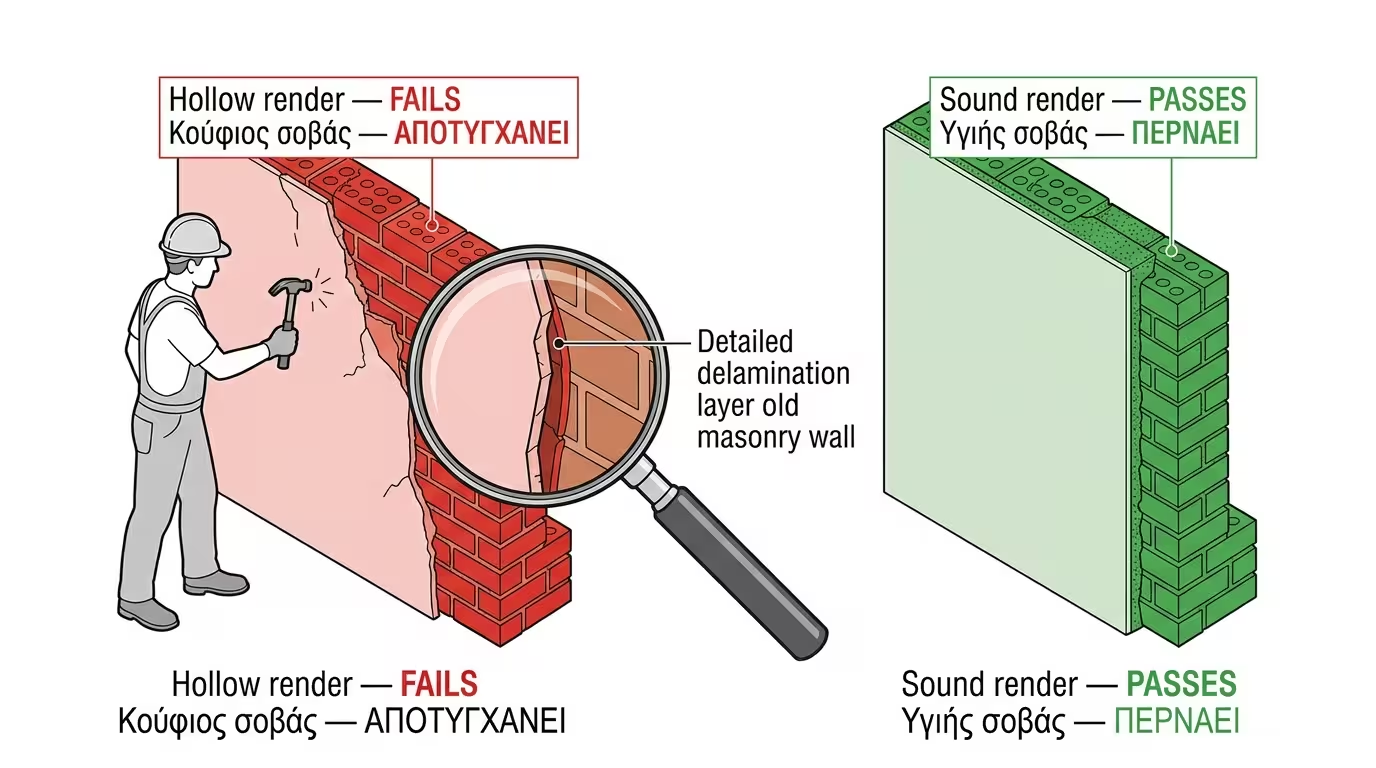
The worker taps the wall lightly with a hammer or the handle of a spatula. If a hollow, dull sound is heard, it means the render no longer holds.
All crumbling and "hollow" spots must be removed ruthlessly with a chisel and patched with new repair mortar. If you bond polystyrene onto hollow render, the weight of the system will pull the render off and everything will collapse onto the pavement.
The adhesive (cement-based or polyurethane foam) needs clean pores to "grip".
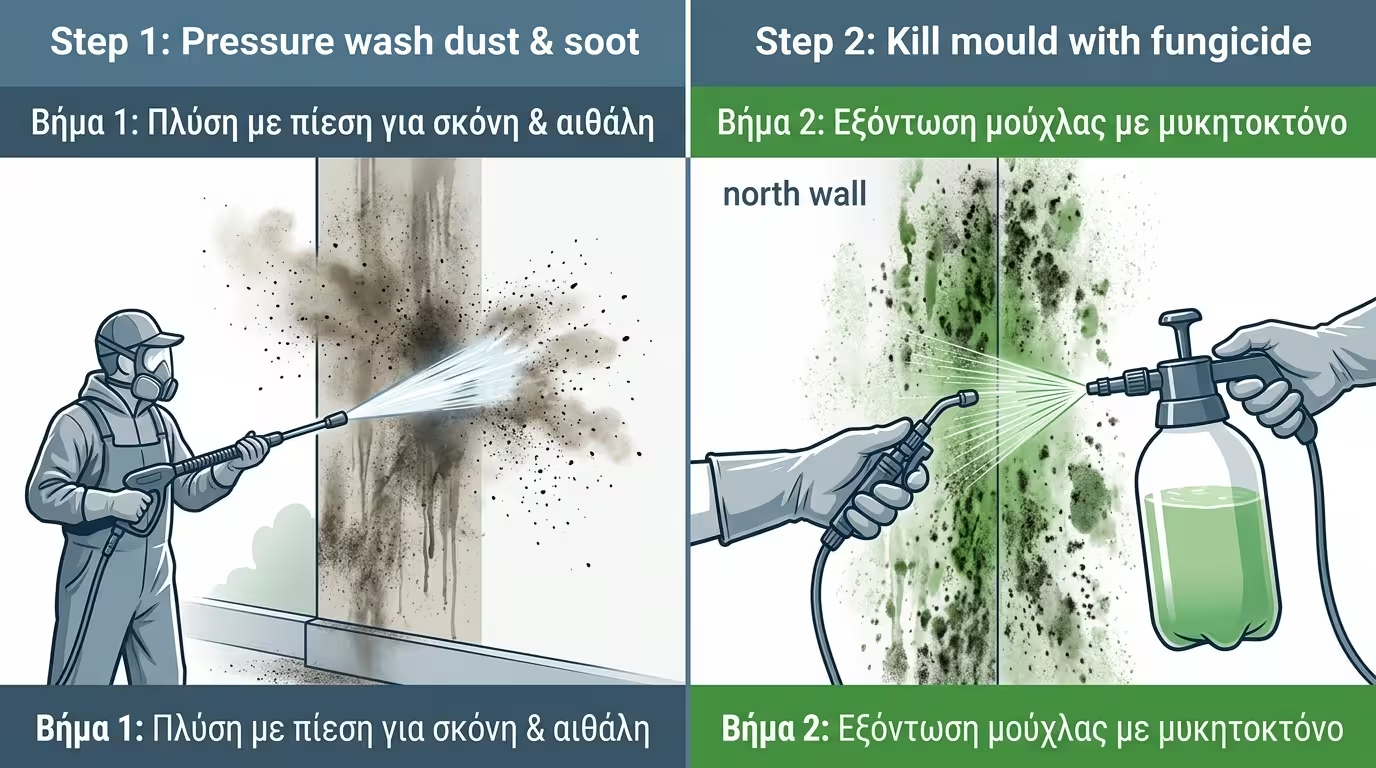
Especially in urban centres, exterior walls have decades of accumulated exhaust fumes and dust. Cleaning with a pressure washer is often essential.
If the wall (especially the north face) has green growth or mould, water is not enough. It must be cleaned with specialised fungicidal solutions, otherwise the micro-organisms will continue to live and eat the wall behind your new insulation.
If your house is already painted, there is an enormous risk. The thermal facade adhesive is extremely strong, but it will bond to the paint, not the render. If the old paint has poor adhesion (e.g. old distempers, lime wash, or flaking coatings), it will detach from the wall, taking the insulation with it.
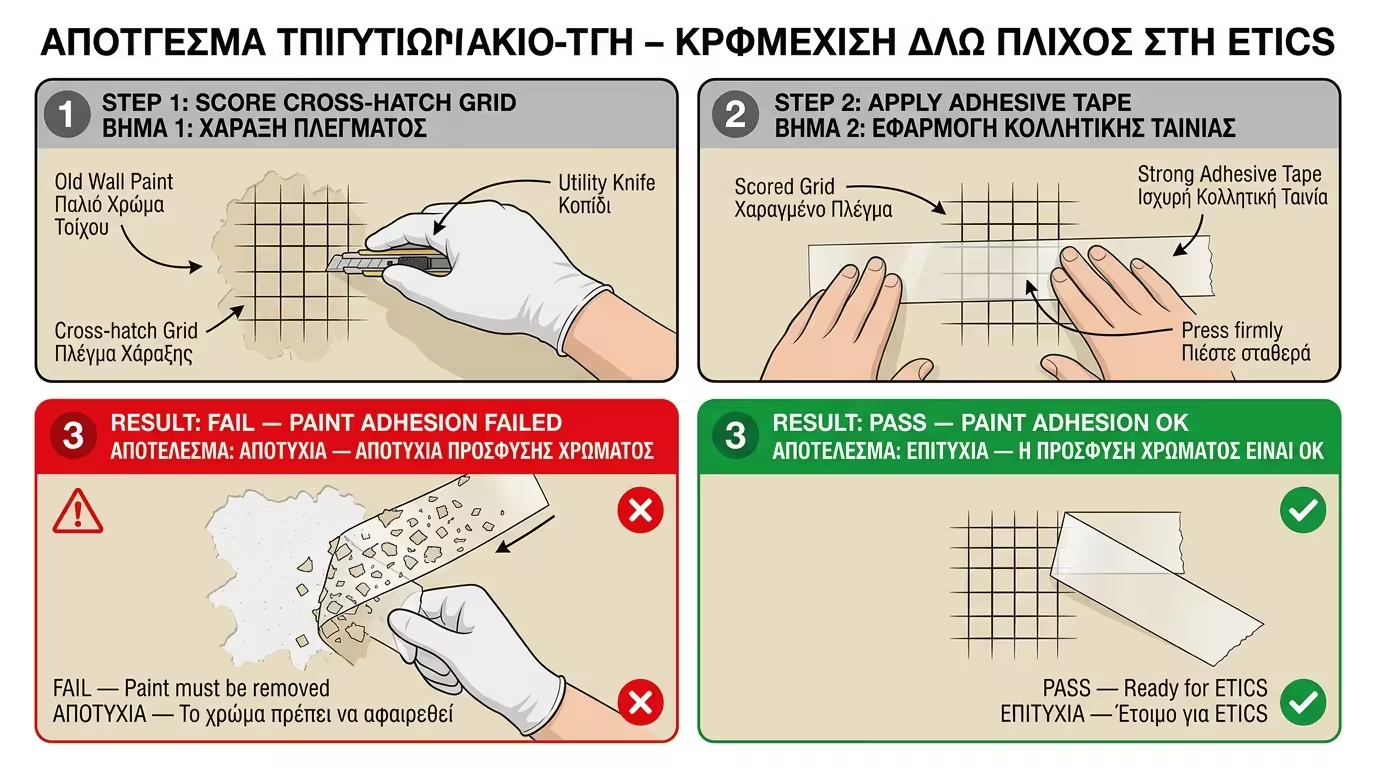
The worker scores a cross-hatch grid with a blade over the old paint, presses strong adhesive tape on it and pulls sharply. If the paint comes off on the tape, then the entire wall must be sanded/scraped before the thermal facade is applied.
Even if the wall is clean and solid, it is often excessively absorbent (e.g. aerated concrete/Ytong, or old bricks). If you apply adhesive onto such a material, the brick will instantly suck all the moisture from the adhesive. The adhesive will "burn" (dry before it chemically bonds) and the board will detach at the first gust of wind.
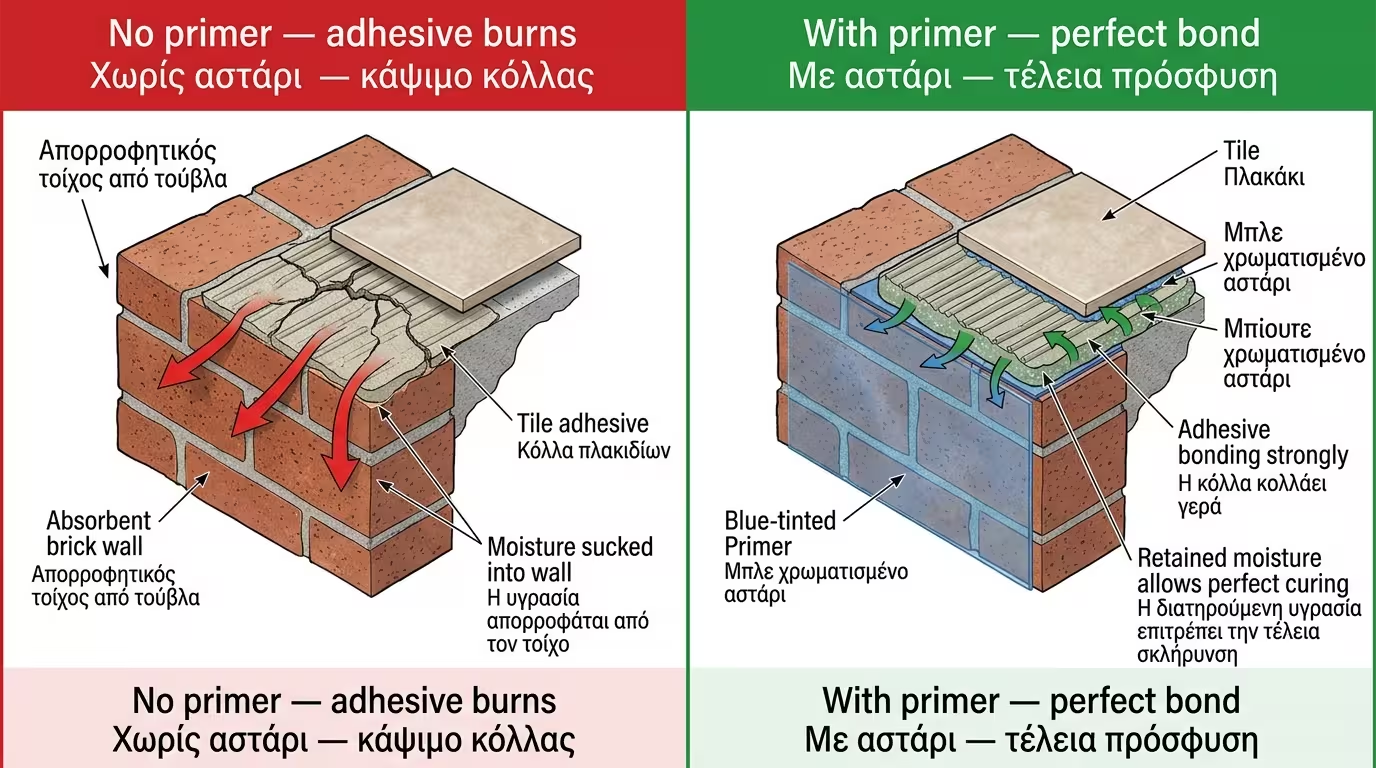
We coat the wall with a specialised deep-penetrating primer. The primer stabilises dust, reduces absorbency and creates the perfect surface for the adhesive to bite.
Let us go to the north wall of our virtual house. The house is 30 years old, painted with a cheap emulsion that has started to "crack", and has a bit of green algae at the bottom.
The contractor is in a hurry. He spreads adhesive on the polystyrene and sticks it directly onto the dirty, old paint. For the first months everything looks perfect. In winter, during a strong south wind, the system faces enormous pressures (wind uplift). The old paint cannot hold, it detaches from the render, and a 5 m² section of thermal facade collapses into the yard!
The crew "loses" the first day only on preparation. They pressure-wash the wall, scrape off loose paint, tap the render to check it is sound, and apply an acrylic primer. The next day when the adhesive goes on, it integrates into the wall so strongly that if you try to pull the polystyrene, the material will break, but the adhesive will never come off!
The Final Conclusion: Substrate preparation is the most boring, dirty and time-consuming part of a renovation, which is why many try to skip it. Do not let them. A clean, solid and primed wall is the only foundation on which a thermal facade that will last 30 years can be "built".
Return to category.
Go to categoryReturn to the central guide.
Go to guide