❄️ In Winter
The sun sits very low on the horizon. Its rays travel almost horizontally and can penetrate deep into rooms.
Until now we have been talking about how to "dress" the house with insulation materials to block the cold and heat. But there is a factor that makes some walls suffer from freezing and others boil: Orientation.
In the northern hemisphere (where Greece is located), the sun does not behave the same way in every season. Depending on whether your wall "faces" North, South, East or West, its thermal needs change dramatically. Let us see how the sun dictates the rules of insulation.
Nature's greatest "gift" to architecture is the sun's trajectory.
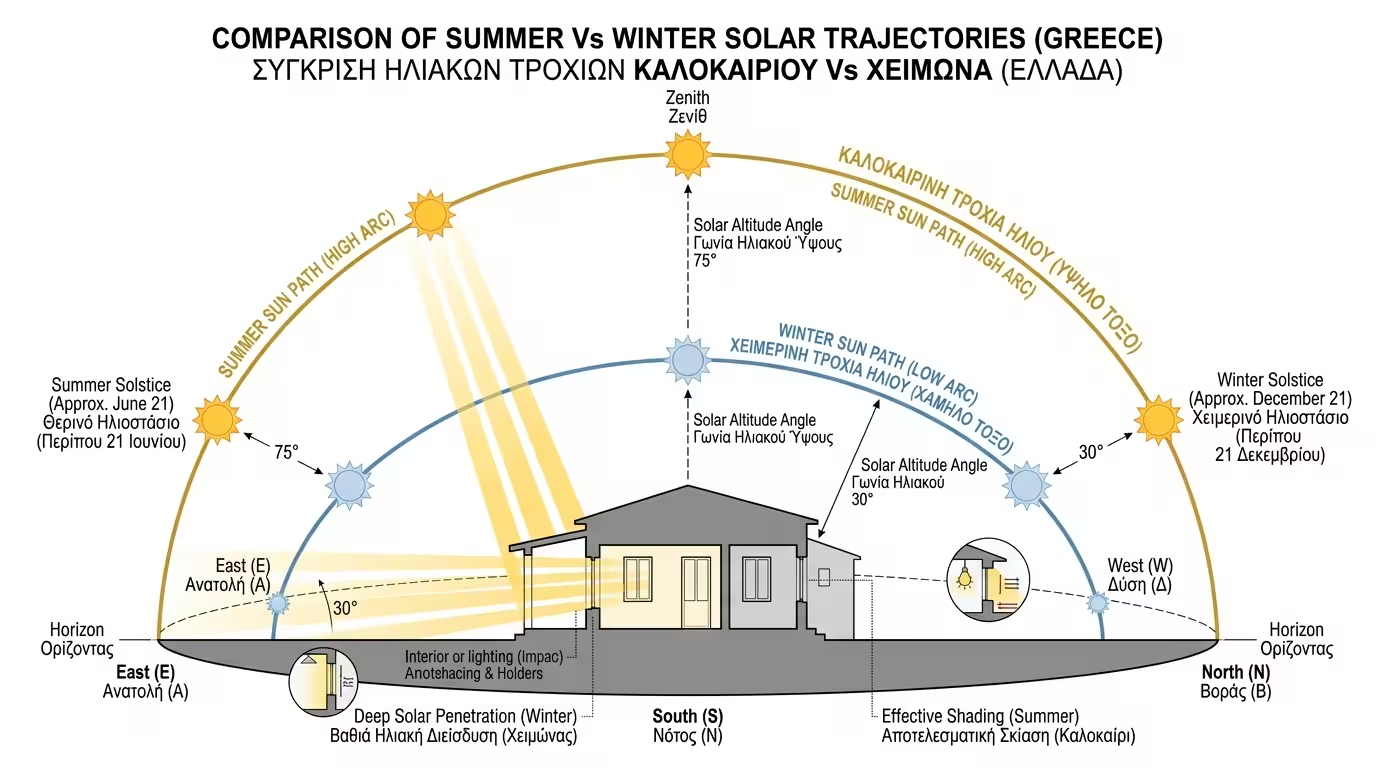
The sun sits very low on the horizon. Its rays travel almost horizontally and can penetrate deep into rooms.
The sun sits almost vertically above our heads. Its rays fall steeply and do not easily enter rooms.
The south side is the most privileged. In winter (when the sun is low), it is bathed in light all day, providing enormous, free amounts of thermal energy (passive solar heating). In summer, because the sun is high, its rays strike the south wall almost vertically.
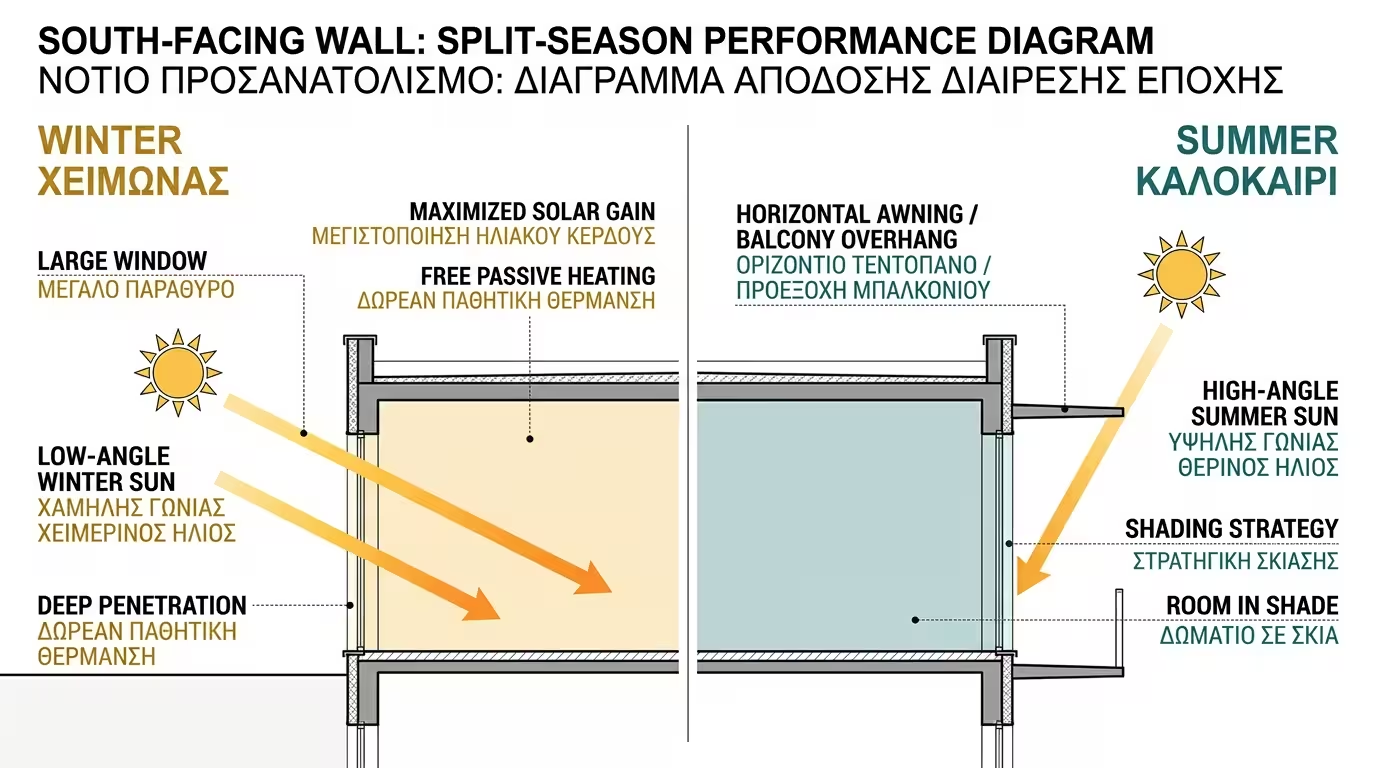
💡 The Strategy: On the south side we want large, energy-efficient windows to "soak up" heat in winter. In summer, we are protected effortlessly with a simple horizontal awning (a canopy or a balcony overhang), which blocks the vertical rays and leaves the house in shade!
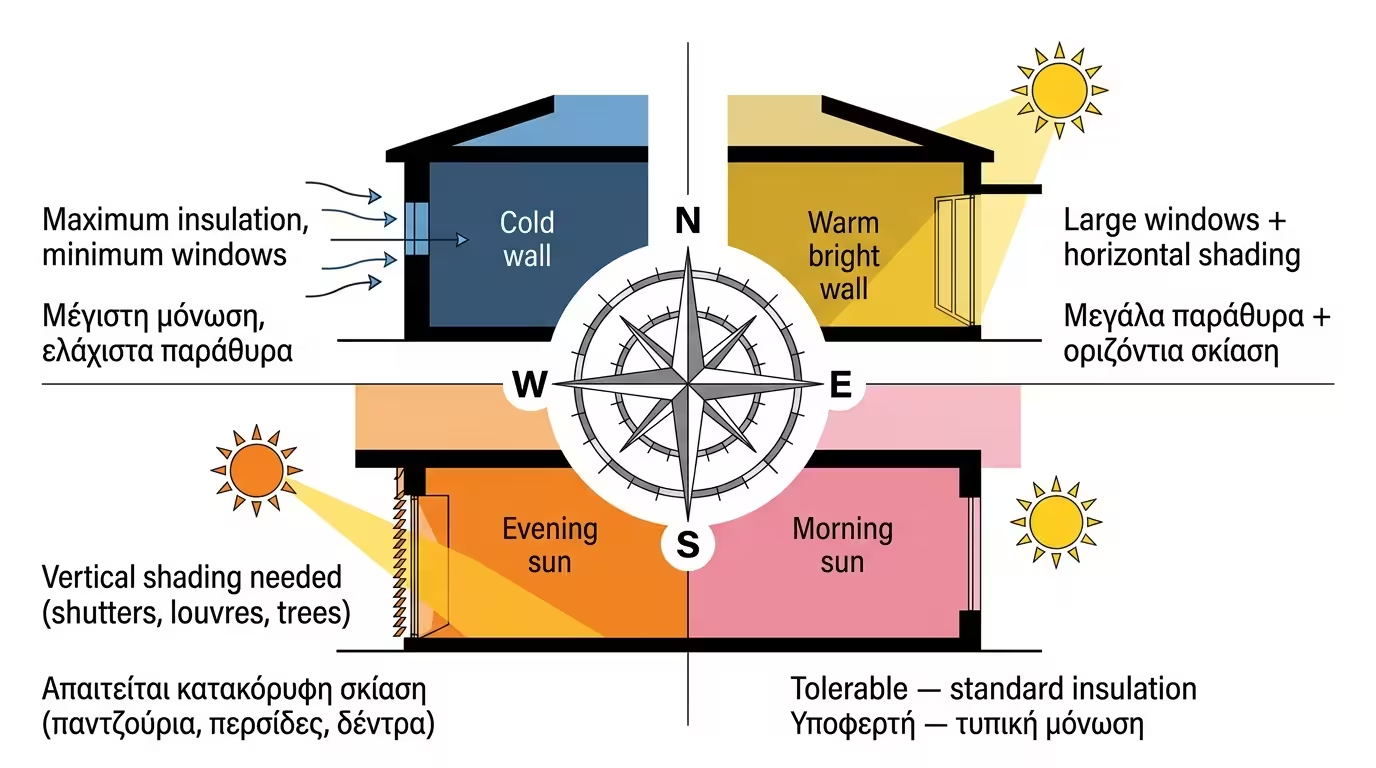
The north side of the house is winter's "nightmare". It never sees the sun directly, neither in winter nor summer. Additionally, it receives the coldest, strongest winds.
There are no solar gains here. The north wall is a permanent, dark "hole" of losses. On the north side we want the smallest possible windows and the most reinforced insulation of the entire building. This is the point where no discount on polystyrene thickness is acceptable.
The east side receives the sun early in the morning (tolerable). The west side is summer's nightmare. The sun drops low on the horizon and "fires" at west-facing windows. Because the angle is low, balconies and canopies cannot block it! We need vertical shading (external roller shutters, louvres, tall trees) and materials with high mass (as we saw in the Time Lag article).
Let us see what a tragic design mistake can do to our digital house, without changing materials - only the layout. Our living room has a huge balcony door (5 metres wide).
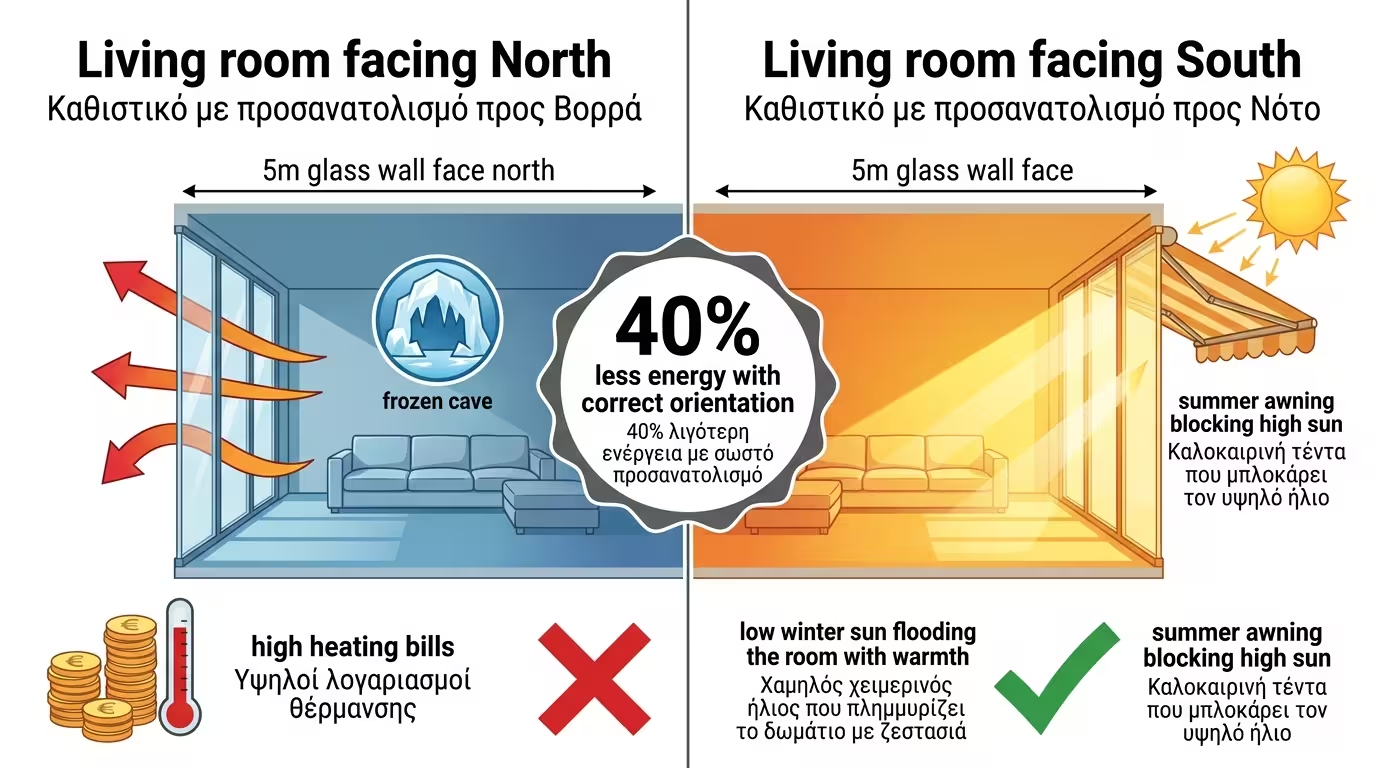
The enormous glass wall faces north. In winter, the living room is a frozen cave that constantly loses heat through the glass, without receiving a single sun ray. Heating oil flows like water. Summer is tolerably cool.
The exact same glass wall faces south. In winter, the low sun enters deep into the living room. It works like an enormous, free radiator from morning to evening. The house warms naturally. In summer, we simply lower the awning 1 metre and the glass is in complete shade all day!
📐 The Result: Two identical houses, with exactly the same materials, but Scenario B consumes 40% less energy, simply because it "faces" the sun correctly!
💡 Final Conclusion: A building is not a box that we insulate uniformly from all sides. The north walls need armour against the cold, the south walls need "smart" openings for the sun, and the west walls need shading and "heavy" materials to fight the summer afternoon. Insulation cooperates with nature, it does not ignore it!
Return to category.
Go to categoryReturn to the central guide.
Go to guide