Calcium Silicate Fire-Rated Panels: The Non-Combustible Boards for
Extreme Demands (Tunnels, Industry)
We've seen pink plasterboard, paints, and rough plasters. But
construction often has uncompromising demands.
What if we need to clad a steel column in a semi-outdoor garage where it
rains and humidity is extreme? Pink plasterboard will absorb water, rot
and disintegrate. What about a motorway tunnel where a tanker fire will
reach 1,200°C in 5 minutes, and we want to hose down the space with
high-pressure jets afterwards? Paints and plasters might delaminate.
This is where the "Special Forces" of dry construction come
in.
Dry construction (building with screws and boards) is fast and clean.
However, when conditions become hostile, gypsum (even the fire-rated
kind) shows its weaknesses. It can't withstand continuous impacts and,
most importantly, it hates water. For heavy industrial, outdoor or
underground applications, engineers turn to Calcium Silicate Boards. Their chemical composition (sand, cement/lime and reinforcing
cellulose or glass fibres) is "baked" in special high-pressure
autoclaves. The result: the ease of a board with the resilience of stone. Visually, they resemble hard, off-white cement boards. They have no
external paper layer and are extremely dense.
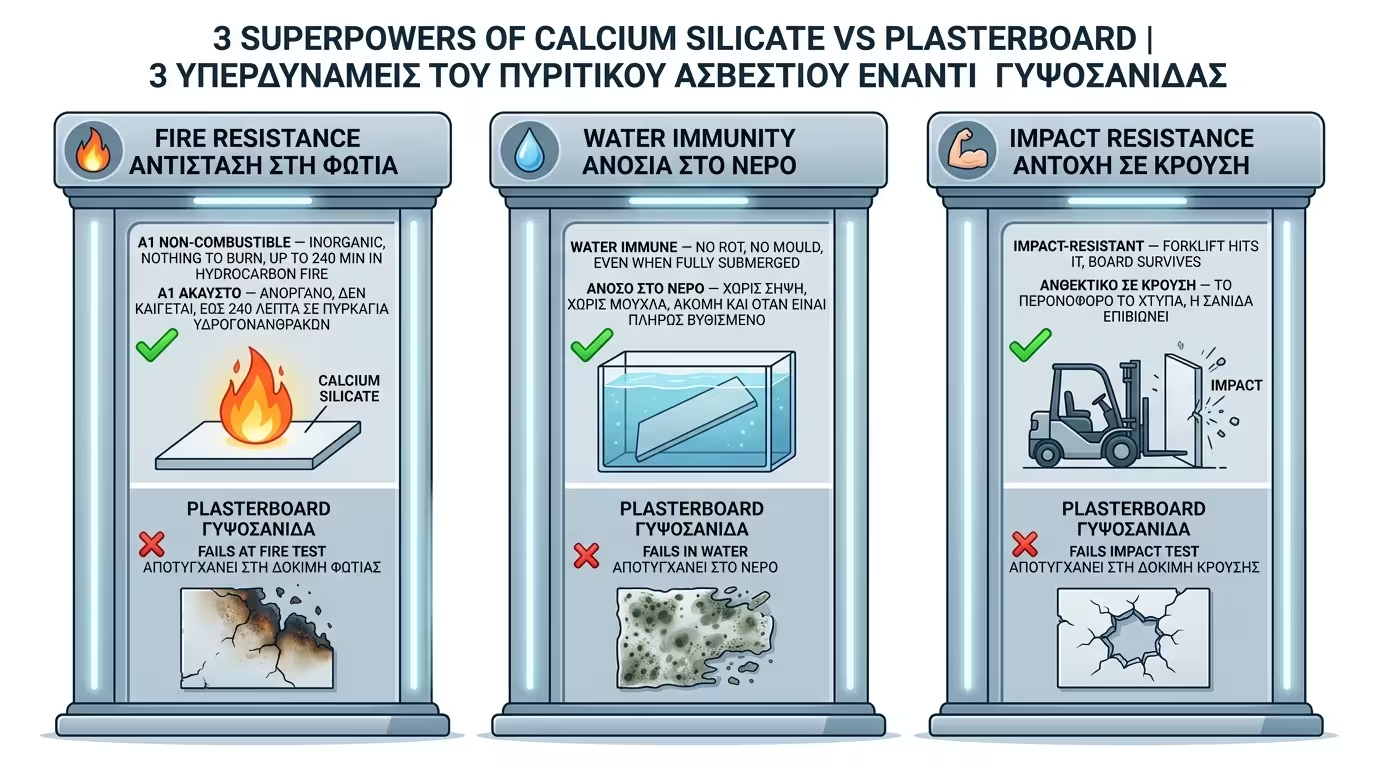
1. The 3 Superpowers of Calcium Silicate
These panels aren't for building a simple partition in your living
room - they're considerably more expensive and heavier than
plasterboard. They are designed for where everything else fails.
🔥 Non-Combustibility (Euroclass A1)
Unlike pink plasterboard that relies on evaporating water (and then
crumbles), calcium silicate is inorganic. There is
nothing to burn, no vapours released, no shrinkage. A double layer
of these panels around a steel column can provide fire resistance of up to 240 minutes (4 full hours) even in extreme hydrocarbon fire conditions (as found in refineries)!
💧 Water Immunity
This is their greatest "weapon." You can install them in a basement
car park that floods, a semi-outdoor canopy or inside a tunnel. Even
when completely soaked, they don't rot, don't mould and don't lose their mechanical strength. When they dry out, they return to exactly their original
condition.
💪 Mechanical Hardness (Impact Resistance)
If you hit plasterboard with a supermarket shopping trolley, it
punches right through. If you hit a calcium silicate board, the trolley probably breaks. They are ideal for hospital corridors, forklift warehouses and
industrial areas where the wall "takes a beating" every single day.
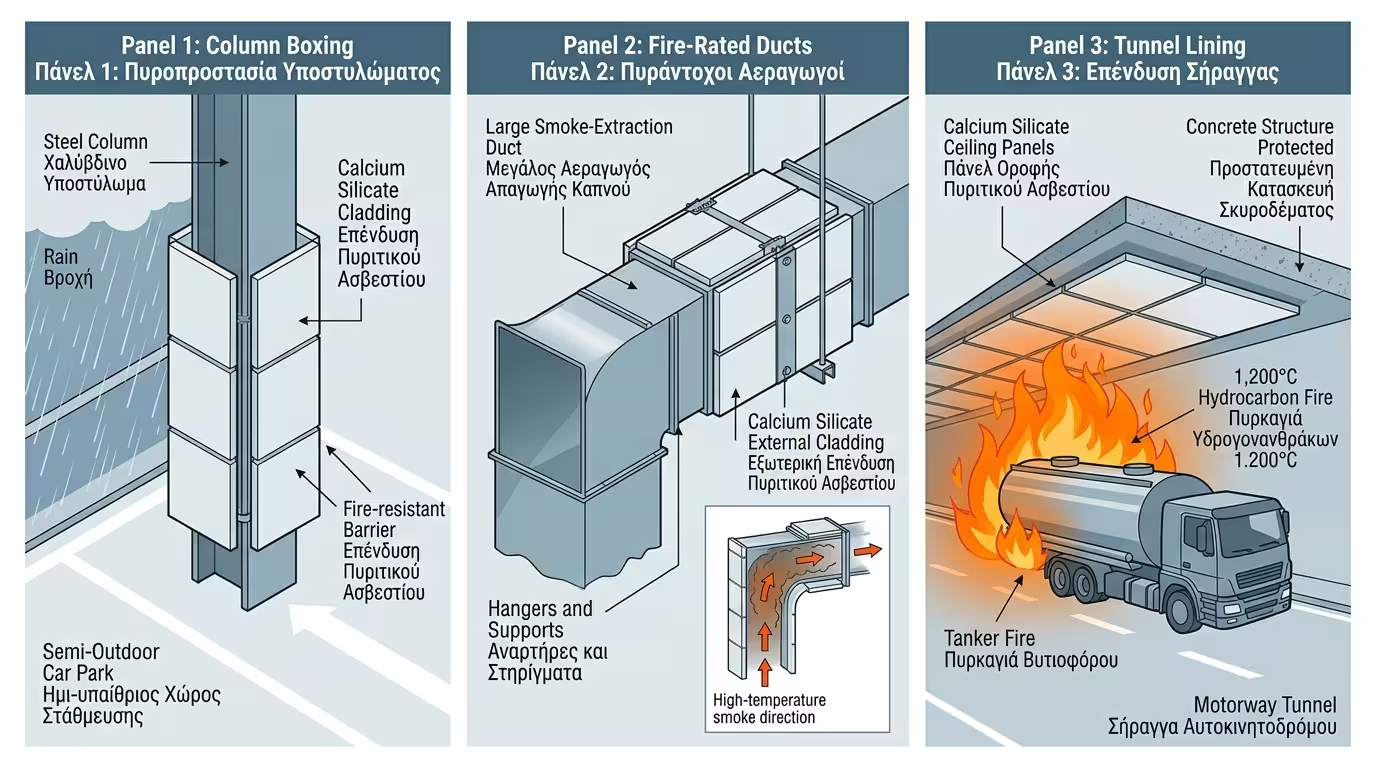
2. Where Are They Used?
Calcium silicate panels are used in three main categories:
🏗️ Steel Column Cladding (Boxing)
When we want square, smooth, attractive columns (unlike the rough
spray plaster) but in spaces with moisture or the risk of mechanical impacts.
🌀 Fire-Rated Ducts
The massive metal ducts that extract smoke from basements must
withstand fire so they don't melt. They are clad externally (or built entirely) from calcium silicate panels to maintain integrity.
🚇 Tunnels & Metro Stations
Tunnel ceiling linings are made of these panels, so that if a
vehicle catches fire inside, the concrete of the tunnel structure doesn't collapse from temperatures of 1,200°C.
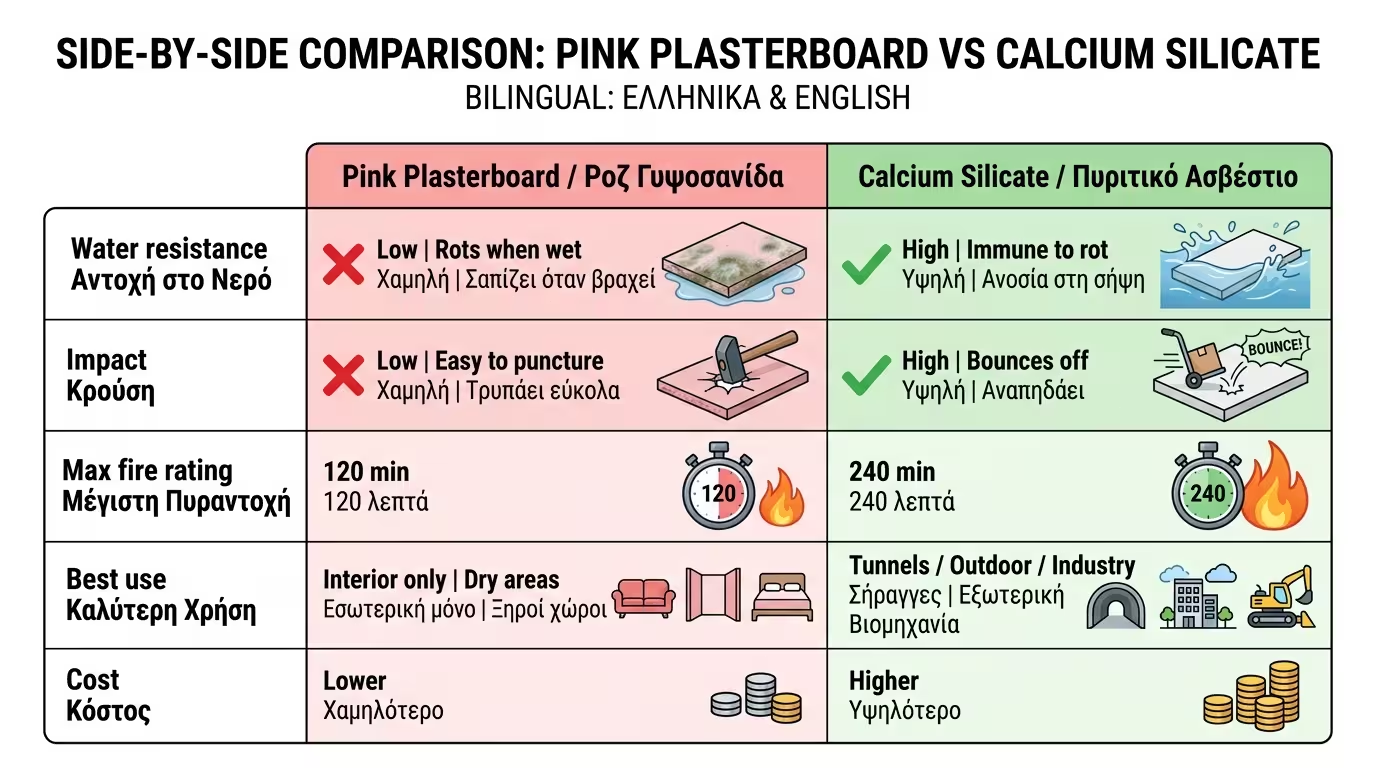
Plasterboard vs Calcium Silicate
Pink plasterboard rots in rain, crumbles on impact and maxes out at
120 minutes. Calcium silicate resists water, impacts and reaches 240
minutes. Plasterboard is ideal for interior spaces, while calcium
silicate excels in extreme outdoor and industrial applications.
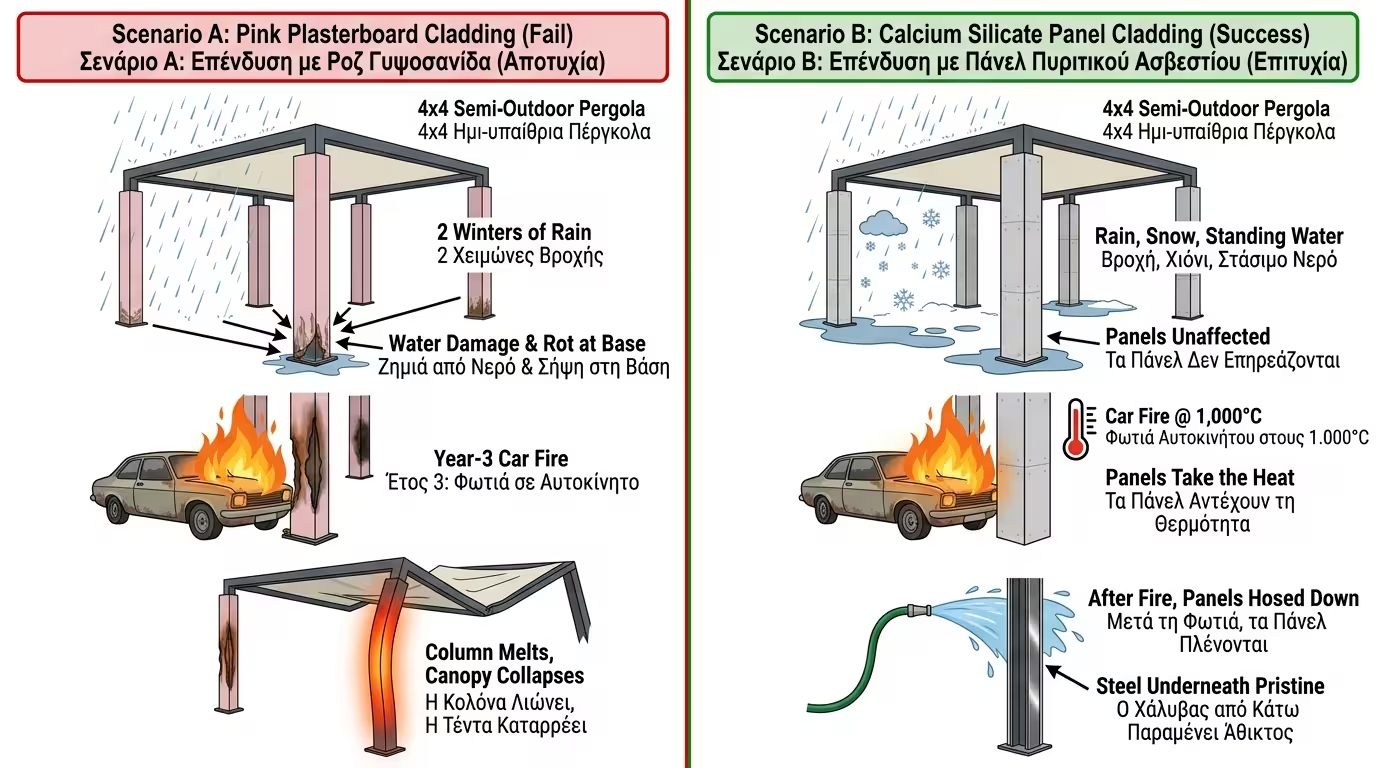
The Experiment in Our Model (The Metal Pergola in the 4×4)
We've built a closed, semi-outdoor parking in our yard with heavy
steel columns. In winter, humidity is extreme and rain constantly
soaks the structure.
❌ Scenario A (The False Economy)
The contractor "clad" the columns with pink plasterboard to give
them fire resistance and painted them. After two winters, rainwater
soaked the bottom section of the plasterboard completely. The
material rotted and crumbled. In year 3, our car catches fire. The
columns are effectively bare at the base. The steel melts and the canopy collapses onto the burning
vehicle.
✅ Scenario B (Calcium Silicate Panels)
The engineer demanded the columns be clad with calcium silicate
panels. Rain, snow, standing water at the base - the panels couldn't
care less. The car bursts into flames. The panels face 1,000°C as if
it were a simple… "warm-up." After the fire is extinguished, we hose
down the panels with water. The steel underneath is completely pristine!
Final Takeaway: When conditions get "warlike," we leave gypsum
for living rooms and reach for calcium silicate. It's the ultimate, heavy-duty,
non-combustible board that ensures your fire protection won't dissolve… in
the first rain!