🧪 The Expansion Secret
They contain special additives (often graphite-based). When the room temperature exceeds 150°C, the mastic reacts chemically and expands (swells) up to 3 to 5 times its original volume!
In fire protection, a 60-minute wall (EI 60) ceases to be a 60-minute wall if there is even a pencil-sized hole. Through that hole, pressurised smoke and flames will pass to the adjacent room.
To seal these small but critical gaps (such as expansion joints, gaps around door frames or cracks), we need materials that don't burn, but instead… "wake up" with heat!
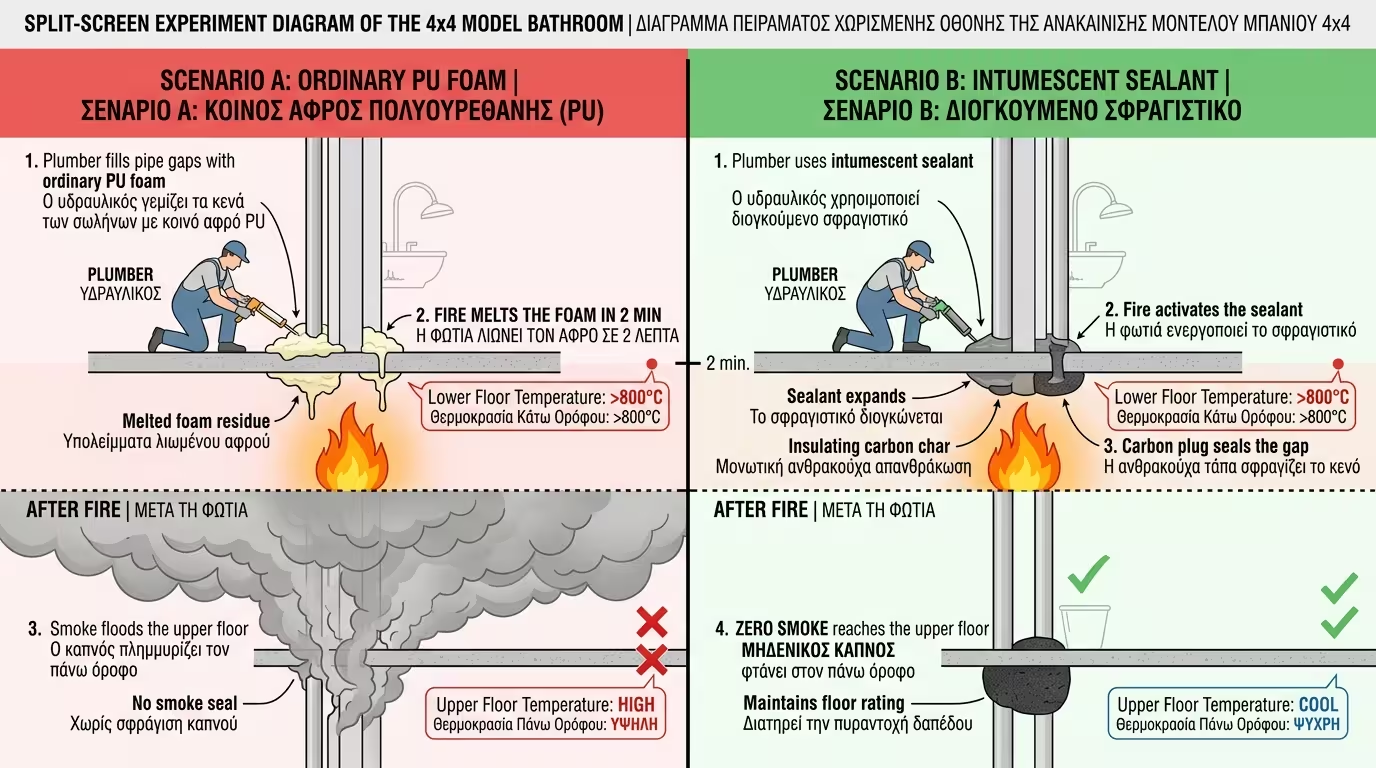
Ordinary Silicone is fantastic for waterproofing your bathroom, but in a fire it melts and ignites at 200°C. Common (Yellow) Polyurethane Foam is the go-to tool for filling gaps, but as we've seen with insulation materials, it is highly flammable. If a spark lands on it, it ignites instantly, melts and drips.
If you use these materials around an expensive fire-rated door, the door will hold, but fire will pass through the gap around it!
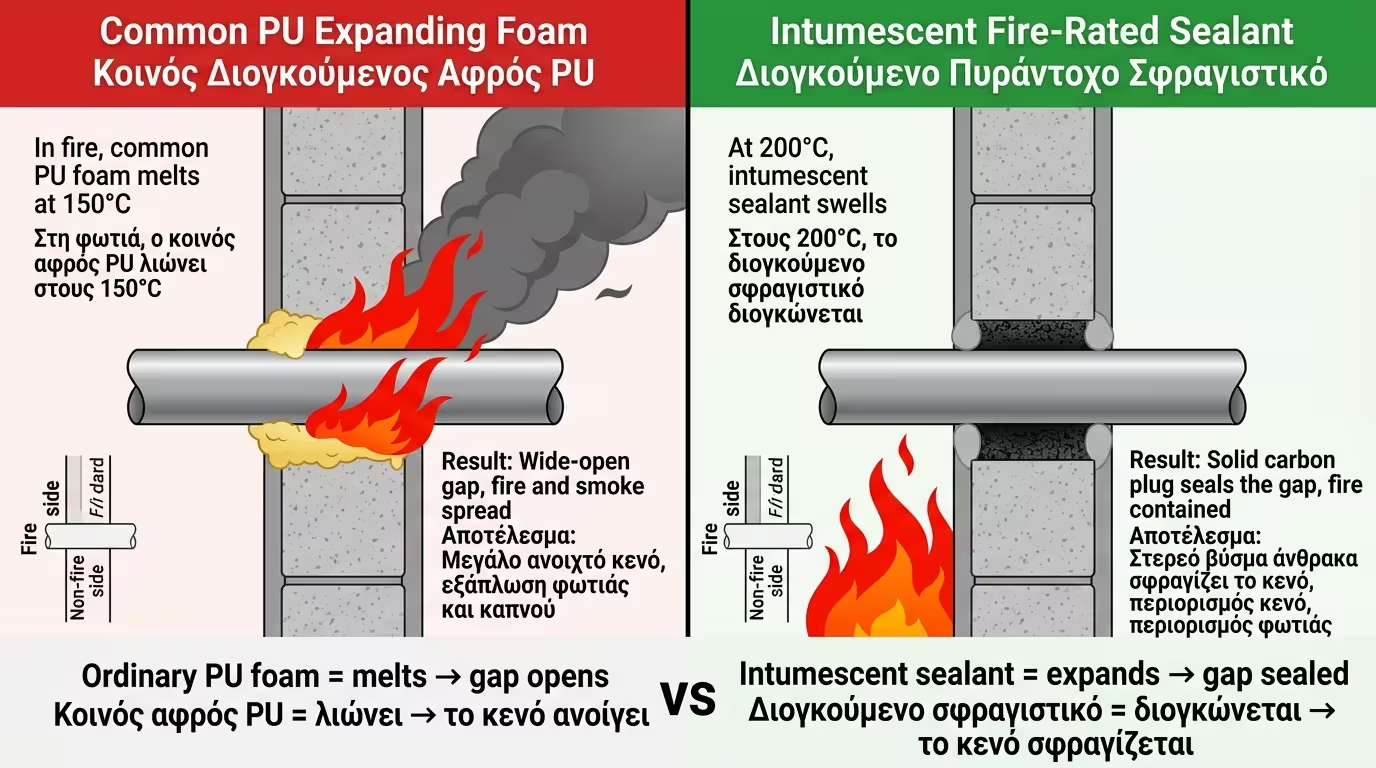
For joints and small openings, we use Fire-Rated Acrylic Mastics. Visually, they look like the common white or grey acrylic mastic a painter uses before painting. However, their chemistry is entirely different.
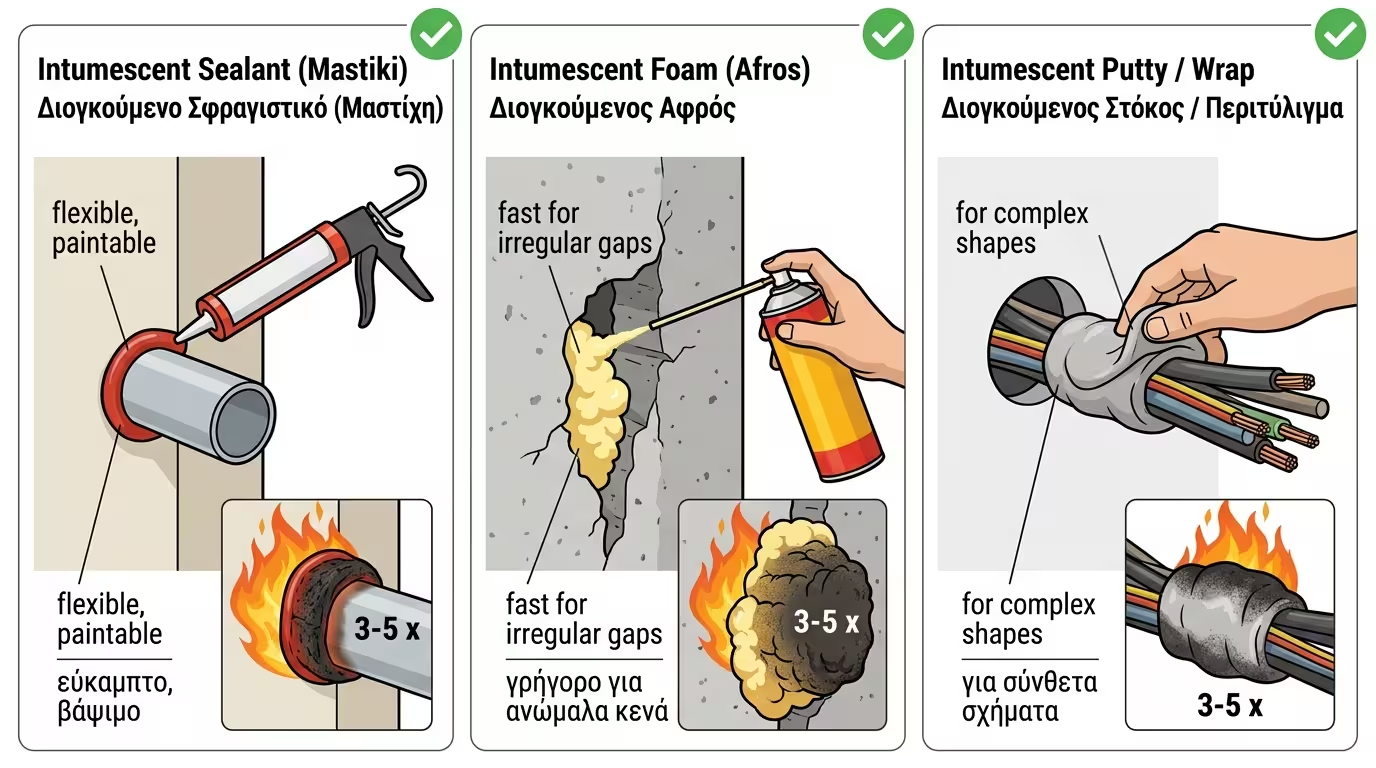
They contain special additives (often graphite-based). When the room temperature exceeds 150°C, the mastic reacts chemically and expands (swells) up to 3 to 5 times its original volume!
As plastics (e.g. small pipes) or wood (e.g. frames) around the joint burn and disappear, the mastic swells, takes their place and creates a hard, impenetrable carbon crust. It air-tightly seals the hole and blocks smoke and flame from passing through.
If you go to a hardware store and ask for fire-rated foam, you'll get a polyurethane foam that (usually) has a pink or red colour. Caution! Being pink doesn't mean it works miracles on its own. Fire-rated foam (class B1) has been chemically modified to be self-extinguishing and withstand fire longer than common yellow foam.
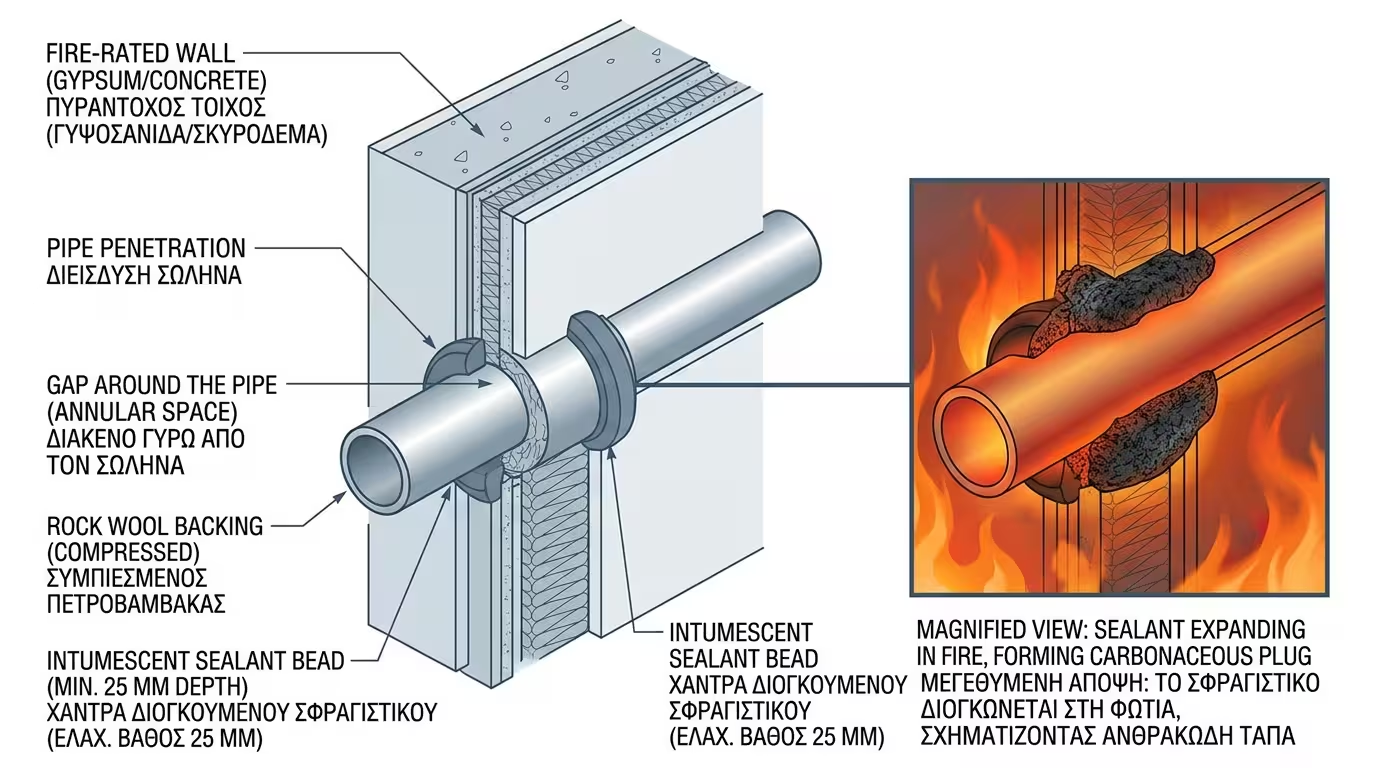
However, for most serious applications (e.g. 90-minute certification), foam alone IS NOT ENOUGH! The correct method is to fill the depth of the gap with pink foam (or rock wool) and always "seal" the surface (the last 1-2 cm) with Fire-Rated Mastic. The foam provides insulation and the mastic provides the essential air-tight block.
We installed an expensive 60-minute fire-rated door in our room. The installer left a 1.5 cm gap around the frame for levelling. Fire breaks out in the corridor outside.
The installer filled the gap with ordinary yellow PU foam and painted over it. After 10 minutes, the heat in the corridor is unbearable. The yellow foam inside the wall melts and ignites. The door stands firm, but flames and dense smoke burst through the joint around it into our room. The room is destroyed.
The installer filled the gap with rock wool and sealed it on both sides with Intumescent Acrylic Mastic. The fire rages. At 150°C, the mastic swells violently. It turns to stone! It fuses with the wall and the frame. After 60 minutes of inferno, not a trace of smoke passed through into our room. The €5 investment in mastic saved the €500 door and our lives.
Final Takeaway: In fire safety, gaps are not "filled" - they are sealed. Never let ordinary foam or silicone take on the role of protector. Demand the special, "smart" chemicals that expand and fight the fire while you run away from it.
Return to category.
Go to categoryReturn to the central guide.
Go to guide