The Frame
Specific metal profiles are required, at specific spacings (typically every 40 or 60 centimetres).
Standard (white) plasterboard is an excellent building material, but in fire it has an expiry date. When flames strike the white wall, the paper burns and the internal gypsum begins to crumble and fall apart within 10 to 15 minutes. Fire finds the hole and passes into the next room.
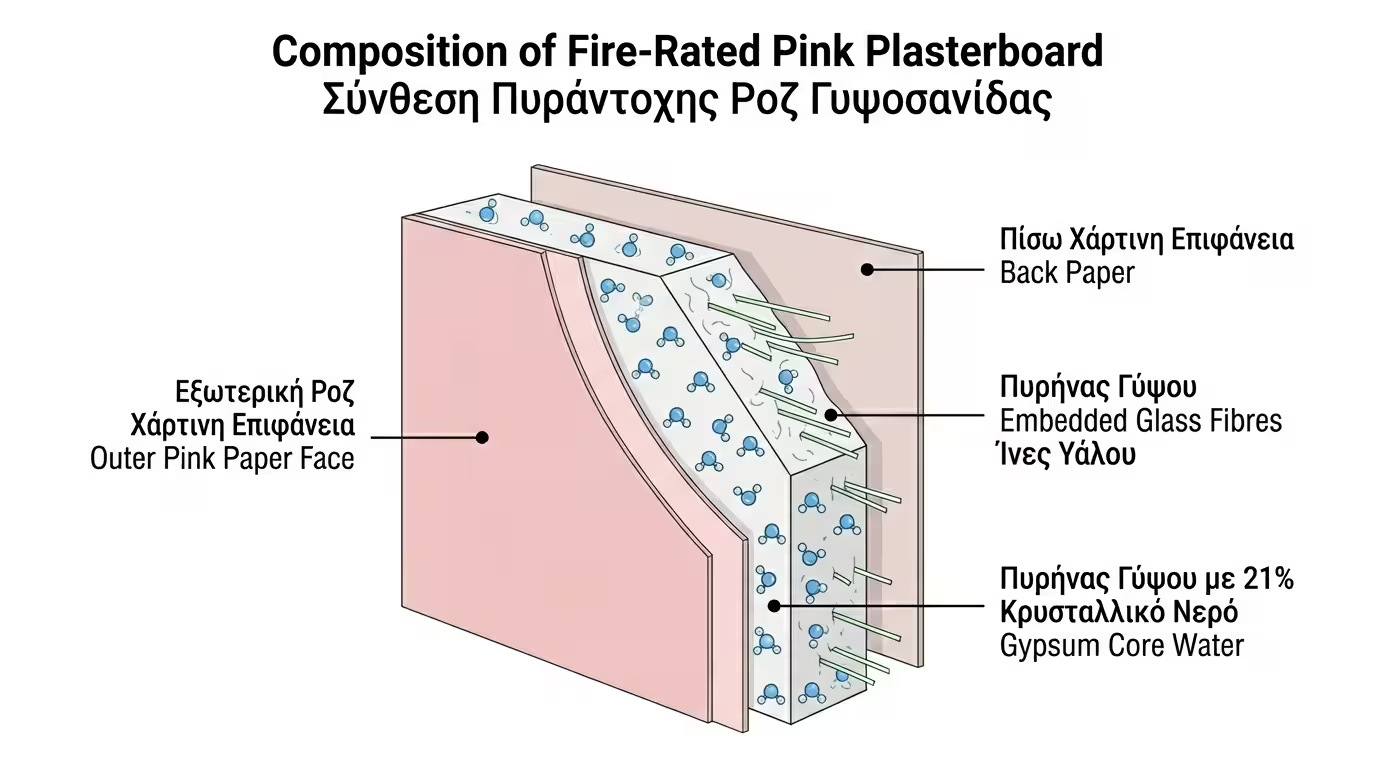
To meet the strict legal requirements (EI 60, EI 120), the industry created Fire-Rated Plasterboard (Type F). To make it easily distinguishable on site, its outer paper is traditionally coloured with a characteristic pink or red colour.
Its secret, however, isn't in the pink paper but in its core. Two different defence mechanisms operate there.
Gypsum, by its nature as a mineral, contains approximately 21% chemically bound water (crystalline water) by volume. This means a simple plasterboard panel hides roughly 2 litres of water per square metre!
When fire breaks out and the surface temperature of the board exceeds 100 °C, this crystalline water begins to "boil." It is released as steam. This process (called calcination) absorbs enormous amounts of thermal energy. While the wall "sweats" and releases steam, the back face (the one facing the safe room) remains incredibly cool (typically below 100 °C), safeguarding the critical Insulation index (I).
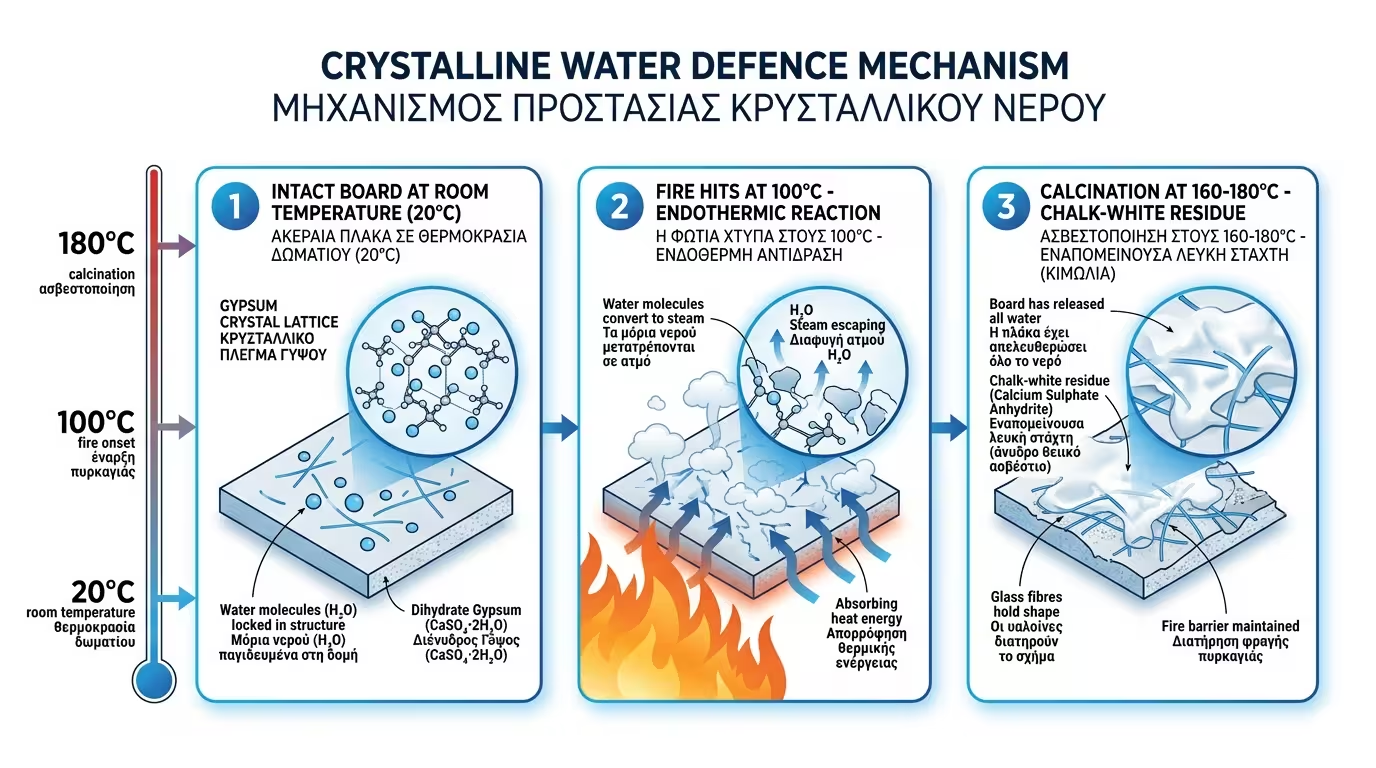
Here lies a problem: when the water has fully evaporated, the gypsum left behind is completely dry, brittle and dead. In a standard white board it would crumble immediately.
In the pink plasterboard, the manufacturer has mixed millions of microscopic glass fibres (fiberglass) and silicone additives into the gypsum. Glass doesn't melt at typical fire temperatures. These fibres act as an invisible mesh (a micro-reinforcement). They hold the dead pieces of calcined gypsum together, preventing the board from collapsing and safeguarding the Integrity index (E).
One of the biggest mistakes in construction is buying pink plasterboard and assuming the job is done. The Fire Service doesn't certify boards - it certifies Dry-Construction Systems.
To achieve, for example, a wall with EI 90 certification (90 minutes of resistance), you must follow the manufacturer's manual religiously:
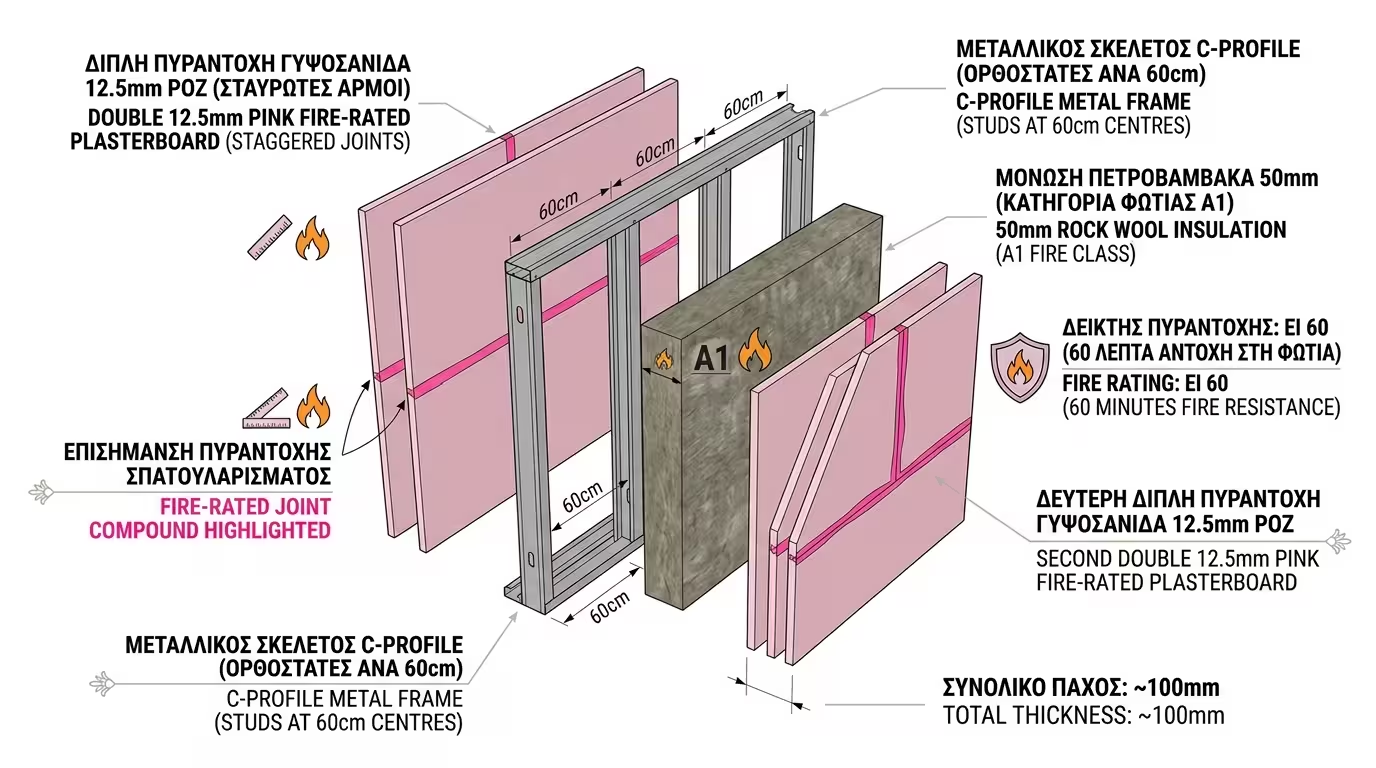
Specific metal profiles are required, at specific spacings (typically every 40 or 60 centimetres).
The cavity between the boards must be filled with rock wool of a specific density (e.g. 50 kg/m³) and thickness. If you use polystyrene, the system is void.
Typically a double layer of pink plasterboard (2 × 12.5 mm) is required on each side of the wall.
The joints between boards must be filled with certified, fire-rated jointing compound, otherwise smoke will pass through the gaps.
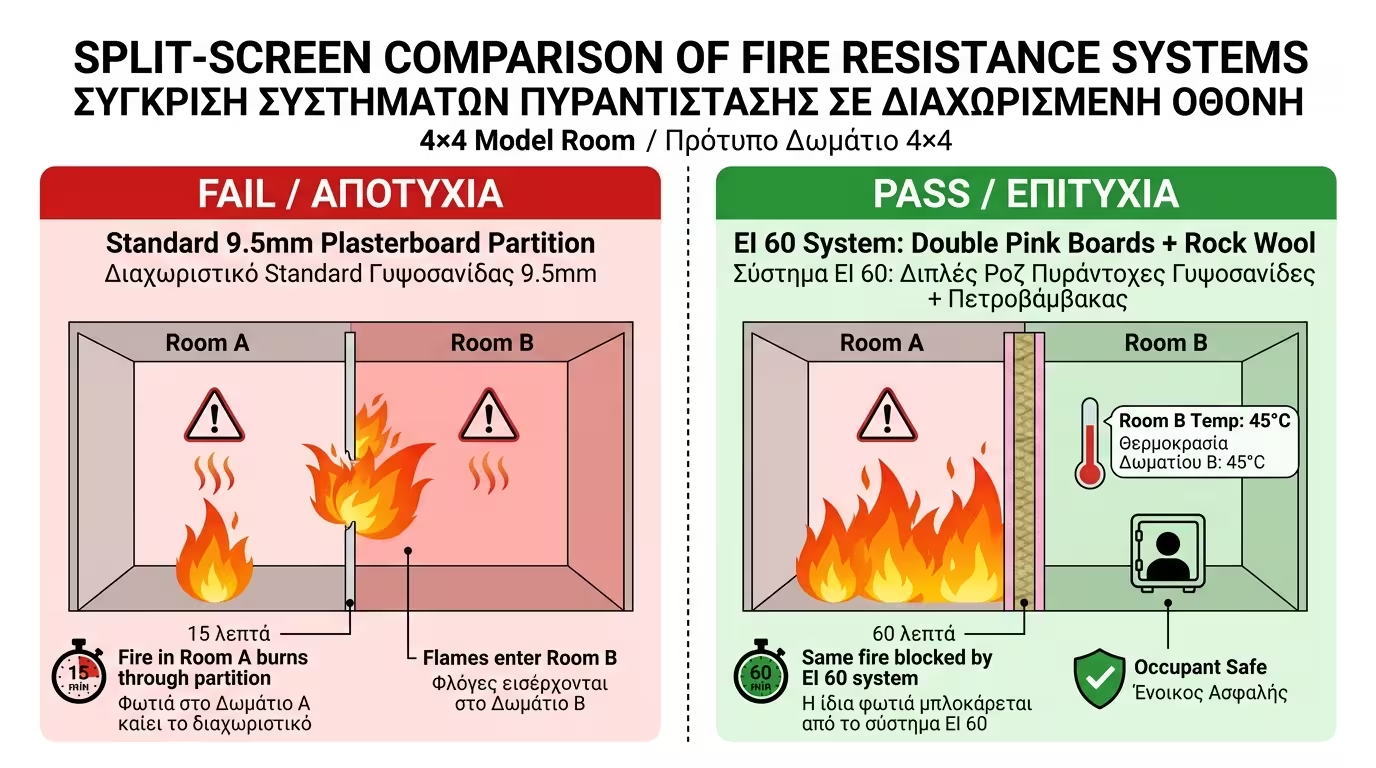
We split our room in two. Fire breaks out on one side.
We installed a single white plasterboard with a bit of glass wool in the middle. At 12 minutes, the paper burns, the gypsum cracks. Flames enter the metal frame. At 15 minutes, the fire punches through the rear board. The safe room fills with smoke and fire. Evacuation has failed.
We built the wall with double pink plasterboard and rock wool. Fire rages. The crystalline water of the first board evaporates, keeping the temperature low. Glass fibres hold the gypsum in place. Even if the first layer is destroyed after 30 minutes, the second pink layer takes over. At approximately 65 minutes, the wall is black and charred, but still standing. The back face remains reasonably cool. We are completely safe.
Final Takeaway: Fire-rated (pink) plasterboard is a masterpiece of materials chemistry. It uses the water hidden inside to quench the fire, and its glass fibres to prevent collapse. It is the ultimate "shield" for creating safe escape routes.
Return to category.
Go to categoryReturn to the central guide.
Go to guide