🧩 Cut-and-Seal
These are high-density rock wool slabs. The technician cuts them like a jigsaw puzzle around the cables to fill every millimetre of gap.
In the previous section we saw how to seal plumbing pipe penetrations. But a modern building (especially offices, hospitals, shopping centres) doesn't have just a few pipes. It has hundreds or thousands of cables - power, data, fibre optic and telephone.
These cables run inside large metal trays (Cable Trays) or drop vertically through enclosed channels (Electrical Shafts / Risers). Every time these channels pierce fire-rated walls or slabs, they create enormous holes (much larger than a single pipe).
How do we seal these enormous holes, packed with densely stacked plastic cables?
The most common solution for large openings (e.g. 30 × 60 cm or larger) through which dozens of cables pass is the Fire Batt.
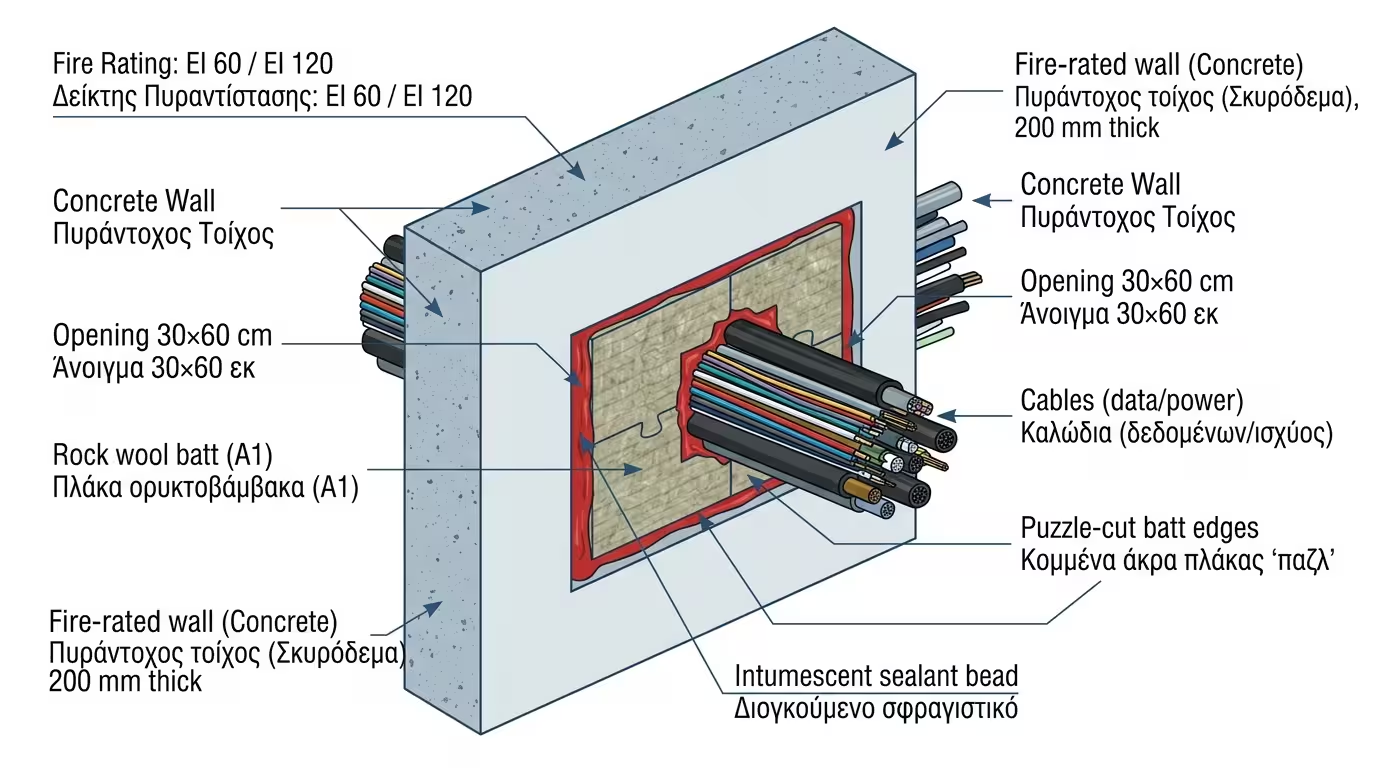
These are high-density rock wool slabs. The technician cuts them like a jigsaw puzzle around the cables to fill every millimetre of gap.
Where a small gap remains between the panel and the cable or wall, the technician fills it with intumescent sealant, which in a fire will swell and seal every crack.
The opening is now air-tight sealed with A1 material (non-combustible) and intumescent elements, providing EI 60 or EI 120 fire protection.
Fire Pillows are a flexible, removable alternative specifically designed for spaces where cables change frequently - e.g. server rooms, telecom nodes.
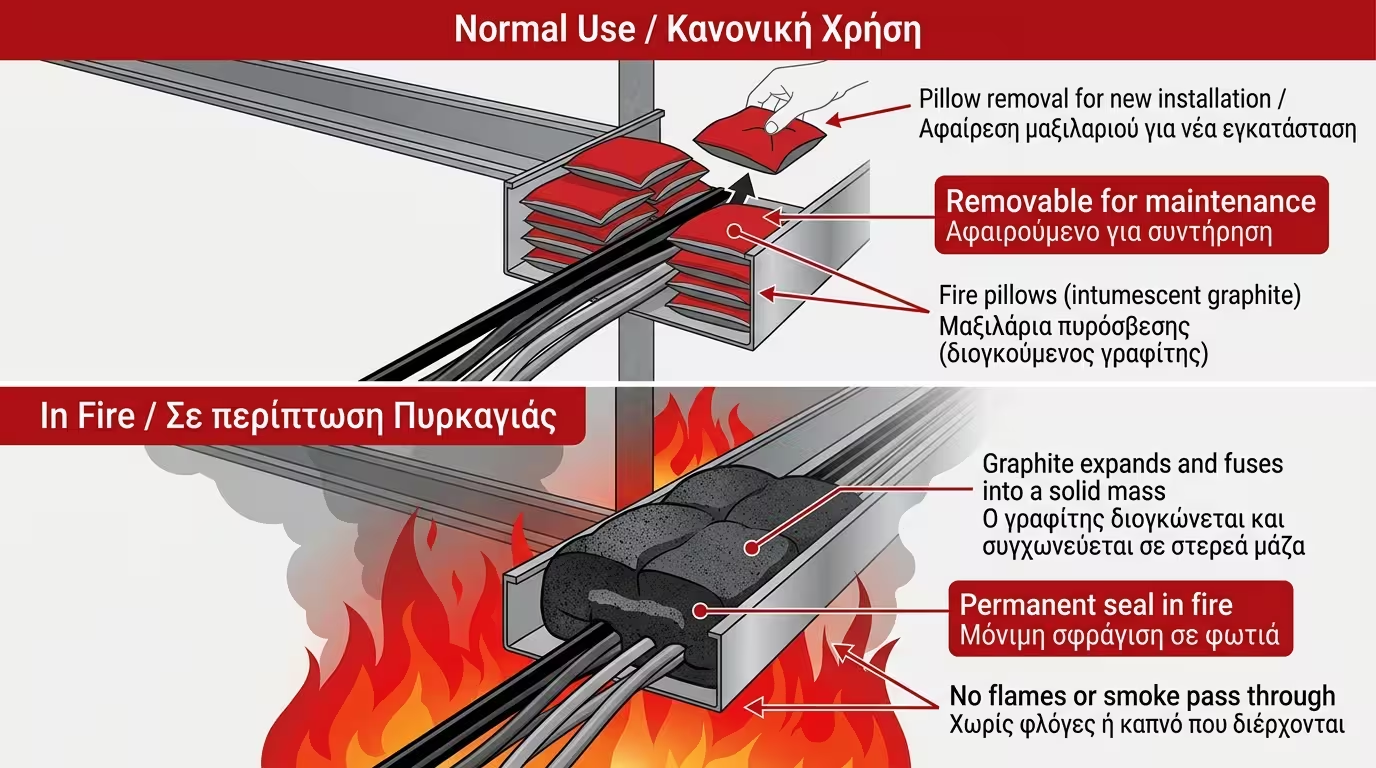
They look like small "pillow packs" or "bags" filled with intumescent graphite. They are stacked inside the opening, around and between the cables.
Need to run new cables? Remove one or two pillows, pass the cables through, then put them back in! No breaking, no cutting.
In a fire, the graphite inside the pillows expands and permanently seals every gap, converting the pillows into a solid, hard mass that blocks flames and smoke.
For large vertical shafts (Electrical Shafts / Risers) that run from the basement to the top floor, a special fire-rated powder compound (Fire Mortar) is used.
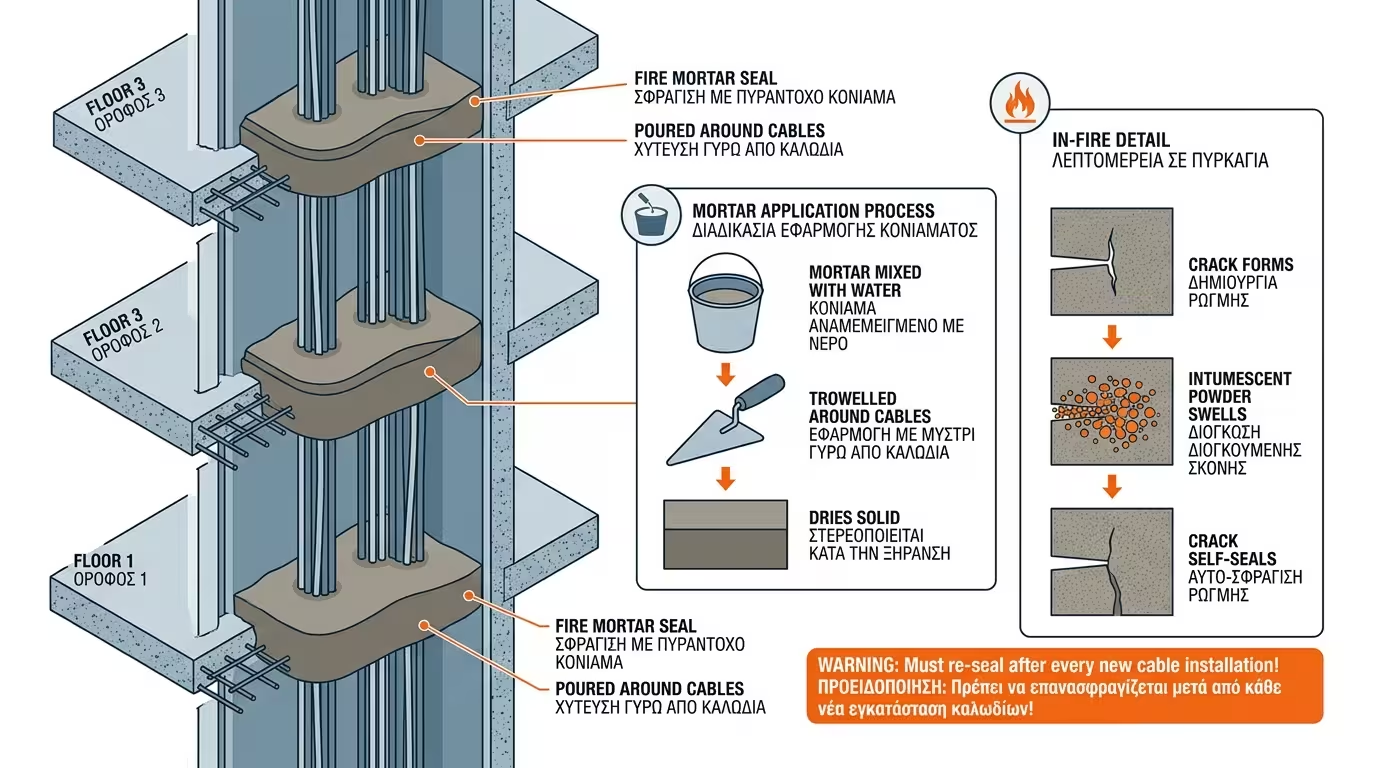
It's mixed with water, trowelled (or poured) onto the floor of each storey around the cables descending into the shaft, and left to dry. It cuts every connection between floors.
Once dry, the mortar resists like concrete and contains intumescent powder. If a crack forms, the powder "swells" and closes the gap.
Every time a new electrician runs a cable through the shaft, they MUST re-seal the hole afterwards. In practice, this step is almost always forgotten - one of the main reasons fire compartmentation fails.
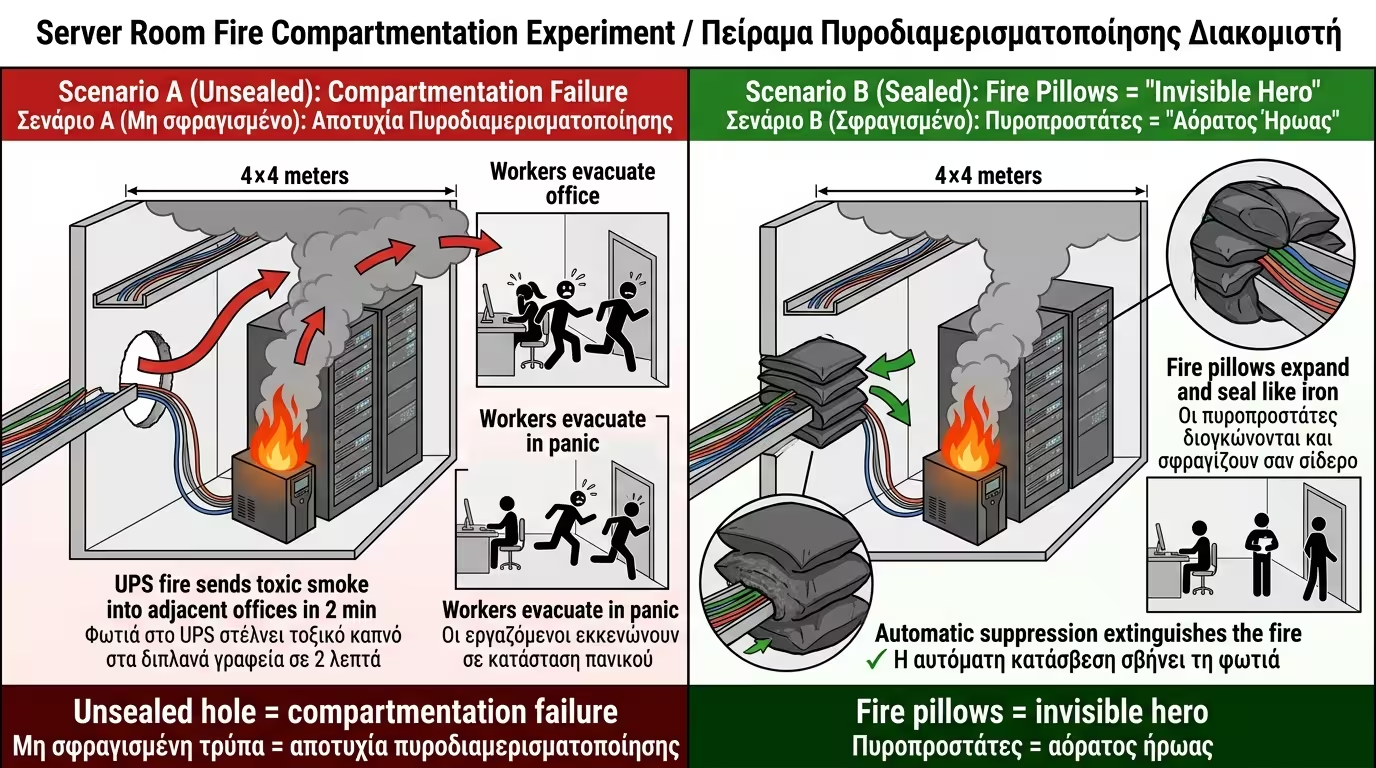
On the ground floor of our building there is a small server room. Through the wall pass 40+ data cables (UTP) on a cable tray. A UPS short-circuits.
The electrician had left the hole around the cables wide open (he ran the cables and forgot to seal it). Toxic smoke from the UPS fire enters the adjacent fire-rated space (offices) within 2 minutes. The compartmentation fails completely. Office workers evacuate in panic, inhaling smoke.
The electrician had stacked fire pillows in the hole around the cables. The same fire breaks out. The pillows react - their graphite expands, grips the melting plastic cable sheaths, and seals the hole like iron. Zero smoke reaches the offices. The server room's automatic fire suppression extinguishes the fire. The offices noticed nothing!
Final Takeaway: Cables create the largest and most "treacherous" holes in Fire Compartments. Fire Batts, Fire Pillows and Fire Mortars are the "shield" that closes these gaps. Without them, even the most expensive office building is a well-dressed "sieve" in a fire.
Return to category.
Go to categoryReturn to the central guide.
Go to guide