1. Rigid Hangers (Nonius Hangers)
Spring wires are banned! The fire-rated ceiling hangs exclusively from reinforced, solid metal fittings (such as Nonius hangers) secured with metal pins that hold the weight even when glowing red-hot.
Imagine you're in a ground-floor restaurant with flats above. Fire breaks out in the kitchen. Flames and hot gases "lick" the ceiling. If the floor slab overheats, the concrete's reinforcement (or the timber beams in an older house) will fail and the first floor will crash into the restaurant.
To save the upper floor (or the roof), a barrier must be placed between the fire and the slab. That barrier is the Fire-Rated Suspended Ceiling.
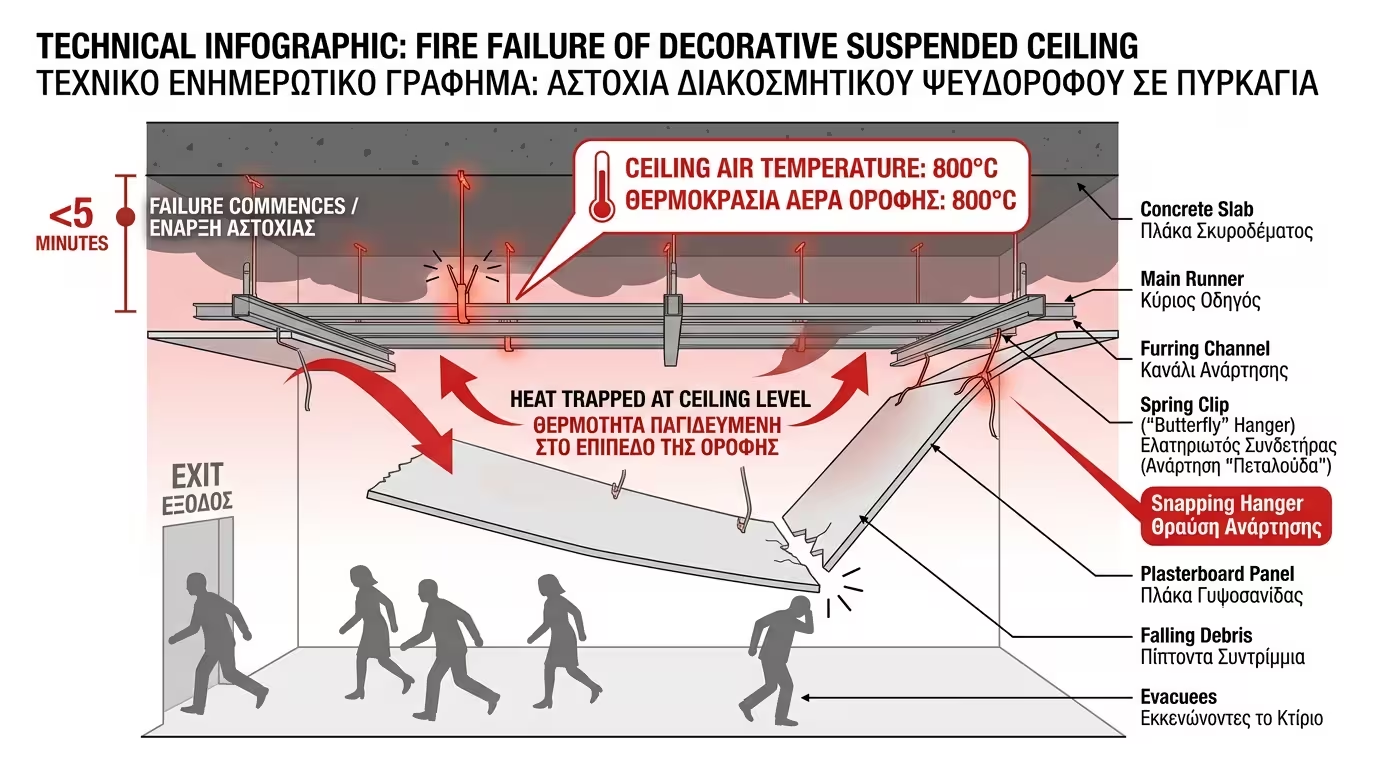
Many people believe that because they installed a plasterboard ceiling to hide downlights, the concrete slab above is protected. This is a lethal illusion. A simple suspended ceiling is held up by thin wires and spring clips (the familiar "butterflies"). When the hot fire gases become trapped against the ceiling, these thin wires and springs glow red, soften and snap in less than 5 minutes.
The result? The entire ceiling crashes down onto evacuees, and the slab is left completely exposed to the flames.
For a ceiling to withstand 60, 90 or 120 minutes (EI 60 – EI 120) against an inferno of 1,000 °C, engineers design a super-structure that acts as a thermal membrane:
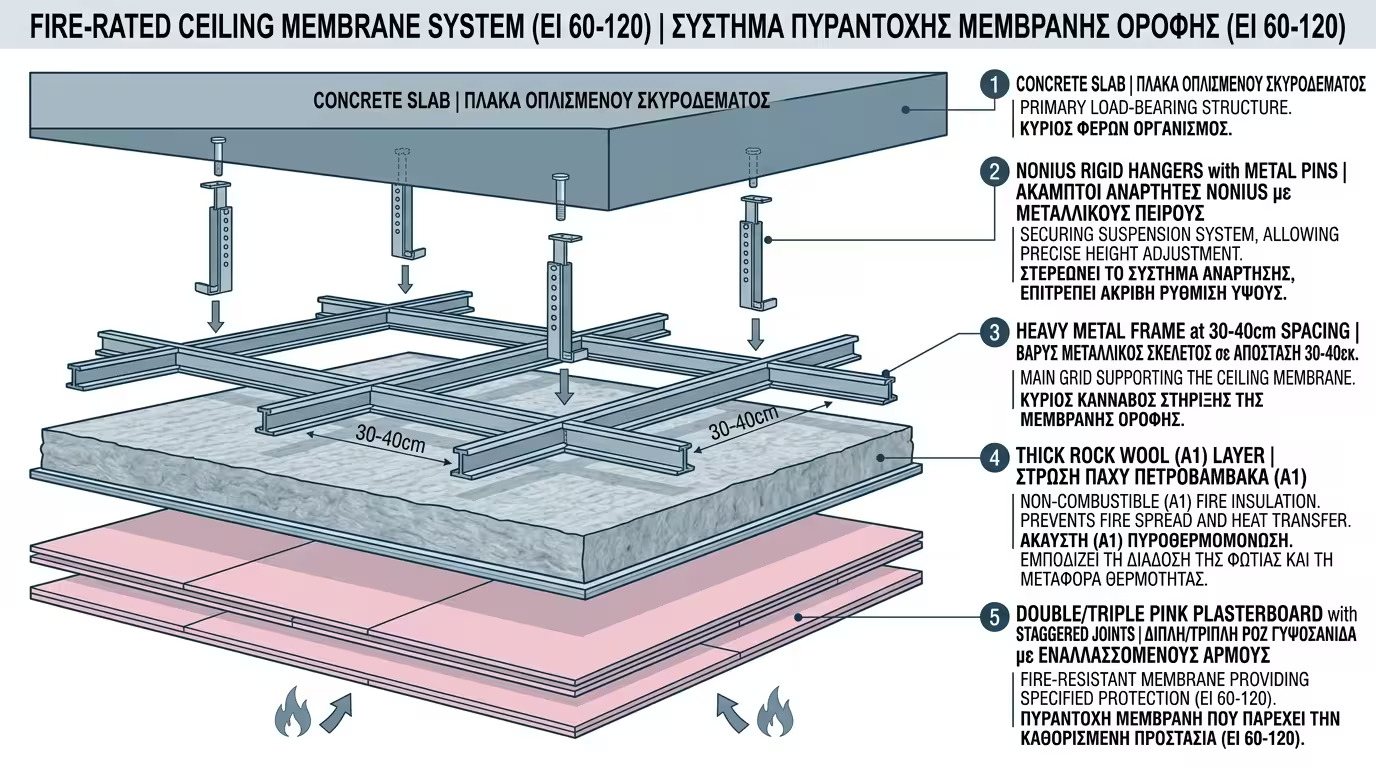
Spring wires are banned! The fire-rated ceiling hangs exclusively from reinforced, solid metal fittings (such as Nonius hangers) secured with metal pins that hold the weight even when glowing red-hot.
Profiles are spaced more closely (typically every 40 or 30 centimetres) to carry the increased weight of the materials without warping.
Above the frame, a thick layer of dense rock wool (Euroclass A1) is mandatory. It prevents heat from rising into the ceiling void (plenum).
The ceiling is closed from below with 2 or 3 layers of fire-rated (pink) plasterboard or special non-combustible calcium silicate boards (for extreme requirements). The joints of each layer must be staggered (cross-laid).
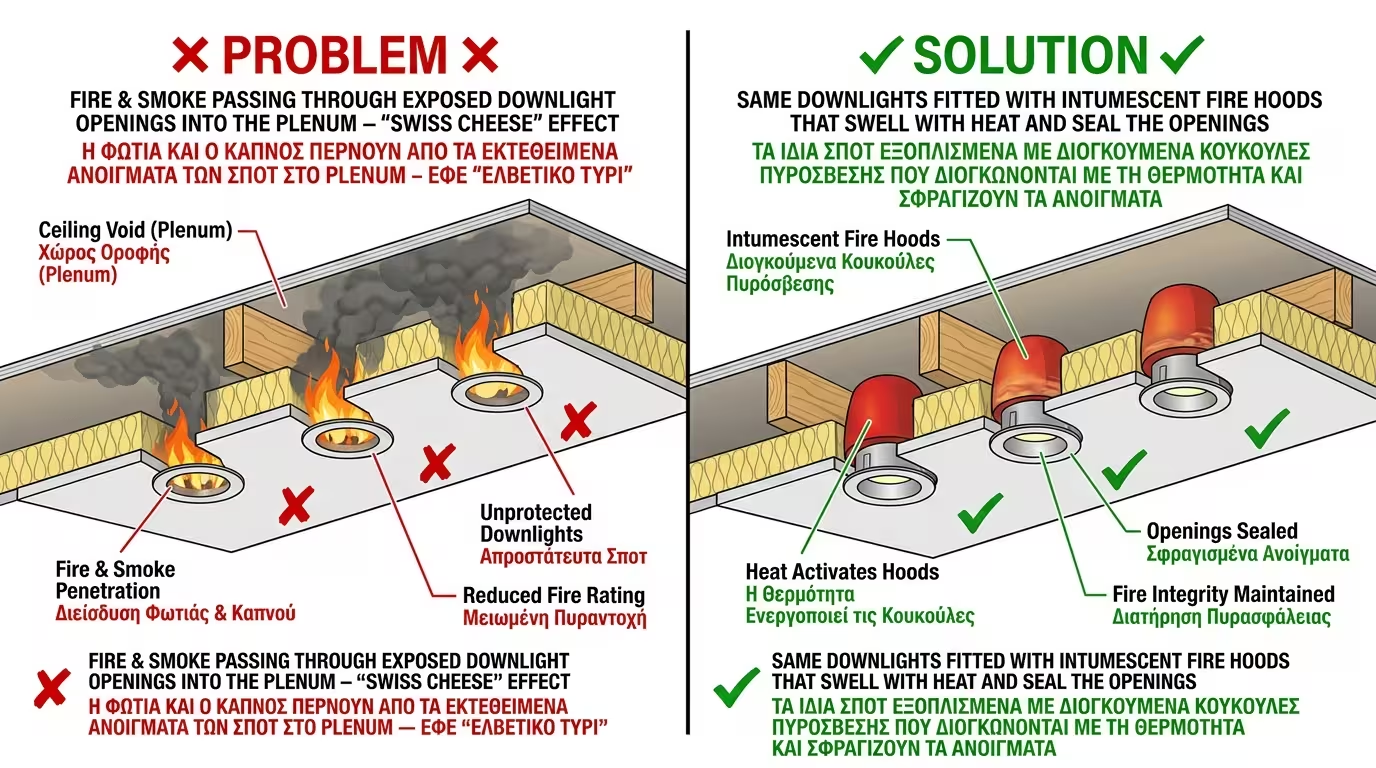
You've built the perfect EI 60 fire-rated ceiling. Then the electrician comes along and cuts 20 large holes with a holesaw for recessed downlights and speakers.
Congratulations - you've just completely voided your fire protection! Those holes are backdoors. Fire will pass straight through the downlights, enter the ceiling void and burn the cables and the slab.
The Solution: Uncontrolled cutting is prohibited in a fire-rated ceiling. If recessed lights must be installed, they are "capped" from above (inside the ceiling void) with special fire hoods/tents that swell with heat and seal the hole when the fitting melts!
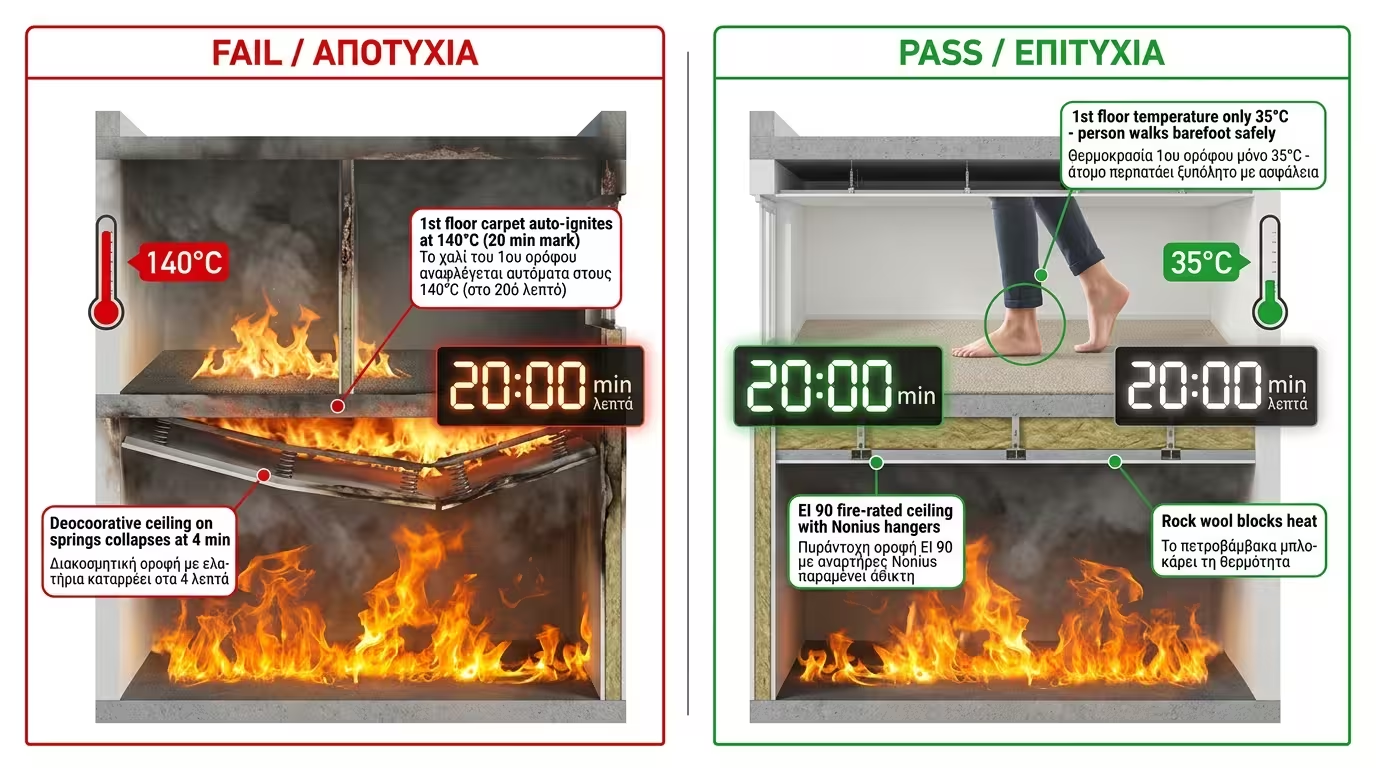
Our room is on the 1st floor. Directly below (on the ground floor) is a workshop. The workshop's ceiling is our floor.
The workshop owner installed plain plasterboard on spring clips to hide the pipes. Fire breaks out. At the 4th minute, the springs melt. The entire ceiling crashes down. Flames begin to "cook" the slab (our floor). At 20 minutes, our floor heats up so much (exceeding 140 °C) that our carpet auto-ignites, while the concrete begins to spall.
The owner built a fire-rated ceiling with Nonius hangers, double pink plasterboard and rock wool. He also fitted fire hoods on the downlights. The same fire breaks out. Air beneath the ceiling reaches 900 °C. But the ceiling stays in place. Rock wool and pink boards absorb all the heat. On our floor (the 1st floor), the temperature is just 35 °C! We walk barefoot, completely safe, waiting for the Fire Brigade.
Final Takeaway: The ceiling is the point that suffers the most violent thermal attack in a fire. If you want to protect the slab, the roof or the upper floor, forget thin sheet metal and wires. Invest in heavy hangers and fire-rated systems, and don't let anyone cut holes without the special fire hoods!
Return to category.
Go to categoryReturn to the central guide.
Go to guide