⚠️ Collapse
When the reinforcement bars inside a column or beam lose their strength, the element can no longer carry the floor's weight. The R index (Load-Bearing Capacity) drops to zero, and the building collapses.
Reinforced concrete is arguably the most important building material humanity has ever invented. It combines two materials: concrete, which withstands enormous compression forces (weight), and steel (the reinforcement bars), which withstands tensile forces (stretching, earthquakes).
In terms of reaction-to-fire classification, concrete is Euroclass A1 (entirely non-combustible). It doesn't ignite, produces no smoke and adds no fuel. So why do structural engineers worry so much during a major fire?
The answer lies in the behaviour of the metal.
Steel is extraordinarily strong, but it has an "Achilles' heel": it hates heat. When a steel reinforcement bar's temperature exceeds 500 °C, the metal goes into "panic mode". It loses roughly 50 % of its load-bearing capacity (its yield strength plummets). If the temperature reaches 700-800 °C, the steel softens so much it resembles… boiled spaghetti.
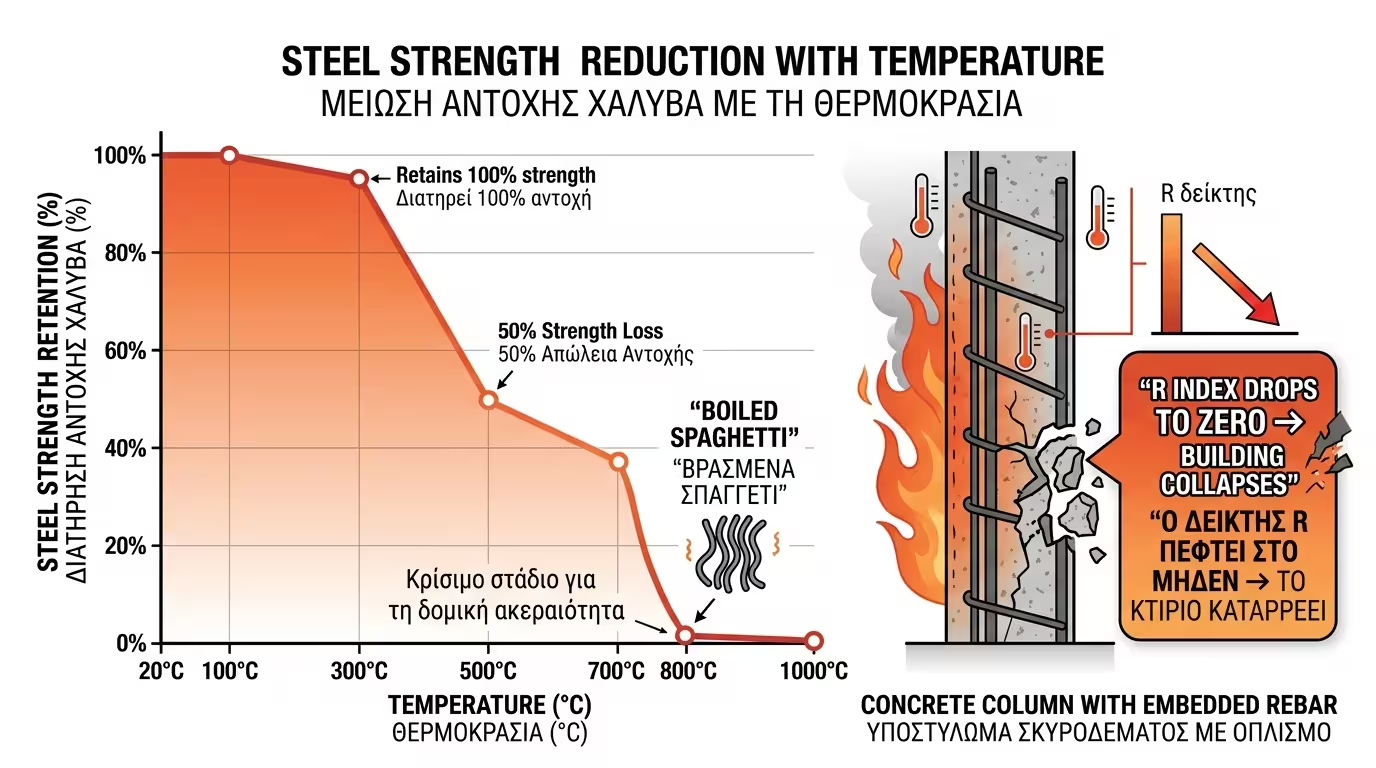
When the reinforcement bars inside a column or beam lose their strength, the element can no longer carry the floor's weight. The R index (Load-Bearing Capacity) drops to zero, and the building collapses.
At this point you'll ask: "But the steel bars are buried deep inside the cold concrete! How will the fire heat them up so much?"
This is precisely where the most terrifying fire phenomenon in concrete appears: Spalling. Concrete, however dry it may look, always contains trapped moisture (water) in its pores. When the room fire reaches 1,000 °C, the concrete heats rapidly.
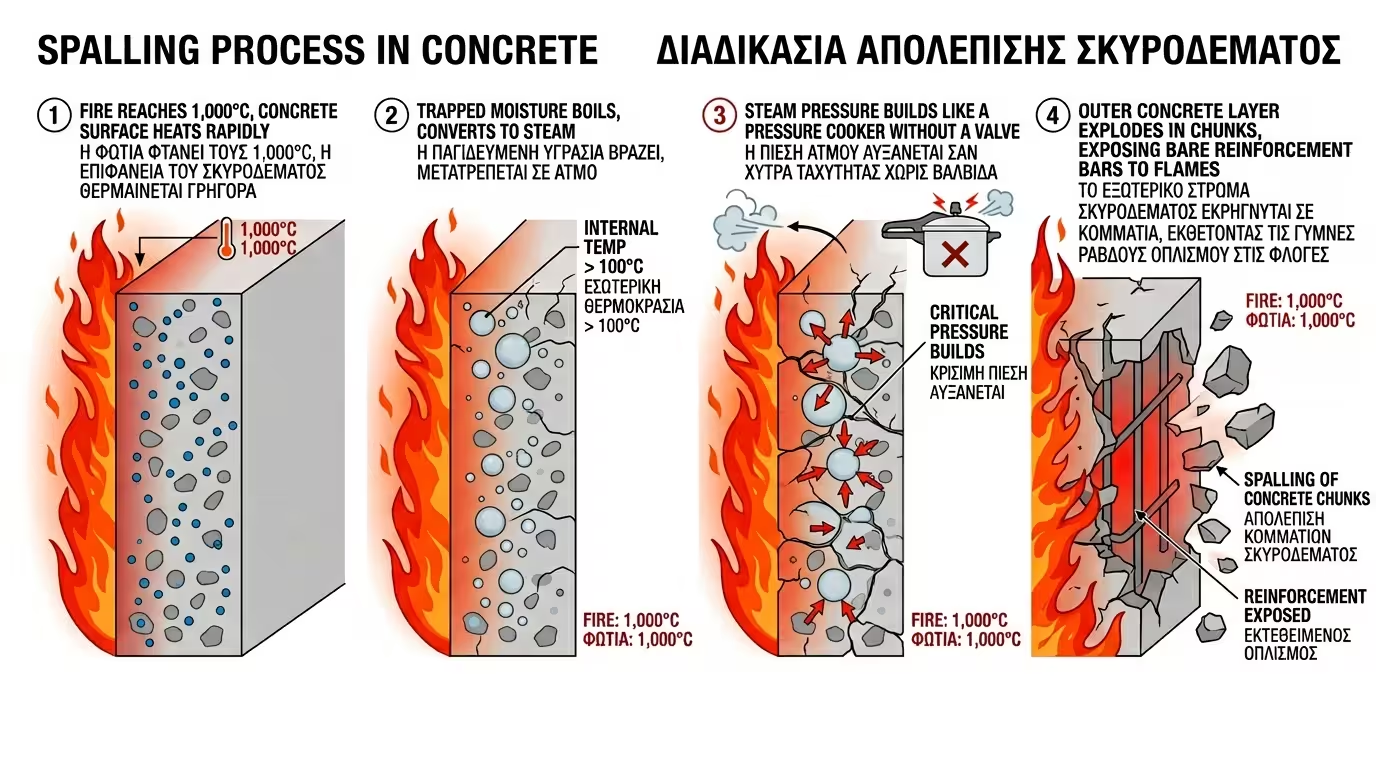
The trapped water boils and turns to steam.
The steam expands and seeks an escape route, creating enormous internal pressure (like a pressure cooker without a valve).
The pressure exceeds the concrete's strength and the outer layer of concrete explodes and blasts off in chunks.
Once that protective shell ("the cover") falls away, the reinforcement is completely exposed! Flames "lick" the metal directly, its temperature hits 500 °C within minutes, and collapse begins.
To prevent this nightmare, civil engineers apply specific solutions during design and construction:
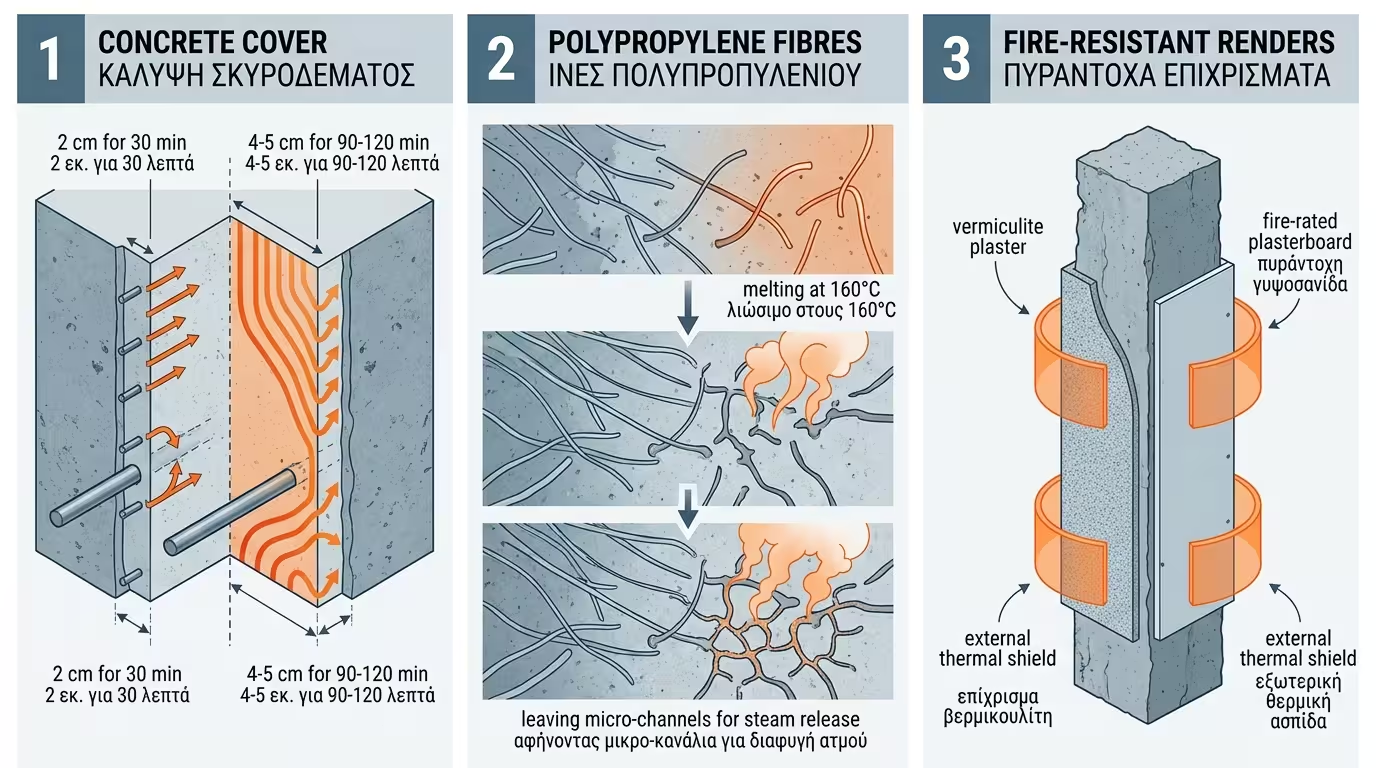
The Eurocode requires reinforcement bars to be "buried" several centimetres below the concrete surface. The greater the fire resistance required (e.g. 120 min), the thicker the concrete layer (the cover) above the bars must be (e.g. 4 or 5 cm instead of 2). This delays the heat reaching the metal.
In modern concrete mixes (especially in tunnels and tall buildings), millions of microscopic plastic fibres are added to the mix. When fire breaks out, at around 160 °C, these plastic fibres melt. They leave behind a network of empty micro-channels ("capillaries") inside the concrete. The steam finds an escape route, pressure is released, and the spalling "explosion" is prevented!
If the building is old and the cover is found to be insufficient, columns and beams are "dressed" externally with special fire-resistant renders (vermiculite) or fire-rated plasterboard, creating an artificial thermal shield.
Our room has a central concrete column. A massive fire breaks out.
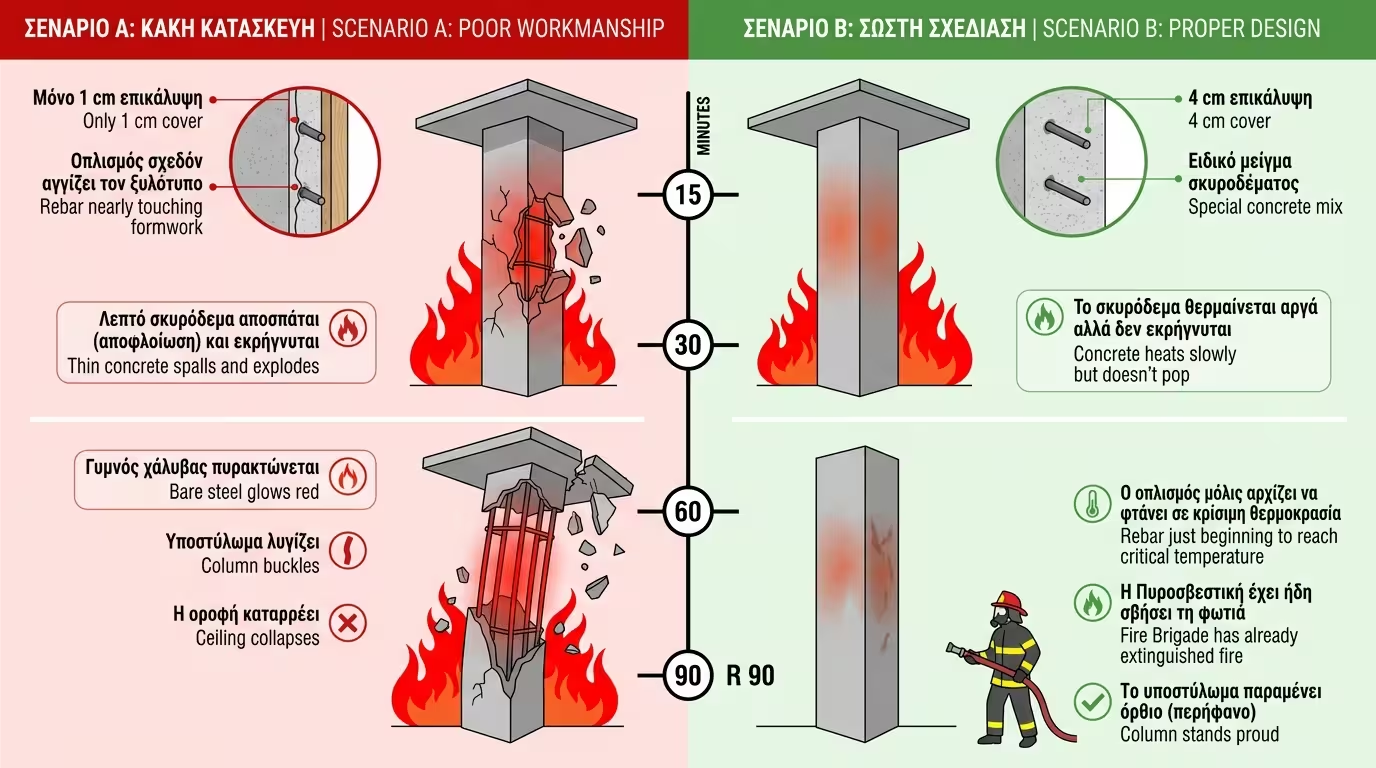
The concreter 30 years ago was in a rush. He tied the bars crooked and they nearly touched the formwork. The cover is just 1 centimetre. At the 15th minute of the fire, the thin concrete "pops" (spalling). The bare steel glows red. At the 30th minute the column buckles and the ceiling collapses.
The engineer specified 4 centimetres of cover and a special concrete mix. The fire rages. The concrete heats, but doesn't pop. Slowly and painfully, heat travels inwards. At approximately 1.5 hours (90 minutes), the bars are only just beginning to reach critical temperature. By then, the Fire Brigade has extinguished the fire. The column stands proud (though it will need repair).
The Bottom Line: Concrete is like a knight's armour, and the steel is its heart. As long as the armour (cover) stays in place and isn't blasted off by steam, the heart (reinforcement) bears the load and the building remains standing.
Return to category.
Go to categoryReturn to the central guide.
Go to guide