🔥 Poorly Built Cladding
If the exterior wall is clad with unsuitable or poorly built thermal cladding, the fire will melt the thin external render and find the bare EPS.
External thermal insulation (thermal cladding) is the best investment you can make to cut your electricity and heating bills. In essence, you "dress" the building in a thick jacket, usually made of Expanded Polystyrene (EPS).
However, as we've seen, EPS is combustible. What happens if a rubbish bin catches fire next to the wall? Or, even worse, what happens if a flat on the 1st floor catches fire and the flames burst out of the window, "licking" the façade?
When a flame exits through a window, it tends to move upwards, clinging to the exterior wall.
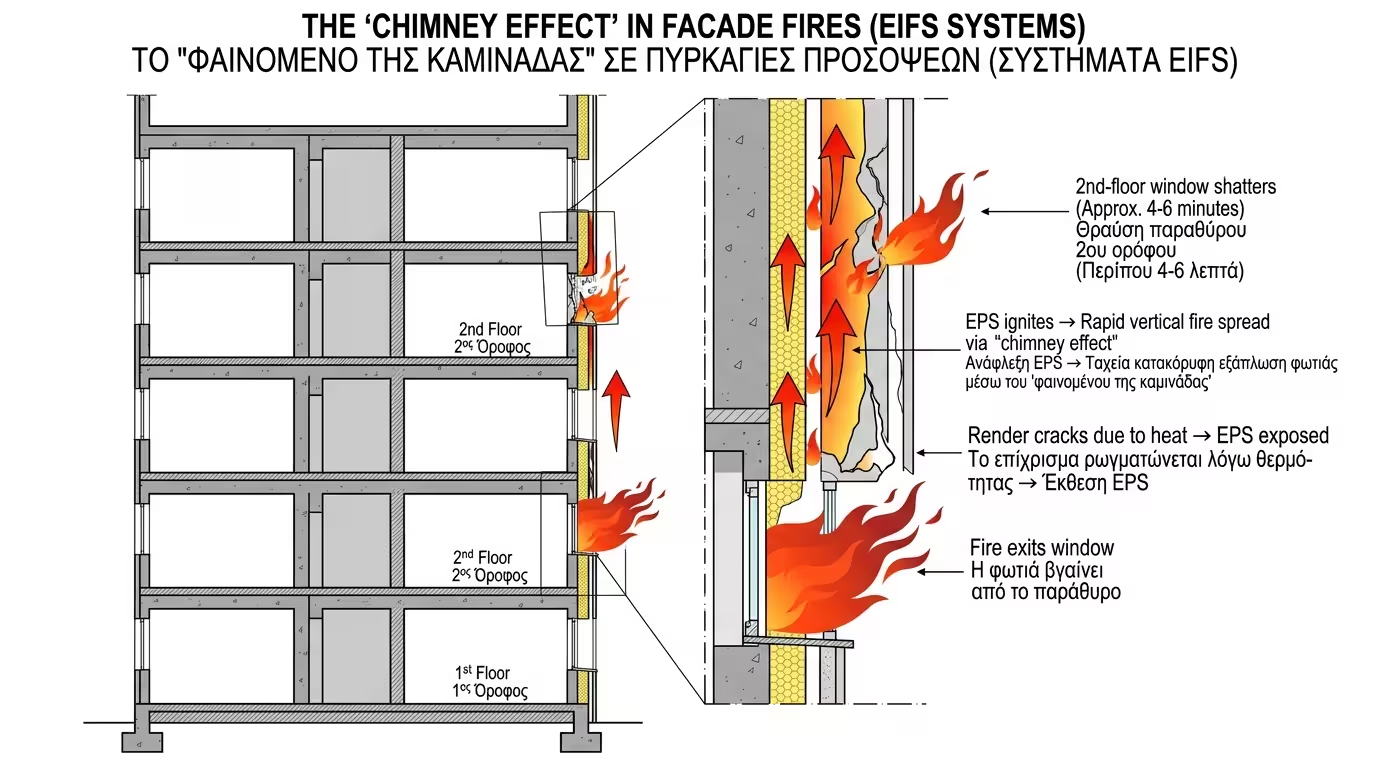
If the exterior wall is clad with unsuitable or poorly built thermal cladding, the fire will melt the thin external render and find the bare EPS.
At that point, the fire finds abundant "fuel." The EPS ignites and fire begins racing vertically up the façade at terrifying speed.
Within minutes, the fire reaches the 2nd-floor window, shatters the glass and enters the next flat. This is called the "Chimney Effect" and is the reason many multi-storey buildings have been completely destroyed.
To prevent this, we must understand that external insulation is not a single material - it is a SYSTEM (ETICS). Your safety doesn't depend only on the insulation material, but on the "armour" that hides it.
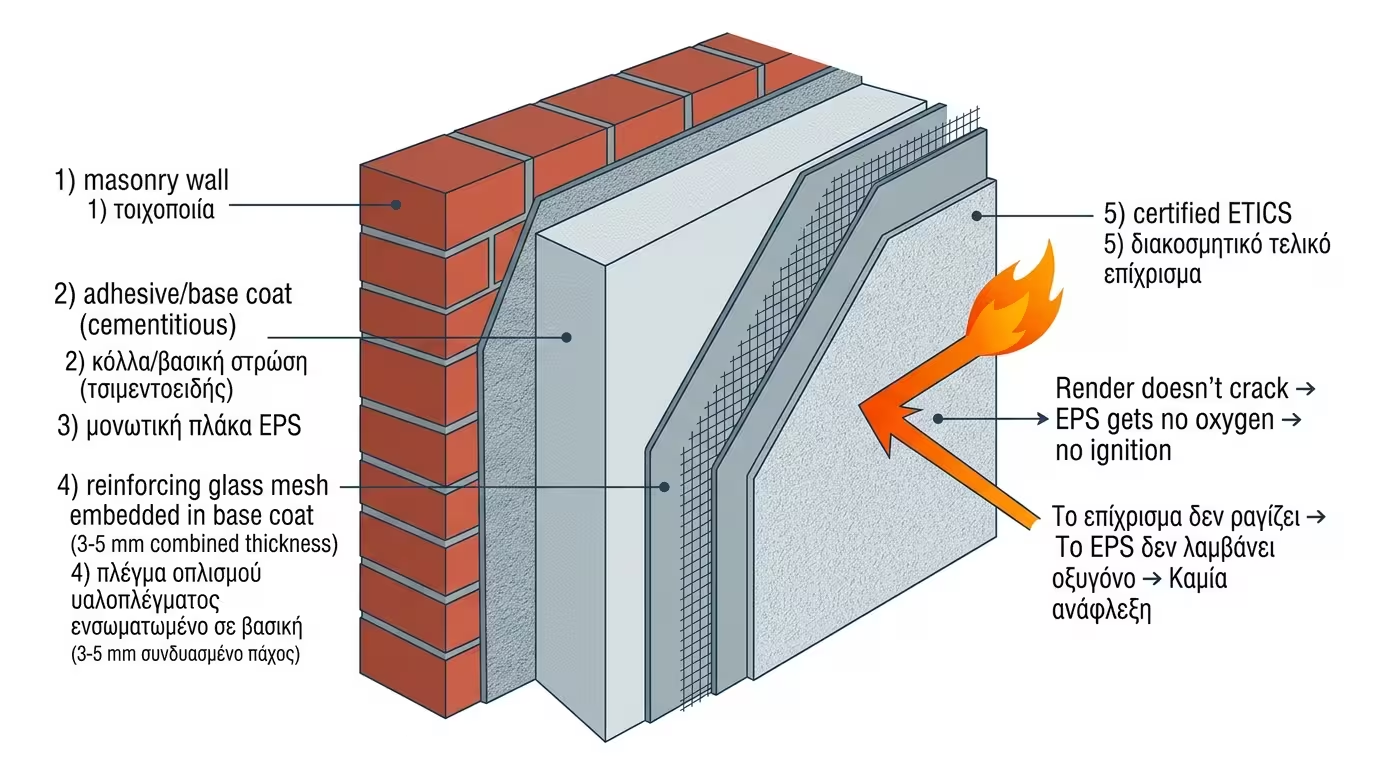
Over the insulation, a layer of special, cementitious material is applied.
Inside the base coat, a durable glass-fibre mesh is "encased."
The decorative finish we see on the outside.
This "sandwich" (3–5 mm thick) is your only defence! If built correctly, it starves the EPS of oxygen. When fire strikes the wall, the EPS behind may heat up and shrink slightly, but because it has no oxygen and is protected by the non-combustible render, it does not ignite.
The biggest mistake in Greece is "marrying" unrelated materials to reduce cost.
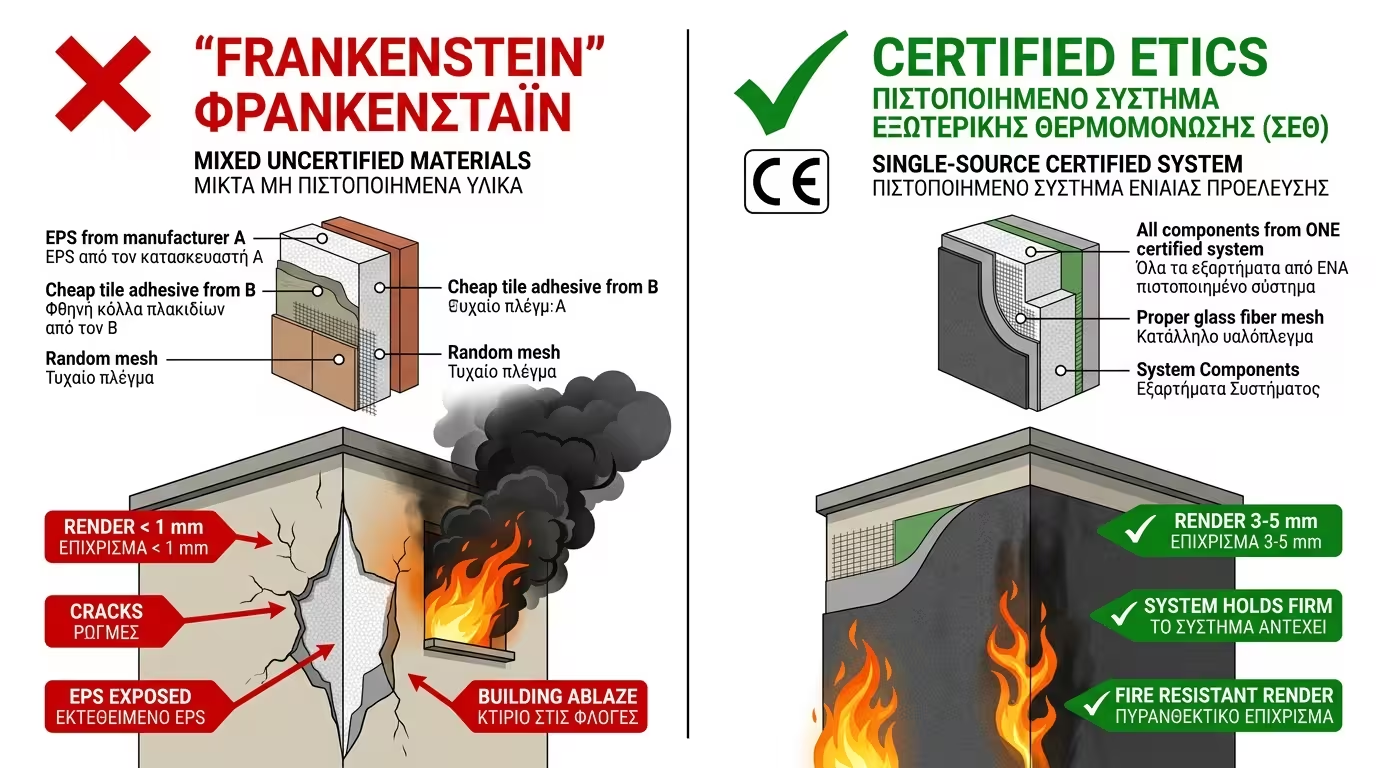
The contractor buys EPS from factory A, cheap tile adhesive from factory B (instead of certified base coat) and a random mesh. This is not an ETICS system. It is a "Frankenstein" experiment.
In a fire, the cheap adhesive will crack immediately. The mesh will melt. The fire will enter the insulation and the house will go up in flames.
A Certified ETICS System (with CE marking) has been tested in laboratories as a complete assembly and guarantees that the render won't tear and won't let the fire reach the EPS.
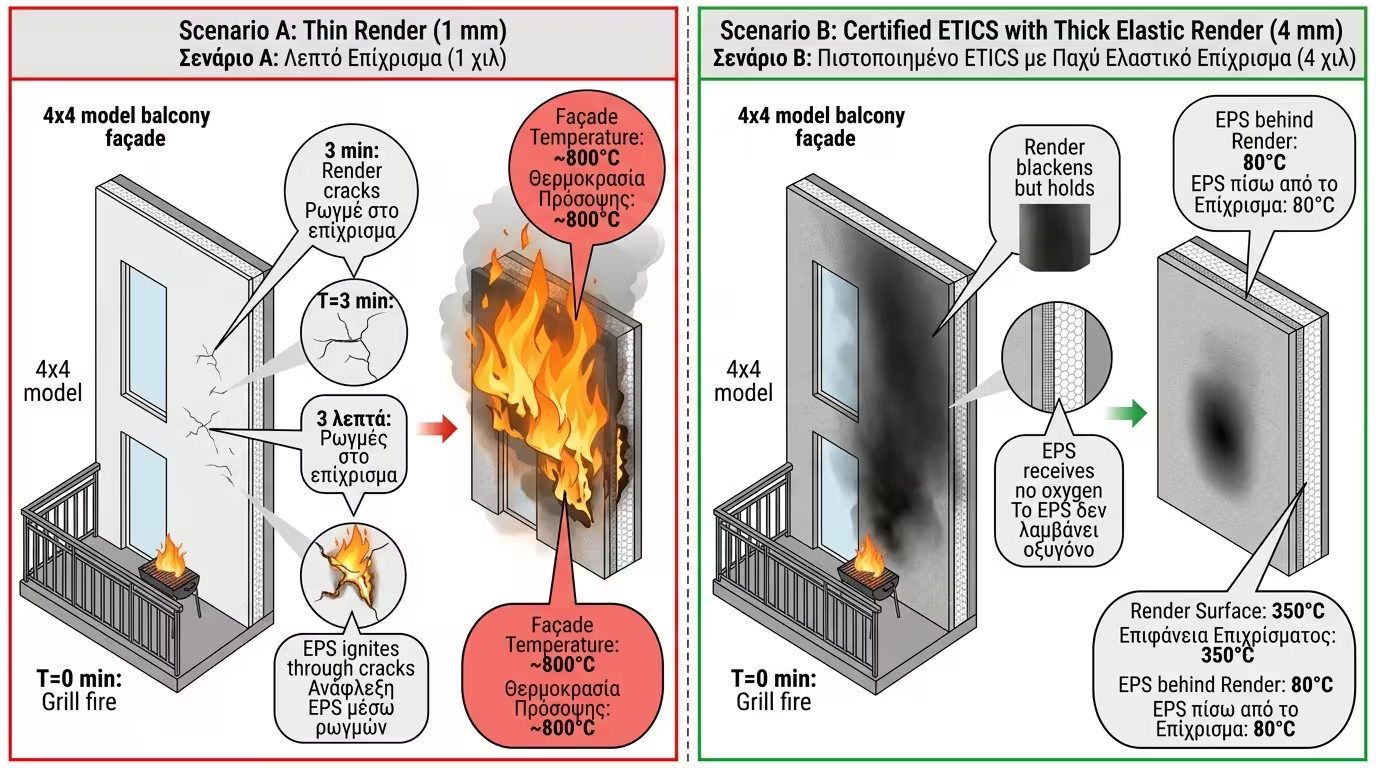
We're having a barbecue on the balcony. The grill catches fire and the flames (1.5 metres tall) lick the external wall that has EPS thermal cladding.
The builder had installed a "cheap and cheerful" mix of materials, applying a very thin render (just 1 millimetre) to finish quickly. At 3 minutes, the thin render cracks from the heat. The polystyrene is exposed. It ignites. In 10 minutes the fire has burned the entire façade and climbed onto the roof. Destruction.
We paid a little extra for a branded, certified system with a thick, elastic and non-combustible base coat. The grill's flames "scorch" the wall. The final render blackens, but doesn't crack! The glass mesh holds the armour together. The EPS behind it gets no oxygen. We extinguish the grill. The wall just has a black mark that needs repainting. The defence worked perfectly!
Final Takeaway: If you choose polystyrene (EPS) for your thermal cladding, don't skimp on its "armour." Demand a strictly certified and branded ETICS system from your contractor. The thick, properly reinforced render is what will keep fire away from your insulation.
Return to category.
Go to categoryReturn to the central guide.
Go to guide