
The Room-in-Room Technique: The Ultimate Method for Building a Recording Studio

When sound exceeds 90 or 100 dB (like a drum kit or an explosion in a Home Cinema movie), and especially with enormous energy in the low frequencies (bass), simply lining a wall is not enough. The vibration is so powerful that it will find its way through the floors and ceilings, transmitting sound throughout the entire building.

The only solution that guarantees results (often exceeding 65-70 dB of sound reduction) is Room-in-Room (RiR) construction.

1. What Exactly Is Room-in-Room: The Principle of Total Decoupling

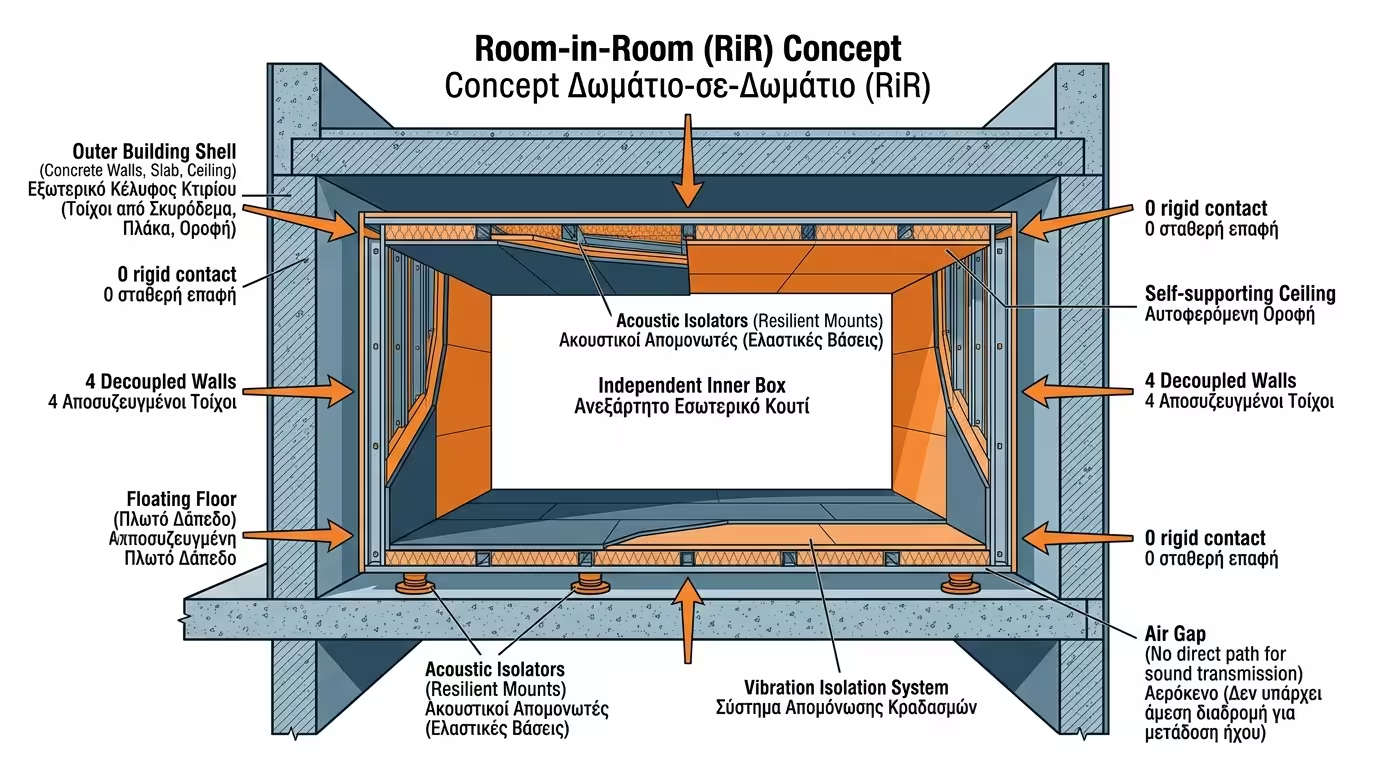
As its name suggests, we don't simply insulate the walls. We build a brand-new, independent box inside the existing room. This inner box "floats" and has absolutely no rigid mechanical contact with the outer building (the shell).

It is the ultimate application of the principle of Decoupling across all 6 surfaces of the space (4 walls, 1 floor, 1 ceiling).

Room-in-Room construction: an independent box inside an existing room with 6-surface decoupling

2. How the "Fortress" Is Built: The 3 Sacred Construction Steps

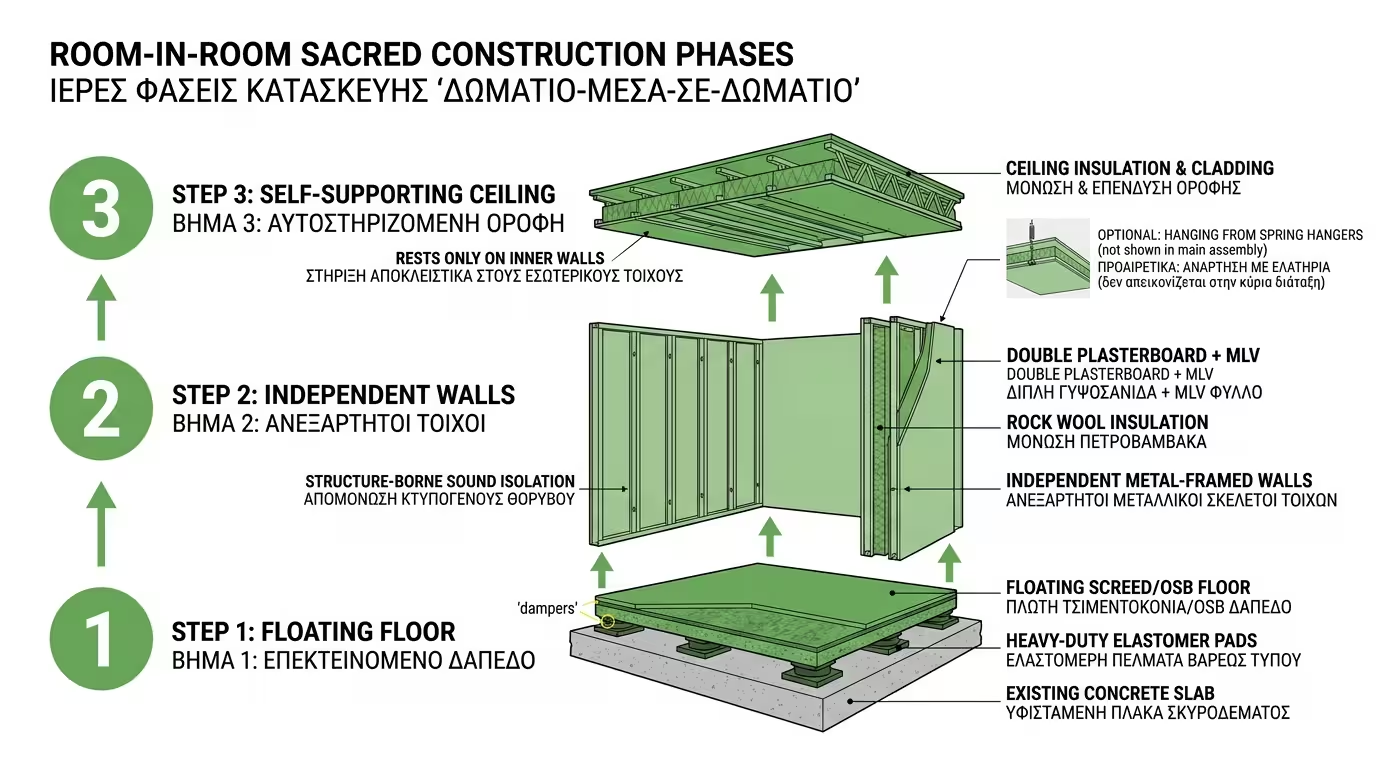
The construction sequence is sacred and cannot be changed. Each stage rests on the previous one, creating a fully decoupled shell.

The 3 Room-in-Room construction steps: floating floor, independent walls, self-supporting ceiling

1️⃣ The Floating Floor (The Foundation)

Construction ALWAYS starts with the floor. We place heavy-duty anti-vibration elastomers (or springs) on the concrete, fill the gaps with rock wool, and pour a heavy floating floor on top (screed or multiple layers of heavy OSB/plywood with MLV in between). This floor does not touch the perimeter walls.
2️⃣ The Independent Walls

On top of this new, floating floor, we erect the metal (or timber) framing for the 4 new walls. These walls stand several centimetres away from the old building walls. They are filled with rock wool and closed with 2 or 3 layers of acoustic plasterboard (and mass-loaded vinyl – MLV). Important: The new walls rest ONLY on the floating floor and are screwed NOWHERE to the old walls.

3️⃣ The Self-Supporting Ceiling

The new soundproof ceiling (the "lid" of the box) ideally rests (is supported) on the 4 new internal walls, without hanging at all from the concrete slab above! If the span is too large and it must hang, top-grade resilient ceiling spring hangers are used, which completely break the transfer of low frequencies.

3. The Achilles' Heel: Air, Doors and Ventilation

You've built a perfect, airtight box. The problem? If you walk inside, you'll suffocate from lack of oxygen within 30 minutes. A proper Room-in-Room requires special solutions for both doors and ventilation.

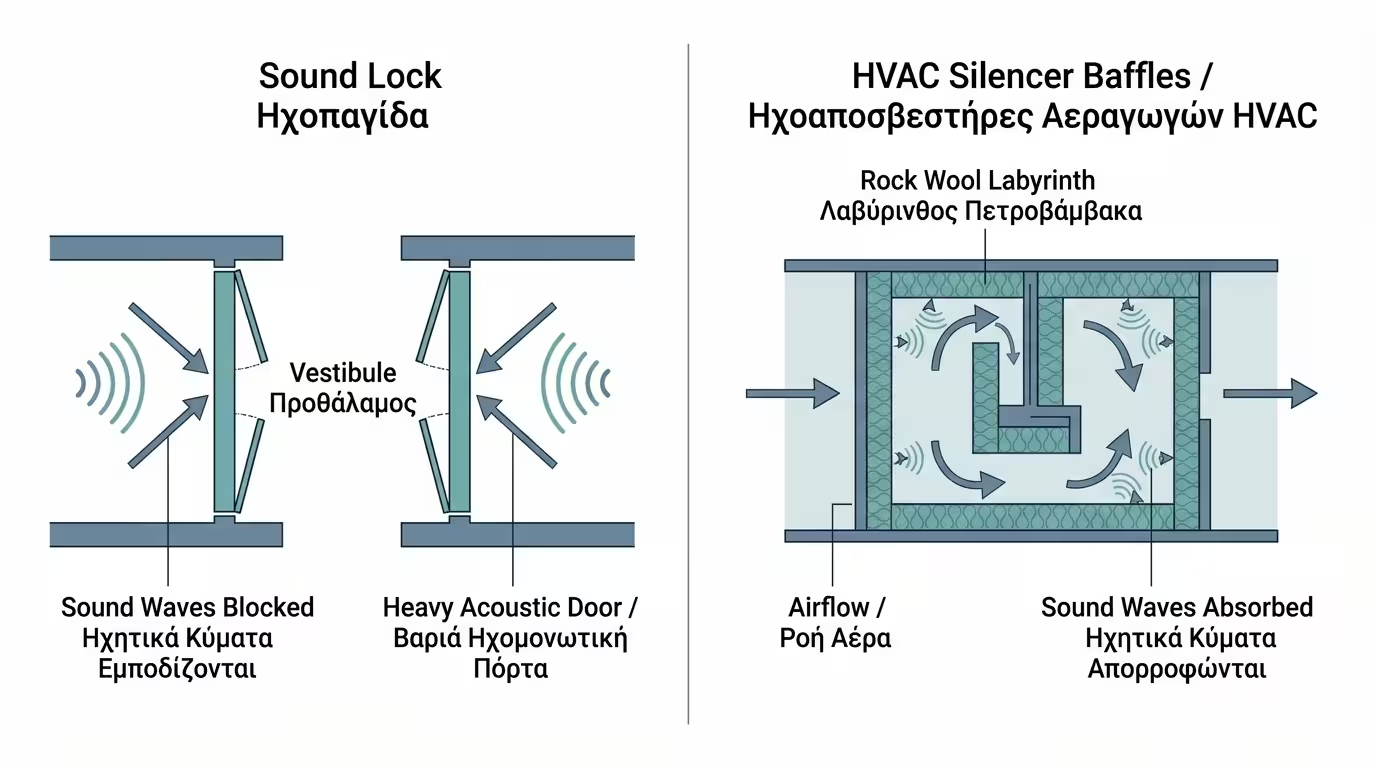
Sound Lock (double doors) and HVAC silencer baffles in a Room-in-Room

🚪 Sound Lock (Double Doors)

One door is not enough. You need a heavy soundproof door on the old wall, a small gap, and a second heavy door on the new internal wall (they usually open in opposite directions). This creates a Sound Lock - an acoustic "airlock".

🌬️ HVAC Silencer Baffles

Air-conditioning and ventilation ducts are huge sound bridges. Special "inertia boxes" (silencers) must be built with rock-wool labyrinths so that air enters the room but sound is trapped and cannot escape to the rest of the house.

4. How Much Space and Weight Will I Lose: The Hard Truth

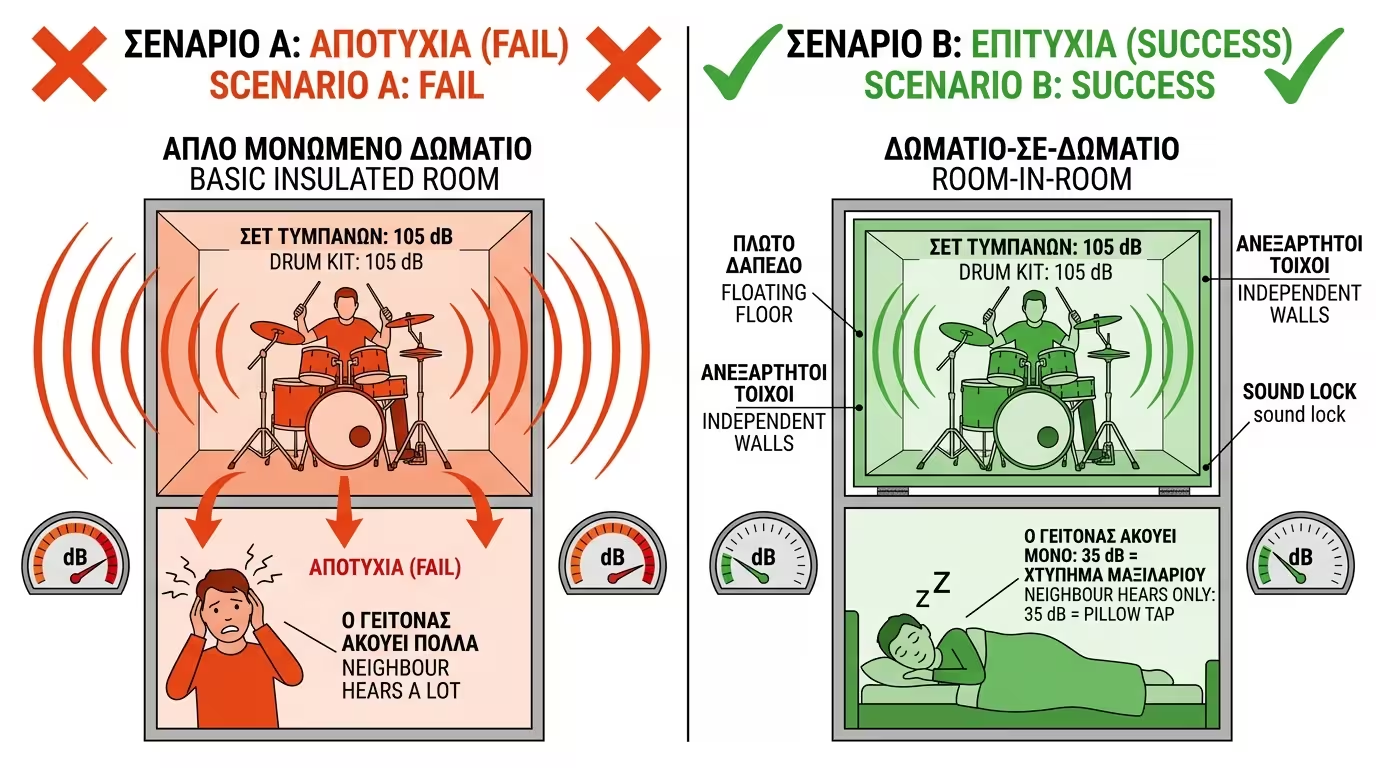
4×4 experiment: Scenario A (basic insulation, drums fail) vs Scenario B (Room-in-Room, 35 dB silence)

The truth is harsh. RiR construction is "bulky" and extremely heavy - but that is precisely why it works.

📐 Space

You will lose at least 15 to 25 centimetres from EVERY surface. A 4×4 room (16 m²) will end up with a usable interior of roughly 3.5×3.5 (12 m²), and the ceiling will drop dramatically.

🏗️ Weight

A complete RiR room adds tonnes of weight. If you are in an older apartment building, a structural engineering assessment is required before loading the slab with that much material.

💡 The Experiment in Our Model (Drums in the 4×4): We decide to set up an acoustic drum kit (producing 105 dB) in our room.

❌ Scenario A (Basic Insulation)

We simply build the walls and ceiling (as we learned in Category B). We hit the kick drum. The enormous bass vibration passes into the floor, climbs into the walls, bypasses the plasterboard and reaches the neighbours as though an earthquake hit. Failure.

✅ Scenario B (The RiR)

We lose 4 square metres and 30 cm of height. We build a floating floor with OSB, erect the walls on top, install a double-door Sound Lock and specialist ventilation. We hit the kick drum with full force (105 dB). The sound strikes the internal walls and floating floor, which "dance" slightly on their anti-vibration mounts. The energy dies. In our living room the sound is like someone hitting a pillow (35 dB). The neighbour below is watching TV and has no idea what's happening upstairs!

The Bottom Line: The Room-in-Room technique is not a "weekend DIY project". It is an expensive, heavy and mechanically demanding build, intended exclusively for those who accept no compromise in sound insulation. It is the only way to play rock 'n' roll in an apartment!

Related Articles

Sound Insulation: Silence and Noise Protection

Return to category.

Go to category

Preview