Sealing Air Leaks: Silicones, Foams and Specialised Tapes

Buildings are not dead objects. They move. In summer they expand with heat, in winter they contract with cold, and they receive micro-vibrations from the road or earthquakes. If you try to close a gap between the aluminium window and the wall with plain cement or hard filler, at the first contraction-expansion cycle the material will crack and the hole will reopen.

Modern airtightness requires materials that are absolutely elastic and withstand the test of time.

1. Polyurethane Foam (The 'Filler')

This is the familiar yellowish material that comes out like shaving foam from the spray can and expands. It is the ideal material for filling large gaps, such as the hole the plumber drilled for the drain pipe or the void around a new door frame.

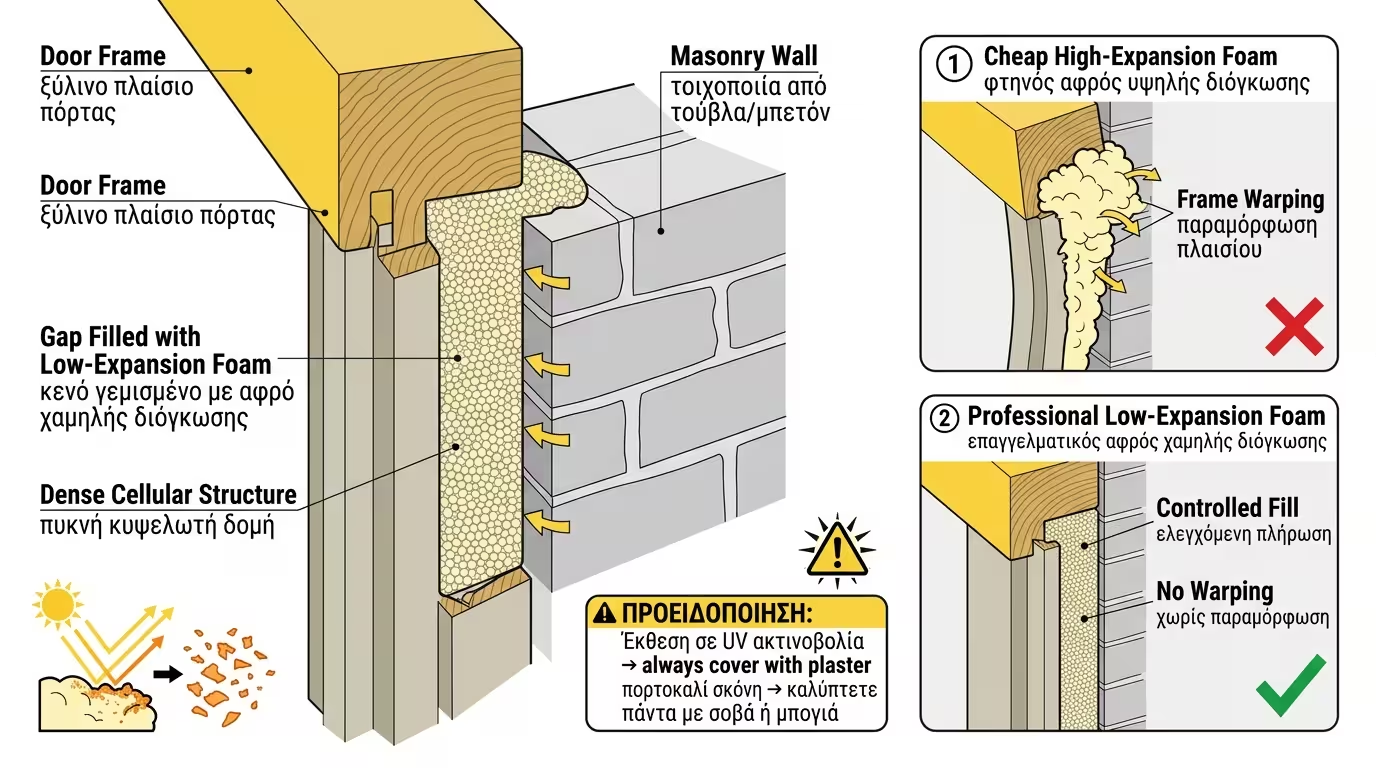
Low-expansion polyurethane foam - filling gaps around frames

🎯 The Secret

Don't buy the cheap high-expansion foam that "erupts" everywhere. For window frame sealing, professionals use Low Expansion Foam. It fills the gap in a controlled manner, creates a very dense cellular structure and does not warp window frames with its pressure.
⚠️ Beware of Sunlight

Foam hates the sun! If left exposed to UV radiation, within a few months it turns into orange dust. It must always be covered (with render, paint or mastic).

2. Elastomeric Mastics & Silicones (The 'Flexible Guards')

For small gaps (up to 1-2 cm), such as the joint under the skirting board, the surround of an external socket or the sink junction, we need something applied with a silicone gun.

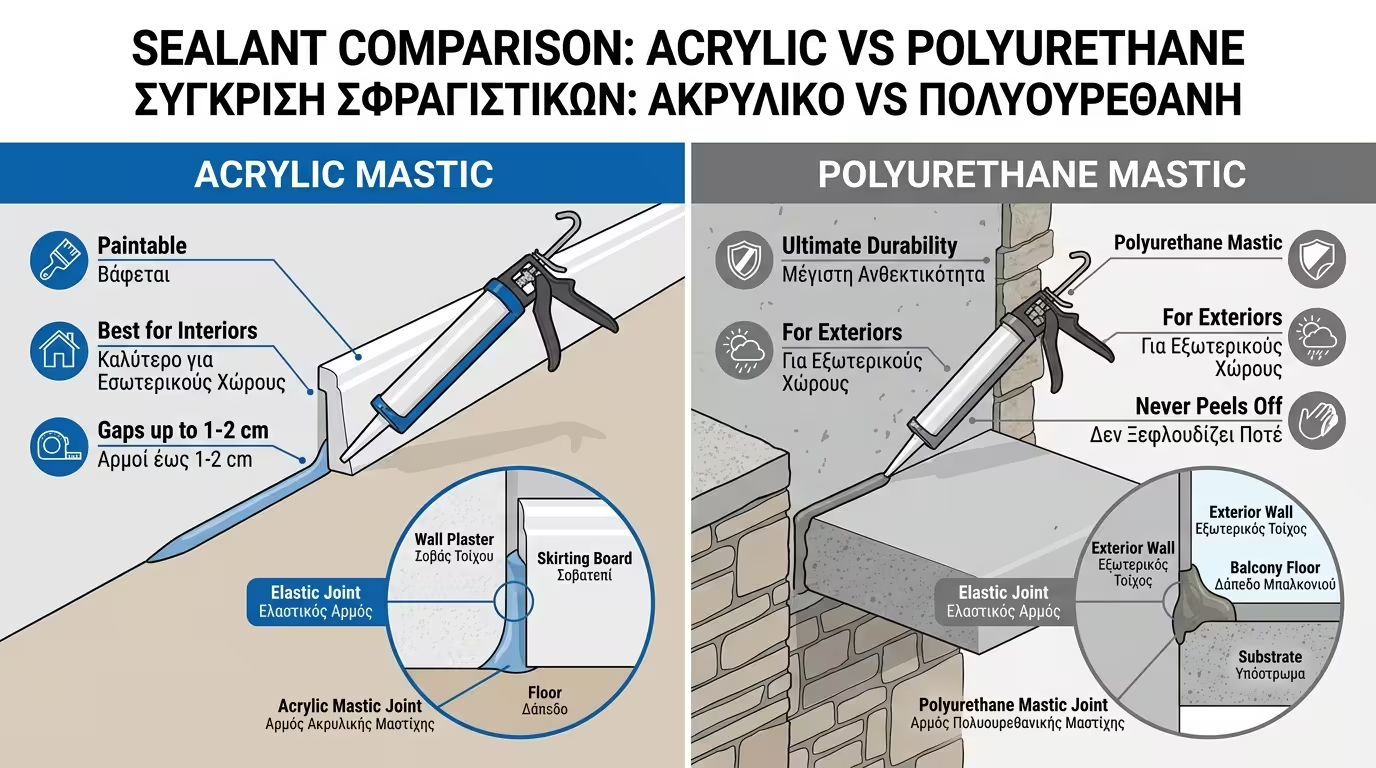
Acrylic mastic and polyurethane mastic - interior vs exterior use

🎨 Acrylic Mastic

The best choice for internal walls. Its huge advantage? It can be painted! You can seal the gap around the window and then paint over it with the wall colour, making it invisible.

🛡️ Polyurethane Mastic

The ultimate "beast" of durability. Used mainly outdoors (e.g. where the balcony meets the wall). It is incredibly elastic and never peels off, but is harder to work with.

3. Specialised Airtightness Tapes (The 'Secret Weapon')

Here we enter the world of Passive Houses (Passivhaus). On a modern construction site before plastering, you will see windows bonded to the wall with strange, colourful tapes.

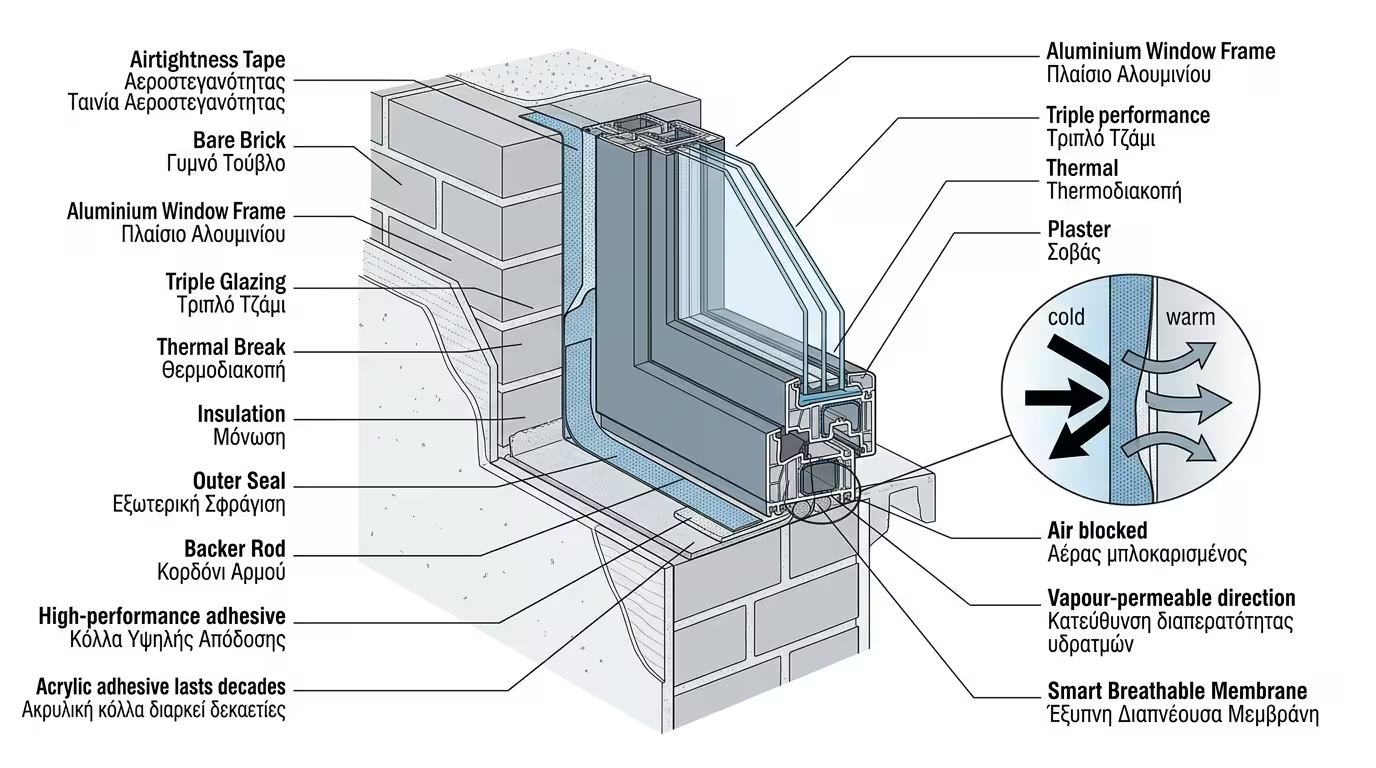
Passivhaus airtightness tapes - bonded to window frame and masonry

🔬 What Are They?

These are not ordinary insulation tapes. They are specialised membranes with an exceptionally strong acrylic adhesive that never dries out (lasts for decades).

📐 Where Are They Placed?

They airtightly bond the window frame to the bare brick or concrete, before plastering. They are also used to join the sheets of the "vapour barrier" on the roof.

💡 The 'Smart' Property

Many of these tapes are "breathable" (depending on the side). They do not let air pass through, but if moisture gets trapped in the wall, they let it evaporate outward!

4. The 10x10 Model Experiment (Installing a New Window)

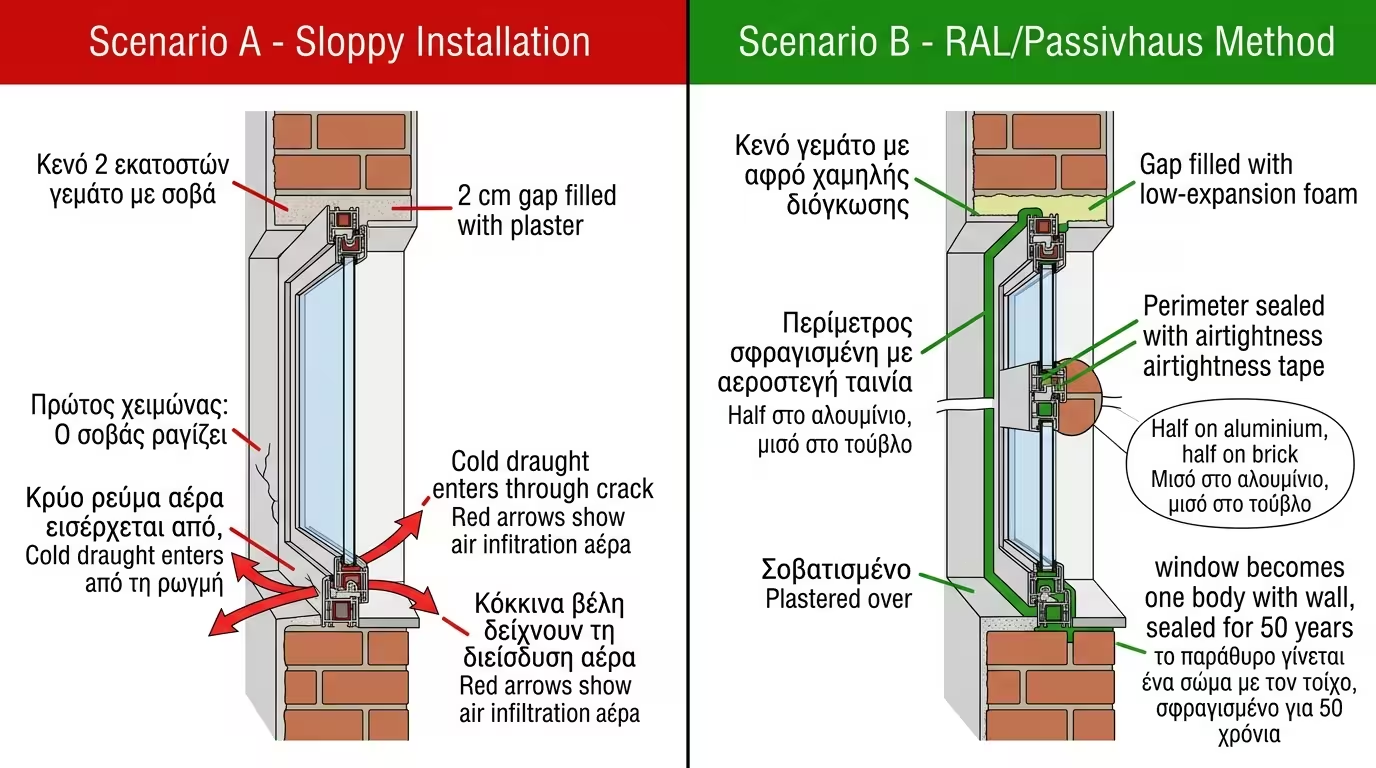
10x10 experiment - slapdash vs RAL/Passivhaus window installation

We removed the old wooden window and brought a fitter to install the brand-new, expensive energy-rated aluminium window.

❌ Scenario A (The Sloppy Job)

The fitter screws in the window. The 2 cm gap between the aluminium and the wall is roughly filled with a little plaster and the trim is pushed on. The first winter, the plaster cracks from contraction. You hold your hand next to the expensive window and feel a freezing draught rushing in through the crack.

✅ Scenario B (RAL / Passivhaus System)

The fitter fills the gap with low-expansion polyurethane foam (for thermal insulation). Then applies a specialised airtight tape around the perimeter, half on the aluminium and half on the brick. Then plasters over it. The window becomes "one body" with the wall. Air is blocked 100% for the next 50 years.

The Final Conclusion: Buying the best window or the best insulation is cancelled out if their junction with the wall is problematic. Don't skimp on sealing materials. A bottle of quality foam and a good acrylic mastic cost very little, but they make the difference between a home that "leaks" and a thermos-home.

Related Articles

Ventilation, Airtightness & Real Consumption: Climate Control

Return to category.

Go to category

Preview