1️⃣ Moisture Production
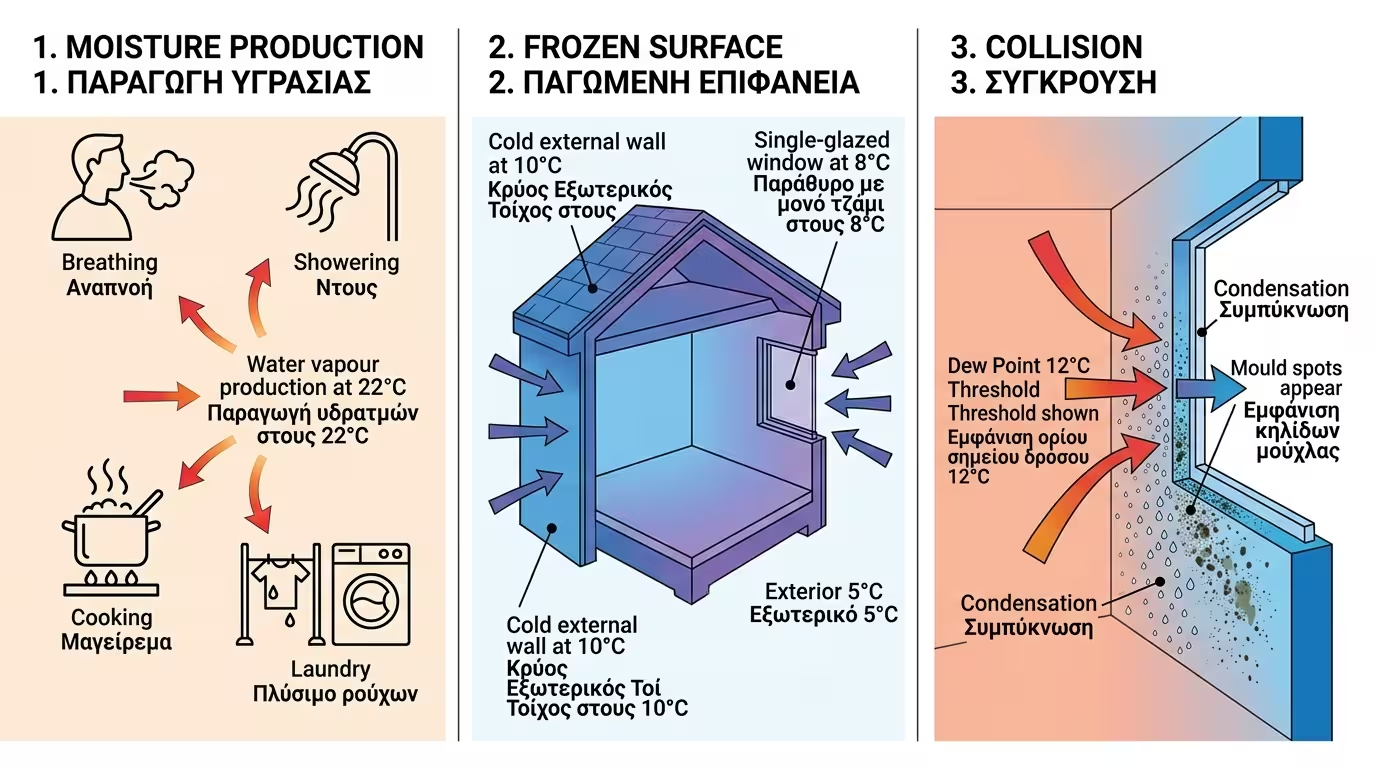
You live inside the house. You breathe, take hot showers, boil pasta, hang laundry. All these activities fill the warm indoor air (e.g. at 22°C) with litres of invisible water vapour.
You wake up on a cold winter morning, go to the living room, and see the window panes covered in water droplets, as if it rained from the inside. You look up at the corner of the north-facing wall and see those familiar, frightening black mould spots.
The first thing most people think is: "The wall is leaking from outside!" or "A pipe has burst!" In 90% of cases, however, no leak is to blame. This water was created by the air inside your home, because of a phenomenon called the Dew Point. If you understand how this phenomenon works, you will get rid of mould forever.
To understand the Dew Point, let us think of a hot August day. You sit on the balcony and take an ice-cold glass of beer from the fridge. Within a few seconds, the outside of the glass fills with water droplets ("sweats").
Obviously, the glass did not crack to let the beer out. The hot summer air is full of invisible water vapour (humidity). Warm air can "hold" a lot of water. But when this warm air touches the freezing glass, it cools suddenly. Cold air cannot hold that much moisture, so it "drops" it on the glass in the form of liquid water (droplets). This phenomenon is called Condensation, and the exact temperature at which air is forced to convert its vapour into water is called the Dew Point.

In winter, exactly the same thing happens inside your house, but in reverse.
You live inside the house. You breathe, take hot showers, boil pasta, hang laundry. All these activities fill the warm indoor air (e.g. at 22°C) with litres of invisible water vapour.
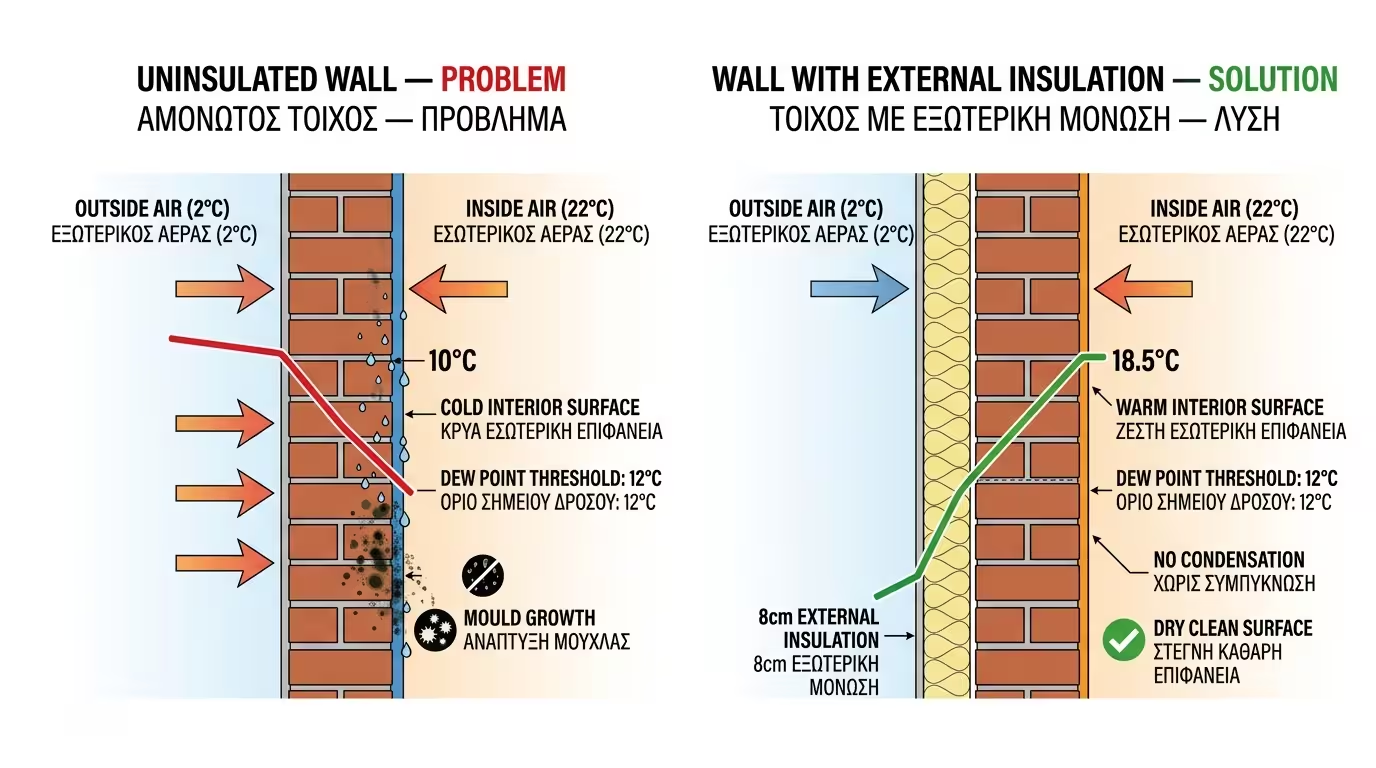
Because it is cold outside (e.g. 5°C) and your home is uninsulated, the external walls, beams and single-glazed windows are freezing. If you touch the wall with your hand, you will feel it cold (e.g. at 12°C).
The warm, moist air circulates and touches the freezing wall. Its temperature drops suddenly. It reaches the Dew Point, cannot hold the moisture, and turns it into water on the wall. The wall gets soaked and within a few weeks the fungi have a party. Welcome to mould!
To stop condensation, you have two options: either stop breathing and showering (impossible), or warm up the wall's surface so the air does not cool when it touches it.
This is where External Insulation (ETICS) and Energy-Efficient Windows come in. By placing the "coat" (polystyrene) on the outside of the house, the cold never reaches the brick. The brick now takes the room temperature. The warm, moist air touches an equally warm wall. The Dew Point is never reached, and the wall stays dry forever!
We are in the living room in January. The air temperature is 20°C and the Relative Humidity is 60% (normal for an occupied house). According to physics, with these values, the Dew Point is 12°C. That means if any surface in the house is colder than 12°C, it will sweat.
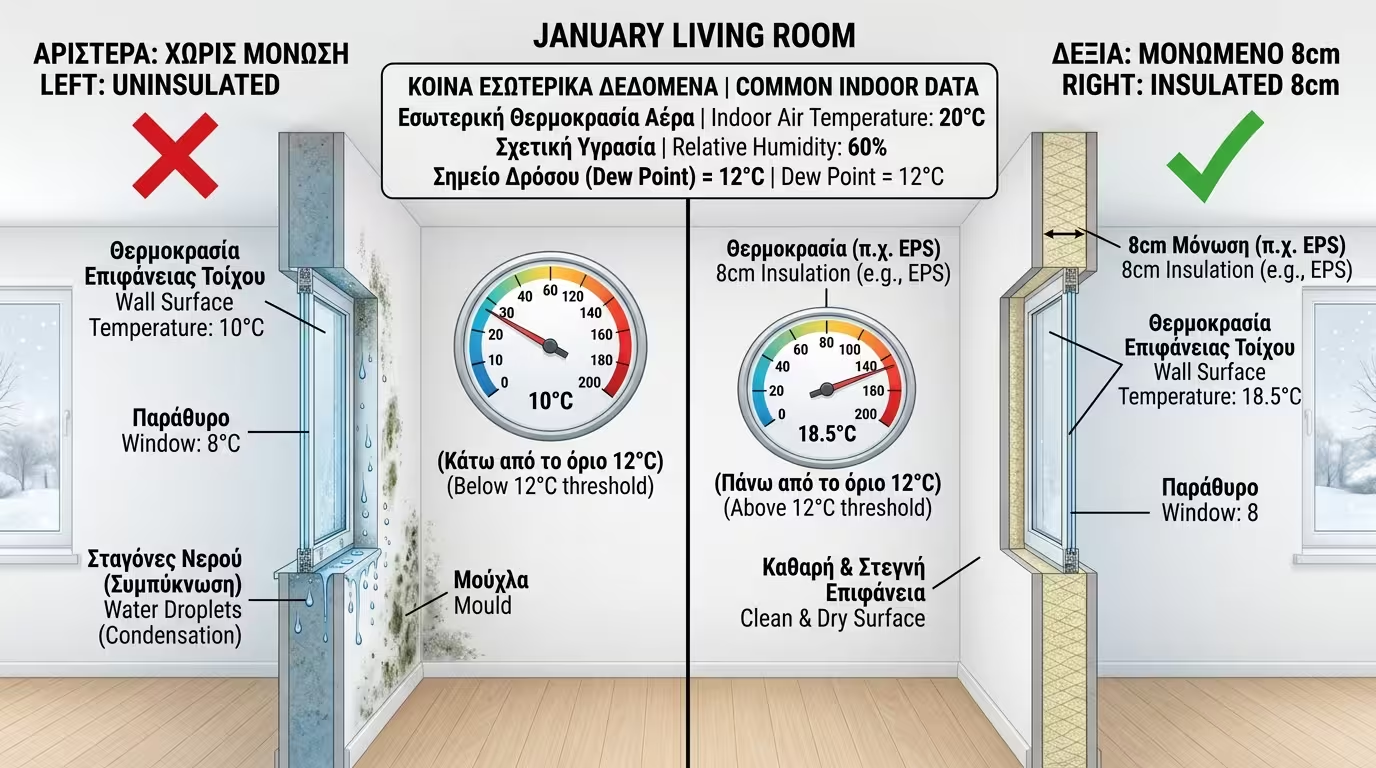
It is 5°C outside. The wall (since it is bare) has an internal surface temperature of 10°C. The aluminium window has 8°C. Both are below the 12°C threshold. The window runs like a river and the wall grows mould.
It is still 5°C outside. But now, thanks to the insulation, the internal surface of the wall is at 18.5°C! The air (looking for a surface below 12°C to sweat on) touches the wall, but nothing happens at all. The house is spotless.
💡 Final Conclusion: Corner mould is not a curse, nor is it solved by simply painting the wall with "anti-mould" paints every spring. It is pure physics. Combine proper home ventilation (open windows for 10 minutes daily to release excess humidity) with adequate external insulation, and the Dew Point phenomenon will disappear forever.
Return to category.
Go to categoryReturn to the central guide.
Go to guide