📌 What Are They?
Special "blades" made of silicone, neoprene rubber or dense nylon brushes.
When we hear "fire," our mind jumps to flames. But statistics tell a completely different, tragic truth: Over 70% of deaths in building fires are not caused by burns, but by inhaling toxic smoke.
Smoke travels through corridors, stairwells and shafts at speeds fire can only dream of. It contains carbon monoxide, which disorients you, makes you dizzy and renders you unconscious before you even realise you're in danger.
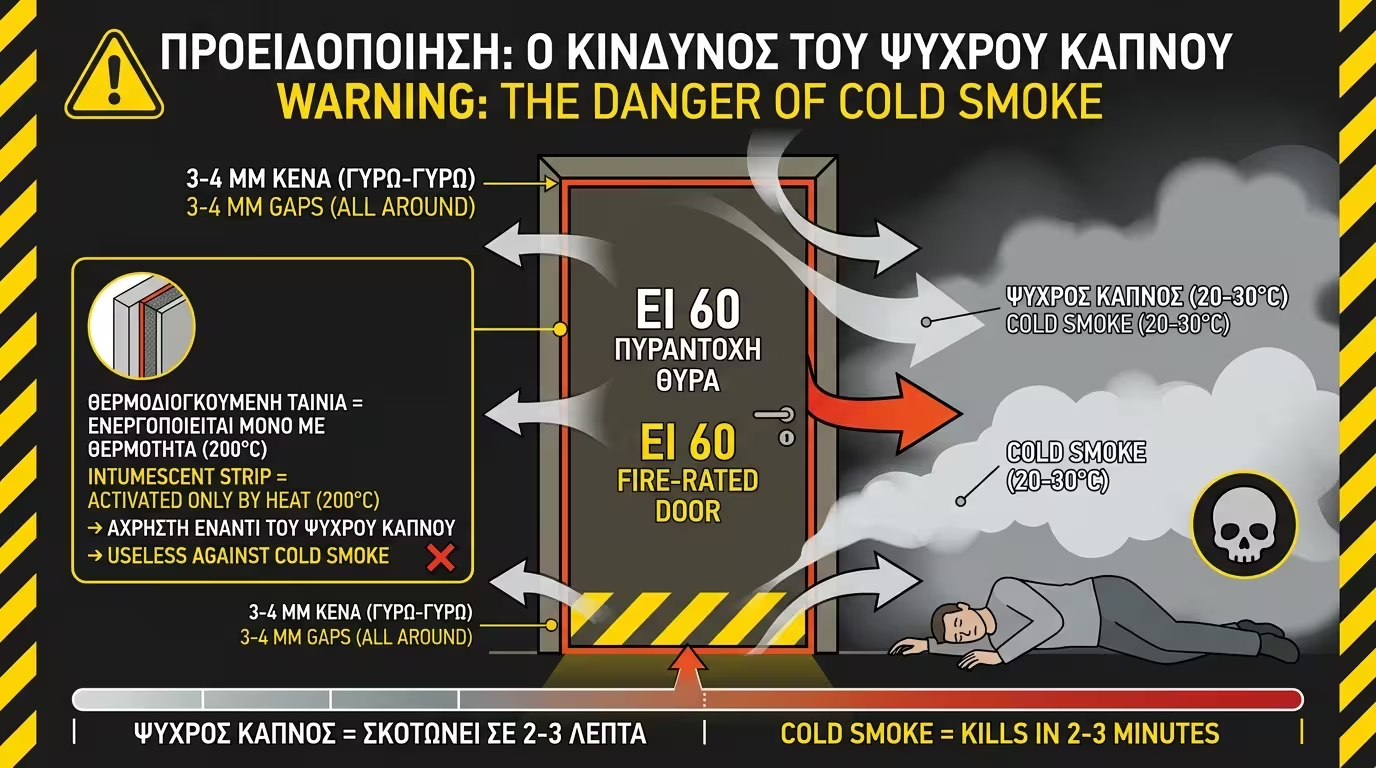
In the previous article we learned about Intumescent Strips placed in door frames. Those strips are fantastic, but they have a "weakness": They need heat to work. They typically require temperatures above 150°C to swell and seal the door.
But what if the fire has broken out on the 1st floor and you're on the 4th? The smoke reaching your door has had time to cool (below 100°C). This "Cold Smoke" doesn't have enough heat to activate the intumescent strip! The strip stays inert, the door gap stays open, and toxic smoke enters your room unhindered.
To block cold smoke, we need a physical barrier that works permanently, from the very first second, without waiting for heat. These are Smoke Seals.
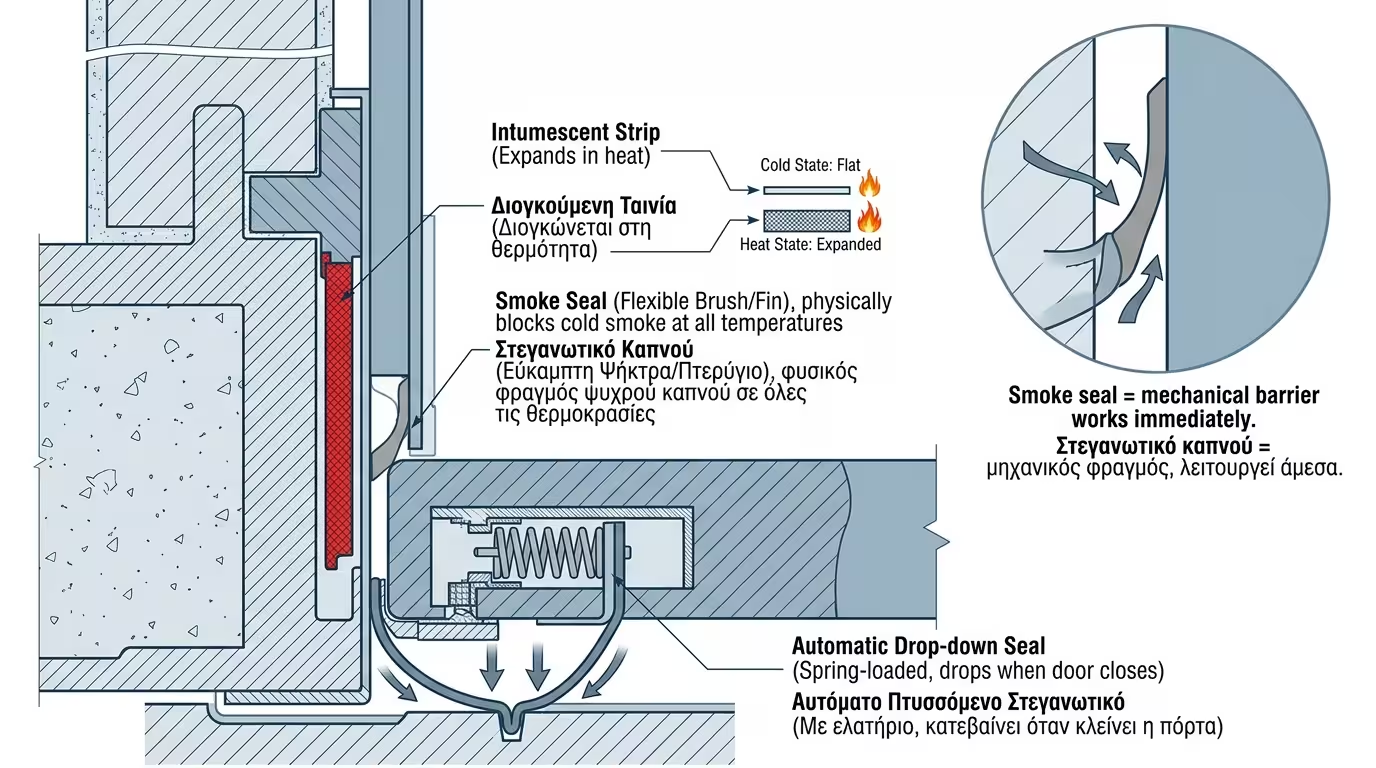
Special "blades" made of silicone, neoprene rubber or dense nylon brushes.
They're usually built into the door frame itself (often alongside the intumescent strip, creating a hybrid "Fire & Smoke" system). When the door closes, the rubber blade presses against the door leaf and mechanically seals the gap, just like the gasket on your refrigerator!
Even if smoke is cold or toxic gases try to pass under pressure, the door is completely air-tight.
We've sealed the frame all around. But every interior door has a 1-2 cm gap at the bottom (between the leaf and the floor) so it can open without catching on the carpet or tiles. Through that huge gap, smoke has a field day!
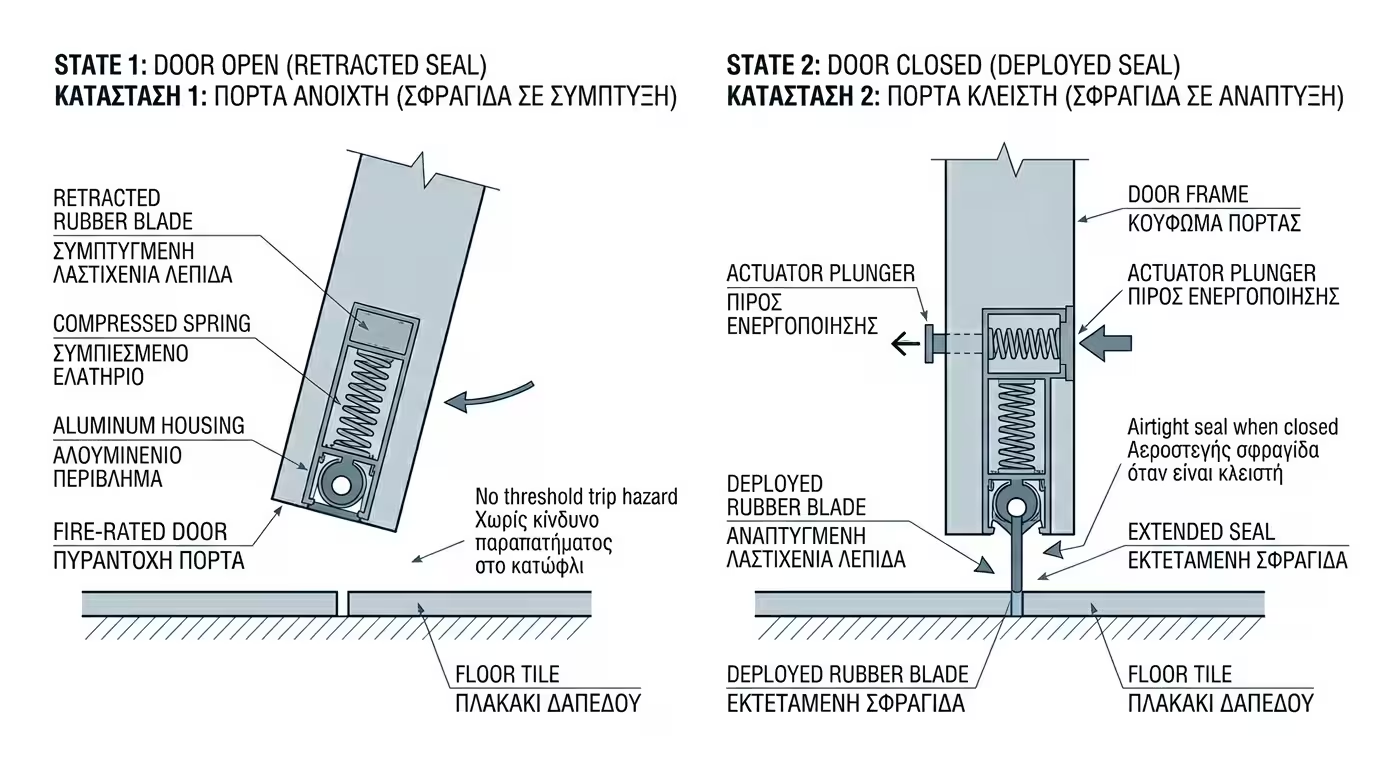
The solution here is Automatic Drop Down Seals. They're a concealed mechanism fitted at the bottom of the door. While the door is open, the rubber stays retracted. The moment the door closes and "meets" the frame, a piston is pressed and automatically drops the rubber to the floor, forcefully sealing the very last millimetre of gap!
We're trapped in our room. In the corridor, a fire has broken out producing dense, black smoke.
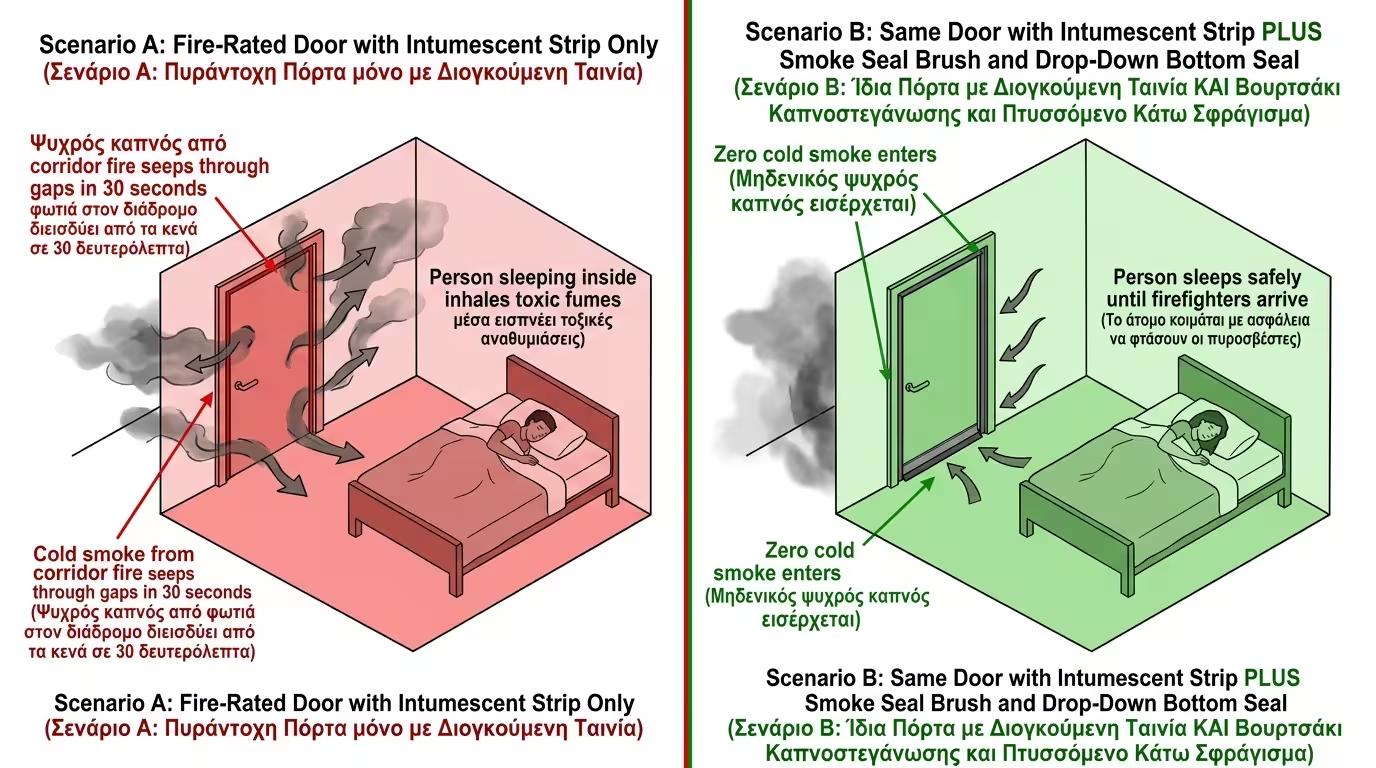
Our door has only an intumescent strip. Because the flame is 10 metres away, our door hasn't heated up enough. The strip doesn't swell. Cold smoke finds the frame gaps and the space under the door. Within 4 minutes, our room fills with smoke. We can't breathe, even though the fire never touched us.
Our door has the "full package" (silicone smoke seals and a drop-down seal at the floor). We close the door. The room seals air-tight in an instant. Smoke hits the door from outside, but the rubber blade and drop-down keep it out. The air inside our room stays perfectly clean. We sit calmly, breathe normally and wait for the Fire Brigade to extinguish the fire.
Final Takeaway: Fire safety without smoke protection is a job half done. When choosing a fire-rated door, don't just look at the resistance minutes (e.g. 60 minutes). Demand it also carries the "S" marking (e.g. EI 60-S), meaning it has Smoke Seals. It's the detail that will keep your lungs clear when the corridor turns black!
Return to category.
Go to categoryReturn to the central guide.
Go to guide