
🪨 Dead Load (Weight)
The external panels (especially natural stone or thick ceramics) are extremely heavy. The frame must transfer this weight safely to the load-bearing structure (columns/concrete) of the building.
When we look at an impressive ventilated façade - whether it is clad with luxury ceramic tiles or aluminium composite panels (e.g. Alucobond) - we see only the "skin" of the building. What does all the hard work and keeps the system standing, however, is the hidden "skeleton" behind the panels, inside the air gap.
This skeleton (the support system) plays the most critical role in the safety and longevity of the construction. It must bear tonnes of weight and withstand extreme weather conditions. The two dominant materials for building it are aluminium and wood.
Let us look at the forces these frames battle against and which material wins the fight.
Before choosing a material, we need to understand exactly what the support system must face:
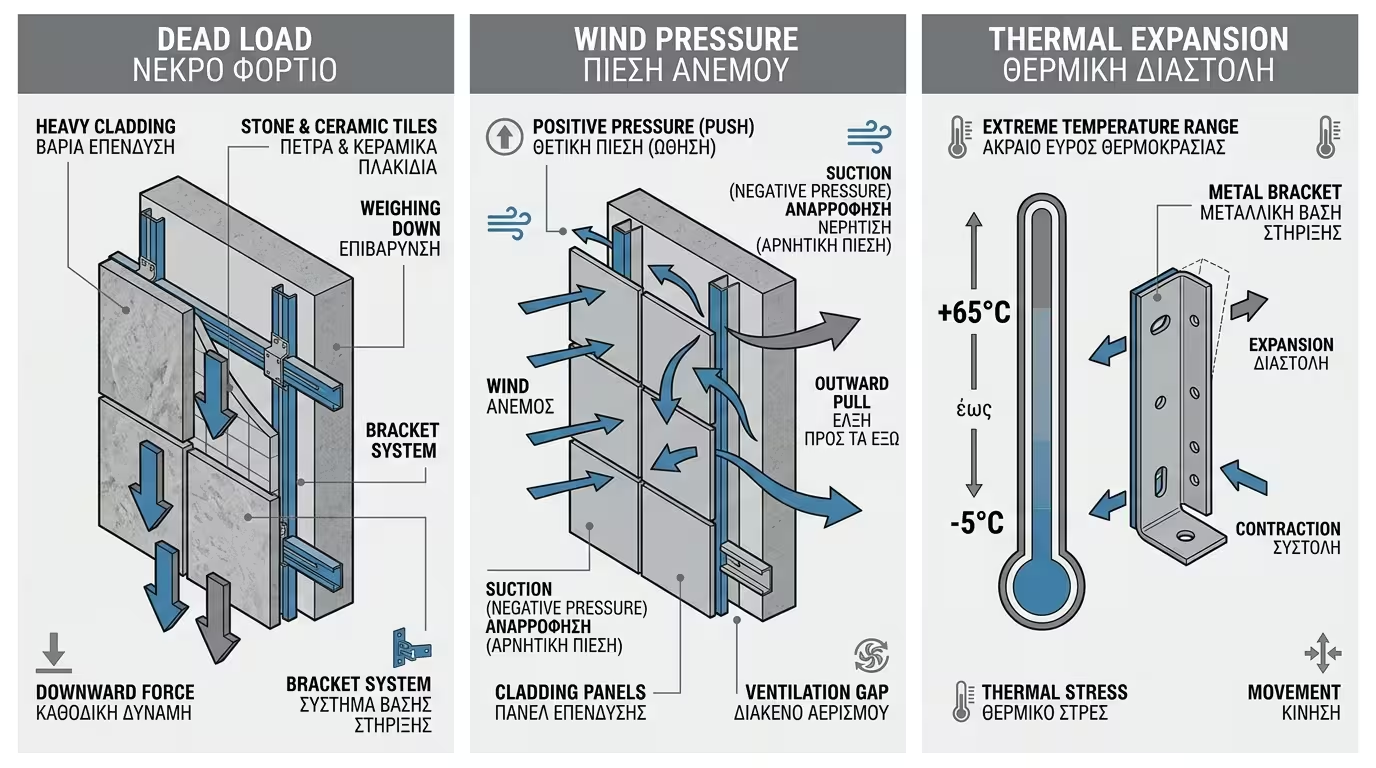
The external panels (especially natural stone or thick ceramics) are extremely heavy. The frame must transfer this weight safely to the load-bearing structure (columns/concrete) of the building.
In strong winds, air does not simply push the façade inwards. It creates negative pressure (suction) that pulls the panels outwards, trying to rip them off.
The outdoor environment has enormous temperature swings (from -5°C in winter to 65°C on the panel in summer). The frame continuously expands and contracts.
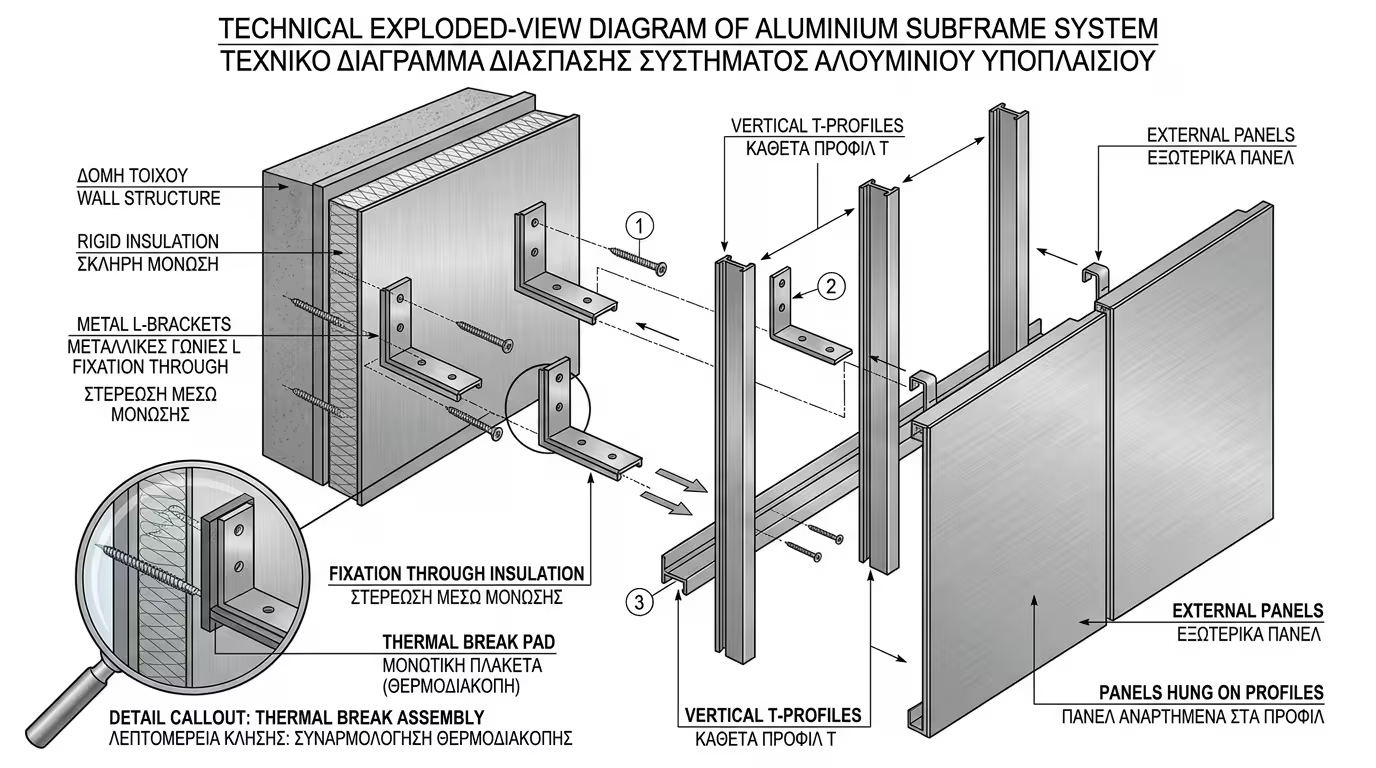
In the vast majority of modern and large buildings, aluminium is the absolute necessity. The system consists of metal brackets (angles) screwed to the wall, onto which the vertical T-profiles "clip".
Aluminium never rusts (unlike steel) and never rots. It is practically immortal, even in coastal areas.
It can support the heaviest materials (e.g. granite or marble) on skyscrapers, withstanding extreme wind pressures.
The metal brackets are adjustable. Even if the old wall is completely "crooked", the frame is adjusted millimetre by millimetre, delivering a perfectly flat façade.
Metal is an excellent heat conductor. Where the metal bracket pierces the insulation to grip the wall, it transfers cold inwards. This is why special insulating "pads" (thermal breaks) are required at the base of each bracket.
It is an expensive material with a high ecological footprint during production.
The wooden frame (usually treated pine or fir) is used mainly in lower buildings, single-family homes or when the external cladding is also timber.
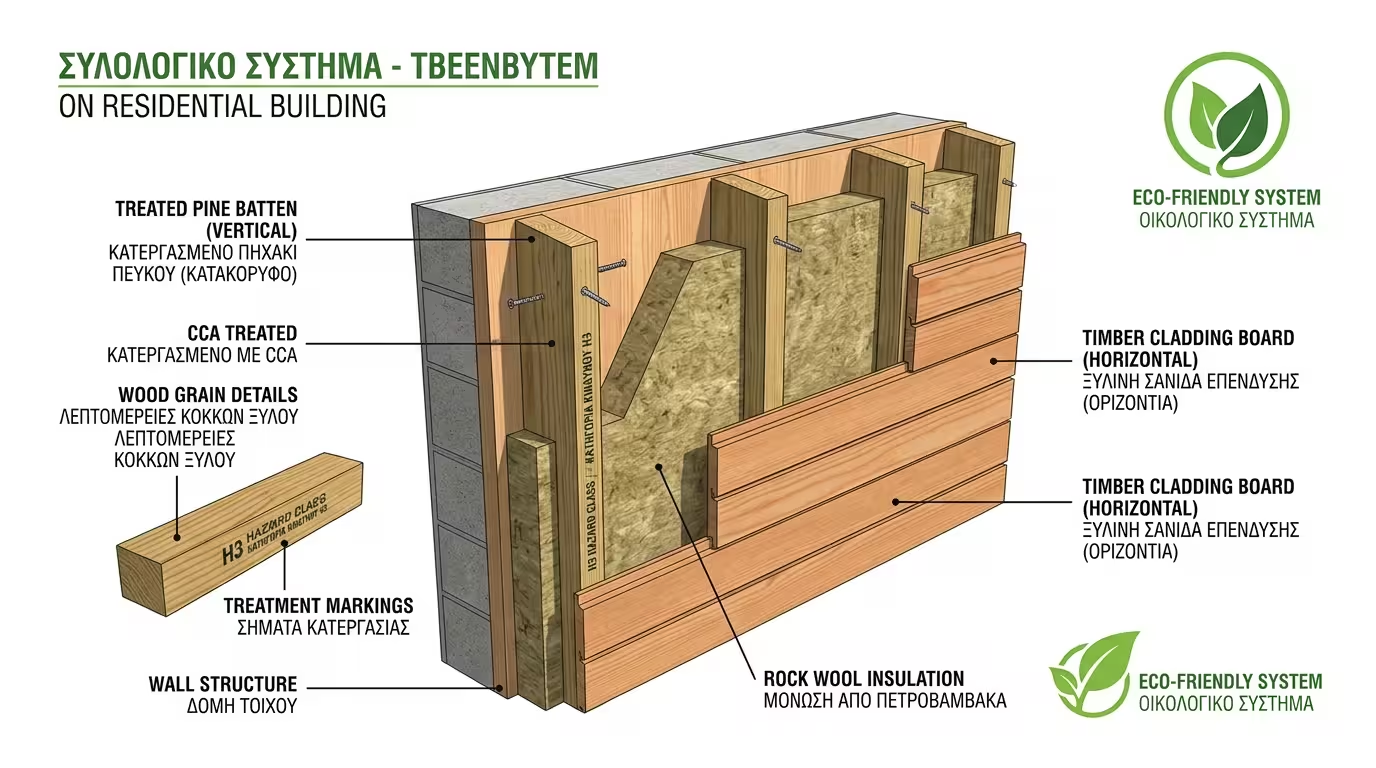
Wood does not transfer heat. It creates no thermal bridges at all, ensuring the full performance of the rock wool between the battens.
It is a natural, renewable material (provided it comes from certified forests) and its purchase cost is noticeably lower than aluminium.
Carpenters can work with it easily on site using simple tools.
Although the gap is ventilated, a failure that leaves the timber permanently wet can lead to rot or mould. Top-quality treatment is essential.
Wood is a "living" material. With moisture changes it can warp (distort). It is not suitable for very heavy panels at height.
Let us apply a ventilated façade to our digital two-storey house, located in an area with strong winds.
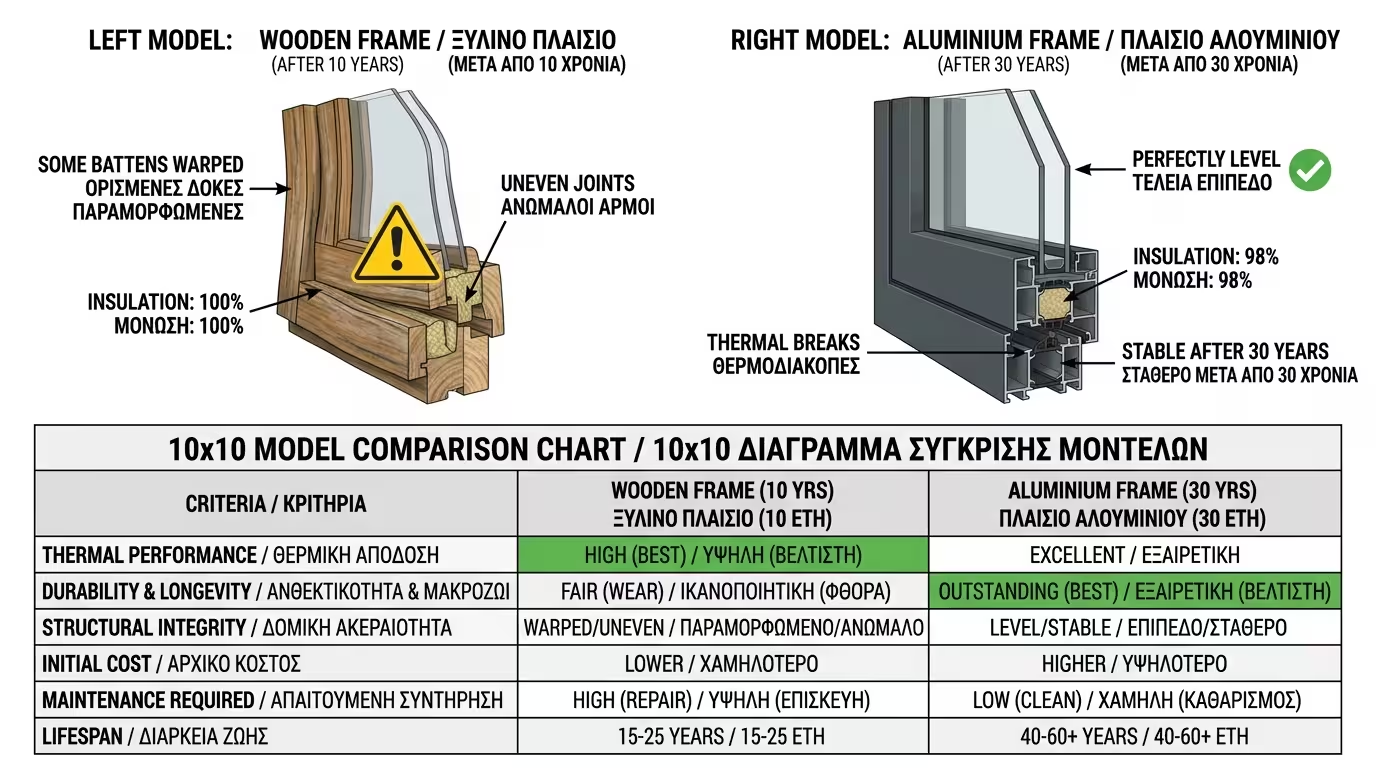
The insulation performs at 100% (no thermal bridges). After 10 years of extreme moisture and heat cycles, some wooden battens may "pull" slightly, causing the joints to be no longer perfectly symmetrical.
The insulation performance drops by an almost imperceptible 2% due to the metal fixings. However, after 30 years and dozens of earthquakes or storms, the façade will be just as level and safe as day one.
💡 Verdict: For small, ecological homes with lightweight cladding, wood is an excellent, thermally "clean" choice. But for multi-storey buildings, commercial spaces, heavy panels and a lifetime guarantee against the elements, aluminium is the undisputed champion.
Return to category.
Go to categoryReturn to the central guide.
Go to guide